Biomolecules of Hormones

Find free online Chemistry Topics covering a broad range of concepts from research institutes around the world.

Biomolecules of Hormones

Hormone is an organic substance (e.g. a peptide or a steroid) that is secreted by one tissue. it limits the blood stream and induces a physiological response (e.g. growth and metabolism) in other tissues. It is an intercellular signalling molecule.

Virtually every process in a complex organism is regulated by one or more hormones: maintenance of blood pressure, blood volume and electrolyte balance, embryogenesis, hunger, eating behaviour, digestion – to name but a few.

Endocrine glands, which are special groups of cells, make hormones. The major endocrine glands are the pituitary, pineal, thymus, thyroid, adrenal glands, and pancreas. In addition, men produce hormones in their testes and women produce them in their ovary.

Chemically, hormones may be classified as either protein (e.g. insulin, epinephrine) or steroids (e.g. estrogen, androgen). Hormones are classified according to the distance over which they act as, endocrine, paracrine and autocrine hormones.

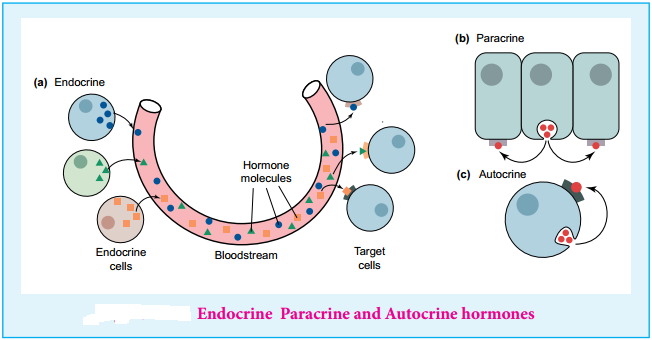
Endocrine hormones act on cells distant from the site of their release. Example: insulin and epinephrine are synthesized and released in the bloodstream by specialized ductless endocrine glands.

Paracrine hormones (alternatively, local mediators) act only on cells close to the cell that released them. For example, interleukin-1 (IL-1).

Autocrine hormones act on the same cell that released them. For example, protein growth factor interleukin-2 (IL-2).

Biomolecules of Hormones img 1

Only those cells with a specific receptor for a given hormone will respond to its presence even though nearly all cells in the body may be exposed to the hormone. Hormonal messages are therefore quite specifically addressed.

Most commonly, hormones are categorized into four structural groups, with members of each group having many properties in common:

  • Peptides and proteins
  • Steroids
  • Amino acid derivatives
  • Fatty acid derivatives – Eicosanoids

Some hormones that are products of endocrine glands are proteins or peptides, others are steroids. (The origin of hormones, their physiological role, and their mode of action are dealt with in the article hormone). None of the hormones has any enzymatic activity.

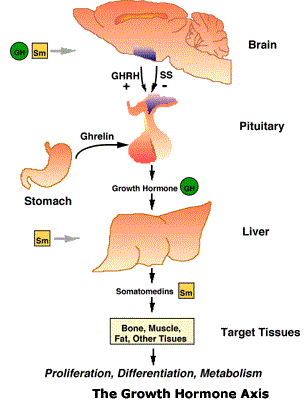
Some examples of protein hormones include growth hormone, which is produced by the pituitary gland, and follicle-stimulating hormone (FSH), which has an attached carbohydrate group and is thus classified as a glycoprotein.

Chemically, hormones may be classified as either proteins or steroids. All of the hormones in the human body, except the sex hormones and those from the adrenal cortex, are proteins or protein derivatives.

Biomolecules of Hormones img 2

Nucleic Acids Types and its Functions

Find free online Chemistry Topics covering a broad range of concepts from research institutes around the world.

Nucleic Acids Types and its Functions

The inherent characteristics of each and every species are transmitted from one generation to the next. It has been observed that the particles in nucleus of the cell are responsible for the transmission of these characteristics.

They are called chromosomes and are made up of proteins and another type of biomolecules called nucleic acids. There are mainly two types nucleic acids, the deoxyribonucleic acid (DNA) and ribonucleic acid (RNA). They are the molecular repositories that carry genetic information in every organism.

Composition and Structure of Nucleic Acids

Nucleic acids are biopolymers of nucleotides. Controlled hydrolysis of DNA and RNA yields three components namely a nitrogenous base, a pentose sugar and phosphate group.

Nitrogen Base

These are nitrogen containing organic compounds which are derivatives of two parent compounds, pyrimidine and purine. Both DNA and RNA have two major purine bases, adenine (A) and guanine (G). In both DNA and RNA, one of the pyrimidines is cytosine (C), but the second pyrimidine is thymine (T) in DNA and uracil (U) in RNA.
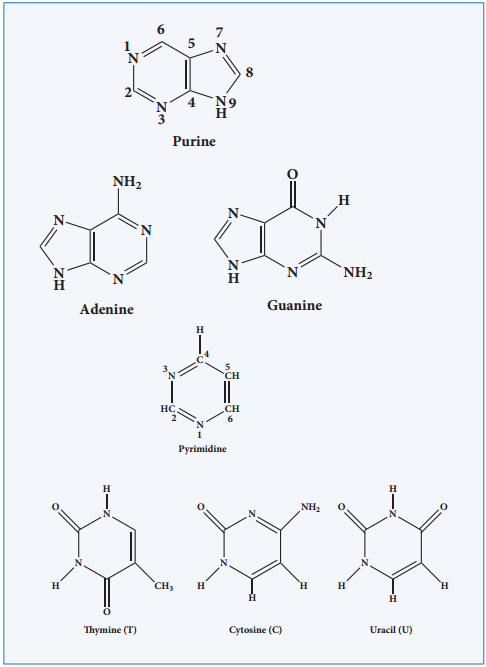
Nucleic Acids Types and its Functions img 1

Pentose Sugar:

Nucleic acids have two types of pentoses. The recurring deoxyribonucleotide units of DNA contain 2’-deoxy-D-ribose and the ribonucleotide units of RNA contain D-ribose. In nucleotides, both types of pentoses are in their β-furanose (closed five membered rings) form.
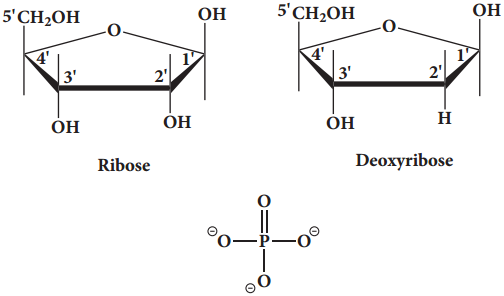
Nucleic Acids Types and its Functions img 2

Phosphate Group

Phosphoric acid forms phospho diester bond between nucleotides. Based on the number of phosphate group present in the nucleotides, they are classified into mono nucleotide, dinucleotide and trinucleotide.

Nucleosides and Nucleotides:

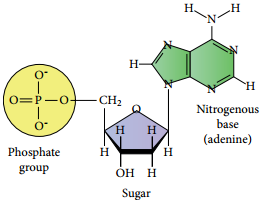
The molecule without the phosphate group is called a nucleoside. A nucleotide is derived from a nucleoside by the addition of a molecule of phosphoric acid. Phosphorylation occurs generally in the 5’ OH group of the sugar. Nucleotides are linked in DNA and RNA by phospho diester bond between 5’ OH group of one nucleotide and 3’ OH group on another nucleotide.

Sugar + Base → Nucleoside
Nucleoside + Phosphate → Nucleotide
nNucleotide → Polynucleotide (Nucleic Acid)

Double Strand Helix Structure of DNA

In early 1950s, Rosalind Franklin and Maurice Wilkins used X-ray diffraction to unravel the structure of DNA. The DNA fibers produced a characteristic diffraction pattern. The central X shaped pattern indicates a helix, whereas the heavy black arcs at the top and bottom of the diffraction pattern reveal the spacing of the stacked bases.
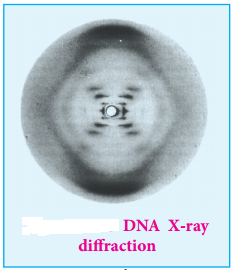
Nucleic Acids Types and its Functions img 3

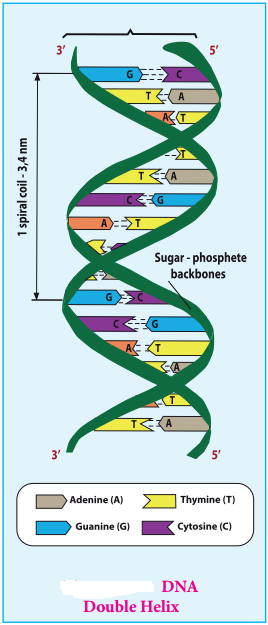
The structure elucidation of DNA by Watson and Crick in 1953 was a momentous event in science. They postulated a 3-dimensional model of DNA structure which consisted of two antiparallel helical DNA chains wound around the same axis to form a right-handed double helix.

The hydrophilic backbones of alternating deoxyribose and phosphate groups are on the outside of the double helix, facing the surrounding water. The purine and pyrimidine bases of both strands are stacked inside the double helix, with their hydrophobic and ring structures very close together and perpendicular to the long axis, thereby reducing the repulsions between the charged phosphate groups. The offet pairing of the two strands creates a major groove and minor groove on the surface of the duplex.
Nucleic Acids Types and its Functions img 4

Nucleic Acids Types and its Functions img 5

The model revealed that, there are 10.5 base pairs (36 Å) per turn of the helix and 3.4 Å between the stacked bases. They also found that each base is hydrogen bonded to a base in opposite strand to form a planar base pair.

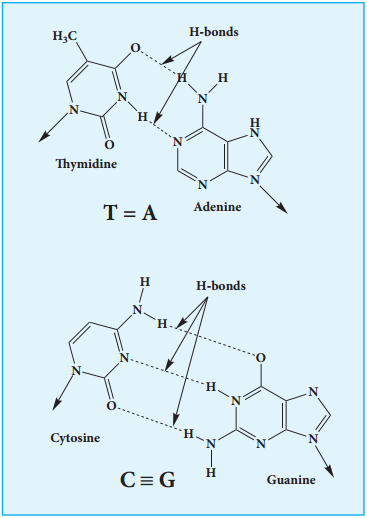
Two hydrogen bonds are formed between adenine and thymine and three hydrogen bonds are formed between guanine and cytosine. Other pairing tends to destabilize the double helical structure. This specific association of the two chains of the double helix is known as complementary base pairing. The DNA double helix or duplex is held together by two forces,

  • Hydrogen bonding between complementary base pairs
  • Base-stacking interactions

The complementary between the DNA strands is attributable to the hydrogen bonding between base pairs but the base stacking interactions are largely non-specific, make the major contribution to the stability of the double helix.

Types of RNA Molecules

Ribonucleic acids are similar to DNA. Cells contain up to eight times high quantity of RNA than DNA. RNA is found in large amount in the cytoplasm and a lesser amount in the nucleus. In the cytoplasm it is mainly found in ribosomes and in the nucleus, it is found in nucleolus.

RNA molecules are classified according to their structure and function into three major types

  • Ribosomal RNA (rRNA)
  • Messenger RNA (mRNA)
  • Transfer RNA (tRNA)

rRNA

rRNA is mainly found in cytoplasm and in ribosomes, which contain 60% RNA and 40% protein. Ribosomes are the sites at which protein synthesis takes place.

tRNA

tRNA molecules have lowest molecular weight of all nucleic acids. They consist of 73 – 94 nucleotides in a single chain. The function of tRNA is to carry amino acids to the sites of protein synthesis on ribosomes.

mRNA

mRNA is present in small quantity and very short lived. They are single stranded, and their synthesis takes place on DNA. The synthesis of mRNA from DNA strand is called transcription. mRNA carries genetic information from DNA to the ribosomes for protein synthesis. This process is known as translation.

Difference between DNA and RNA

DNA

RNA

It is mainly present in nucleus, mitochondria and chloroplastIt is mainly present in cytoplasm, nucleolus and ribosomes
It contains deoxyribose sugarIt contains ribose sugar
Base pair A = T. G = CBase pair A = U. C = G
Double standard moleculesSingle standard molecules
It’s life time is highIt is Short lived
It is stable and hot hydrolysed easily by alkalisIt is unstable and hydrolysed easily by alkalis
It can replicate itselfIt cannot replicate itself. It is formed from DNA.

More to Know

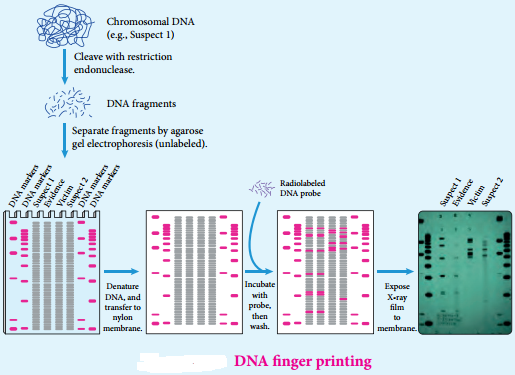
DNA finger printing Traditionally, one of the most accurate methods for placing an individual at the scene of a crime has been a fingerprint. With the advent of recombinant DNA technology, a more powerful tool is now available: DNA fingerprinting is (also called DNA typing or DNA profiling).

It was first invented by Professor Sir Alec Jeffrey sin 1984. The DNA finger print is unique for every person and can be extracted from traces of samples from blood, saliva, hair etc… By using this method we can detect the individual specific variation in human DNA.

In this method, the extracted DNA is cut at specific points along the strand with restriction of enzymes resulting in the formation of DNA fragments of varying lengths which were analysed by technique called gel electrophoresis. This method separates the fragments based on their size.

The gel containing the DNA fragments is then transferred to a nylon sheet using a technique called blotting. Then, the fragments will undergo autoradiography in which they were exposed to DNA probes (pieces of synthetic DNA that were made radioactive and that bound to the fragments).

A piece of X-ray film was then exposed to the fragments, and a dark mark was produced at any point where a radioactive probe had become attached. The resultant pattern of marks could then be compared with other samples. DNA fingerprinting is based on slight sequence differences (usually single base-pair changes) between individuals. These methods are proving decisive in court cases worldwide.
Nucleic Acids Types and its Functions img 6

Biological Functions of Nucleic Acids

In addition to their roles as the subunits of nucleic acids, nucleotides have a variety of other functions in every cell such as,

(i) Energy Carriers (ATP)
Nucleic Acids Types and its Functions img 7

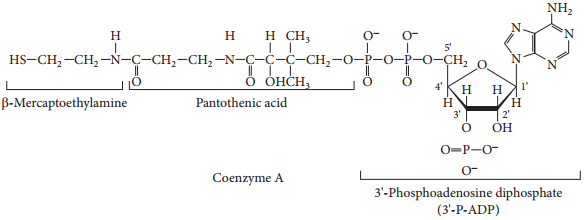
(ii) Components of enzyme cofactors (Example: Coenzyme A, NAD+, FAD)
Nucleic Acids Types and its Functions img 8

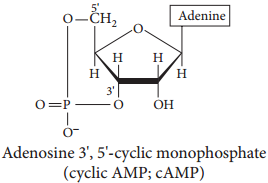
(iii) Chemical messengers (Example: Cyclic AMP, cAMP)
Nucleic Acids Types and its Functions img 9

Biomolecules of Vitamins and Their Functions

Find free online Chemistry Topics covering a broad range of concepts from research institutes around the world.

Biomolecules of Vitamins and Their Functions

Vitamins are small organic compounds that cannot be synthesised by our body but are essential for certain functions. Hence, they must be obtained through diet. The requirements of these compounds are not high, but their deficiency or excess can cause diseases. Each vitamin has a specific function in the living system, mostly as co enzymes.

They are not served as energy sources like carbohydrates, lipids, etc. The name ‘Vitamin’ is derived from ‘vital amines’, referring to the vitamins earlier identified amino compounds. Vitamins are essential for the normal growth and maintainance of our health.

Classification of Vitamins

Vitamins are classified into two groups based on their solubility either in water or in fat.

Fat Soluble Vitamins:

These vitamins absorbed best when taken with fatty food and are stored in fatty tissues and livers. These vitamins do not dissolve in water. Hence they are called fat soluble vitamins. Vitamin A, D, E & K are fat-soluble vitamins.

Water Soluble Vitamins:

Vitamins B (B1, B2, B3, B5, B6, B7, B9 and B12) and C are readily soluble in water. On the contrary to fat soluble vitamins, these can’t be stored. The excess vitamins present will be excreted through urine and are not stored in our body. Hence, these two vitamins should be supplied regularly to our body. The missing numbers in B vitamins are once considered as vitamins but no longer considered as such, and the numbers that were assigned to them now form the gaps.

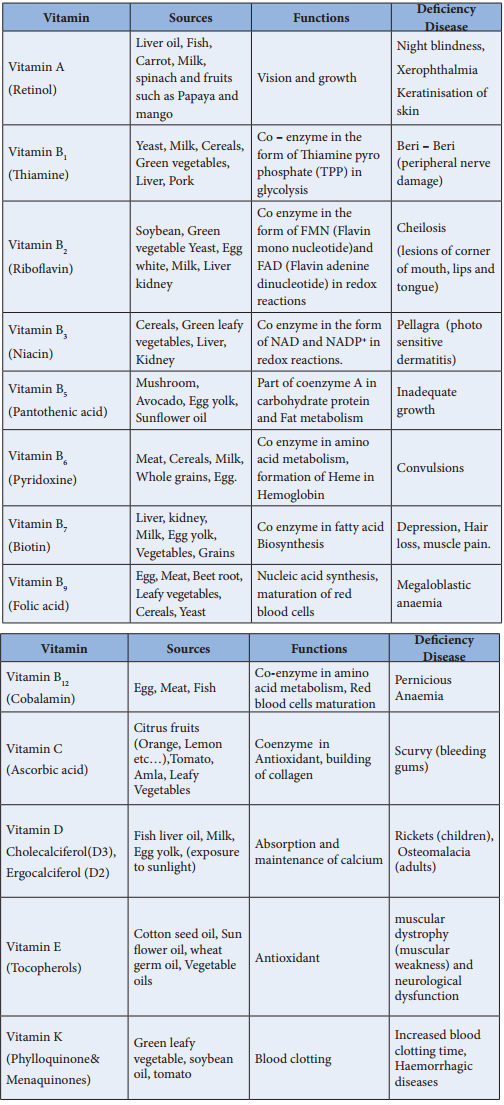
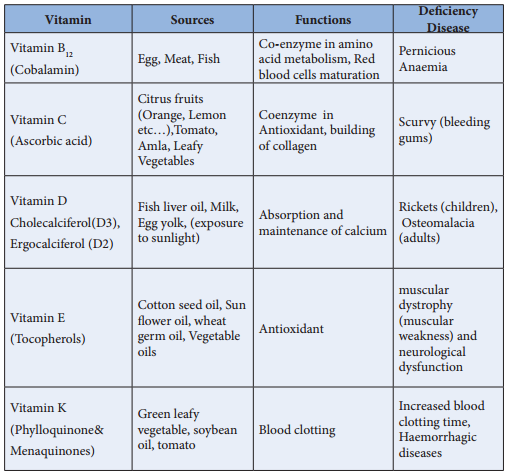
Table 14.2: Vitamins, their Sources, Functions and their Deficiency Disease

Biomolecules of Vitamins and Their Functions img 1
Biomolecules of Vitamins and Their Functions img 1a

A diverse range of biomolecules exist,

Including:

Small Molecules:

Lipids, fatty acids, glycolipids, sterols, monosaccharides. Vitamins.

Biological Function of Vitamins

Once growth and development are completed, vitamins remain essential nutrients for the healthy maintenance of the cells, tissues, and organs that make up a multicellular organism; they also enable a multicellular life form to efficiently use chemical energy provided by food it eats, and to help process
the proteins, All of the biomolecules that make up our cells are made up of strings of monomers.

For example, proteins are made up of strings of amino acids and nucleic acids are strings of nucleotides. The term for a long string of monomers is a polymer. The biomolecules, proteins, carbohydrates and nucleic acids are all polymers.

Vitamins and minerals are considered essential nutrients-because acting in concert, they perform hundreds of roles in the body. They help shore up bones, heal wounds, and bolster your immune system. They also convert food into energy, and repair cellular damage.

Vitamin, any of several organic substances that are necessary in small quantities for normal health and growth in higher forms of animal life. Vitamins are distinct in several ways from other biologically important compounds such as proteins, carbohydrates, and lipids.

Biomolecules of Lipids:

Find free online Chemistry Topics covering a broad range of concepts from research institutes around the world.

Biomolecules of Lipids:

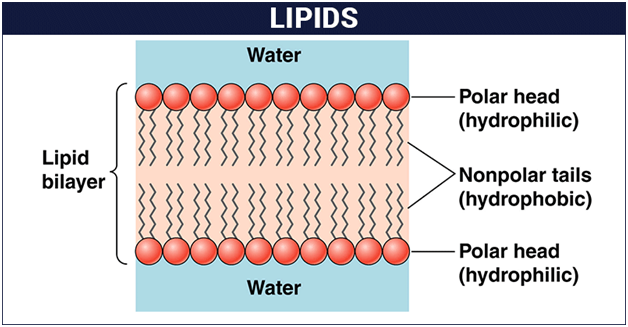
Lipids are organic molecules that are soluble in organic solvents such as chloroform and methanol and insoluble in water. The word lipid is derived from the Greek work ‘lipos’ meaning fat. They are the principal components of cell membranes. In addition, they also act as energy source for living systems. Fat provide 2-3 fold higher energy compared to carbohydrates/proteins.

Classification of Lipids:

Based on their structures lipids can be classified as simple lipids, compound lipids and derived lipids. Simple lipids can be further classified into fats, which are esters of long chain fatty acids with glycerol (triglycerides) and waxes which are the esters of fatty acids with long chain monohydric alcohols (Bees wax).

Compound lipids are the esters of simple fatty acid with glycerol which contain additional groups. Based on the groups attached, they are further classified into phospholipids, glycolipids and lipoproteins. Phospholipids contain a phospho-ester linkage while the glycolipids contain a sugar molecule attached. The lipoproteins are complexes of lipid with proteins.

Biological Importance of Lipids

  1. Lipids are the integral component of cell membrane. They are necessary of structural integrity of the cell.
  2. The main function of triglycerides in animals is as an energy reserve. They yield more energy than carbohydrates and proteins.
  3. They act as protective coating in aquatic organisms.
  4. Lipids of connective tissue give protection to internal organs.
  5. Lipids help in the absorption and transport of fat soluble vitamins.
  6. They are essential for activation of enzymes such as lipases.
  7. Lipids act as emulsifier in fat metabolism.

They include fats, waxes, oils, hormones, and certain components of membranes and function as energy-storage molecules and chemical messengers. Together with proteins and carbohydrates, lipids are one of the principal structural components of living cells.

Biological substances that are insoluble in water are classified as lipids. This characteristic physical property of lipids makes them very different from other biomolecules like carbohydrates, proteins, and nucleic acids. Some lipids are used to store energy.

The four main groups of lipids include:

  • Fatty acids (saturated and unsaturated)
  • Glycerides (glycerol-containing lipids)
  • Nonglyceride lipids (sphingolipids, steroids, waxes)
  • Complex lipids (lipoproteins, glycolipids)

Carbohydrates, nucleic acids, and proteins are often found as long polymers in nature. Lipids are not usually polymers and are smaller than the other three, so they are not considered macromolecules by some sources 1, 2 start superscript, 1, comma, 2, end superscript.

Fats and Oils. A fat molecule consists of two main components-glycerol and fatty acids. Glycerol is an organic compound (alcohol) with three carbons, five hydrogens, and three hydroxyl (OH) groups.

A lipid is any of various organic compounds that are insoluble in water. They include fats, waxes, oils, hormones, and certain components of membranes and function as energy-storage molecules and chemical messengers.

Biomolecules of Lipids img 1

Rearrange Jumbled Sentences in a Paragraph Exercises for Class 11

Rearrange Jumbled Sentences in a Paragraph Exercises for Class 11

This grammar section explains English Grammar in a clear and simple way. There are example sentences to show how the language is used. Students can also read NCERT Solutions for Class 11 English to get good marks in CBSE Board Exams.

Rearrange Jumbled Sentences in a Paragraph Exercises for Class 11

If some sentences are given in a jumbled manner, the students should be able to perceive the logical order and sequence in which they should properly be written. For this, their knowledge of grammar will come in handy. The following are some of the indicators of the correct order and sequence.

(a) See whether the indefinite articles ‘a’ and ‘an’ or the definite article ‘the’ have been used. Sentences containing ‘the’ should generally come later.
(b) Use of personal pronouns normally comes after the use of proper nouns.
(c) Sentence connectors also indicate sequence. Connectors like ‘then’, ‘because’, ‘since’, ‘before’, ‘after’, etc. give time reference and are helpful in determining the sequence.

Rearrange the Jumbled Sentences With Answers Pdf

♦ Read the sentences given below. They are not in the correct sequential order. Rewrite the sentences in a paragraph form placing them in the correct order:

Question 1.
(a) of the/are venomous/only/300 out/species/2700 known
(b) which is/yellow liquid/water/snake venom/90% of/is a
(c) expelled/poison gland/that is/it is/from the/substance
(d) of thick/are/connective/these glands/made/tissues
(e) used it/in the/to treat/doctors/12th century/leprosy

Question 2.
(a) The eldest of the three sons would have become the king after his father.
(b) So he drove the three sons away.
(c) There was once a king in India who died leaving behind three sons.
(d) But the captain of the king’s army wanted the kingdom for himself.

Answer:
(c) There was once a king in India who died leaving three sons.
(a) The eldest of the three sons would have become the king after his father.
(d) But the captain of the king’s army wanted the kingdom for himself.
(b) So he drove the three sons away.

Question 3.
(a) What were the conditions of life in London during the days of the plague?
(b) He was a child during the plague and could not remember much.
(c) We know that a lot of people moved away from the city and went to other places which were free of the plague.
(d) The writer Daniel Defoe described conditions in London during the plague, but he did this some years after it had ended.

Answer:
(a) What were the conditions of life in London during the days of the plague?
(c) We know that a lot of people moved away from the city and went to other places which were free of the plague.
(d) The writer Daniel Defoe described conditions in London during the plague, but he did this some years after it had ended.
(b) He was a child during the plague and could not remember much.

Question 4.
(a) He had many brothers.
(b) When the old king died, there was fighting between the brothers for the throne.
(c) Ashoka was born in the ruling Maurya family of Magadha.
(d) Ashoka was able to defeat his brothers.

Answer:
(c) Ashoka was born in the ruling Maurya family of Magadha.
(a) He had many brothers.
(b) When the old king died, there was fighting between the brothers for the throne.
(d) Ashoka was able to defeat his brothers.

Question 5.
(a) of its residents/becomes a/it reflect /a house/the personality/home when
(b) has to look/no rules/how our/ there are/as to/home
(c) thing is/inhabiting them/should enjoy/the important/ that we
(d) about/houses are/our lives/personal statements
(e) the confidence/in ourselves/they reflect/we have
(f) we have/will be/the more/individualistic/confidence/the more/ our homes

Question 6.
(a) Special arrangements are made to water the wheat plants in winter.
(b) They grow to about 8” height by December.
(c) At this time in December, they need watering.
(d) Wheat seeds are planted in October.

Answer:
(d) Wheat seeds are planted in October.
(b) They grow to about 8” height by December.
(c) At this time in December, they need watering.
(d) Special arrangements are made to water the wheat plants in winter.

Question 7.
(a) He is called so because he led India to freedom from British rule.
(b) The first cause that he took up was of an indigo farmer of Champaran, Bihar.
(c) Mahatma Gandhi is called the Father of the Nation.
(d) He started fighting for India’s freedom after he returned from South Africa.

Answer:
(c) Mahatma Gandhi is called the Father of the Nation.
(a) He is called so because he led India to freedom from British rule.
(d) He started fighting for India’s freedom after he returned from South Africa.
(b) The first cause that he took up was of an indigo farmer of Champaran, Bihar.

Question 8.
(a) We decided to have a special morning assembly and a cultural programme in the last two periods.
(b) I have been chosen to be the Head Boy of my school.
(c) I was given the responsibility of organising the Children’s Day programme in the school.
(d) I had a meeting with the members of the Students’ Council to decide the programme.

Answer:
(b) I have been chosen to be the Head Boy of my school.
(c) I was given the responsibility of organizing the Children’s Day Programme in tine school.
(id) I had a meeting with the members of the Students’ Council to decide on the programme.
(a) We decided to have a special morning assembly and a cultural programme in the last two periods.