Chemistry In Everyday Life – Importance, Examples, Uses

Find free online Chemistry Topics covering a broad range of concepts from research institutes around the world.

Chemistry In Everyday Life – Importance, Examples, Uses

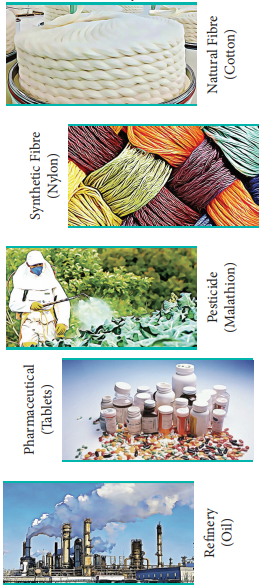
‘Unna unavu, udukka udai, irukka idam’ – in Tamil classical language means food to eat, cloth to wear and place to live. These are the three basic needs of human life. Chemistry plays a major role in providing these needs and also helps us to improve the quality of life.

Chemistry has produced many compounds such as fertilizers, insecticides etc. that could enhance the agricultural production. We build better and stronger buildings that sustain different weather conditions with modern cements, concrete mixtures and better quality steel. We also have better quality fabrics.

Chemistry is everywhere in the world around us. Even our body is made up of chemicals. Continuous biochemical reactions occurring in our body are responsible for human activities. Chemistry touches almost every aspect of our lives, culture and environment.

The world in which we are living is constantly changing, and the science of chemistry continues to expand and evolve to meet the challenges of our modern world. Chemical industries manufacture a broad range of new and useful materials that are used in every day life.

Examples: polymers, dyes, alloys, life saving drugs etc.

When HIV/AIDS epidemic began in early 1980s, patients rarely lived longer than a few years. But now many effective medicines are available to fight the infection, and people with HIV infection have longer and better life.

The understanding of chemical principles enabled us to replace the non eco friendly compounds such as CFCs in refrigerators with appropriate equivalents and increasing number of green processes. There are many researchers working in different fields of chemistry to develop new drugs, environment friendly materials, synthetic polymers etc. for the betterment of the society.

As chemistry plays an important role in our day-to-day life, it becomes essential to understand the basic principles of chemistry in order to address the mounting challenges in our developing country.

Chemistry is everywhere in the world around us. Even our body is made up of chemicals. Continuous bio-chemical reactions occurring in our body are responsible for human activities. Chemistry touches almost every aspect of our lives, culture and environment.

Chemistry is essential for meeting our basic needs of food, clothing, shelter, health, energy, and clean air, water, and soil. Chemical technologies enrich our quality of life in numerous ways by providing new solutions to problems in health, materials, and energy usage.

Food is made from chemicals. Many of the changes you observe in the world around you are caused by chemical reactions. Examples include leaves changing colors, cooking food and getting yourself clean. Knowing some chemistry can help you make day-to-day decisions that affect your life.

The scientific study of the chemical composition of living matter and of the chemical processes that go on in living organisms.

Chemistry - The Centre of Life img 1

Editing Exercises for Class 8 CBSE With Answers

Editing Exercises for Class 8

This grammar section explains English Grammar in a clear and simple way. There are example sentences to show how the language is used. NCERT Solutions for Class 8 English will help you to write better answers in your Class 10 exams. Because the Solutions are solved by subject matter experts.

Editing Exercises for Class 8 CBSE With Answers PDF

Editing Solved Exercise With Answers for Class 8 CBSE

Question 1.
Edit the following passage by replacing the incorrect word with the correct one.

Incorrect Correct
Children love picnics and outings of their parents(a) ____________________________
though they are equally happier doing things with(b)____________________________
them around the house. A parent may make(c)____________________________
his child feels special by following some simple(d)____________________________
rituals. Bedtime stories, the game of cards or(e)____________________________
simply talking and laugh together before going to bed some give children a wonderful sense(f)____________________________
of well being. They hardly ever forgot these moments(g)____________________________
and cherish them throughout these lives.(h)____________________________

Answer:
(a) of – with
(b) happier – happy
(c) around – in
(d) feels – feel
(e) the – a
(f) laugh – laughing
(g) forgot – forget
(h) these – their

Question 2.
The following passage has not been edited. There is one error in each line. Write the incorrect word and the correction in your answer sheet as given below against the correct blank number.

Incorrect Correct
Time is very precious than money.(a) _____________________
Money once lose can be regained(b)___________ __________
but time once lost was lost forever.(c)___________ __________
Time and tide waits for no one. A(d)___________ __________
Lost opportunities may spoil one’s life.(e)___________ __________
Those who doesn’t act in time(f)___________ __________
has to repent afterwards. An intelligent(g) __________ __________
student prepares his lessons on advance.(h)___________ __________
Hence proper using of time is essential in life.(i)______________________

Answer:
(a) Very – more
(b) Lose – lost
(c) Was – is
(d) Waits – wait
(e) Opportunities – opportunity
(f) Doesn’t – don’t
(g) Has – have
(h) On – in
(i) Using – use

Editing Practice Exercise With Answers for Class 8 CBSE

Question 1.
Edit the following passage by replacing the incorrect word with the correct one.

   Incorrectcorrect
Gone is the days of stone age when man useda. ____________________
to work hard day to night and used to go onb. ____________________
foot or by bullock cart without much comfortc. ____________________
in life. It was difficult for him to even got the basicd. ____________________
necessities of life. He had a very tough time worke. ____________________
like a machine without any leisure but pleasure.f. ____________________

Question 2.

   Incorrectcorrect
Science have conquered time and distance. The differenta. ____________________
countries of the world has been brought closer tob. ____________________
one another and the globe seem to have shrink inc. ____________________
size. The journey which took months are complete ind. ____________________
hours today. Modern man has conquered a moone. ____________________
and is trying to conquer the distant planets asf. ____________________
Venus or Mars.g. ____________________

Omission Exercises for Class 8 CBSE With Answers

Omission Exercises for Class 8

This grammar section explains English Grammar in a clear and simple way. There are example sentences to show how the language is used. NCERT Solutions for Class 8 English will help you to write better answers in your Class 10 exams. Because the Solutions are solved by subject matter experts.

Omission Exercises for Class 8 CBSE With Answers PDF

Omission Solved Exercises With Answers for Class 8 CBSE

Question 1.
Directions: Complete the sentence using the word or set of words for each blank that best fits the meaning of the sentence as a whole.

(i) Esteban ____________ to the playground yesterday.
(a) went
(b) had
(c)made
(d) cried
Answer:
(a) went

(ii) Rachel ____________ in a new computer yesterday.
(a) taught
(b) learned
(c) bought
(d) learned
Answer:
(c) bought

(iii) Molly ____________ waffles for breakfast yesterday.
(a) read
(b) ate
(c) took
(d)talked
Answer:
(b) ate

(iv) Yesterday, Connor ____________ a new word.
(a) bought
(b) took
(c) learned
(d) ate
Answer:
(c) learned

(v) Last week, Kerry ____________ pasta for dinner.
(a) cooked
(b) spoke
(c) learned
(d) took
Answer:
(a) cooked

(vi) Casey ____________ a dog when he was a little boy.
(a) ate
(b) was
(c) made
(d) had
Answer:
(d) had

(vii) I ____________ to go to the beach yesterday.
(a) was
(b) watched
(c) wanted
(d) listened
Answer:
(c) wanted

(viii) Emily’s cat ____________ away last month.
(a) had
(b) studied
(c) ran
(d) talked
Answer:
(c) ran

(ix) It ____________ a lot during last week’s storm.
(a) rained
(b) talked
(c) learned
(d) took
Answer:
(a) rained

(x) Yesterday, will ____________ to his mother on the telephone.
(a) was
(b) had
(c)walked
(d) talked
Answer:
(d) talked

Question 2.
Choose the correct option.
(i) She knew the medicine would taste terrible, ___________ in order to be cured, she had to take it.
(a) but
(b) and
(c) although
(d) so
Answer:
(a) but

(ii) ___________ the fox is typically able to withstand heavy winters, it ___________ falls victim to famine and exhaustion.
(a) Although, usually
(b) Even though, normally
(c) While, sometimes
(d) If, never
Answer:
(b) Even though, normally

(iii) After looking at the map, Jesse ___________ that we should continue heading east. I ___________ him, and started in that direction.
(a) surmised, agreed
(b) assumed, concurred
(c) deduced, disagreed
(d) concluded, differed
Answer:
(a) surmised, agreed

(iv) When the value of an asset ___________, the owner of that asset
(a) increases becomes poor
(b) appreciates, gains popularity
(c) depreciates, becomes enraged
(d) decreases incurs a loss
Answer:
(d) decreases, incurs a loss

(v) The formation of calumniated thunderheads are a fair indication of an incoming storm; ___________ sea-captains are typically able to identify them, thereby – identify them, thereby ___________ any potential danger.
(a) experienced, encountering
(b) inveterate, avoiding
(c) knowledgeable, involving
(d) novice, circumventing
Answer:
(b) inveterate, avoiding

(vi) I did not bring my ruler, so she lent me ___________.

Omission Practice Exercises With Answers for Class 8 CBSE

Omission Exercises Practice Example 1.

Life in the hostels today is, of course, / different from a. ______
the life in / ancient Ashrams or other seats of higher b. ______
learning. It is not as disciplined today / it used to be in c. ______
olden days. Students are sent to the hostels / devote d. ______
themselves to their studies / single-minded attention. e. ______
They are expected to put their heart/soul into studies. f. ______

Omission Exercises Practice Example 2.

A library is nothing / a collection of books, magazines and a. ______
papers. Books contain the knowledge and / library contains books. b. ______
A library is the temple of knowledge and a boon to / people. c. ______
It is the place where knowledge is preserved. / library is the d. ______
heart and soul of / educational institution. A library forms a e. ______
very important part of / educational institution. f. ______

Omission Exercises Practice Example 3.

A newspaper keeps a man usefully busy. It keeps him / touch a. ______
with all that is / in the world. It is much more than that. b. ______
It is a powerful medium and / mighty force. It is the custodian c. ______
of truth and a sentinal of human rights/liberty. It can be d. ______
used for good as well / for evil. It is a vehicle of thought. That is e. ______
why the freedom/press means freedom to the masses. f. ______

Omission Exercises Practice Example 4.

No one can under-estimate the educational value / travelling. a. ______
Travelling is a better teacher/books. It confirms one’s bookish b. ______
and theoretical knowledge. It helps us to learn things in / easier, c. ______
more lasting and more lucid manner. Travelling is essential / the d. ______
healthy growth of the mind. Travelling converts a student / an e. ______
awakened scholar in the open university of / world. f. ______

Rearrange Jumbled Sentences Exercises for Class 8 CBSE With Answers

Rearrange Jumbled Sentences Exercises for Class 8

This grammar section explains English Grammar in a clear and simple way. There are example sentences to show how the language is used. NCERT Solutions for Class 8 English will help you to write better answers in your Class 10 exams. Because the Solutions are solved by subject matter experts.

Rearrange Jumbled Sentences Exercises For Class 8 Format, Examples, Topics, Exercises Pdf

Rearrange Jumbled Sentences Solved Exercises With Answers for Class 8 CBSE

Question 1.

1. man/was/uncivilised/quite/olden days,/in/the
______________________________________
2. covered/body/his/he/leaves/with/of/trees
______________________________________
3. became/he/and/cultured/civilised/as time/advanced/but
______________________________________

Question 2.
1. hostel life/advantages/as well/disadvantages/as/has/own/its
______________________________________
2. society/to live/to learn/it/trains/the/in/students/the
______________________________________
3. self sufficiency/teaches/them/it/of/art/the
______________________________________

Question 3.
(a) called / rose / the / queen /the / is / flowers / of
(b) widely / it / grown /is/ the / all / world / over
(c) 500 / there / about / are/ species / roses / of
(d) the / rose / persian/ best /is/ the
(e) brought / from/there / was/it/ India / to
Answer:
(a) The rose is called the queen of flowers.
(b) It is widely grown all over the world.
(c) There are about 500 species of roses.
(d) The Persian rose is the best.
(e) From there it was brought to India.

Question 4.
(a) person /a/ Healthy l’exercise / makes
(b) important / in /life/it/one’s/is
(c) exercises / physical / person / make / physically / a/fit
(d) mental / makes / fresh / the / exercise / mind
(e) mind /it/sharp/ makes / the / too.
Answer:
(a) Exercise makes a person healthy.
(b) It is important in one’s life.
(c) Physical exercises make a person physically fit.
(d) Mental exercise makes the mind fresh.
(e) It makes the mind sharp too.

Question 5.
(a) keep/ vitamins / fit / body / our.
(b) appetite/they/ and / improve/ body’s / increase / ability / fight /to / diseases
(c) help/minerals / growth / the / body / of /in/ the
(d) vegetables / fresh fruits / sources / and / are / vitamins / of/ minerals / and
(e) roughage / body/helps / undigested / get rid of / to /the / food
Answer:
(a) Vitamins keep our body fit.
(b) They improve appetite and increase body’s ability to fight diseases.
(c) Minerals help in the growth of the body.
(d) Fresh fruits and vegetables are sources of vitamins and minerals.
(e) Roughage helps the body to get rid to undigested food.

Question 6.
(a) useful / camel / is / animal/desert / the / most / the /in/the
(b) heavy/it/ through / carry I can/loads / sand / hot
(c) feet / adapted / walk / are/its / to / sand / on
(d) without/live/it/ water / food / many days / can/an/ for
(e) the ship of the desert / camel / called /is/ the
Answer:
(a) The camel is the most useful animal in the desert.
(b) It can carry heavy loads through hot sand.
(c) Its feet are adapted to walk on sand.
(d) It can live without food and water for many days.
(e) The camel is called the ship of the desert.

Question 7.
Arrange the words/ phrases/clauses given in brackets in the right order and make meaningful sentences.
(i) The prisoner ____________ (what had happened / the judge / told)
(ii) We ____________ (untidy / found / the room)
(iii) Queen Victoria ____________ (a genius / him / considered)
(iv) Who ____________? (you / how to swim / taught)
(v) Everyone ____________ (to make/wants / these days / quick money)
(vi) The government ____________ (to checķ / is trying / population growth)
(vii) No one ____________ (drops / to / expects / prices)
Answer:
(i) The prisoner told the judge what had happened.
(ii) We found the room untidy.
(iii) Queen Victoria considered him a genius.
(iv) Who taught you how to swim?
(v) Everyone wants to make quick money these days.
(vi) The government is trying to check population growth.
(vii) No one expects prices to drop.

Rearrange Jumbled Sentences Practice Exercises for Class 8 CBSE

Question 1.
Rearrangement the sentences.
(i) (a) India’s / Kabaddi / one / is / games / indigenous / of
(b) popular / rural /it/in/is / areas
(c) does not / playground / this / require/ game / large / a
(d) is /it / game / cheap / very / a
(e) played /it/ courtyard / can/in/be/even /the / of / house / a

(ii) (a) nurse / symbol/is/a/ of/ humanity / service /a/ and
(b) frequently / she / seen / hospitals /is/in
(c) attentive/she/her / very / remains / duties / to
(d) noble / she / patients / all / iş / to
(e) she / popularly / is/ as / known / sister

(iii) (a) Vindhya hills / located / in / Madhya Pradesh/the Bandhavgarh National Park /the / is / of
(b) tigers / natural /it /home/is/ for / a / protected
(c) also / other / found / animals / here / are
(d) rare birds / spotted / also / some / can/be
(e) great / wildlife lovers / place / is/ for /it/a

Question 2.
Rearrangement the following words to form meaningful sentences.
(i) Chinese / served / Italian / are / here/meals / and
(ii) are / cinnamon / benefits / what / the / of?
(iii) freedom/fought /he/the/ India / of/ for
(iv) hit / he / the ball / so hard / lost /it/was / that
(v) repair / all types / works / undertaken / of/ are
(vi) are / the / description / of/ beyond / beauties / nature
(vii) tomato / and / cut / cucumber / slices / some
(viii) was / clever / Birbal / extremely / witty / and
(ix) my / bag / lost / in /I/train/the

Modals Exercises for Class 8 With Answers

Modals Exercises for Class 8 With Answers Q1.1

What are modal verbs?
Modals (also called modal verbs, modal auxiliary verbs, modal auxiliaries) are special verbs that behave irregularly in English. They are different from normal verbs like “work, play, visit…” They give additional information about the function of the main verb that follows it. They have a great variety of communicative functions.

This grammar section explains English Grammar in a clear and simple way. There are example sentences to show how the language is used. NCERT Solutions for Class 8 English will help you to write better answers in your Class 10 exams. Because the Solutions are solved by subject matter experts.

Modals Exercise For Class 8 CBSE With Answers PDF

Modals Review

  • Modals are helping verbs.
  • We use them with the base form of the verb, modals create verbal phrases.
  • Modals do not change form.
  • Modals never end in “s” even in 3rd person singular.
  • We use ‘not’ to make modal verbs negative.
  • Don’t use two double modals together.
  • Modals do not have past tense forms, except could and would which serve as the past of can and will.
ModalsUsage
Can
  • ability (in the present) – I con ride a bike.
  • opportunity – She can help you learn to ride a bike, when she is finished studying.
  • permission – Can I try to ride the bike now?
  • possibility and conditional – Anyone can learn to ride a bike, if they are not afraid to try.
  • request – Can you teach me to ride a bike?
  • willingness -1 can teach you.
Could
  • ability (in the past) -1 could ride a bike when I was younger.
  • conditional – He could learn to ride a two-wheeler if his father removes the training wheels.
  • possibility – Pawan could be the best bike rider with some more practice.
  • suggestion – Mayank could ride his bike to campus, instead of driving his car.
  • request – Could I use your bike?
May
  • polite request or permission – May I borrow your bike?
  • possibility – He may be able to help you assemble the bike tomorrow.
Might
  • possibility, but not certainty – I might be able to let you borrow the bike, after I wash it.
  • conditional – This bike might be a good choice for cross country riding, if the seat is comfortable.
  • suggestion – You might want to lower the seat, so that your legs reach the pedals.
Must
  • strong obligation – You must return the bike, if you do not use it.
  • necessity -1 must ride my bike to lose weight.
  • Substitute must with “have to” – You have to return the bike, if you do not use it.
Shall
  • formal invitation and future action – Shall \nq go bike riding together tomorrow?
Should
  • mild obligation, recommendation, advice – You should wear a helmet when you ride a bike.
  • expectation – He should finish the race around noon.
  • substitute should with “ought to” – You ought to wear a helmet when you ride a bike.
Will
  • intent (in the future) – I will go for bike riding on Saturday.
  • promise – We will definitely make time to ride together next weekend.
  • prediction – The weatherman, however, reports that the winds will be strong.
  • voluntary action -1 will go anyway.
Would
  • conditional -1 would, ride the bike at night, if it had a light.
  • past of will – He would ride his bike before he hurt his knee.

We use the base form of the word with modals. Modals do not change form.

  • He couid ride for iong distances. (Correct)
  • He could rode for long distances. (Incorrect)

Modals never end in “s” even in the third person singular.

  • She should peddle slower. (Correct)
  • She shouids peddles slower. (Incorrect)

Combine the base form of the verb with the modals – not with the infinitive ‘to.’

  • He should ride with traffic. (Correct)
  • He should to ride with traffic. (Incorrect)

We use ‘not’ to make modal verbs negative.

  • I can not ride a bike.
  • I could not ride a bike because I was afraid of falling.
  • I may not be riding next weekend because I have to work extra hours.
  • She might not wear a helmet, but she is careful when she rides.
  • Bike riders under 18 years of age must not ride without helmets in Delhi.
  • Riders shall not break the traffic rules.
  • When using hand signals to indicate turning, riders should not use their right arm.
  • He will not go riding when it rains.
  • The bike club would not participate in the race because they objected to the high entrance fee.

To form questions:

  • Can I teach you how to ride a bike?
  • Should we ask your mother first?
  • Might it help if I let her know that you’ll be wearing a helmet?
  • Will you let me take the training wheels off?

Do not use two modals together.

  • He could can fix the flat tire. (Incorrect)
  • I will might enter the bicycle challenge marathon. (Incorrect)

More about Modals

Must/ought to
Must and ought to are used to show expression of necessity.
Example:

  • You must come to the office at 9 o’clock.
  • You ought to come to the office at 10’o clock.

Ought always comes with infinitive ‘to’ and must is used without ‘to’ Must not/mustn’t and ought not/oughtn’t
To make negative sentences we use must not or ought not.
Must not or ought not shows negative compulsion.
Example:

  • She must not talk to his father like this.
  • She ought not to talk to her father like this.

To show assumption

  • She must be very popular.
  • She ought to be very popular.

Expression of duty and obligation

  • She must respect her family.
  • You must love your work.
  • She ought to respect her family.
  • One ought to love his country.

To give advice

  • She must concentrate on her work.
  • You ought to drive with care.
  • She must avoid fatty food.
  • She ought to avoid argues with her elders.

To show certainty (of past events)

  • He studied very hard he, must have secure first rank in the class.
  • He started with lots of enthusiasm, he must have reached his destiny.
  • She spoke very fluently, she must have won the first prize.

Must be / must have been (also shows certainty)

  • He talks very impressively he must be an anchor.
  • This team plays very well, it must have been a winning team.

Ought to have (Work that should be completed in the past but couldn’t be completed)

  • He ought to have appeared at the examination.
  • They ought to have helped you in your need.

Need/Needn’t
Need is used to tell about necessity,
(He, she) ‘s’ in third person singular (I, u, or we) without ‘s’

  • I need some water.
  • He needs water.
  • They need water.
  • We need your support.
  • I needed a pen.
  • She doesn’t need anything.

‘Need’ in a negative sentence
In negative sentences, third-person also comes without ‘s’.

  • He need not fear me.
  • He need never fear me.
  • He need hardly take my help.

“Need” in an interrogative sentence In interrogatives, (third-person without ‘s’)

  • Need you help him?
  • Need she come with him?

“Need” with do interrogative

  • Do they need to go with him?
  • Does she need to go alone there?
  • Do you need to behave like this?

Needn’t

  • Needn’t is used with both, singular as well as the plural form.
  • Need not to go there?
  • They need not to share it with you.
  • We need not to take him in our team.

Dare / Dare not
Dare is used to give challenge, and it is used according to number or person, in third person singular dares or dare with (I, we, you)

  • He dares me to go alone in the dark wood.
  • I dare you to compete with him.
  • They dare me to do such a big task alone.

“Dare” in negative sentences
In negative sentences, dare is used without ‘s’ w

  • He dare not to leave me.
  • I dare not stand before him.
  • You dare not ask me anything personal.
  • She dare hardly speak before her father.

Interrogative with dare
In interrogative, we use dare not dares,

  • Dare he speaks before you?
  • Dare he repeats the same mistake?

Dare in ‘do’ interrogative (dare not dares)

  • Does she dare to challenge you?
  • Did she dare to slap her?
  • Do I dare to stand before you?

‘Dare not’

  • She dare not to say a single word to me.
  • I dare not to perform on such a big stage.

Dare not have +past participle (to show the past unnecessary)

  • He dare not have talked like this.
  • You dare not have moved this heavy luggage alone.

Used to
To tell the frequency and habit of past

  • He used to come at my home to watch the TV.
  • She used to try my outfits.
  • They used to quarrel with their neighbour.
  • I used to play the flute in my college days.
  • I am used to this lifestyle.

Negative and interrogative with ‘used to’

  • She is used to this type of climate.
  • Did he use to wear this kind of dress?

To tell habitual of the thing, we use subject+ verb ‘to be’+ used +noun / gerund

  • I am used to this.
  • She is used to this luxury life.
  • He has to get used to traveling in crowded bus.

Do + used to

  • He did not use to live life in this way.
  • Did he use to live like this?

Modals Exercises Solved Examples  for Class 8 CBSE

Question 1.
Fill in the blanks using must, mustn’t, don’t have to, should, shouldn’t, might, can, can’t!
(i) Rose and Ted _____________ be good players. They have won hundreds of cups!
(ii) You _____________ pay to use the library. It’s free.
(iii) I’m not sure where my wife is at the moment. She _____________ be at her dance class.
(iv) Jerry _____________ be working today. He never works on Sundays.
(v) You _____________ be 18 to see that film.
(vi) You _____________ hear this story. It’s very funny.
(vii) Dad _____________ go and see a doctor. His cough is getting worse all the time.
(viii) You don’t have to shout. I _____________ hear you very well.
(ix) It _____________ be him. I saw him a week ago, and he didn’t look like that.
(x) You look pretty tired. I think you _____________ go to bed early tonight.
(xi) Let me look. I. _____________ be able to help you.
(xii) “Children, you _____________ cross the street if the lights are red!”
(xiii) You _____________ sit so near the TV. It’s bad for your eyes.
(xiv) I’m sorry but I _____________ give you a lift because my car is broken.
(XV) I _____________ stop and talk to you now. I have to get to the library.
Answer:
(i) must
(ii) don’t have to
(iii) might
(iv) can’t
(v) must
(vi) must
(vii) should
(viii) can
(ix) can’t
(x) should
(xi) might
(xii) mustn’t
(xiii) shouldn’t
(xiv) can’t
(xv) can’t

Question 2.
Match 1 – 10 to a – j.

1.It is a very good film.a.You needn’t get up early.
2.He is not sure now.b.You don’t have to get up early
3.She is so different.c.We can’t miss it.
4.It is the last train.d.We mustn’t miss it
5.It’s Sunday today.e.You can be her sister.
6.This is not free of charge.f.You can’t be her sister
7.I’ll prepare breakfast myself.g.I have to buy a ticket.
8.The coach leaves tonight and it takes twelve hours to get here.h.I must buy a ticket.
9.Your address is the same.i.He may come tomorrow.
10.We have plenty of time.j.He must come tomorrow

Answer:
(i) (h)
(ii) (i)
(iii) (f)
(iv) (d)
(v) (b)
(vi) (g)
(vii) (a)
(viii) (j)
(ix) (e)
(x) (c)

Modals Exercises Practice Examples  for Class 8 CBSE

Question 1.
Fill in the blanks using Must, can’t, may, might, could, should, shouldn’t and the Past Form of them!
(i) Sally looks worried. She __________ a problem with something. (Have)
(ii) Bob __________ at school because I haven’t seen him all day. (Be)
(iii) I. __________ you the money. Why didn’t you ask me. (Lend)
(iv) Mr Travis hasn’t come to work yet. He has never been late for work. He __________ the bus. (Miss)
(v) She knew everything about on plans She __________ to our conversation. (Listen)
(vi) A: will you come to my birthday party tomorrow afternoon?
B: I’m sorry but I __________ because I have to look after my sister. (Come)
(vii) Timmy is a very good boy. He isn’t naughty, so he __________ that window. Somebody else __________ it (Break 2x)
(viii) The street is wet this morning. I’m not sure but it __________ last night (Rain)
(ix) She __________ like an angel I when she was a child (Sing)
(x) A: I talked to your science teacher yesterday
B: You __________ to her because she wasn’t at school yesterday. (Talk)