MCQ Questions for Class 10 Geography Chapter 3 Water Resources with Answers

Check the below NCERT MCQ Questions for Class 10 Geography Chapter 3 Water Resources with Answers Pdf free download. MCQ Questions for Class 10 Social Science with Answers were prepared based on the latest exam pattern. We have Provided Water Resources Class 10 Geography MCQs Questions with Answers to help students understand the concept very well. https://mcqquestions.guru/mcq-questions-for-class-10-geography-chapter-3/

Water Resources Class 10 MCQs Questions with Answers

Choose the correct option:

Water Resources Class 10 MCQ Question 1
The major source of fresh water in India is
(a) rainfall
(b) ground water
(c) atmospheric water
(d) ocean water

Answer

Answer: (b) ground water


Water Resources MCQ Class 10 Question 2.
Rooftop rainwater harvesting is a technique to recharge
(a) ground water
(b) river water
(c) lake water
(d) sea water

Answer

Answer: (a) ground water


MCQ On Water Resources Class 10 Icse Question 3.
Rana Pratap Sagar Dam is located in
(a) Odisha
(b) Uttarakhand
(c) Rajasthan
(d) Andhra Pradesh

Answer

Answer: (c) Rajasthan


Class 10 Water Resources MCQ Question 4.
The Narmada Bachao Andolan is associated with
(a) Sardar Sarovar Dam
(b) Tehri Dam
(c) Hirakud Dam
(d) Gandhi Sagar Dam

Answer

Answer: (a) Sardar Sarovar Dam


MCQ Of Water Resources Class 10 Question 5.
How much of earth’s surface is covered with water?
(a) One-fourth
(b) Half
(c) Three-fourth
(d) Two-third

Answer

Answer: (c) Three-fourth


Class 10 Geography Chapter 3 MCQ With Answers Question 6.
Sardar Sarovar Dam is situated on the river named
(a) Ganga
(b) Godavari
(c) Mahanadi
(d) Narmada

Answer

Answer: (d) Narmada


Water Resources Class 10 Icse MCQ Question 7.
Which of the following social movements is/ are not a resistance to multi-purpose projects?
(a) Narmada Bachao Andolan
(b) Tehri Dam Andolan
(c) Navdanya
(d) Chipko Movement

Answer

Answer: (c) Navdanya


Class 10 Geography Chapter 3 MCQ Question 8.
The remote village that has earned the rare distinction of being rich in rainwater?
(a) Gari
(b) Kaza
(c) Gendathur
(d) none of the above

Answer

Answer: (c) Gendathur


MCQ On Water Resources Class 10 Question 9.
Bamboo drip irrigation system is prevalent in:
(a) Manipur
(b) Meghalaya
(c) Mizoram
(d) Madhya Pradesh

Answer

Answer: (b) Meghalaya


Water Resources Class 10 MCQ With Answers Question 10.
Underground tanks seen in Rajasthan to store rainwater for drinking is called:
(a) Tankas
(b) Khadin
(c) Ponds
(d) Kuls

Answer

Answer: (a) Tankas


Water Resources Class 10 MCQ Icse Question 11.
Nagarjuna Sagar Dam is built on which river?
(a) Clenab
(b) Mahanadi
(c) Krishna
(d) Satluj

Answer

Answer: (c) Krishna


Ch 3 Geo Class 10 MCQ Question 12
On which of the following rivers is Koyena dam built?
(a) Krishna
(b) Kaveri
(c) Ganga
(d) Mahanadi

Answer

Answer: (a) Krishna


MCQs Of Water Resources Class 10 Question 13.
What percentage of the total volume of world’s water is estimated to exist as oceans?
(a) 94.5%
(b) 95.5%
(c) 96.5%
(d) 97.5%

Answer

Answer: (c) 96.5%


Water Resources Class 10 MCQ Pdf Question 14.
In which of the following regions, people built ‘Guls’ and ‘Kuls’ for irrigation?
(a) Northern Plains
(b) Western Himalayas
(c) Coastal areas
(d) None of these

Answer

Answer: (b) Western Himalayas


Water Resources Class 10 MCQs Question 15.
Hirakud dam is built on which river?
(a) Chenab
(b) Mahanadi
(c) Krishna
(d) Satluj

Answer

Answer: (b) Mahanadi


Question 16.
What is the contribution of hydroelectricity in the total generation of electricity?
(a) 52%
(b) 42%
(c) 32%
(d) 22%

Answer

Answer: (d) 22%


Question 17.
In which one of the following states was rooftop rainwater harvesting practised?
(a) West Bengal
(b) Haryana
(c) Rajasthan
(d) Punjab

Answer

Answer: (c) Rajasthan


Question 18.
Which of the following rivers is not having any multipurpose river project?
(a) Satluj-Beas
(b) Mahanadi
(c) Narmada
(d) Yamuna

Answer

Answer: (d) Yamuna


Question 19.
On which one of the following rivers Mettur dam is constructed?
(a) River Kaveri
(b) River Krishna
(c) River Godavari
(d) River Mahanadi

Answer

Answer: (a) River Kaveri


Question 20.
Roof tap rainwater harvesting system in Rajasthan is known as:
(a) Guls
(b) Kuls
(c) Tankas
(d) Baobs

Answer

Answer: (c) Tankas


Question 21.
Which of the following structures are known as ‘tankas’?
(a) Underground tanks for storing rainwater harvested from roof tops for drinking purpose
(b) Tanks constructed on rooftops for storing rainwater
(c) Tanks constructed in agricultural fields to store rainwater
(d) Tanks constructed to store floodwater

Answer

Answer: (a) Underground tanks for storing rainwater harvested from roof tops for drinking purpose


Question 22.
Which one of the following is not an adverse effect of dams?
(a) Interstate water disputes
(b) Excessive sedimentation of Reservoir
(c) Displacement of population
(d) Flood control

Answer

Answer: (d) Flood control


Question 23.
In which of the following states is the bamboo-drip irrigation system prevalent?
(a) Rajasthan
(b) Himachal Pradesh
(c) West Bengal
(d) Meghalaya

Answer

Answer: (d) Meghalaya


Question 24.
Due to which of the following reasons are rooftop rainwater harvesting commonly practised, particularly in Rajasthan?
(a) To store water for irrigation
(b) To keep the house cool
(c) To store drinking water
(d) To clean the rooftops

Answer

Answer: (c) To store drinking water


Question 25.
In which of the following areas are ‘guls’ and ‘kuls’ used to channel water for agriculture?
(a) Deccan Plateau
(b) Deserts of Rajasthan
(c) Western Himalayas
(d) Ganga Plains

Answer

Answer: (c) Western Himalayas


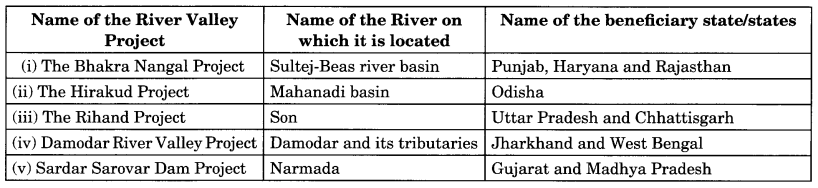
Complete the following table:
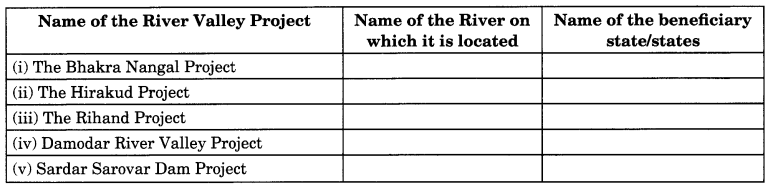
MCQ Questions for Class 10 Geography Chapter 3 Water Resources with Answers 1

Answer

Answer:
MCQ Questions for Class 10 Geography Chapter 3 Water Resources with Answers 2


Fill in the blanks:

1. Diversion channels are built in ………………. and ………………. regions of India.

Answer

Answer: hilly, mountainous


2. Drip irrigation system is a means of ………………. conservation.

Answer

Answer: water


3. Today dams are built for ………………. reasons.

Answer

Answer: multi-purpose


4. Different social groups do not have ………………. access to water.

Answer

Answer: equal


5. Multi-purpose projects were launched in India after ………………..

Answer

Answer: independence


We hope the given NCERT MCQ Questions for Class 10 Geography Chapter 3 Water Resources with Answers Pdf free download will help you. If you have any queries regarding Water Resources CBSE Class 10 Geography MCQs Multiple Choice Questions with Answers, drop a comment below and we will get back to you soon.
MCQ Questions for Class 10 Geography Chapter 2 Forest and Wildlife Resources with Answers

Check the below NCERT MCQ Questions for Class 10 Geography Chapter 2 Forest and Wildlife Resources with Answers Pdf free download. MCQ Questions for Class 10 Social Science with Answers were prepared based on the latest exam pattern. We have Provided Forest and Wildlife Resources Class 10 Geography MCQs Questions with Answers to help students understand the concept very well. https://mcqquestions.guru/mcq-questions-for-class-10-geography-chapter-2/

Forest and Wildlife Resources Class 10 MCQs Questions with Answers

Choose the correct option:

Forest And Wildlife Resources Class 10 MCQ Question 1.
Which one of the following is not considered a sacred tree in India
(a) Peepal
(b) Neem
(c) Banyan
(d) Mango

Answer

Answer: (b) Neem


Class 10 Geography Chapter 2 MCQ With Answers Question 2.
The Buxa Tiger Reserve in West Bengal has been threatened about the loss of habitat of many species due to
(a) Industrial development
(b) Agricultural expansion
(c) Port activities
(d) Mining

Answer

Answer: (d) Mining


Class 10 Geography Chapter 2 MCQ Question 3.
What was the aim of Chipko movement?
(a) Human rights
(b) Political rights
(c) Agricultural expansion
(d) Forest conservation

Answer

Answer: (d) Forest conservation


Geography Class 10 Chapter 2 MCQ Question 4.
The Mundas and Santhals of Chhota Nagpur region worship which one of the following trees?
(a) Mahua
(b) Mango
(c) Peepal
(d) Tamarind

Answer

Answer: (a) Mahua


Geography Chapter 2 Class 10 MCQ Question 5.
The species which are in danger of extinction are called:
(a) Vulnerable species
(b) Rare species
(c) Endangered species
(d) Normal species

Answer

Answer: (c) Endangered species


Ch 2 Geo Class 10 MCQ Question 6.
The Himalayan brown bear is an example of:
(a) Vulnerable species
(b) Rare species
(c) Endemic species
(d) Extinct species

Answer

Answer: (b) Rare species


MCQ Questions For Class 10 Geography Chapter 2 Question 7.
The Asian cheetah was declared extinct in India in the year:
(a) 1951
(b) 1952
(c) 2010
(d) 1975

Answer

Answer: (b) 1952


MCQ Of Chapter 2 Geography Class 10 Question 8.
The Himalayan yew is:
(a) an insect
(b) a medicinal plant
(c) a mammal
(d) a bird

Answer

Answer: (b) a medicinal plant


Geography Ch 2 Class 10 MCQ Question 9.
Teak monoculture has damaged the natural forests in:
(a) Ganga Plain
(b) South India
(c) Brahmaputra Plain
(d) None of the above

Answer

Answer: (b) South India


Class 10 Geo Ch 2 MCQ Question 10.
How many tiger reserves are there in India:
(a) 10
(b) 15
(c) 27
(d) 29

Answer

Answer: (c) 27


Ch 2 Geography Class 10 MCQ Question 11.
Which one of the following is not considered a sacred tree in India?
(a) Peepal
(b) Neem
(c) Banyan
(d) Mango

Answer

Answer: (b) Neem


Class 10th Geography Chapter 2 MCQ Question 12.
India has nearly …………… percent of total number of species in the world
(a) 5
(b) 10
(c) 8
(d) 2

Answer

Answer: (c) 8


Ncert Class 10 Geography Chapter 2 MCQ Question 13.
When was Asiatic Cheetah declared extinct in India?
(a) in 1958
(b) in 1989
(c) in 1922
(d) in 1952

Answer

Answer: (d) in 1952


Chapter 2 Geography Class 10 MCQ Question 14.
The Buxa Tiger Reserve is situated in which of the following states?
(a) Madhya Pradesh
(b) West Bengal
(c) Gujarat
(d) Orissa

Answer

Answer: (b) West Bengal


Class 10 Geo Chapter 2 MCQ Question 15.
How many species of flora are found in India?
(a) 81000
(b) 47000
(c) 15000
(d) 41000

Answer

Answer: (b) 47000


Question 16.
Sariska wildlife sanctuary is located in which state?
(a) Rajasthan
(b) Uttar Pradesh
(c) Gujarat
(d) West Bengal

Answer

Answer: (a) Rajasthan


Question 17.
Which one of the following belongs to vulnerable species?
(a) Black buck
(b) Crocodile
(c) Indian rhino
(d) Blue sheep

Answer

Answer: (d) Blue sheep


Question 18.
Which of the following types of species are known as the extinct species?
(a) Species whose population levels are normal
(b) Whose population has declined
(c) Species with small population
(d) Species which are not found

Answer

Answer: (d) Species which are not found


Question 19.
Which one of the following states has the largest area under permanent forests?
(a) Bihar
(b) Kerala
(c) Madhya Pradesh
(d) Uttar Pradesh

Answer

Answer: (c) Madhya Pradesh


Question 20.
Which of the following is an extinct species?
(a) Blue sheep
(b) Asiatic cheetah
(c) Black buck
(d) Asiatic elephant

Answer

Answer: (b) Asiatic cheetah


Question 21.
Forests and wastelands belonging to both private individuals and government are known as:
(a) Sacred groves
(b) Reserved forest
(c) Protected forests
(d) Unclassed forests

Answer

Answer: (d) Unclassed forests


Question 22.
Which of the following species was included for the first time in list of protected species in 1991?
(a) Insects
(b) Fishes
(c) Plants
(d) Reptiles

Answer

Answer: (c) Plants


Question 23.
In which of the following states, a very high percentage of its forests is managed by local communities?
(a) Jammu and Kashmir
(b) Arunachal Pradesh
(c) Andhra Pradesh
(d) Himachal Pradesh

Answer

Answer: (b) Arunachal Pradesh


Question 24.
What is the Himalayan Yew?
(a) A type of deer
(b) A medicinal plant
(c) A species of bird
(d) A food crop grown in the Himalayas

Answer

Answer: (b) A medicinal plant


Question 25.
Cleaning of forests is still continuing in Madhya Pradesh mainly due to which of the following reasons?
(a) Dolomite mining
(b) Commercial plantations
(c) Industrialisaiton and urbanisation
(d) Narmada Sagar (River Valley) Project

Answer

Answer: (d) Narmada Sagar (River Valley) Project


We hope the given NCERT MCQ Questions for Class 10 Geography Chapter 2 Forest and Wildlife Resources with Answers Pdf free download will help you. If you have any queries regarding Forest and Wildlife Resources CBSE Class 10 Geography MCQs Multiple Choice Questions with Answers, drop a comment below and we will get back to you soon.

MCQ Questions for Class 10 Geography Chapter 1 Resources and Development with Answers

Check the below NCERT MCQ Questions for Class 10 Geography Chapter 1 Resources and Development with Answers Pdf free download. MCQ Questions for Class 10 Social Science with Answers were prepared based on the latest exam pattern. We have Provided Resources and Development Class 10 Geography MCQs Questions with Answers to help students understand the concept very well. https://mcqquestions.guru/mcq-questions-for-class-10-geography-chapter-1/

Resources and Development Class 10 MCQs Questions with Answers

Choose the correct option:

Resources And Development Class 10 MCQ Question 1.
Which of the following methods does not help in soil conservation?
(a) Contour ploughing
(b) Strip cropping
(c) Creating shelter belts
(d) Ploughing up and down the slopes

Answer

Answer: (d) Ploughing up and down the slopes


Class 10 Geography Chapter 1 MCQ Question 2.
Which one of the following is a renewable resource?
(a) Coal
(b) Petroleum
(c) Solar energy
(d) Fossil fuels

Answer

Answer: (c) Solar energy


Class 10 Resources And Development MCQ Question 3.
The alluvial soil consists of
(a) sand
(b) silt
(c) clay
(d) all of the above

Answer

Answer: (d) all of the above


Resources And Development MCQ Question 4.
One of the following which does not check land degradation-
(a) control on overgrazing
(b) creating shelter belts
(c) deforestation
(d) afforestation

Answer

Answer: (c) deforestation


Resource And Development Class 10 MCQ Question 5.
Burial ground is a
(a) community owned resource
(b) national resource
(c) individual resource
(d) international resource

Answer

Answer: (a) community owned resource


Class 10 Geography Chapter 1 MCQ With Answers Question 6.
Laterite soil is very useful for growing:
(a) Rice, wheat and mustard
(b) Tea, coffee and cashewnut
(c) Pulses, sugarcane and resin
(d) None of the above

Answer

Answer: (b) Tea, coffee and cashewnut


Geography Class 10 Chapter 1 MCQ Question 7.
Black soil is deficient in
(a) Calcium carbonate
(b) Magnesium
(c) Potash
(d) Phosphoric contents

Answer

Answer: (d) Phosphoric contents


Resource And Development MCQ Question 8.
Which of the following soils has self-aeration capacity?
(a) Alluvial
(b) Red soil
(c) Black soil
(d) Mountain soil

Answer

Answer: (c) Black soil


Ch 1 Geo Class 10 MCQ Question 9.
Ploughing along the contour lines to decelerate the flow of water down the slopes is called:
(a) Strip cropping
(b) Sheet erosion
(c) Contour ploughing
(d) Terrace cultivation

Answer

Answer: (c) Contour ploughing


MCQ On Resources And Development Class 10 Question 10.
Which of the following is not a measure for soil conservation?
(a) Strip cropping
(b) Terrace cultivation
(c) Shelter belts
(d) Overdrawing of ground water

Answer

Answer: (d) Overdrawing of ground water


MCQ Questions For Class 10 Geography Chapter 1 Question 11.
Resources which are found in a region but have not been utilised are called
(a) developed resources
(b) stock
(c) international resources
(d) potential resources

Answer

Answer: (d) potential resources


Geography Chapter 1 Class 10 MCQ Question 12.
Which one of the following is the main cause of land degradation in Punjab?
(a) Extensive cultivation
(b) Deforestation
(c) Overgrazing
(d) Over-irrigation

Answer

Answer: (d) Over-irrigation


MCQ Of Resources And Development Question 13.
Soil formed by intense leaching is:
(a) alluvial soil
(b) red soil
(c) laterite soil
(d) desert soil

Answer

Answer: (c) laterite soil


MCQ Of Resources And Development Class 10 Question 14.
Which cold desert is relatively isolated from the rest of country?
(a) Leh
(b) Kargil
(c) Ladakh
(d) Dras

Answer

Answer: (c) Ladakh


Class 10 Geo Ch 1 MCQ Question 15.
Which one of the following is the main cause of land degradation in Punjab?
(a) Intensive Cultivation
(b) Overgrazing
(c) Deforestation
(d) Over-irrigation

Answer

Answer: (d) Over-irrigation


Question 16.
What is the percentage share of plains in the total land area?
(a) 43%
(b) 23%
(c) 33%
(d) 27%

Answer

Answer: (a) 43%


Question 17.
Which one of the following states mostly has laterite soil?
(a) Uttar Pradesh
(b) Bihar
(c) Rajasthan
(d) Meghalaya

Answer

Answer: (d) Meghalaya


Question 18.
There is enough for everybody’s need and not for any body’s greed,’’ who among the following has given the above statement?
(a) Vinoba Bhave
(b) Mahatma Gandhi
(c) Jawaharlal Nehru
(d) Atal Behari Vajpayee

Answer

Answer: (b) Mahatma Gandhi


Question 19.
Which one of the following is a Biotic Resource?
(a) Land
(b) Water
(c) Human beings
(d) Rocks

Answer

Answer: (c) Human beings


Question 20.
Which one of the following is not the community owned resource?
(a) Grazing grounds
(b) Burial grounds
(c) Village ponds
(d) Privately owned house

Answer

Answer: (d) Privately owned house


Question 21.
In which of the following states is overgrazing responsible for land degradation?
(a) Jharkhand and Orissa
(b) Madhya Pradesh and Rajasthan
(c) Punjab and Haryana
(d) Kerala and Tamil Nadu

Answer

Answer: (b) Madhya Pradesh and Rajasthan


Question 22.
How can the resources be classified on the basis of their origin?
(a) Biotic and Abiotic
(b) Renewable and Non-renewable
(c) Individual and Community
(d) Potential and Reserves

Answer

Answer: (a) Biotic and Abiotic


Question 23.
Which one of the following soil is ideal for growing cotton?
(a) Regur Soil
(b) Laterite Soil
(c) Desert Soil
(d) Mountainous Soil

Answer

Answer: (a) Regur Soil


Question 24.
Which among the following is a type of resources classified on the basis of exhaustibility?
(a) Biotic and abiotic
(b) Renewable and non-renewable
(c) National and individual
(d) Potential and reserves

Answer

Answer: (b) Renewable and non-renewable


Question 25.
What is arrangement of soil in different layers or horizons known as?
(a) Soil Composition
(b) Soil Erosion
(c) Soil Profile
(d) Soil Texture

Answer

Answer: (c) Soil Profile


We hope the given NCERT MCQ Questions for Class 10 Geography Chapter 1 Resources and Development with Answers Pdf free download will help you. If you have any queries regarding Resources and Development CBSE Class 10 Geography MCQs Multiple Choice Questions with Answers, drop a comment below and we will get back to you soon.

MCQ Questions for Class 10 History Chapter 8 Novels, Society and History with Answers

Check the below NCERT MCQ Questions for Class 10 History Chapter 8 Novels, Society and History with Answers Pdf free download. MCQ Questions for Class 10 Social Science with Answers were prepared based on the latest exam pattern. We have Provided Novels, Society and History Class 10 History MCQs Questions with Answers to help students understand the concept very well. https://mcqquestions.guru/mcq-questions-for-class-10-history-chapter-8/

Novels, Society and History Class 10 MCQs Questions with Answers

Choose the correct option:

History Of Novel MCQ Class 10 Question 1.
Love stories for adolescent girls first became popular in
(a) Britain
(b) the USA
(c) France
(d) Germany

Answer

Answer: (b) the USA


Historical Novel MCQ Questions Class 10 Question 2.
Treasure Island was written by
(a) Rudyard Kipling
(b) Thomas Hardy
(c) Charles Dickens
(d) R.L. Stevenson

Answer

Answer: (d) R.L. Stevenson


Class 10 History Chapter 8 MCQ With Answers Question 3.
Novels began to be written in Europe in the
(a) sixteenth century
(b) seventeenth century
(c) eighteenth century
(d) nineteenth century

Answer

Answer: (b) seventeenth century


Question 4.
Which one of the following was seriaised in a magazine?
(a) Jane Eyre
(b) The Mayor of Casterbridge
(c) Pickwick Papers
(d) All the Year Round

Answer

Answer: (c) Pickwick Papers


Question 5.
The first proper modern novel was
(a) Chandrakanta
(b) Pariksha-Guru
(c) Indirabai
(d) Indulekha

Answer

Answer: (b) Pariksha-Guru


Question 6.
Who wrote Sultana’s Dream?
(a) Rokeya Hossein
(b) Jarabai Shinde
(c) Pandita Ramabai
(d) Devaki-Nandan Khatri

Answer

Answer: (a) Rokeya Hossein


Question 7.
Who is known as the pioneer of modern Hindi literature?
(a) Bharatendu Harishchandra
(b) Premchand
(c) Ismat Chugtai
(d) Dharmavir Bharati

Answer

Answer: (a) Bharatendu Harishchandra


Question 8.
The first historical novel written in Bangali was –
(a) Titash Ekti Nadir Naam
(b) Anguriya Binimoy
(c) Padmarag
(d) Saraswativijayam

Answer

Answer: (b) Anguriya Binimoy


Question 9.
What was meant by ‘Vernacular’?
(a) Stylish writing
(b) Classical language
(c) Literary language
(d) Language of the common people

Answer

Answer: (d) Language of the common people


Question 10.
What was expressing in the novel Ramona?
(a) Love stories
(b) Adventure stories
(c) Comedy stories
(d) None of these

Answer

Answer: (a) Love stories
Explanation:
Ramona express the love stories written for adolescent girls by American women writers. It also first became popular in the period of 1884, especially in the US.


Question 11.
Which was the novels that became a great hit in the late 19th century?
(a) Treasure Island
(b) Jungle Book
(c) Both a and b
(d) None of these

Answer

Answer: (c) Both a and b
Explanation:
Books like R.L. Stevenson’s Treasure Island (1883) or Rudyard Kipling’s Jungle Book (1894) became great hits. They aroused the excitement and adventure of conquering strange lands.


Question 12.
Who was the writer of the novel ‘Mayor of Casterbridge’?
(a) Charles Dickens
(b) Thomas Hardy
(c) Walter Scott
(d) None of these

Answer

Answer: (b) Thomas Hardy
Explanation:
In his novel Mayor of Caster bridge, Thomas Hardy mourns about the loss of traditional rural communities, loss of a more personalised world and the old rural culture with its independent farmers dying out.


Question 13.
What was the hero of Daniel Defoe’s Robinson Crusoe is?
(a) Merchant
(b) Washerman
(c) An adventurer and slave trader
(d) None of these

Answer

Answer: (c) An adventurer and slave trader
Explanation:
The hero of Daniel Defoe’s Robinson Crusoe (1719) is an adventurer and slave trader. Shipwrecked on an island, Crusoe treats coloured people not as human beings equal to him, but as inferior creatures.


Question 14.
What do you mean by ‘serialised novel’?
(a) A cheap, illustrated novel
(b) A novel published in a magazine
(c) A format in which the story is published in instalments
(d) All of these

Answer

Answer: (c) A format in which the story is published in instalments
Explanation:
A format in which the story is published in instalments, each part in a new issue of a journal. In 1836 a notable event took place when Charles Dickens’s Pickwick Papers was serialised in a magazine.


Question 15.
Which was the first major historical novel written in Assamese?
(a) Karuna
(b) Manomati
(c) Phulmoni
(d) None of these

Answer

Answer: (b) Manomati
Explanation:
Rajanikanta Bardoloi wrote the first major historical novel in Assam called Manomati (1900). It is set in the Burmese invasion stories about old soldiers who had fought in the 1819 campaign.


Question 16.
Which was the Bengali novels translated into Assamese by missionaries?
(a) Phulmoni
(b) Karuna
(c) both a and b
(d) None of these

Answer

Answer: (c) both a and b
Explanation:
The first novels in Assam were written by missionaries. Two of them were translations of Bengali including Phulmoni and Karuna.


Question 17.
Who was the writer of ‘Chandrakanta’?
(a) Chandu Menon
(b) Kandukuri Viresalingam
(c) Devaki Nandan Khatri
(d) None of these

Answer

Answer: (c) Devaki Nandan Khatri
Explanation:
The writings of Devaki Nandan Khatri created a novel reading public in Hindi. His best-seller, Chandrakanta is a romance with dazzling elements of fantasy and is believed to have contributed immensely in popularising the Hindi language.


Question 18.
Which is the first proper modern novel in Hindi?
(a) Pariksha Guru
(b) Bharatendu Harishchandra
(c) Ramayana
(d) None of these

Answer

Answer: (a) Pariksha Guru
Explanation:
Pariksha Guru, published in 1882, written by Srinivas Das of Delhi is the first proper modern novel in Hindi. It cautioned young men of well-to-do families against the dangerous influences of bad company and consequent loose morals.


Question 19.
Which was the earliest novel in Marathi?
(a) Mochongadh
(b) Muktamala
(c) Yamuna Paryatan
(d) None of these

Answer

Answer: (c) Yamuna Paryatan
Explanation:
The earliest novel in Marathi was Baba Padmanji’s Yamuna Paryatan (1857), which used a simple style of storytelling to speak about the plight of widows.


Question 20.
Who was the writer of ‘Sevasadan’?
(a) Premchand
(b) Bankim Chandra
(c) Sarat Chandra
(d) None of these

Answer

Answer: (a) Premchand
Explanation:
Premchand in 1916 wrote Sevasadan. Many critics think that his novel Sewasadan (The Abode of Service), lifted the Hindi novel from the realm of fantasy, moralising and simple entertainment.


Question 21.
Who was the writer of Jungle book?
(a) R. L. Stevenson
(b) Rudyard Kipling
(c) R. K. Narayan
(d) Charles Dickens

Answer

Answer: (b) Rudyard Kipling
Explanation:
Rudyard Kipling wrote Jungle Book in 1894 and it became great hit at that time.


Question 22.
Who was the writer of ‘Indulekha’?
(a) Chandu Menon
(b) Srinivas Das
(c) Raja Ravi Verma
(d) None of these

Answer

Answer: (a) Chandu Menon
Explanation:
The delightful novel of Chandu Menon was called Indulekha which published in 1889, was the first modern novel in Malayalam.


Question 23.
Who was the writer of the novel ‘Hard Times’?
(a) Thomas Hardy
(b) Jane Austen
(c) Charles Dickens
(d) None of these

Answer

Answer: (c) Charles Dickens
Explanation:
Charles Dickens wrote about the terrible effects of industrialisation on people’s lives and characters. His novel Hard Times (1854) describes Coketown, a fictitious industrial town, as a grim place full of machinery and many more.


Question 24.
What do you mean by ‘Meyeli’?
(a) The language associated with women’s speech
(b) The new style used by Bengali novel, a colloquial style associated with urban life
(c) The simple Bengali used by the poor and illiterate
(d) None of these

Answer

Answer: (a) The language associated with women’s speech
Explanation:
Meyeli is the language associated with women’s speech. This style was quickly replaced by Bankim’s prose which was Sanskritised but also contained a more vernacular style.


Source-based Questions:

Question 1.
Read the extract (Source A) taken from Textbook page 194 and then answer the questions that follow:

Why women should not read novels

From a Tamil essay published in 1927:

‘Dear children, don’t read these novels, don’t even touch them. Your life will be ruined. You will suffer disease and ailments. Why did the good Lord make you – to wither away at a tender age? To suffer in disease? To be despised by your brothers, relatives and those around you? No. No. You must become mothers; you must lead happy lives; this is the divine purpose. You who were born to fulfil this sublime goal, should you ruin your life by going crazy after despicable novels?’

Essay by Thiru. Vi, Ka, Translated by A.R, Venkatachalapathy

(i) What message is given to children in the above extract?
(ii) How are girls seen here?
(iii) Name one woman novelist who did not popularise the domestic role of women? Also name her novel.

Answer

Answer:
(i) Children have been told not to read novels. It will ruin their lives.
(ii) Girls have been told not to read novels but to lead happy lives only. This is the divine purpose of life.
(iii) Rokeya Hossein. Novel ‘Sultana’s Dream’.


Picture Based Questions:

Question 1.
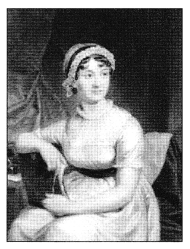
Study the picture (NCERT TB page 184) and answer the question’s that follow:
MCQ Questions for Class 10 History Chapter 8 Novels, Society and History with Answers 1
(i) Who is she? Name one of the famous novels written by her.
(ii) How does she portray women in her novels?

Answer

Answer:
(i) She is Jane Austen. “Pride and Prejudice” is one of her famous novels.
(ii) She gives us a glimpse of the world of woman in genteel rural society in early nineteenth century Britain. It makes us think about a society which encouraged woman to look for good marriages and wealthy husbands.


We hope the given NCERT MCQ Questions for Class 10 History Chapter 8 Novels, Society and History with Answers Pdf free download will help you. If you have any queries regarding Novels, Society and History CBSE Class 10 History MCQs Multiple Choice Questions with Answers, drop a comment below and we will get back to you soon.

MCQ Questions for Class 10 History Chapter 7 Print Culture and the Modern World with Answers

Check the below NCERT MCQ Questions for Class 10 History Chapter 7 Print Culture and the Modern World with Answers Pdf free download. MCQ Questions for Class 10 Social Science with Answers were prepared based on the latest exam pattern. We have Provided Print Culture and the Modern World Class 10 History MCQs Questions with Answers to help students understand the concept very well. https://mcqquestions.guru/mcq-questions-for-class-10-history-chapter-7/

Print Culture and the Modern World Class 10 MCQs Questions with Answers

Choose the correct option:

Class 10 History Chapter 7 MCQ With Answers Question 1.
Which problem has been raised in Gulamgiri?
(a) The injustices of caste system
(b) Excessive drinking among the poor
(c) The miserable lives of upper-caste Hindu women
(d) Widow immolation

Answer

Answer: (a) The injustices of caste system


Print Culture And The Modern World MCQ Question 2.
The Bengal Gazette was edited by
(a) Gangadhar Bhattacharya
(b) Raja Rammohun Roy
(c) James Augustus Hickey
(d) Richard M. Hoe

Answer

Answer: (c) James Augustus Hickey


Print Culture And The Modern World Class 10 MCQ Question 3.
The earliest kind of print technology was developed in China, Japan and
(a) Korea
(b) France
(c) India
(d) England

Answer

Answer: (a) Korea


Print Culture And The Modern World MCQ With Answers Question 4.
Who said, “Printing is the ultimate gift of God and the greatest one.”?
(a) Charles Dickens
(b) Louise-Sebastien Mercier
(c) Mahatma Gandhi
(d) Martin Luther

Answer

Answer: (d) Martin Luther


Print Culture And Modern World MCQ Question 5.
Diomond Sultra is the oldest printed book of
(a) Korea
(b) India
(c) Japan
(d) China

Answer

Answer: (c) Japan


MCQ On Print Culture And The Modern World Question 6.
Martin Luther was a/an
(a) social reformer
(b) religious reformer
(c) environmentalist
(d) educationist

Answer

Answer: (b) religious reformer


Print Culture And The Modern World Class 10 MCQ With Answers Question 7.
Penny magazines were especially meant for
(a) children
(b) factory workers
(c) women
(d) elite class

Answer

Answer: (c) women


Class 10 History Chapter 7 Questions And Answers Question 8.
What made Governor-General Warren Hastings persecute James Hickey who edited the Bengal Gazette?
(a) He published articles supporting Indian nationalist leaders.
(b) He published advertisements related to import and sale of slaves.
(c) He published anti-religious articles.
(d) He published gossip about senior East India Company officials.

Answer

Answer: (d) He published gossip about senior East India Company officials.


Printer Option Is Available In MCQ Question 9.
The main theme of the book ‘Chhote aur Bade Ka Sawal’ written by Kashibaba, a Kanpur mill worker, was:
(a) The life of the elite upper castes.
(b) The link between caste and class exploitation.
(c) Restrictions on the Vernacular Press.
(d) Injustices of the caste system.

Answer

Answer: (b) The link between caste and class exploitation.


Class 7 History Chapter 10 MCQ Questions Question 10.
Why was the Vernacular Press Act passed by the British Government in India?
(a) The Vernacular Act was passed to promote vernacular languages.
(b) The Vernacular Act was passed by the British government to put some check on vernacular newspapers which had become assertively nationalist.
(c) The Vernacular Act was passed to please the Indians who wanted to promote Indian languages.
(d) The Vernacular Act was passed to consolidate British rule in India.

Answer

Answer: (b) The Vernacular Act was passed by the British government to put some check on vernacular newspapers which had become assertively nationalist.


Question 11.
What do you mean by the term ‘Galley’?
(a) A metal frame in which types are laid and the text composed
(b) A corridor
(c) A scarecrow
(d) None of these

Answer

Answer: (a) A metal frame in which types are laid and the text composed
Explanation:
Galley is the metal frame in which types are laid and the text composed.


Question 12.
Who was the first to use wood-block printing?
(a) Indian
(b) French
(c) Spaniards
(d) None of these

Answer

Answer: (c) Spaniards
Explanation:
The first to use wood-block printing were the Spaniards. By the early fifteenth century, woodblocks were being widely used in Europe to print textiles, playing cards, and religious pictures with simple, brief texts.


Question 13.
Who was Kitagawa Utamaro?
(a) A Japanese artist
(b) An Indian artist
(c) An Korean artist
(d) None of these

Answer

Answer: (a) A Japanese artist
Explanation:
Kitagawa Utamaro was a Japanese artist born in Edo in 1753, famous for his contribution to an art form called ‘Ukiyo’ which influenced European artists like Manet, Monet and Van Gogh.


Question 14.
What do you mean by the term ‘Calligraph’?
(a) The art of beautiful printing
(b) The art of beautiful hand printing
(c) The art of beautiful and stylised writing
(d) None of these

Answer

Answer: (c) The art of beautiful and stylised writing
Explanation:
The term Calligraph means the art of beautiful and stylised writing. Superbly skilled craftsmen could duplicate, with remarkable accuracy, as the beauty of calligraphy.


Question 15.
Who was known for an art form called ukiyo?
(a) Chinz ho
(b) Kitagawa Utamaro
(c) Gutenberg
(d) None of these

Answer

Answer: (b) Kitagawa Utamaro
Explanation:
Kitagawa Utamaro, born in Edo in 1753, was widely known for his contributions to an art form called ukiyo ‘pictures of the floating world’


Question 16.
What was the first book printed by Gutenberg?
(a) Bible
(b) Ramayana
(c) Chapbook
(d) None of these

Answer

Answer: (a) Bible
Explanation:
The first printing press in Europe is invented by Johann Gutenberg in 1448. The first book he printed was the Bible. About 180 copies were printed at that time.


Question 17.
What was the ancient name of Tokyo?
(a) Edo
(b) Osaka
(c) Gifu
(d) None of these

Answer

Answer: (a) Edo
Explanation:
Edo was the ancient name of Tokyo. In the late eighteenth century, the flourishing urban circles at Edo (later to be known as Tokyo), and illustrated collections of paintings.


Question 18.
What was the ‘Bengal Gazette’?
(a) First English magazine
(b) English Hindi mixed magazine
(c) A weekly Hindi magazine
(d) A weekly English magazine

Answer

Answer: (d) A weekly English magazine
Explanation:
Bengal Gazette was a weekly English magazine edited by James Hickey from 1780, described as a commercial paper open to all, and influenced by none.


Question 19.
Which is not an innovation of the 20th century?
(a) Cheap paperback editions
(b) The dust cover
(c) Important novels were serialised
(d) None of these

Answer

Answer: (c) Important novels were serialised
Explanation:
Printers and publishers developed new strategies to sell their products. Important novels were serialised, which led to a new way of writing novels. It is not an innovation of the20th century.


Question 20.
What was Protestant Reformation?
(a) A challenge to the authority of Rome
(b) Movement to reform the Catholic Church
(c) A new religion
(d) None of these

Answer

Answer: (b) Movement to reform the Catholic Church
Explanation:
Protestant Reformation was a 16th century movement to reform the Catholic Church dominated by Rome. Martin Luther was one of the main Protestant reformers. Several traditions of anti-Catholic Christianity developed out of the movement.


Question 21.
Who spoke these words “Printing is the ultimate gift of God and the greatest one.”?
(a) Johann Gutenberg
(b) Jawahar lal Nehru
(c) martin Luther
(d) None of these

Answer

Answer: (c) martin Luther
Explanation:
Deeply grateful to print, Luther said, ‘Printing is the ultimate gift of God and the greatest one.’ Several scholars, in fact, think that print brought about a new intellectual atmosphere and helped spread the new ideas that led to the Reformation.


Question 22.
The book, ‘Chote Aur Bade Ka Sawal’ talked about which social reforms?
(a) The link between caste and class exploitation
(b) The injustices of the caste system
(c) Restrictions on the vernacular press
(d) Ill treatment of widows

Answer

Answer: (a) The link between caste and class exploitation
Explanation:
Kashibaba, a Kanpur millworker, wrote and published Chhote Aur Bade Ka Sawal in 1938 to show the links between caste and class exploitation.


Question 23.
Which book was carried by petty pedlars and sold for a penny?
(a) Novels
(b) Magazines
(c) Chapbook
(d) None of these

Answer

Answer: (c) Chapbook
Explanation:
In England, penny chapbooks were carried by petty pedlars known as chapmen, and sold for a penny, so that even the poor could buy them.


Question 24.
When was the Paperback editions of books were introduced?
(a) The onset of the Great Depression
(b) The First World War
(c) The Second World War
(d) None of these

Answer

Answer: (a) The onset of the Great Depression
Explanation:
The Paperback editions of books were introduced during the onset of the Great depression. To sustain buying, all brought out cheap paperback editions.


Question 25.
Who introduced the first printing press in India?
(a) East India company
(b) Arabic traders
(c) Portuguese missionaries
(d) None of these

Answer

Answer: (c) Portuguese missionaries
Explanation:
The printing press was first introduced in India by Portuguese missionaries.


Picture Based Questions

Question 1.
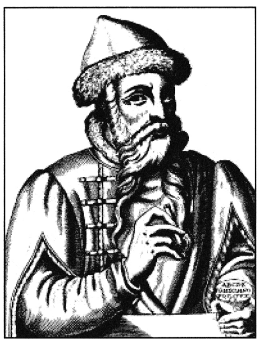
Study the picture (NCERT TB page 157). Identify the personality and answer the questions that follow:
MCQ Questions for Class 10 History Chapter 7 Print Culture and the Modern World with Answers 1
(i) Who is he? Which country did he belong to?
(ii) What did he invent? When?
(iii) Name the first book that he printed.

Answer

Answer:
(i) He is Johann Gutenberg. He belonged to Germany.
(ii) He invented printing press in 1430’s.
(iii) The Bible.


Source Based Questions

Question 1.
Read the extract (Source E) taken from Textbook page 172 and then answer the questions that follow:

In 1926, Begum Rokeya Sakhawat Hossein, a noted educationist and literary figure, strongly condemned men for withholding education from women in the name of religion as she addressed the Bengal Women’s Education Conference:

‘The opponents of female education say that women will become unruly… Fie! They call themselves Muslims and yet go against the basic tenet of Islam which gives Women an equal right to education. If men are not led astray once educated, why should women?’

(i) Who was Begum Rokeya Hossein?
(ii) Why did she condemn men?
(iii) What was her opinion about women’s education?

Answer

Answer:
(i) Begum Rokeya Hossein was a noted educationist and literary figure.
(ii) She condemned men for withholding education from women in the name of religion.
(iii) She opined that women must be given education. They must be given an equal right to education.


We hope the given NCERT MCQ Questions for Class 10 History Chapter 7 Print Culture and the Modern World with Answers Pdf free download will help you. If you have any queries regarding Print Culture and the Modern World CBSE Class 10 History MCQs Multiple Choice Questions with Answers, drop a comment below and we will get back to you soon.