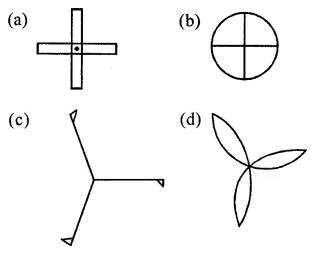
ML Aggarwal Class 8 Solutions for ICSE Maths Chapter 17 Visualising Solid Shapes Objective Type Questions

ML Aggarwal Class 8 Solutions for ICSE Maths Chapter 17 Visualising Solid Shapes Objective Type Questions

Mental Maths
Question 1.
Fill in the blanks:
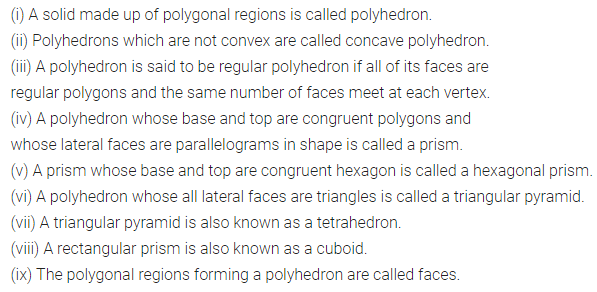
(i) A solid made up of polygonal regions is called ………
(ii) Polyhedrons which are not convex are called ………
(iii) A polyhedron is said to be ……… if all of its faces are regular polygons and the same number of faces meet at each vertex.
(iv) A polyhedron whose base and top are congruent polygons and whose lateral faces are parallelograms in shape is called a ………
(v) A prism whose base and top are congruent hexagon is called a ………
(vi) A polyhedron whose all lateral faces are triangles is called a ………
(vii) A triangular pyramid is also known as ………
(viii) A rectangular prism is also known as ………
(ix) The polygonal regions forming a polyhedron are called ………
Solution:
ML Aggarwal Class 8 Solutions for ICSE Maths Chapter 17 Visualising Solid Shapes Objective Type Questions 1

Question 2.
State which of the following statements are true (T) or false (F):
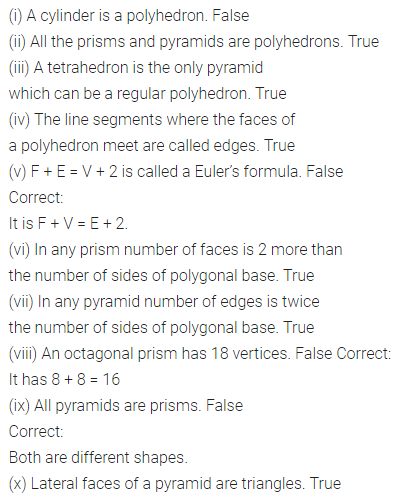
(i) A cylinder is a polyhedron.
(ii) All the prisms and pyramids are polyhedrons.
(iii) A tetrahedron is the only pyramid which can be a regular polyhedron.
(iv) The line segments where the faces of a polyhedron meet are called edges.
(v) F + E = V + 2 is called a Euler’s formula.
(vi) In any prism number of faces is 2 more than number of sides of polygonal base.
(vii) In any pyramid number of edges is twice the number of sides of polygonal base.
(viii) An octagonal prism has 18 vertices.
(ix) All pyramids are prisms.
(x) Lateral faces of a pyramid are triangles.
Solution:
ML Aggarwal Class 8 Solutions for ICSE Maths Chapter 17 Visualising Solid Shapes Objective Type Questions 2

Multiple Choice Questions
Choose the correct answer from the given four options (3 to 17):
Question 3.
Which of the following is not a 2-dimensional shape?
(a) Triangle
(b) Circle
(c) Sphere
(d) Rectangle
Solution:

ML Aggarwal Class 8 Solutions for ICSE Maths Chapter 17 Visualising Solid Shapes Objective Type Questions 3

Question 4.
Which of the following is a 3-dimensional shape?
(a) Parallelogram
(b) Cylinder
(c) Square
(d) none of these
Solution:

ML Aggarwal Class 8 Solutions for ICSE Maths Chapter 17 Visualising Solid Shapes Objective Type Questions 4

Question 5.
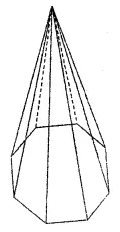
Name the pyramid shown in the given figure.
ML Aggarwal Class 8 Solutions for ICSE Maths Chapter 17 Visualising Solid Shapes Objective Type Questions 5
(a) Nonagonal pyramid
(b) Octagonal pyramid
(c) Decagonal pyramid
(d) Hexagonal pyramid
Solution:

ML Aggarwal Class 8 Solutions for ICSE Maths Chapter 17 Visualising Solid Shapes Objective Type Questions 6

Question 6.
How many parallel and congruent faces does a cylinder have?
(a) 4
(b) 3
(c) 2
(d) none
Solution:

ML Aggarwal Class 8 Solutions for ICSE Maths Chapter 17 Visualising Solid Shapes Objective Type Questions 7

Question 7.
How many pairs of congruent parallel faces does a rectangular prism have?
(a) 8
(b) 6
(c) 4
(d) 3
Solution:

ML Aggarwal Class 8 Solutions for ICSE Maths Chapter 17 Visualising Solid Shapes Objective Type Questions 8

Question 8.
How many congruent isosceles triangles does a square pyramid have?
(a) 2
(b) 4
(c) 6
(d) 8
Solution:

ML Aggarwal Class 8 Solutions for ICSE Maths Chapter 17 Visualising Solid Shapes Objective Type Questions 9

Question 9.
Which amongst the following is not a polyhedron?
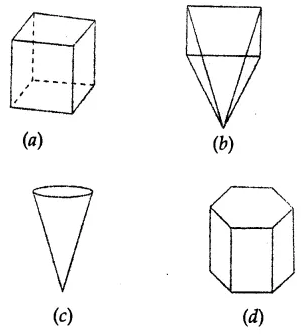
ML Aggarwal Class 8 Solutions for ICSE Maths Chapter 17 Visualising Solid Shapes Objective Type Questions 10
Solution:
ML Aggarwal Class 8 Solutions for ICSE Maths Chapter 17 Visualising Solid Shapes Objective Type Questions 11

Question 10.
Which of the following is not a prism?
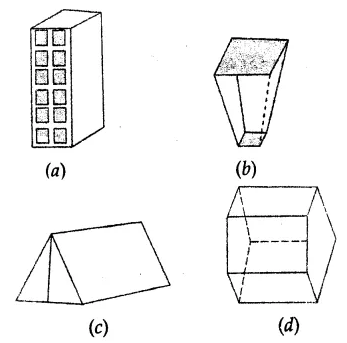
ML Aggarwal Class 8 Solutions for ICSE Maths Chapter 17 Visualising Solid Shapes Objective Type Questions 12
Solution:
ML Aggarwal Class 8 Solutions for ICSE Maths Chapter 17 Visualising Solid Shapes Objective Type Questions 13

Question 11.
The number of triangular faces of a triangular prism is
(a) 2
(b) 3
(c) 4
(d) 5
Solution:

ML Aggarwal Class 8 Solutions for ICSE Maths Chapter 17 Visualising Solid Shapes Objective Type Questions 14

Question 12.
The number of edges in a pentagonal pyramid is
(a) 5
(b) 10
(c) 15
(d) 20
Solution:

ML Aggarwal Class 8 Solutions for ICSE Maths Chapter 17 Visualising Solid Shapes Objective Type Questions 15

Question 13.
The number of rectangular faces in a hexagonal prism is
(a) 6
(b) 8
(c) 10
(d) 12
Solution:

ML Aggarwal Class 8 Solutions for ICSE Maths Chapter 17 Visualising Solid Shapes Objective Type Questions 16

Question 14.
In a polyhedron E = 15, V = 10, then F is
(a) 3
(b) 5
(c) 7
(d) 9
Solution:
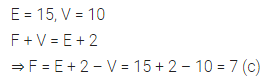
ML Aggarwal Class 8 Solutions for ICSE Maths Chapter 17 Visualising Solid Shapes Objective Type Questions 17

Question 15.
In a polyhedron F = 5, E = 8, then V is
(a) 3
(b) 5
(c) 7
(d) 9
Solution:
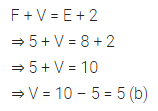
ML Aggarwal Class 8 Solutions for ICSE Maths Chapter 17 Visualising Solid Shapes Objective Type Questions 18

Question 16.
In a polyhedron F = 17, V = 30, then E is
(a) 30
(b) 45
(c) 60
(d) none of these
Solution:
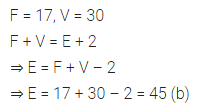
ML Aggarwal Class 8 Solutions for ICSE Maths Chapter 17 Visualising Solid Shapes Objective Type Questions 19

Question 17.
A polyhedron has 4 faces, 4 vertices and 6 edges. Name the polyhedron.
(a) A rectangular prism
(b) A triangular prism
(c) A rectangular pyramid
(d) A triangular pyramid
Solution:

ML Aggarwal Class 8 Solutions for ICSE Maths Chapter 17 Visualising Solid Shapes Objective Type Questions 20

Higher Order Thinking Skills (Hots)
Question 1.
Which of the following nets can be folded to form a cone?
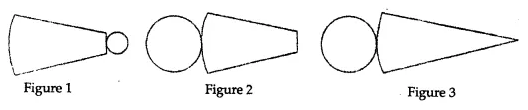
ML Aggarwal Class 8 Solutions for ICSE Maths Chapter 17 Visualising Solid Shapes Objective Type Questions 21
Solution:
ML Aggarwal Class 8 Solutions for ICSE Maths Chapter 17 Visualising Solid Shapes Objective Type Questions 22

Question 2.
Which of the following nets can be folded to form a cylinder?
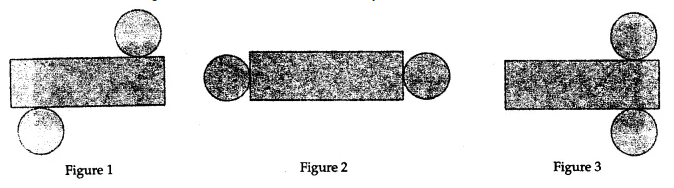
ML Aggarwal Class 8 Solutions for ICSE Maths Chapter 17 Visualising Solid Shapes Objective Type Questions 23
Solution:
ML Aggarwal Class 8 Solutions for ICSE Maths Chapter 17 Visualising Solid Shapes Objective Type Questions 24

ML Aggarwal Class 8 Solutions for ICSE Maths

ML Aggarwal Class 8 Solutions for ICSE Maths Chapter 17 Visualising Solid Shapes Ex 17.2

ML Aggarwal Class 8 Solutions for ICSE Maths Chapter 17 Visualising Solid Shapes Ex 17.2

Question 1.
Can a polyhedron have for its faces
(i) 3 triangles?
(ii) 4 triangles?
(iii) a square and four triangles?
Solution:
ML Aggarwal Class 8 Solutions for ICSE Maths Chapter 17 Visualising Solid Shapes Ex 17.2 1

Question 2.
Which are prisms among the following?
ML Aggarwal Class 8 Solutions for ICSE Maths Chapter 17 Visualising Solid Shapes Ex 17.2 2
Solution:
ML Aggarwal Class 8 Solutions for ICSE Maths Chapter 17 Visualising Solid Shapes Ex 17.2 3

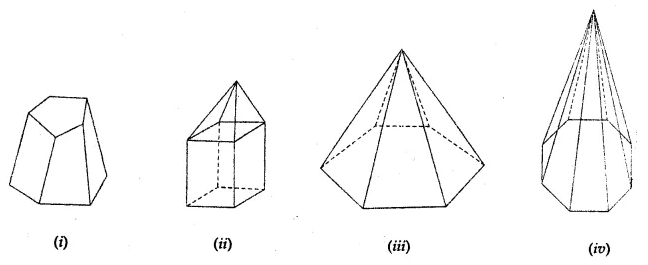
Question 3.
Verify Euler’s formula for these solids:
ML Aggarwal Class 8 Solutions for ICSE Maths Chapter 17 Visualising Solid Shapes Ex 17.2 4
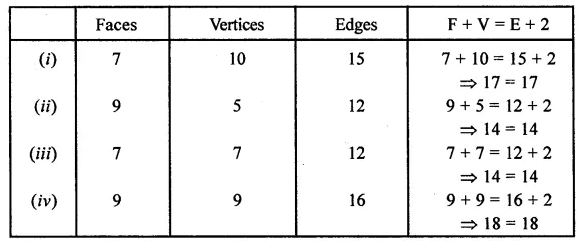
Solution:
ML Aggarwal Class 8 Solutions for ICSE Maths Chapter 17 Visualising Solid Shapes Ex 17.2 5

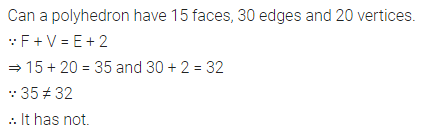
Question 4.
Can a polyhedron have 15 faces, 30 edges and 20 vertices?
Solution:
ML Aggarwal Class 8 Solutions for ICSE Maths Chapter 17 Visualising Solid Shapes Ex 17.2 6

Question 5.
If a polyhedron has 8 faces and 8 vertices, find the number of edges.
Solution:
ML Aggarwal Class 8 Solutions for ICSE Maths Chapter 17 Visualising Solid Shapes Ex 17.2 7
Question 6.
If a polyhedron has 7 faces and 10 vertices, find the number of edges.
Solution:
ML Aggarwal Class 8 Solutions for ICSE Maths Chapter 17 Visualising Solid Shapes Ex 17.2 8
Question 7.
Write the number of faces, vertices and edges in
(i) an octagonal prism
(ii) decagonal pyramid.
Solution:
ML Aggarwal Class 8 Solutions for ICSE Maths Chapter 17 Visualising Solid Shapes Ex 17.2 9

Question 8.
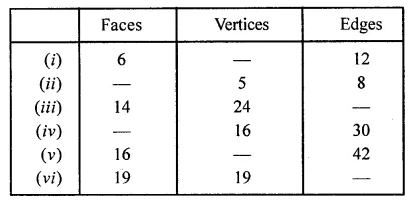
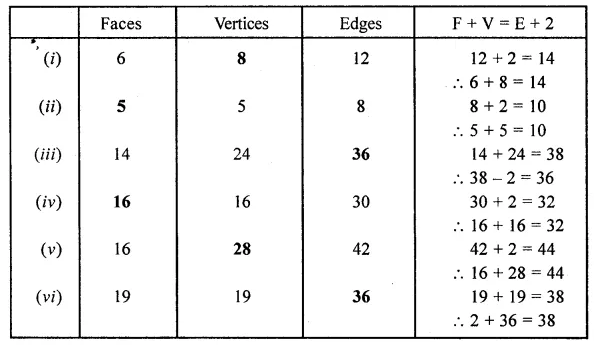
Using Euler’s formula, complete the following table:
ML Aggarwal Class 8 Solutions for ICSE Maths Chapter 17 Visualising Solid Shapes Ex 17.2 10
Solution:
ML Aggarwal Class 8 Solutions for ICSE Maths Chapter 17 Visualising Solid Shapes Ex 17.2 11

ML Aggarwal Class 8 Solutions for ICSE Maths

ML Aggarwal Class 8 Solutions for ICSE Maths Chapter 17 Visualising Solid Shapes Ex 17.1

ML Aggarwal Class 8 Solutions for ICSE Maths Chapter 17 Visualising Solid Shapes Ex 17.1

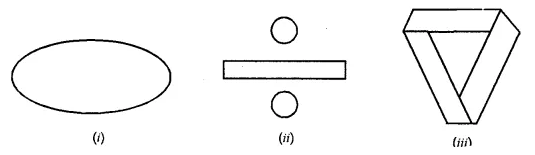
Question 1.
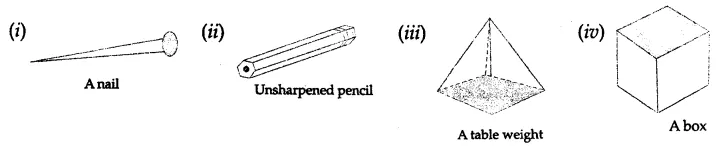
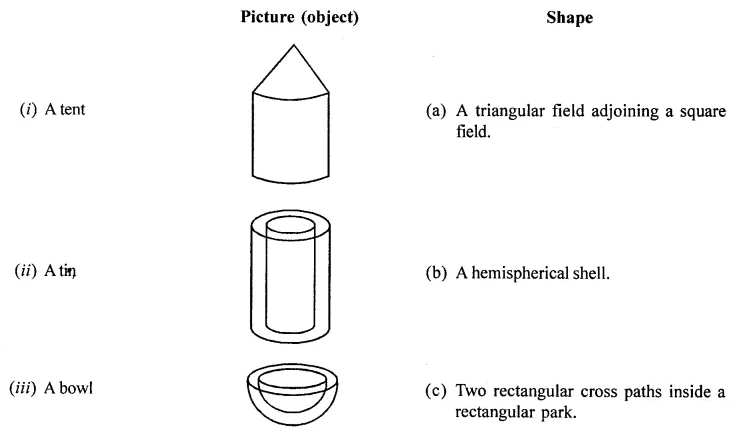
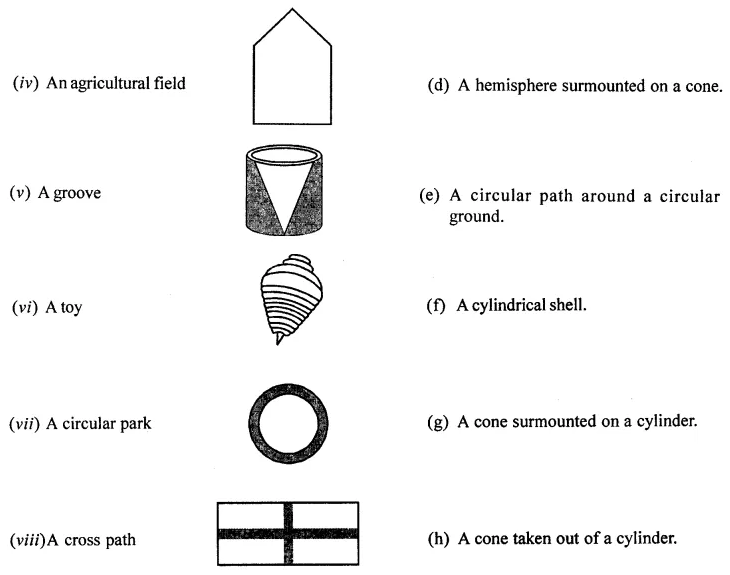
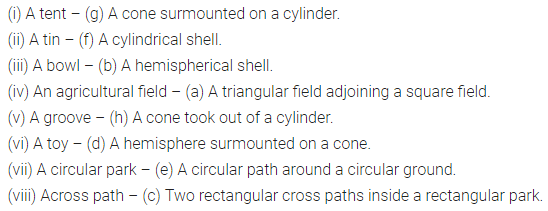
Match the objects with their shapes:
ML Aggarwal Class 8 Solutions for ICSE Maths Chapter 17 Visualising Solid Shapes Ex 17.1 1
ML Aggarwal Class 8 Solutions for ICSE Maths Chapter 17 Visualising Solid Shapes Ex 17.1 2
Solution:
ML Aggarwal Class 8 Solutions for ICSE Maths Chapter 17 Visualising Solid Shapes Ex 17.1 3

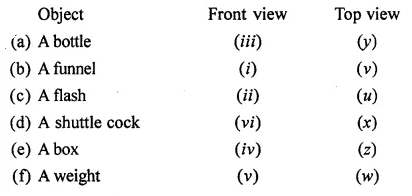
Question 2.
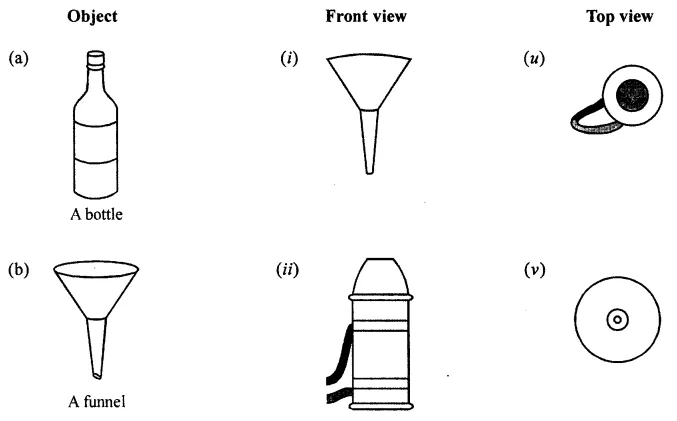
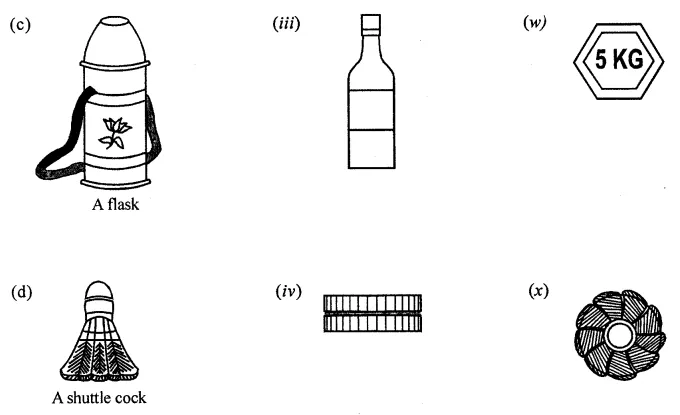
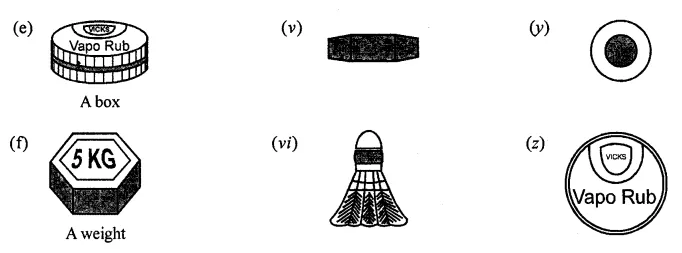
For each of the given solid, the two views are given. Match for each solid the corresponding front and top views.
ML Aggarwal Class 8 Solutions for ICSE Maths Chapter 17 Visualising Solid Shapes Ex 17.1 4
ML Aggarwal Class 8 Solutions for ICSE Maths Chapter 17 Visualising Solid Shapes Ex 17.1 5
ML Aggarwal Class 8 Solutions for ICSE Maths Chapter 17 Visualising Solid Shapes Ex 17.1 6
Solution:
ML Aggarwal Class 8 Solutions for ICSE Maths Chapter 17 Visualising Solid Shapes Ex 17.1 7

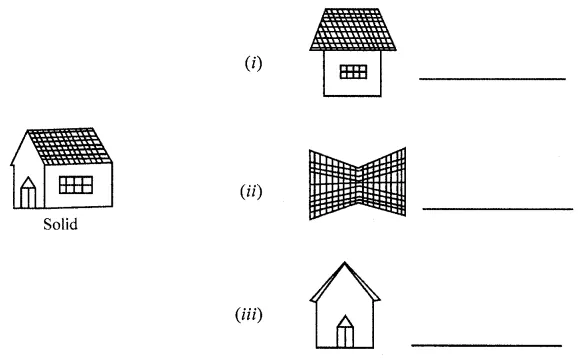
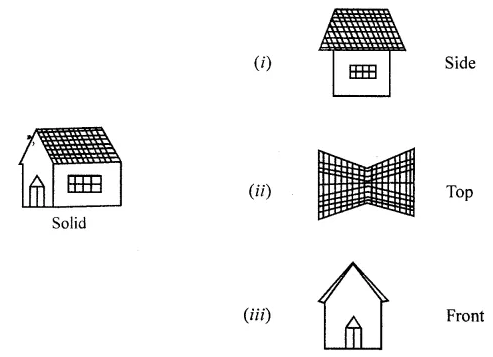
Question 3.
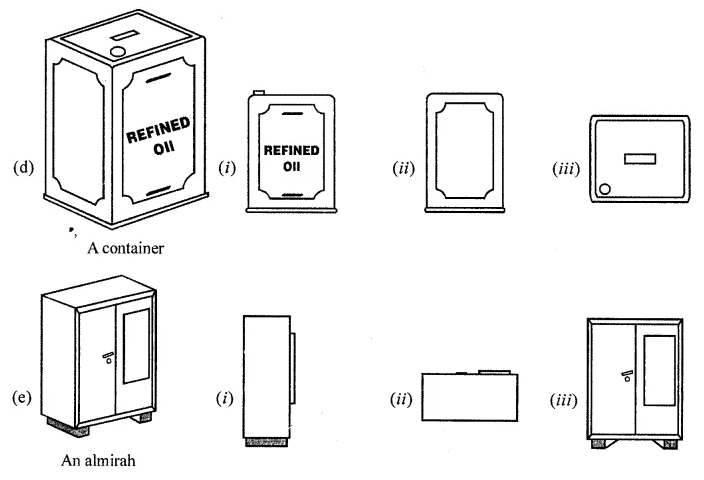
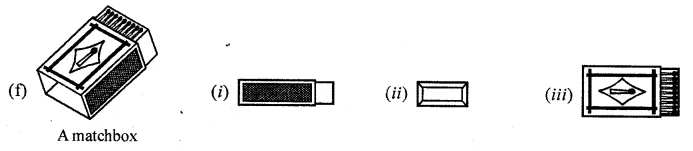
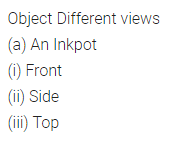
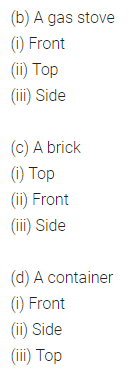
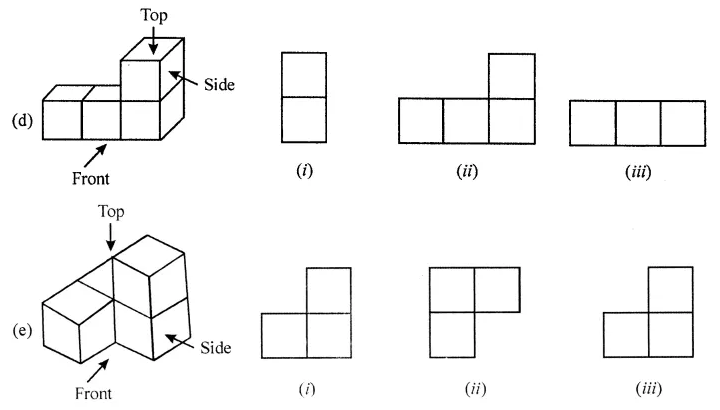
For the given solid, identify the front, side and top views and write it in the space provided.
ML Aggarwal Class 8 Solutions for ICSE Maths Chapter 17 Visualising Solid Shapes Ex 17.1 8
Solution:
ML Aggarwal Class 8 Solutions for ICSE Maths Chapter 17 Visualising Solid Shapes Ex 17.1 9

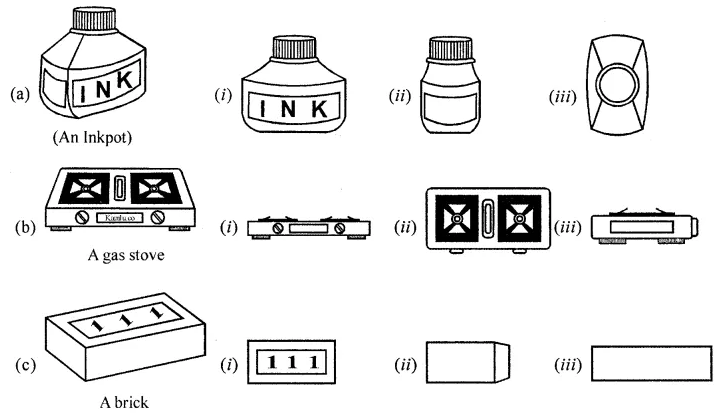
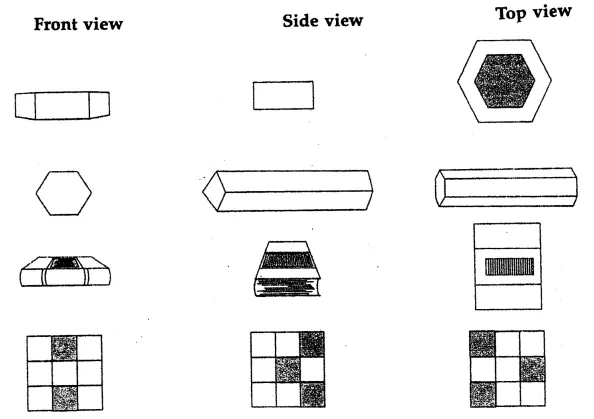
Question 4.
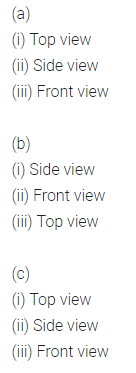
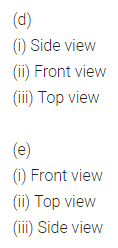
For each of the given solid, the three views are given. Identify for each solid the corresponding top, front and side views.
ML Aggarwal Class 8 Solutions for ICSE Maths Chapter 17 Visualising Solid Shapes Ex 17.1 10
ML Aggarwal Class 8 Solutions for ICSE Maths Chapter 17 Visualising Solid Shapes Ex 17.1 11
ML Aggarwal Class 8 Solutions for ICSE Maths Chapter 17 Visualising Solid Shapes Ex 17.1 12
Solution:
ML Aggarwal Class 8 Solutions for ICSE Maths Chapter 17 Visualising Solid Shapes Ex 17.1 13
ML Aggarwal Class 8 Solutions for ICSE Maths Chapter 17 Visualising Solid Shapes Ex 17.1 14
ML Aggarwal Class 8 Solutions for ICSE Maths Chapter 17 Visualising Solid Shapes Ex 17.1 15

Question 5.
For each given solid, identify the top view, front view and side view.
ML Aggarwal Class 8 Solutions for ICSE Maths Chapter 17 Visualising Solid Shapes Ex 17.1 16
ML Aggarwal Class 8 Solutions for ICSE Maths Chapter 17 Visualising Solid Shapes Ex 17.1 17
Solution:
ML Aggarwal Class 8 Solutions for ICSE Maths Chapter 17 Visualising Solid Shapes Ex 17.1 18
ML Aggarwal Class 8 Solutions for ICSE Maths Chapter 17 Visualising Solid Shapes Ex 17.1 19

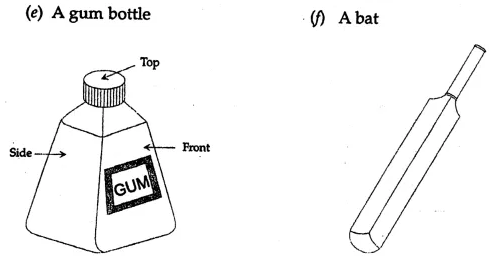
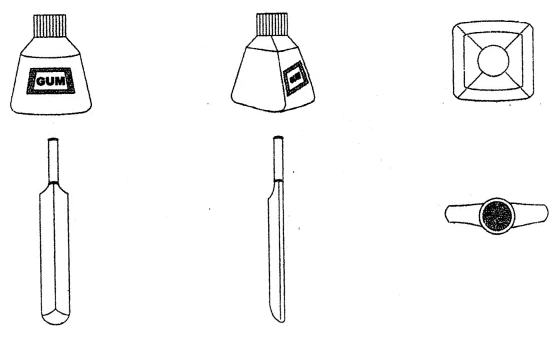
Question 6.
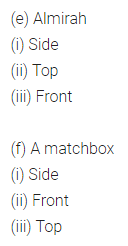
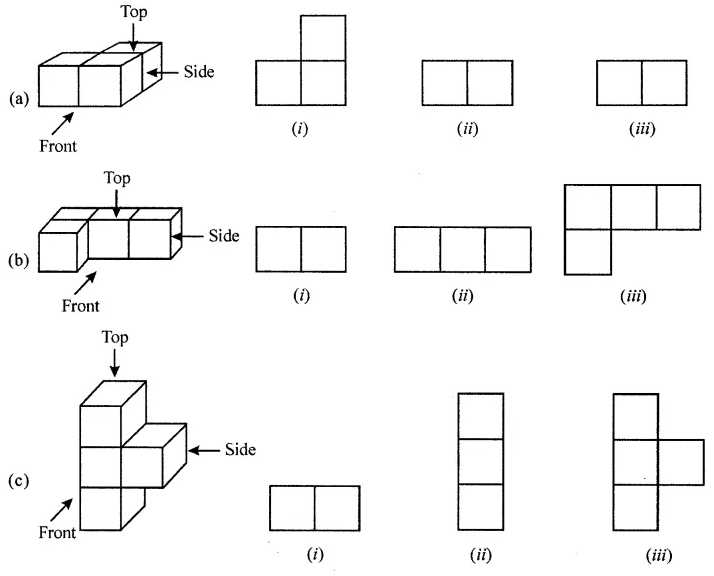
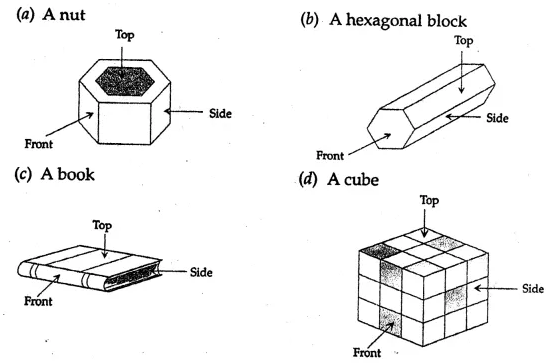
Draw the front view, side view and top view of the given objects:
ML Aggarwal Class 8 Solutions for ICSE Maths Chapter 17 Visualising Solid Shapes Ex 17.1 20
ML Aggarwal Class 8 Solutions for ICSE Maths Chapter 17 Visualising Solid Shapes Ex 17.1 21
Solution:
ML Aggarwal Class 8 Solutions for ICSE Maths Chapter 17 Visualising Solid Shapes Ex 17.1 22
ML Aggarwal Class 8 Solutions for ICSE Maths Chapter 17 Visualising Solid Shapes Ex 17.1 23

ML Aggarwal Class 8 Solutions for ICSE Maths

ML Aggarwal Class 8 Solutions for ICSE Maths Chapter 16 Symmetry Reflection and Rotation Check Your Progress

ML Aggarwal Class 8 Solutions for ICSE Maths Chapter 16 Symmetry Reflection and Rotation Check Your Progress

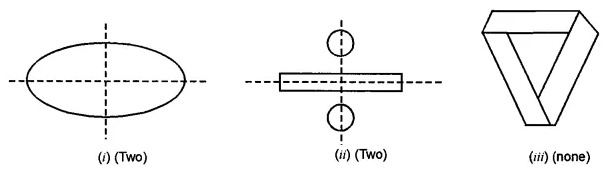
Question 1.
Draw the line (or lines) of symmetry, if any, of the following shapes and count their number :
ML Aggarwal Class 8 Solutions for ICSE Maths Chapter 16 Symmetry Reflection and Rotation Check Your Progress 1
Solution:
ML Aggarwal Class 8 Solutions for ICSE Maths Chapter 16 Symmetry Reflection and Rotation Check Your Progress 2

Question 2.
For each of the given shape in question 1, find the order of the rotational symmetry (if any).
Solution:
ML Aggarwal Class 8 Solutions for ICSE Maths Chapter 16 Symmetry Reflection and Rotation Check Your Progress 3

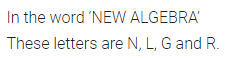
Question 3.
Write the letters of the word ‘NEW ALGEBRA’ which have no line of symmetry.
Solution:
ML Aggarwal Class 8 Solutions for ICSE Maths Chapter 16 Symmetry Reflection and Rotation Check Your Progress 4

ML Aggarwal Class 8 Solutions for ICSE Maths

ML Aggarwal Class 8 Solutions for ICSE Maths Chapter 16 Symmetry Reflection and Rotation Objective Type Questions

ML Aggarwal Class 8 Solutions for ICSE Maths Chapter 16 Symmetry Reflection and Rotation Objective Type Questions

Mental Maths
Question 1.
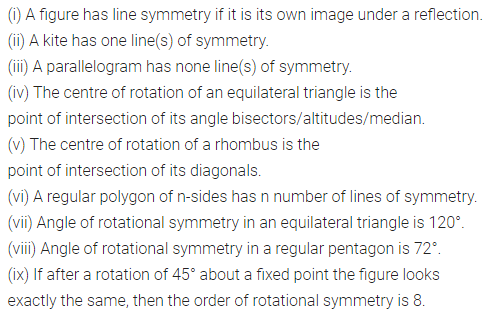
Fill in the blanks:
(i) A figure has ………….. symmetry if it is its own image under a reflection.
(ii) A kite has ………….. line(s) of symmetry.
(iii) A parallelogram has ………….. line(s) of symmetry.
(iv) The centre of rotation of an equilateral triangle is the point of intersection of its …………..
(v) The centre of rotation of a rhombus is the point …………..
(vi) A regular polygon of n-sides has ………….. number of lines of symmetry.
(vii) Angle of rotational symmetry in an equilateral triangle is …………..
(viii) Angle of rotational symmetry in a regular pentagon is …………..
(ix) If after a rotation of 45° about a fixed point the figure looks exactly the same, then the order of rotational symmetry is …………..
Solution:
ML Aggarwal Class 8 Solutions for ICSE Maths Chapter 16 Symmetry Reflection and Rotation Objective Type Questions 1

Question 2.
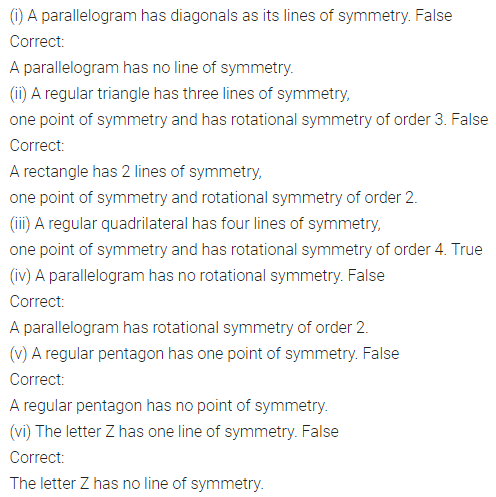
State whether the following statements are true (T) or false (F):
(i) A parallelogram has diagonals as its lines of symmetry.
(ii) A regular triangle has three lines of symmetry, one point of symmetry and has rotational symmetry of order 3.
(iiii) A, regular quadrilateral has four lines of symmetry, one point of symmetry and has . rotational symmetry of order 4.
(iv) A parallelogram has no rotational symmetry.
(v) A regular pentagon has one point of symmetry.
(vi) The letter Z has one line of symmetry.
Solution:
ML Aggarwal Class 8 Solutions for ICSE Maths Chapter 16 Symmetry Reflection and Rotation Objective Type Questions 2

Multiple Choice Questions
Choose the correct answer from the given four options (3 to 6):
Question 3.
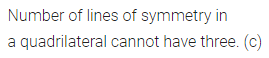
The number of lines of symmetry which a quadrilateral cannot have
(a) 1
(b) 2
(c) 3
(d) 4
Solution:
ML Aggarwal Class 8 Solutions for ICSE Maths Chapter 16 Symmetry Reflection and Rotation Objective Type Questions 3

Question 4.
A possible angle of rotation of a figure having rotational symmetry of order greater than or equal to 2 is
(a) 36°
(b) 144°
(c) 150°
(d) 360°
Solution:
ML Aggarwal Class 8 Solutions for ICSE Maths Chapter 16 Symmetry Reflection and Rotation Objective Type Questions 4

Question 5.
The figure which does not have both line and rotational symmetry is
ML Aggarwal Class 8 Solutions for ICSE Maths Chapter 16 Symmetry Reflection and Rotation Objective Type Questions 5
Solution:
ML Aggarwal Class 8 Solutions for ICSE Maths Chapter 16 Symmetry Reflection and Rotation Objective Type Questions 6

Question 6.
The letter which has both line and rotational symmetry is
ML Aggarwal Class 8 Solutions for ICSE Maths Chapter 16 Symmetry Reflection and Rotation Objective Type Questions 7
Solution:
ML Aggarwal Class 8 Solutions for ICSE Maths Chapter 16 Symmetry Reflection and Rotation Objective Type Questions 8

ML Aggarwal Class 8 Solutions for ICSE Maths