The Interview Summary in English by Christopher Silvester

We have decided to create the most comprehensive English Summary that will help students with learning and understanding. in This article, we are discussed The Interview Summary

The Interview Summary in English by Christopher Silvester

The Interview by Christopher Silvester About the Author

Christopher Silvester (1959) was educated at Lancing College Sussex, and Peter House, Cambridge, where he read history. From 1983 to 1994, he worked for Private Eye, initially writing the ‘New Boys’ column. He has written for several newspapers and magazines. He is also the Editor of The Penguin Book of Interviews: An Anthology from 1859 to the Present Day and the author of The Pimlico Companion to Parliament. He currently writes obituaries for the Times (of London) and book reviews. He is writing a three-volume social history of Hollywood for Pantheon Books.

Author NameChristopher Silvester
Born1959, London
EducationLancing College, Sussex, and Peterhouse, Cambridge, where he read history
BooksThe Pimlico Companion to Parliament: A Literary Anthology
Books editedThe Penguin Book of Interviews: An Anthology from 1859 to the Present Day
The Interview Summary by Christopher Silvester

The Interview Introduction to the Chapter

‘The Interview’ is an extract from an interview of Umberto Eco. The interviewer is Mukund Padmanabhan : from the ‘The HINDU’. Thousands of celebrities have been interviewed over the years. Our most vivid impressions about contemporary celebrities are through interviews. But for some of them, interviews , are ‘unwarranted intrusion in their lives’.

In the second part of the chapter, the interviewer highlights how Umberto Eco considers himself as an . academician first and a novelist later on. He considers himself a university professor who writes novels : on Sundays – occasionally. The possible reasons of the huge success of Eco’s novel, ‘The Name of the i Rose’ are also highlighted in the interview.

The Interview Theme

‘The Interview’ written by Christopher Silvester briefs the new invention ‘Interview’ in the field of journalism. Interview that was invented over 130 years has become a commonplace journalism. Today, every literate or illiterate will have to experience interview at some points of their life. It is surprising to notice that as an interviewer, each one is comfortable, whereas as an interviewee, they feel it much disturbing and diminishing.

The Interview Summary in English

The narration, “The Interview”, written by Christopher Silvester is a very interesting lesson speaking about the invention of the interview about 130 years ago. We face interviews throughout our journey of life and several thousand celebrities are the part and parcel of this process. Yh e opinions of the interview—its functions, methods and merits—vary considerably. Some people believe that they are able to recall the truth while there are those who have a great despise from the word ‘interview’. They believe it to be a kind of direct encounter into the lives of the celebrities. In this context, some of the world fame writers had varied opinion. According to V.S. Naipaul, a cosmopolitan writer, “Some people are wounded by interviews and lose a part of themselves.”

Given below is an extract from an interview of Umberto Eco. He is interviewed by Mukund Padmanabhan from The Hindu.

Mukund : Once an English novelist, David Lodge remarked that he was unable to understand how Eco could do so many things.

Umberto Eco : People might feel, ‘I am doing many things but in the end I have found that I am always doing the same thing.’

Mukund : Which is that thing?

Umberto Eco : It is very difficult to explain. I have got some philosophical interests which are pursued by my novels and academic work. There are my books for children. They are about peace and non-violence and this is all philosophical interest. Even then there is a secret. All of us have a lot of empty spaces in our lives and I call them interstices.

Suppose you are coming over in an elevator to my place and I am waiting for you. This is an interstice—an empty space. I work in empty spaces. Your elevator will come up from the first to the third floor, and I am waiting for it. I have already written an article.

Mukund : It must be your non-fictioiial writing. Your work has a certain playful and personal quality about it. This is a departure from a regular academic style. You must have adopted an informal approach.

Umberto Eco : While presenting my first doctoral dissertation in Italy, one of the professors said “Scholars learn a lot of certain subjects, then they make a lot of false hypotheses, correct them and give the conclusions. But you told the story of your research.”

At the age of 22,1 understood that the scholarly books should be written the way I had done—by telling the story of the research. So, my essays have a narrative aspect. At the age of 50, I started writing novels. I remember that my friend Roland Barthes was always frustrated that he was an essayist and not a novelist. He wanted to do some creative writing but he died. In my case, I started writing novels by accident. The novels satisfied my taste for narration.

Mukund : Thus, you became famous after the publication of The Name of the Rose. You have written five novels and many more on non-fiction. Among them a seminal piece of work on semiotics. If we ask people about Umberto Eco, they will say that he is a novelist. Does it trouble you?

Umberto Eco : Of course, it troubles me. I consider myself a University Professor who writes novels on Sundays. It is not a joke. I always participate in academic conferences. I do not attend the meetings of Pen Clubs and writers. I identify myself with the academic community. By writing novels, I am in a position to reach to the large number of people. I cannot expect to have one million readers with stuff on semiotics.

Mukund : I ask you another question. Your novel The Name of the Rose is very serious novel. At one level, it is a detective tale, and then it goes deep into metaphysics, theology and medieval history. It is being enjoyed by a large number of audience. Were you puzzled at all by this?

Umberto Eco : No, the journalists are puzzled. We can even see that sometimes publishers also get puzzled because both believe that people like trash and do not like difficult reading experiences. Suppose there are six billion people in this planet and the novel is sold to 10 and 15 millions. Thus, I am getting only a small percentage of readers. Thus, these readers do not always want easy experiences. After dinner at 9.00 p.m., I watch television, and see ‘Miami Vice’, or Emergency Room. I enjoy it and I need it but not all day.

Mukund : Can you tell that how your novel has got a good success even if it deals with the medieval history?

Umberto Eco : That is possible. But I can tell you another story. My American publisher told she did not expect to sell more than 3000 copies in a country where some has seen a cathedral or studied Latin. So, I was given an advance for 3000 copies but in the end it sold two or three million in the U.S. So many books have been written about the medieval past but the book has a mysterious success. Nobody can predict it. If I had written it ten years earlier or later, it would not have been the same. Why it worked is a mystery? Thus, the novel The Name of the Rose has got a good success.

The Interview Main Characters in the Chapter

Mukund Padmanabhan

He is an interviewer from ‘The Hindu’ who interviews Umberto Eco after his huge success of the book he wrote.

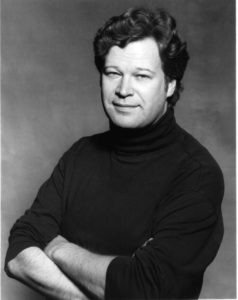
Umberto Eco

He is the author of the popular novel, ‘Name of the Rose’. He is a University Professor. Writing novel is his hobby which he does only on Sundays. He had written 40 scholarly works of non-fiction and 5 novels. He always identified himself with the academic community, and never with writers or novelists.

The Interview Summary Reference-to-Context Questions

Read the following extracts and answer the questions that follow.

1. Some might make quite extravagant claims for it as being, in its highest form, a source of truth, and, in its practice, an art. Others, usually celebrities who see themselves as its victims, might despise the interview as an unwanted intrusion into their lives, or feel that it somehow diminishes them, just as in some primitive cultures it is believed that if one takes a photographic portrait of somebody then one is stealing that person’s soul.

a. What is ‘it’ referred here?
Answer:
Here, ‘it’ is referred to interview.

b. How is ‘it’ described in the above lines?
Answer:
The interview is described as the highest form, a source of truth and an art in its practice.

c. Who might despise the interview?
Answer:
Celebrities who see themselves as its victim despise the interview.

d. Why do they despise?
Answer:
Celebrities despise interview because they consider it as an unwanted intrusion into their lives.

2. Rudyard Kipling expressed an even more condemnatory attitude towards the interviewer. His wife, Caroline, writes in her diary for 14 October 1892 that their day was ‘wrecked by two reporters from Boston’. She reports her husband as saying to the reporters, “Why do I refuse to be interviewed? Because it is immoral!

a. What was the attitude of Rudyard Kipling towards the interviewer?
Answer:
Rudyard Kipling expressed a condemnatory attitude towards the interviewer.

b. What happened on 14 October 1892?
Answer:
On 14 October 1892, Rudyard Kipling and his wife’s day was wrecked by two reporters from Boston.

c. Where were the two reporters from?
Answer:
The two reporters were from Boston.

d. Why did Rudyard Kipling refuse to be interviewed?
Answer:
Rudyard Kipling refused to be interviewed because he considers it to be immoral.

3. H.G. Wells in ah interview in 1894 referred to ‘the interviewing ordeal’ but was a fairly frequent interviewee and forty years later found himself interviewing Joseph Stalin. Saul Bellow, who has consented to be interviewed on several occasions, nevertheless once described interviews as being like thumbprints in his windpipe.

a. What did H.G. Wells refer to in an interview in 1894?
Answer:
In an interview in 1894, H.G. Wells referred to ‘the interviewing ordeal’.

b. Who was a frequent interviewee?
Answer:
H.G. Wells was a frequent interviewee.

c. Who was H.G. Wells interviewing to after forty years?
Answer:
After forty years, H.G. Wells was interviewing Joseph Stalin.

d. How did Saul Bellow once describe interviews?
Answer:
Saul Bellow once described interviews as being like thumbprints in his windpipe.

4. Aah, now that is more difficult to explain. I have some philosophical interests and I pursue them through my academic work and my novels. Even my books for children are about non-violence and peace…you see, the same bunch of ethical, philosophical interests.

a. Who is the speaker of the above lines?
Answer:
Umberto Eco is the speaker of the above lines.

b. Whom is the speaker speaking to?
Answer:
The speaker is speaking to Mukund Padmanabhan, the interviewer.

c. How does the speaker pursue his philosophical interests?
Answer:
He pursues his philosophical interests through his academic work and his novels.

d. What are his books for children about?
Answer:
His books for children are about non-violence and peace.

5. This is why my essays always have a narrative aspect. And this is why probably I started writing narratives (novels) so late – at the age of 50, more or less. I remember that my friend Roland Barthes was always frustrated that he was an essayist and not a novelist. He wanted to do creative writing one day or another, but he died before he could do so.

a. Why did his essays have a narrative aspect?
Answer:
His essays have a narrative aspect because he used to write in a way of telling stories.

b. When did Umberto Eco start writing novels?
Answer:
He started writing novels at the age of 50, more or less.

c. Why was his friend Roland Barthes always frustrated?
Answer:
Roland Barthes was always frustrated that he was an essayist and not a novelist.

d. What did his friend want to do?
Answer:
His friend wanted to do creative writing.
 

Poets and Pancakes Summary in English by Asokamitran

We have decided to create the most comprehensive English Summary that will help students with learning and understanding.

Poets and Pancakes Summary in English by Asokamitran

Poets and Pancakes by Asokamitran About the Author

Asokamitran (22 September 1931-23 March 2017) was a famous Tamil writer and Sahitya Akademi, winner. He was one of the few writers who wrote fluently in both Tamil and English. In a career spanning over six decades, he wrote 8 novels, 20 novellas and hundreds of short stories, on a wide range of issues.

He spent the initial years of his career in the famous Gemini Studios of Chennai. Although he was entrusted with the clerical task of cutting and pasting newspaper articles, he learned a lot about the functioning of Gemini Studios, which he humorously depicted in his autobiographical book My Years with Boss.

Author NameAsokamitran
Born22 September 1931, Secunderabad
Died23 March 2017, Chennai
BooksThe Eighteenth Parallel, Manacarovar, Tannir
MoviesSivaranjiniyum Innum Sila Pengalum
AwardsSahitya Akademi Award for Tamil Writers
Poets and Pancakes Summary by Asokamitran

Poets and Pancakes Introduction to the Chapter

Set up in 1940, for almost thirty years, Gemini Studios of Madras (Chennai) was one of India’s pioneering and influential film-producing organisations of India. Founded by the brilliant and talented S.S. Vasan, it had a staff of over 600 people and made movies for Tamil Nadu and other southern Indian states. Pancake was the make-up material used by Gemini Studios. Sahitya Akademi award winning Tamil writer Asokamitran worked for the Gemini Studios from 1952 to 1966. He later recorded his reminiscences in the book, ‘My Years with Boss’.

Poets and Pancakes Theme

This chapter has been taken from “My Years with Boss’ written by Asokamitran. Through this write up, Asokamitran brings up a lot of topics pertaining to film industry in particular and India in general, and provides the reader a glimpse of independent India in its infancy. Asokamitran also tells about the manner in which the legal advisor ruins the career of a talented actress unwittingly.

Communism also finds a place in the musings of Asokamitran. At that time of India, the educated folk took pride in showing their support for communism and Gemini studios was no exception. He also mentions the anti-communism movement run by the West.

Poets and Pancakes Summary in English

The essay, “Poets and Pancakes” is an extract from Asokamitran’s book “My Years with Boss.” The Boss was S.S. Vasan, who founded the Gemini Studios which produced a number of films that influenced every aspect of Indian life.

Asokamitran talks about his days at Gemini Studios. He is known for his humour and gende satire. He explains us about a make-up material. The brand name of this material was Pancake. This material was bought and used up in the studios. He gives name of few actresses who used that material. He suggests that the make-up department was located in a building which was believed to have been Robert Clive’s stable. However, there were several buildings associated with Robert Clive’s residence but this was not true as Clive’s stay in India was very shortlived.

Further, he gives a description of the make-up department as a symbol of national integration and the make-up room as a hair-cutting salon. Pancake and many other lotions made actors ugly as it was necessary to make them presentable in a movie. In the make-up department, there was a forty-year-old office boy with dream of becoming a star-actor or director or lyrics writer. His dreams remained unfulfilled, making him frustrated. For this, he blamed Subbu, who was No. 2 and a favourite of the boss.

The writer tells about poets who used to wear khadi and believed that Communists were monster^. He even tells about legal adviser who had been the member of the story department. He was at odds in the department and lost his job with the closure of story department. The legal adviser had even once brought an abrupt end to the promising career of a talented actress.

The Gemini Studios even hosted a two-hundred strong Moral Rearmament Army (MRA) which showed two plays in the most professional manner. The plays became a good success and left their impression on Tamil drama. Later, the writer however, learnt that MRA was actually a counter-Communist movement.

The writer even tells us about Subbu, a man of many abilities and kind-hearted person. However, the office boys felt jealous of him, and cursed him.

The writer humorously tells of an English poet’s visit to the studios. Though royal preparations were done but the purpose of his arrival was a mystery for long time to come. At the studios, they had never heard the poet’s name before. Further, they did not understand what he spoke. The poet also perhaps felt baffled.

Asokamitran’s duty at the studios was to cut newspaper clippings on several issues and store them in files. However, anyone who saw him tearing newspapers thought he had no work. Thus, everybody wanted to deliver some work to him.

The author saw a notice in The Hindu. A short story contest had been organised by a British periodical called, The Encounter. The writer desired to send an entry. However, he wanted to know status of the periodical. For this, he went to British Council Library. There he found it. He learnt that the editor of the periodical was Stephen Spender, the poet who had come to Gemini Studios.

After his retirement, he came across a book titled, The God That Failed. It had six essays about failure of Communism. One of these essays was written by Spender. The mystery of Spender’s visit to Gemini Studios was cleared. Perhaps it had something to do with his anti-communist perspective.

Poets and Pancakes Main Characters in the Chapter

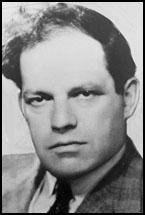
Asokamitran

The author of the narrative and an employee of Gemini Studio, Asokamitran’s work was to cut newspaper clippings, paste these and maintain a file of the same. The other stafflooked down on his job and believed themselves to be superior to him.

Office Boy

The office boy was not really a boy, but a grown-up man. He was forty years old. He was in charge of the crowd make-up. Though his job was an easy one, he considered himself to be a skilled artist. He had once aspired to be a star actor or a top screen writer. He blamed Subbu for his failure.

Kothamangalam Subbu

Kothamangalam Subbu was the No. 2 at Gemini Studios. Though he definitely came from a less advantaged background than the office boy, being a brahmin by birth had given him better exposure than the office boy. He had the ability to look cheerful at all times and his undivided loyalty was to Vasan, the principal of Gemini Studios. Extremely creative, Subbu directed all his talent to his principal’s advantage.

Though a brilliant actor, he was content playing secondary roles and usually performed better than the lead actors. Without a doubt, Subbu gave direction and definition to Gemini Studios during its golden years. Subbu was an extremely talented poet as well. Though capable of writing complex poetry, he deliberately chose to write in simple Tamil verse to enlighten the masses. Generous to the core, Subbu’s house was a permanent residence for dozens of near and distant relations, whom he fed and supported without a thought. Yet, even Subbu had enemies.

Legal Advisor

Like Subbu, the story department of Gemini Studios also had a lawyer, officially known as legal advisor, though better known for the opposite reasons. While every other member of the story department wore a khadi dhoti and white khadi shirt, the legal advisor wore pants and a tie, and sometimes an oversized coat. He is described as a man of cold logic in a crowd of dreamers. He was responsible for destroying the acting career of a highly talented actress, by his irresponsible behaviour.

Stephen Spender

Stephen Spender, an English poet, editor and a one-time communist, came to Gemini Studios and gave a speech. His lecture was about Communism on one side and about his struggles to establish as a poet on the other. The content of the speech and the accent of the poet left everyone utterly bewildered. The reason for his visit remained an unexplained mystery. Asokamitran later discovered that Stephen Spender was the editor of the British periodical, ‘Encounter’. When he accidentally chanced upon Spender’s essay on Communism in the book, ‘The God that Failed’, Asokamitran understood the connection between the English poet, Stephen Spender and the owner of Gemini Studios, S.S. Vasan.

Poets and Pancakes Summary Reference-to-Context Questions

Read the following extracts and answer the questions that follow.

1. They were all incandescent lights, so you can imagine the fiery misery of those subjected to make-up.The make-up department was first headed by a Bengali who became too big for a studio and left. He was succeeded by a Maharashtrian who was assisted by Dharwar Kannadiga, an Andhra, a Madras Indian Christian, an anglo- Burmese and the usual local Tamils. All this shows that there was a great deal of national integration long before A.I.R. and Doordarshan began broadcasting programmes on national integration.

a. Where were all these lights to be found?
Answer:
These lights were to be found in the make-up room of the Gemini Studios.

b. What was the name of the make-up material used by Gemini Studios?
Answer:
‘Pancake’ was the brand name of the make-up material that Gemini Studios used in vast quantities.

c. Explain: “fiery misery”.
Answer:
The heat emanated by all the incandescent lights made the make-up room very hot. Actors who had to put on make-up had to endure the misery of this fiery heat.

d. Why does the author say that there was a great deal of national integration here?
Answer:
People from different states of the country worked in complete harmony in this department. They were a Bengali, succeeded by a Maharashtrian, assisted by an Andhra, and sundry local Tamils.

2. He wasn’t exactly a ‘boy’; he was in his early forties, having entered the studios years ago in the hope of becoming a star actor or a top screen writer, director or lyrics writer. He was a bit of a poet.

a. Who was ‘he’?
Answer:
“He” was the office boy.

b. What had he aspired to become?
Answer:
He had hoped to become a star actor or a top screen writer, director or lyrics writer.

c. What was his role in Gemini Studios?
Answer:
Though a bit of a poet, the office boy’s work was to put make-up on the crowd players on the days that had crowd shooting.

d. Whom did he blame for his failure? Why?
Answer:
He blamed Kothamangalam Subbu.Though both started their careers in Gemini Studios at the same level, Subbu rose to become No. 2 at Gemini Studios while he remained an office boy in the make-up department.

3. Even in the matter of education, specially formal education, Subbu couldn’t have had an appreciable lead over our boy. But by virtue of being bom a Brahmin—a virtue, indeed! he must have had exposure to more affluent situations and people.

a. What was Subbu’s position in Gemini Studios?
Answer:
Subbu held the No.2 position in Gemini Studios.

b. Who does “our boy” refer to?
Answer:
It refers to the office boy, Subbu’s arch-rival.

c. What was Subbu’s advantage over “our boy”?
Answer:
Subbu’s advantage over the boy was by virtue of his birth, since he was born a Brahmin.

d. Name two ways in which Subbu’s ‘birth’ helped him.
Answer:
It gave him a greater exposure to an affluent society, with affluent situations and people.

4. It seemed against Subbu’s nature to be even conscious that he was feeding and supporting so many of them. Such a charitable and improvident man, and yet he had enemies!

a. Who were the people Subbu fed and supported?
Answer:
Subbu was extremely generous and large hearted. His house was apermanent residence for dozens of near and far relations and acquaintances.

b. Why did he do so?
Answer:
Charity and generosity was an integral part of nature. He was not even conscious that he was feeding and supporting so many people all the time.

c. Who do you think was Subhu’s enemy?
Answer:
Subbu’s enemy was the man the office boy who envied Subbu his success and popularity.

d. Why did Subbu have enemies?
Answer:
Subbu’s intimacy with the boss and his eagerness to say nice things in all situations made him appear like a sycophant. This made him enemies.

5. While every other member of the Department wore a kind of uniform- khadi dhoti with a slightly oversized and clumsily tailored white khadi shirt- the legal adviser wore pants and a tie and sometimes a coat that looked like a coat of mail. Often he looked alone and helpless—a man of cold logic in a crowd of dreamers—a neutral man in an assembly of Gandhiites and khadiites.

a. Which is the department referred to in the above passage?
Answer:
The department referred to is the story department.

b. How was the lawyer differently dressed?
Answer:
Unlike all other members of the department who khadi, the lawyer wore pants, a tie and an oversized coat.

c. What did it say about him?
Answer:
The lawyer’s attire isolated him from the others. He looked like a man of cold logic in a crowd of dreamers.

d. Why was the lawyer, a legal adviser, also known as the opposite?
Answer:
The lawyer was responsible for wrecking the career of brilliant actress when he recorded her outburst in the studios and played it back.The girl was so shocked that she could never overcome the trauma she experienced.

6. Most of them wore khadi and worshipped Gandhiji but beyond that they had not the faintest appreciation for political thought of any kind. Naturally they were all averse to the term ‘Communism’.

a. Who are “them”?
Answer:
Some of them were poets like Harindranath Chattopadhyaya and sundry other members of the Gemini Studios.

b. What was the role of the poets in Gemini Studios?
Answer:
Most of the time they radiated leisure, ie., were idling, which was an apparent pre¬requisite for poetry.

c. Why did they wear khadi and worship Gandhiji?
Answer:
Most of these people had no political awareness or ideology they expressed their nationalism by wearing khadi and worshipping Gandhiji.

d. Why were they averse to communism?
Answer:
For them, a Communist was a godless man with no love for parents or wife. He was ruthless and did not hesitate to kill his parents or children. His aim was to spread violence and unrest in society among innocent and ignorant people.

7. ………. they couldn’t have found a warmer host in India than the Gemini Studios. Someone called the group an international circus. They weren’t very good on the trapeze and their acquaintance with animals was only at the dinner table, but they presented two plays in a most professional manner.

a. Who were “they”?
Answer:
‘They’ were Frank Buchman’s Moral Rearmament army, a group of two hundred people, that visited Gemini Studios.

b. Why had they come to India?
Answer:
They presented two plays to counter-act the rising spread of international Communism.

c. Name the two plays they presented.
Answer:
The two plays were, jotham Valley’ and ‘The Forgotten Factor’.

d. How did they impact the Tamil drama community?
Answer:
The Tamil drama community was very impressed by their sets and costumes. For years, thereafter, all Tamil plays imitated their scenes of sunrise and sunset with a bare stage, a white background curtain and a tune played on the flute.

8. Then the poet spoke. He couldn’t have addressed a more dazed and silent audience— no one knew what he was talking about and his accent defeated any attempt to understand what he was saying. The whole thing lasted about an hour; then the poet left and we all dispersed in utter bafflement—what were we doing?

a. Who was the poet who spoke ?
Answer:
The speaker was Stephen Spender, English poet and editor.

b. Whom did the poet address?
Answer:
He addressed a dazed and silent audience consisting of the members of the Gemini Studios.

c. What caused the lack of communication between the poet and his audience?
Answer:
No one knew what he talked about and his accent was so heavy that as no one could understand what he said.

d. Why was the audience baffled?
Answer:
The poet spoke for an hour and left, leaving everyone utterly bewildered. No one had followed a word of what he spoke.They wondered why he had been brought to Gemini Studios at all.

Indigo Summary in English by Louis Fischer

We have decided to create the most comprehensive English Summary that will help students with learning and understanding.

Indigo Summary in English by Louis Fischer

Indigo by Louis Fischer About the Author

Louis Fischer (29 February 1896 – 15 January 1970) was an American journalist. He wrote the biography of Mahatma Gandhi entitled The Life of Mahatma Gandhi. ‘Indigo’ is an excerpt from this book widely acknowledged as one of the best books written on Gandhi.

Author NameLouis Fischer
Born29 February 1896, Philadelphia, Pennsylvania, United States
Died15 January 1970, Princeton, New Jersey, United States
EducationCentral High School, South Philadelphia High School
AwardsNational Book Award for History and Biography (Nonfiction)
NationalityAmerican
Indigo Summary by Louis Fischer

Indigo Introduction to the Chapter

In the chapter’Indigo’, the author describes the struggle of Gandhi for the poor peasants of Champaran, who had to share their crops with the British planters. This made their life miserable as they were forced to grow indigo according to an agreement.

Indigo Theme

In the chapter ‘Indigo’, the main theme covered by the author is that how an effective leadership can overcome any problem. The chapter tells us about the leadership shown by Mahatma Gandhi to secure justice for the oppressed people through convincing argumentation and negotiation.

Indigo Summary in English

The story ‘Indigo’, written by Louis Fischer narrates Gandhiji’s struggle for the poor peasants of Champaran. The peasants were sharecroppers with the British planters. According to an old agreement, the peasants had to produce indigo on 15 per cent of the land and give it as rent to the landlords. Around 1917, it was told that Germany had developed synthetic indigo. So the British planters now no longer desired the indigo crop. To release the peasants from the old 15 per cent agreement, they demanded compensation from them. Most of the illiterate peasants agreed to it.

However, others refused. Lawyers were engaged to go to the court. At that time, on the request of Rajkumar Shukla a sharecropper, Gandhiji appeared in Champaran. He fought for the poor peasants a long battle for one year and managed to get justice for them. The peasants now got courage and became aware of their rights. Along with the political and economic struggle, Gandhiji worked on the social level also. He made arrangements for the education, health and hygiene of the families of poor peasants by teaching the lesson of self¬reliance. It was one of the ways to forward the struggle for Indian independence.

Indigo Main Characters in the Chapter

Rajkumar Shukla

Rajkumar Shukla was a poor sharecropper who was a victim of British landlords. Though he was illiterate, he was determined to fight against the injustice of the British landlords, and to fight them, he goes to meet Gandhiji to seek his help. It was because of Rajkumar Shukla that Gandhiji came to Champaran village in Bihar. Later, this struggle with British landlords became a turning point in the fight for the independence of India.

Charles Freer Andrews

Charles Freer Andrews was an English pacifist who became a devoted follower of Gandhi. He came to bid farewell to Gandhi before going on a tour to Fizi islands. Gandhi’s lawyer friends insisted him to stay and help them in the battle, but Gandhiji strongly opposed saying that they must not rely on an Englishman but on themselves to win the battle.

Mahatma Gandhi

Mohandas Karamchand Gandhi, known as Mahatma Gandhi was a highly intelligent and perceptive man. His fundamental principles were non-violence and self-reliance. His entire political campaign for the development of the country was based on these two principles.

Indigo Summary Reference-to-Context Questions

Read the extracts given below and answer the questions that follow.

1. He had gone to the December 1916 annual convention of the Indian National Congress party in Lucknow. There were 2, 301 delegates and many visitors. During the proceedings, Gandhi recounted, “a peasant came up to me looking like any other peasant in India, poor and emaciated, and said, ‘I am Rajkumar Shukla. I am from Champaran, and I want you to come to my district’!”

a. Who is ‘he’ here?
Answer:
Here, ‘he’ is Gandhiji.

b. What was ‘he’ doing in Lucknow?
Answer:
He was attending the annual convention of the Indian National Congress Party.

c. What did Gandhi recount?
Answer:
He recounted about a poor looking peasant who came up to him and asked him to visit Champaran.

d. What did Rajkumar Shukla want from Gandhiji?
Answer:
Rajkumar Shukla wanted Gandhiji to visit Champaran to look after the problems faced by the poor peasants there.

2. Then the two of them boarded a train for the city of Patna in Bihar. There Shukla led him to the house of a lawyer named Rajendra Prasad who later became President of the Congress party and of India.

a. Who are ‘them’ here?
Answer:
Here, ‘them’ are Mahatma Gandhi and Rajkumar Shukla.

b. Where are they going?
Answer:
They were going to the city of Patna in Bihar.

c. Who was Rajendra Prasad?
Answer:
Rajendra Prasad was a lawyer who later became the President of the Congress party of India.

d. Was Rajendra Prasad available at home?
Answer:
Rajendra Prasad was not at home, he was out of town.

3. Gandhi decided to go first to Muzaffarpur, which was en route to Champaran, to obtain more complete information about conditions than Shukla was capable of imparting. He accordingly sent a telegram to Professor J.B. Kriplani, of the Arts College in Muzaffarpur, whom he had seen at Tagore’s Shantiniketan school.

a. Why did Gandhi go to Muzaffarpur?
Answer:
Gandhi went to Muzaffarpur as he wanted to collect more information about the issue addressed by Rajkumar Shukla.

b. Whom did he contact in Muzaffarpur?
Answer:
He sent a telegram to Professor J.B. Kriplani, of the Arts College in Muzaffarpur.

c. Where did Gandhi first meet J.B. Kriplani?
Answer:
Gandhi first met J.B. Kriplani at Tagore’s Shantiniketan school.

The Rattrap Summary in English by Selma Lagerlof

We have decided to create the most comprehensive English Summary that will help students with learning and understanding.

The Rattrap Summary in English by Selma Lagerlof

The Rattrap by Selma Lagerlof About the Author

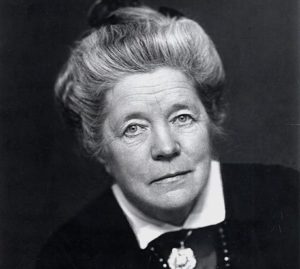
Selma Lagerlof (20 November 1858 – 16 March 1940), a Swedish writer, was the first female to win a Nobel Prize in literature in 1909. Her most remembered book is ‘The Wonderful Adventures of Nils’. Initially a teacher, in 1895, she devoted herself completely to writing. She wrote several books, including novels and collection of stories such as Gosta Berling’s Saga, Invisible Links and The Miracles of the Antichrist.

Author NameSelma Lagerlof
Born20 November 1858, Marbacka, Sweden
Died16 March 1940, Marbacka, Sweden
ProfessionWriter, Teacher
MoviesThe Enchanted Boy, The Saga of Gosta Berling
The Rattrap Summary by Selma Lagerlof

The Rattrap Introduction to the Chapter

‘The Rattrap’ is a story that gives us a psychological insight into human nature. The author highlights how greed for material things entraps human beings. The story upholds the belief that the essential goodness of a human being can be awakened through love and understanding. It brings into focus the idea that the world is a rattrap. Riches, joys, shelter and food are all lucrative baits to trap mankind.

The Rattrap Theme

The chapter, ‘The Rattrap’ covers the theme of the basic human need for companionship, and shows the negative effects of loneliness. The story stresses on the fact that most human beings are prone to fall into the trap of material benefit. The author targets the materialistic approach of the people. The worldly riches have disillusioned them, and they are running after the things which are temporary.

The Rattrap Summary in English

The story begins like a fairy tale. The central character is a beggar and a petty thief who goes about selling rattraps of wire to make a small living. He finds it difficult to make both ends meet. It makes him reflect about his own condition and the world at large. He realises that the whole world is nothing but a big rattrap. It offers rich and varied baits to people who bite on them and get trapped in the rattrap.

The storyline unfolds gradually with the various baits being offered to the beggar. The old man that the tramp meets is generous with his hospitality but the bait of the three ten-kronor bills is enough to tempt him. Next at the Ramsjo ironworks, while seeking shelter for the night, the tramp bites the bait offered to him by the owner (though he initially refuses it), the ironmaster, of mistaken identity. Edla, the ironmaster’s daughter, offers yet another bait of full-hearted generosity, comfortable living and a magically peaceful Christmas for the tramp. Finally, the bitter truth dawns on the hosts.

Edla is downcast when she learns that the peddler is a thief. The tramp undergoes a change of heart after experiencing her kindness. He returns the stolen money and writes a letter to her, thanking her for helping him escape the rattrap. He attains nobility of spirit and ‘becomes’ Captain Von Stahle. The story ends with the victory of human goodness.

The Rattrap Main Characters in the Chapter

The peddler

He is the protagonist and central character of the story. He is an unnamed man who lives as a tramp wandering the countryside and selling rattraps. As he does not make enough money from this to survive, the rattrap peddler also engages in petty thievery and begging.

Characteristics of peddler: Vagabound, thief, beggar, witty, philosopher, pragmatist and humorous.

Edla Willmansson

Edla is the daughter of the ironmaster. He is described as ‘not at all pretty, but modest and quite shy’. She is exceptionally kind. She convinces the peddler to come to her house and then convinces her father to let the peddler stay for Christmas Eve. She is the most positive figure in the story, and her compassion and generosity are the reasons for the peddler’s transformation.

Characteristics of Edla Willmansson: Kind, compassionate, friendly, charming, modest, shy, persuasive, sensitive, understanding, hospitable, honest and innocent.

Ironmaster

Ironmaster is Edla Willmansson’s father and the man who owns Ramsjo Ironworks. He is a very prominent ironmaster. He steps by at his forge every day and night to watch the work, and inspects the quality of his products. In his younger days, he was in the military, so he mistakes the peddler for his ‘old regimental comrade’ Captain von Stahle.

Characteristics of Ironmaster: Greedy, cautious, hospitable, suspicious, unkind and taskmaster.

The Crofter

This is an old man who lets the peddler spend the night at his house. As the old man is lonely, he is glad to have a company and provides the peddler with food, tobacco and conversation. He is a very kind, and generous old man, but the peddler repays his generosity by stealing thirty kronors from him.

Characteristics of Crofter: Lonely, happy, friendly, gullible, generous and hospitable.

The Rattrap Summary Reference-to-Context Questions

Read the extracts given below and answer the questions that follow.

1. He had naturally been thinking of his rattraps when suddenly he was struck by the idea that the whole world about him – the whole world with its land and seas, its cities and villages – was nothing but a big rattrap. It had never existed for any other purpose than to set baits for people.

a. Who is ‘he’ here?
Answer:
Here, ‘he’ is the peddler.

b. What was ‘he’ thinking?
Answer:
‘He’ was thinking about his rattraps.

c. What idea was struck to him suddenly?
Answer:
The idea that the whole world with its land and seas, its cities and villages is nothing but a rattrap, struck him suddenly.

d. According to him, what is the purpose of the world?
Answer:
World being a rattrap, it traps people by offering things that attract us.

2. One dark evening as he was trudging along the road he caught sight of a little gray cottage by the roadside, and he knocked on the door to ask shelter for the night. Nor was he refused. Instead of the sour faces which ordinarily met him, the owner, who was an old man without wife or child, was happy to get someone to talk to in his loneliness.

a. When was he trudging along the road?
Answer:
He was trudging along the road on a dark evening.

b. What did he see on his way?
Answer:
He caught sight of a litde gray cottage by the roadside.

c. Why did he knock the door?
Answer:
He knocked the door to ask shelter for the night.

d. What was the reaction of the old man?
Answer:
The old man was happy to get someone to talk to in his loneliness.

3. The next day both men got up in good season. The crofter was in a hurry to milk his cow, and the other man probably thought he should not stay in bed when the head of the house had gotten up. They left the cottage at the same time. The crofter locked the door and out the key in his pocket.

a. Who is the ‘other man’ here?
Answer:
Here, the ‘other man’ is the peddler.

b. Why was crofter in a hurry?
Answer:
Crofter was in a hurry as he had to milk his cow.

c. What did the other man think?
Answer:
The other man thought that it would be inappropriate to stay in the bed when the head of the house has gotten up.

d. Explain, ‘both men got up in good season’.
Answer:
Both men woke up early on time in the morning.

4. He walked and walked without coming to the end of the wood, and finally he realised that he had only been walking around in the same part of the forest. All at once he recalled his thoughts about the world and the rattrap. Now his own turn had come. He had left himself befooled by a bait and had been caught.

a. Who is ‘he’ here?
Answer:
Here, ‘he’ is the peddler.

b. What was he doing in the woods?
Answer:
He was walking and walking in search of an end to the forest, but he was lost.

c. What did he realise then?
Answer:
He realised that he had been walking around in the same part of the forest.

d. ‘Now his own turn had come’. Explain.
Answer:
As he recalled his thoughts about the world and the rattrap, he understood that now he has been caught in a trap for getting fooled by a bait.

Deep water Summary in English by William Douglas

We have decided to create the most comprehensive English Summary that will help students with learning and understanding.

Deep water Summary in English by William Douglas

Deep water by William Douglas About the Author

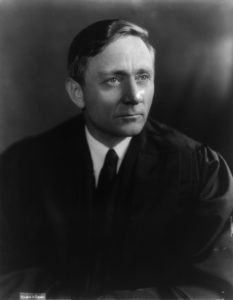
William O. Douglas (16 October 1898 – 19 January 1980) was born in Maine, Minnesota and was raised in Yakima, Washington. He was an American jurist and politician. He served as an Associate Justice of the Supreme Court of the United States. He was nominated at the age of 40 by President Franklin D. Roosevelt and was the youngest justice appointed to the court and served for the longest term in the history of the Supreme Court.

Author NameWilliam O. Douglas
Born16 October 1898, Minnesota, United States
Died19 January 1980, Bethesda, Maryland, United States
BooksOf Men and Mountains
PartyDemocratic Party
NationalityAmerican, Canadian
Deep Water Summary by William Douglas
Deep water Summary by William Douglas

Deep water Introduction to the Chapter

‘Deep Water1 is our autobiographical account of the author’s childhood misadventure at the swimming pool. In this chapter, he tells us how as a young boy, he was nearly drowned in the swimming pool. Thereafter, he feared water so much that he avoided it whenever he could, but on the other hand, he was also determined to get rid of his fear. Slowly and steadily, he overcame the fear of water in the end.

Deep water Theme

The chapter, ‘Deep Water’ is an essay written by William Douglas, in which he shares about his fear of water and how he overcomes the fear with courage, hardwork, determination, will power, perseverance and a strong desire to learn swimming. The theme covered in this chapter is ‘fear’ and his ‘triumph’ over it. It conveys the idea that fear is a great obstacle to our happiness and progress. It is a negative feeling which we can overcome by sheer will power and optimism.

Deep water Summary in English

The excerpt, ‘Deep Water’ written by William Douglas is taken from his book ‘Of Men and Mountains’.

‘Deep Water’ talks about his fear of water, and thereafter, how he finally overcame it. His first such experience was on the sea beach. He was with his father when a powerful wave swept over him. Though the wave receded, it left Douglas petrified. He decided to learn swimming. For this, he chose the Y.M.C.A. pool. It was safe. Its depth at the shallow end was only two feet. However, the deep end was nine feet deep.

One day, a strong young man picked Douglas and tossed him into the deep side of the pool. Douglas sank to the bottom. However, he jumped and came up gradually. Fear had seized him and he was nearly drowned. His efforts to save himself went in vain. No one came to’ his rescue. He tried to breathe but swallowed water. Though death was at his doorstep, he experienced complete freedom from the fear of death. He lay in complete peace. There was no sensation or fear of death. But someone finally saved him. This horrific experience, however, shook Douglas badly. Its memories haunted him so much that he felt sick. The sight of water rattled him so much that he could not even go canoeing or fishing.

Finally, he made up his mind to overcome his fear. He found an instructor who trained him as a swimmer bit by bit. He was able to overcome his fear completely and swim for miles.

The experience of fear and death; and its conquest made him live intensely. Conquering fear made him realise the true value of life and this helped him enjoy every moment of his living. He finally learnt to live life to the fullest.

Deep water Main Characters in the Chapter

William Douglas

William Douglas, the narrator of the story, was a positive thinker. He feared water since childhood. So he decided to overcome his fear. He was a determined man with a very strong will power. It was his determination and will power that helped him get rid of his fear. He was a strategic thinker also. When he was unexpectedly pushed into the water, he quickly planned his strategy to save his life.

Deep water Summary Reference-to-Context Questions

Read the extracts given below and answer the questions that follow.

1. From the beginning, however, I had an aversion to the water when I was in it. This started when I was three or four years old and father took me to the beach in California. He and I stood together in the surf. I hung on to him, yet the waves knocked me down and swept over me. I was buried in water. My breath was gone. I was frightened. Father laughed, but there was terror in my heart at the overpowering force of the waves.

a. Who is ‘I’ here?
Answer:
Here, T is the author, William Douglas.

b. When did the aversion to water start?
Answer:
Aversion to water started at the age of three or four.

c. Where did his father take him?
Answer:
His father took him to the beach of California.

d. Why was the author frightened?
Answer:
The author was frightened because he was swept over by the waves while surfing with his father.

2. With that he picked me up and tossed me into the deep end. I landed in a sitting position, swallowed water, and went at once to the bottom. I was frightened, but not yet frightened out of my wits. On the way down I planned: When my feet hit the bottom, I would make a big jump, come to the surface, lie flat on it, and paddle to the edge of the pool.

a. Who is ‘he’ here?
Answer:
Here, ‘he’ is a boy of eighteen years old.

b. In which position did he land?
Answer:
He landed in a sitting position and went once to the bottom.

c. Was he frightened?
Answer:
He was frightened but was not out of his wits.

d. What did he plan?
Answer:
He planned that when his feet would hit the bottom, he would make a big jump, come to the surface, lie flat on it and paddle to the edge of the pool.

3. The next I remember I was lying on my stomach beside the pool, vomiting. The chap that threw me in was saying, “But I was only fooling.” Someone said, “The kid nearly died. Be all right now. Let’s carry him to the locker room.” Several hours later, I walked home. I was weak and trembling. I shook and cried when I lay on my bed.

a. Where was the author lying?
Answer:
The author was lying on his stomach beside the pool.

b. Why was the author vomiting?
Answer:
The author was vomiting because he got drowned inside the pool.

c. Where was the author carried to?
Answer:
The author was carried to the locker room.

d. Describe the condition of the author.
Answer:
The author walked home alone after few hours. He was weak and trembling with fear.

4. Next he held me at the side of the pool and had me kick with my legs. For weeks I did just that. At first my legs refused to work. But they gradually relaxed; and finally I could command them. Thus, piece by piece, he built a swimmer. And when he had perfected each piece, he put them together into an integrated whole. In April he said, “Now you can swim. Dive off and swim the length of the pool, crawl stroke.”

a. What did the author do for weeks?
Answer:
For weeks, the author’s instructor held him at the side of the pool and had him kick with his legs.

b. Was he able to do?
Answer:
Initially, his legs refused to work, but gradually, they relaxed and later he could easily command them.

c. Who built a swimmer?
Answer:
The instructor built a swimmer out of the author, piece by piece.

d. When did he put together into an integrated whole?
Answer:
When the instructor perfected each piece of the author, he put them together into an integrated whole.