The Tiger King Summary in English by Kalki

We have decided to create the most comprehensive English Summary that will help students with learning and understanding.

The Tiger King Summary in English by Kalki

The Tiger King by Kalki About the Author

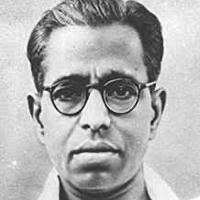
Kalki is the pen-name of Ramaswamy Aiyer Krishnamurthy (9 September 1899 – 5 December 1954). He was a Tamil writer, journalist, poet, critic and Freedom Movement activist. His writings include over 120 short stories, 10 novelettes, five novels, three historical romances, editorials and political writings and hundreds of films and music reviews. Kalki received the Sangeetha Kalasikhami award conferred on him by the Indian Fine Arts Society in 1953. On the occasion of the centenary celebrations, a postage stamp was released in his honour. His works were nationalised by the government of Tamil Nadu.

Author NameKalki Krishnamurthy
Born9 September 1899, Manalmedu
Died5 December 1954, Chennai
MoviesPonniyin Selvan, Thyaga Bhoomi, Kalvanin Kadhali, Parthiban Kanavu, Meera, Tananam Tananam, Ponvayal
Short storiesTiger King, Otrai Roja, Tharkolai, Amara Vazhvu
The Tiger King Summary by Kalki

The Tiger King Introduction to the Chapter

The story revolves around a King whose death at the hands of a tiger had been foretold by astrologers, when he was born. He tries to reverse the fate spelled out for him and the author uses thinly-veiled satire to walk the reader through the King’s attempts, which later prove futile, in a manner that makes the readers laugh.

The Tiger King Theme

The chapter, ‘The Tiger King’ is a story about the transience of life and power. The chapter is a satire on the pride and stubborness of those people who are in power. The author in the story tells about the days of autocratic and eccentric kings. These kings fear the British as they lived under the thumb rule of British.

The Tiger King Summary in English

When Maharaja Jilani Jung Jung Bahadur was born, the astrologers had foretold that one day, the king would have to die. Suddenly, the ten-day-old prince started speaking; he told them that all those who were born would have to die one day.

He asked them to tell the manner of his death. Everyone stood stunned as an infant born just ten days ago was talking in such a manner. The chief astrologer told the Prince that he was born in the hour of the bull. As bull and tiger were enemies, therefore, his death would come from a tiger.

The Maharaja grew stronger and took to tiger hunting. He was overjoyed when he killed the first tiger. When he fold the chief astrologer about it, the chief astrologer told him that he may kill 99 tigers, but he must be careful with the hundredth one. In ten years,he killed 70 tigers. He banned the killing of tigers in Pratibandapuram. The tiger population became’extinct at Pratibandapuram. So the Maharaja married into a royal family in a state where tiger population was high. Thus, he killed 99 tigers but one was still left. There was no sign of tigers anywhere. Maharaja could not bear this any more.

He raised the land tax and also dismissed some of his men. Later, a tiger was brought for the Maharaja. Maharaja took his men for hunting. He shot the tiger but missed it. Since the tiger fainted on hearing the shot, the Maharaja did not realise that he had not killed the tiger. Maharaja’s men knew it but they feared that if they tell it to Maharaja, then they may lose their job, so they killed the tiger. But the Maharaja did not know that he still had one tiger left to kill. Free from the threat of imminent death, the Maharaja had now decided to celebrate his three-year-old son’s birthday.

He gifted him a wooden tiger. The tiger was made by an unskilled man. Its surface was rough, as a result, a splinter pierced into Maharaja’s hand. The infection spread into his whole hand and the Maharaja died.

Thus, ironically, the fateful hundredth tiger, though a wooden one, was the cause of the Maharaja’s death and proved the prediction of the astrologer correct.

The Tiger King Main Characters in the Chapter

The King

The Maharaja of Pratibandapuram was a brave, resolute, determined, courageous and a firm ruler of his state but lacked worldly wisdom. He was only ten-day-old, when he challenged the prediction of the astrologers. He grew up to be a tall, sturdy, brave and strong man. He became the King of his state at the age of twenty. He was determined to fulfil his pledge.

The Tiger King Summary Questions and Answers

Question 1.
When did the Tiger King stand in danger of losing his kingdom? How was he able to avert the danger?
Answer:
Tiger King, to disprove the astrologer’s prediction, started to hunt and kill tigers. He also banned tiger hunting by anyone except the Maharaja. Anyone who disobeyed him was punished and all his wealth and property was confiscated. A British high-ranking officer wished to hunt tigers. The Maharaja told that the officer could hunt any other animal except the tiger. The British officer’s secretary wanted the Maharaja to allow the British officer to take a photograph of himself holding a gun and standing over a tiger’s , carcass. The Maharaja refused permission because he did not want anybody to kill a tiger. At this, the Maharaja stood in danger of losing his kingdom. Hence, he offered a bribe of 50 diamond rings worth three lakhs, to the wife of the British officer. By this act, the Maharaja was able to avert the danger.

Question 2.
What did the British officer’s secretary tell the Maharaja? Why did the Maharaja refuse permission?
Answer:
The British officer’s secretary told the Maharaja to allow him to shoot the tigers in his kingdom. But the Maharaja did not allow him because he thought that the number of tigers would decrease and he would not be able to complete the desired number.

Question 3.
Why, do you think, was the Maharaja in danger of losing his throne?
Answer:
A high-ranking British official came to the state. He desired to hunt tigers. The Maharaja did not give permission. The officer sent a word to get himself photographed holding a gun beside a tiger’s dead body. However, the Maharaja refused even that. As the Maharaja had prevented a British officer from fulfilling his desire, he was in danger of losing his kingdom.

Question 4.
What led the Maharaja to start out on a tiger hunt?
Answer:
When the Maharaja of Pratibandapuram was born, an astrologer predicted that his death would be caused by a tiger. So the Maharaja started out on a tiger hunt.

Question 5.
What was the astrologer’s reaction, when the Maharaja told him that he had killed his first tiger?
Answer:
On being told that the Maharaja had killed his first tiger, the astrologer announced that he could kill ninety-nine tigers, but he must be very careful with the hundredth one.

Question 6.
How does the hundredth tiger take its final revenge upon the Tiger King?
Answer:
Few days after killing the hundredth tiger, the Maharaja gifted a wooden tiger to his son on his third birthday. A tiny splinter on the surface of the wooden tiger pierced the Maharaja’s right hand, leading to a sore, followed by the Maharaja’s death. Hence, the hundredth tiger took its final revenge upon the Tiger King.

Question 7.
Why did the Maharaja decide to get married?
Answer:
As the Maharaja occupied the throne at the age of twenty, he went on a tiger hunting campaign. He was excited to kill his first tiger, and within ten years, he killed seventy tigers. Soon, tigers became extinct in his own state. So he decided to get married to the . royal family of a state that had a large number of tigers.

Question 8.
Why was the Maharaja so anxious to kill the hundredth tiger?
Answer:
The Maharaja had killed ninety-nine tigers. If he could kill just one more tiger, he would have no fear left. Then he could give up tiger hunting altogether. Moreover, he had to be extremely careful with the last tiger.

Question 9.
What sort of hunts did the Maharaja offer to organise for the high-ranking British officer? What trait of the officer does it reveal?
Answer:
For the high-ranking British officer, the Maharaja was prepared to organise any other hunt—a boar hunt, a mouse hunt, a mosquito hunt. But a tiger hunt was impossible. The officer was a big show-off. He actually did not wish to hunt or kill the tiger himself, he just wanted to be photographed with a gun in his hand, standing over a dead tiger.

Question 10.
Why was it a celebration time for all the tigers inhabiting Pratibandapuram?
Answer:
It was a celebration time for all the tigers inhabiting Pratibandapuram because the ,Maharaja banned tiger hunting in the state. Except the Maharaja, no one was allowed to hunt tigers. It was proclaimed that if anyone was found hunting a tiger, all his property and wealth would be seized.

Aunt Jennifer’s Tigers Summary in English by Adrienne Rich

We have decided to create the most comprehensive English Summary that will help students with learning and understanding.

Aunt Jennifer’s Tigers Summary in English by Adrienne Rich

Aunt Jennifer’s Tigers Poem by Adrienne Rich About the Poet

Adrienne C. Rich (May 16, 1929 – March 27, 2012) was born in Baltimore. She was an American poet, essayist and feminist. She was known as “one of the most widely read and influential poets of the second half of the 20th century”, and was credited with bringing “the oppression of women to the forefront of poetic discourse.” She published twenty-five volumes of poetry, three collections of essays and more than half a dozen other writings.

Rich’s prose collections are widely acclaimed for their erudite, lucid, and poetic treatment of politics, feminism, history, racism and many other topics.

Poet NameAdrienne Rich
Born16 May 1929, Baltimore, Maryland, United States
Died27 March 2012, Santa Cruz, California, United States
EducationRadcliffe College a women’s liberal arts college in Cambridge, Massachusetts
AwardsNational Book Award for Poetry, Ruth Lilly Poetry Prize
Aunt Jennifer’s Tigers Summary by Adrienne Rich

Aunt Jennifer’s Tigers Introduction to the Poem

The poem, Aunt Jennifer’s Tigers’ addresses the constraints of married life that a woman experiences. The protagonist of the poem, Aunt Jennifer represents women all over the world, particularly the women in America, during the 1950s. She represents the kind of women who were caught under the oppressive hand of a patriarchal society. The poet, Adrienne Rich through the simple lines of the poem, delineates a woman’s struggles with expression and rebellion. The three quatrains (four lined stanza) expose the desolating effects of patriarchy.

In the first stanza, the poet first introduces us to Aunt Jennifer’s dreams. In the second stanza, we are introduced to the reality of Aunt Jennifer’s world. The third stanza is a narrative of the future.

Aunt Jennifer’s Tigers Theme

The poem revolves around the desires and the depressingly harsh realities of Aunt Jennifer’s existence, using sharp contrasts between the tigers and herself. The tigers appear to be in sharp contrast to her personality. The tiger’s actions are smooth, uninhibited and robust. Aunt Jennifer, on the other hand, has great trouble even to embroider because her movements are so weak. Aunt Jennifer is evidently a lonely, pained old woman plagued by anxiety. The reason for her miserable plight is the oppressive patriarchal family system, wherein the whole soul of the family is the male and it is he, who dominates the scene. She creates an alternative world of freedom—a world that she longs for.

Aunt Jennifer’s Tigers Summary in English

In this feminist poem, which is critical of the male world, Aunt Jennifer creates an alternate world of freedom in her art. The tigers of Aunt Jennifer’s stitchings are representative of her desire of a free spirit, emphasising the fact that she pines for freedom from her burdensome husband.

The first stanza opens with Aunt Jennifer’s visual tapestry of tigers who are fearless of their environment. “Bright topaz denizens of a world of green” – evoke an image that these tigers are unafraid of other beings in the jungle. Here, ‘bright’ signifies their powerful and radiant persona. There is a sense of certainty and confidence in the way these tigers move as can be seen in the line – “They pace in sleek chivalric certainty”.

In the second stanza, the reality of Aunt Jennifer is revealed as she is feeble, weak and enslaved, very much the opposite of the tigers she was knitting. Her physical and mental trauma is depicted in the line – “find even the ivory needle hard to pull”. Even though a wedding ring doesn’t weigh much, “the massive weight of uncle’s wedding band, sits heavily upon Aunt Jennifer’s hand” signifies the amount of dominance her husband has exercised over her. This also means that her inner free spirit has been jailed by the patriarchal society.

The last stanza starts on a creepy note about Aunt Jennifer’s death. Even her death wouldn’t free her from the ordeals she went through which can be seen in “When Aunt is dead, her terrified hands will lie still ringed with ordeals she was mastered by”. But her art work which was her escape route or in a way, her inner sense of freedom, will stay forever, proud and unafraid.

Aunt Jennifer’s Tigers Summary Reference-to-Context Questions

Read the extracts given below and answer the questions that follow.

1. Aunt Jennifer’s tigers prance across a screen,
Bright topaz denizens of a world of green.
They do not fear the men beneath the tree;
They pace in sleek chivalric certainty.

a. How are Aunt Jennifer’s tigers described?
Answer:
They are chivalric, brave and fearless. They have self-confidence.

b. Why are they described as denizens of a world of green?
Answer:
It means the tigers are in their habitat and they are known for their strength and attitude.

c. Why are they not afraid of the men?
Answer:
They are not afraid of the men because they are strong, brave and fearless.

d. Mention the poetic device used in the last line.
Answer:
Alliteration e.g., ‘chivalric certainty’

2. Aunt Jennifer’s fingers fluttering through her wool
Find even the ivory needle hard to pull.
The massive weight of Uncle’s wedding band
Sits heavily upon Aunt Jennifer’s hand.

a. What does the first line of this extract tell us about Aunt Jennifer?
Answer:
Aunt Jennifer feels so nervous, fearful and terrified of her male counterpart that even while weaving the tapestry, her hands shake and flutter. She is a victim of gender oppression at the hands of her husband.

b. Why is it so hard for her to pull the ivory needle?
Answer:
She finds it very hard to pull a light-weight ivory needle because while she is creating her work of art, which is a creation of her desires and feelings, she feels fearful of the uncle. She finds it more hard to pull because of the mental suppression and not because of physical weakness.

c. Explain, ‘massive weight of Uncle’s wedding band’?
Answer:
This expression is symbolic of male authority and power. Matrimony seems to bind the woman physically as well as mentally. The wedding band was a burden for her as she was not getting enough freedom to express herself because of the domestic responsibilities . and restrictions put on her as a woman.

d. What is suggested in the third line of the extract?
Answer:
It suggests the weight of the relationship. The image is suggestive and the wedding band is symbolic of an unbreakable bond that weighs her down.

3. When Aunt is dead, her terrified hands will lie
Still ringed with ordeals she was mastered by.
The tigers in the panel that she made
Will go on prancing, proud and unafraid.

a. Why are Aunt Jennifer’s hands ‘terrified’?
Answer:
Aunt Jennifer has been enslaved by the wedding ring. After undergoing the harsh and bitter experiences of her married life, she feels weak and shaken.

b. What is Aunt Jennifer’s death symbolic of? Is the society anyway affected by her death?
Answer:
Her death is symbolic of her complete submission to the suppression. The male-dominated society seems to show no concern for Aunt Jennifer’s suffering, or even her death. The society seems in no way affected by it.

c. What does ‘ringed with ordeals’ imply?
Answer:
‘Ringed with ordeals’ refers to the wedding band. Ring here symbolises handcuff which enslaves her all her life and makes her a frightened and scared soul.

d. How will the tigers behave after her death?
Answer:
The tigers will go on prancing proud and unafraid.

A Roadside Stand Summary in English by Robert Frost

We have decided to create the most comprehensive English Summary that will help students with learning and understanding. In this article, we are explaining a roadside stand summary.

A Roadside Stand Summary in English by Robert Frost

A Roadside Stand Poem by Robert Frost About the Poet

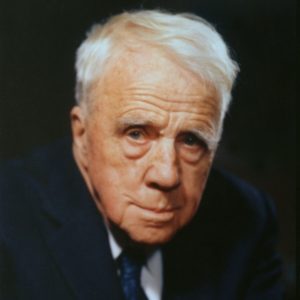
One of the America’s foremost poets of the twentieth century, Robert Frost was born in San Francisco and lived there till the age of eleven. When he was just eleven, he moved to England. In 1911, due to some circumstances, he sold his farm in Derry, New Hampshire and moved with his family to England. Here, he met and received the support of Ezra Pound.

Frost received four Pulitzer prizes and Prizes like Bollinger Poetry Prize (1963). Robert Frost’s (1874¬1963) best works include ‘Birches’, ‘Stopping by Woods on a Snowy Evening’, ‘Mending Walls’, and ‘The Road Not Taken’.

Poet NameRobert Frost
Born26 March 1874, San Francisco, California, United States
Died29 January 1963, Boston, Massachusetts, United States
PoemsThe Road Not Taken
AwardsRobert Frost Medal, Pulitzer Prize for Poetry
A Roadside Stand Summary by Robert Frost

A Roadside Stand Introduction to the Poem

Robert Lee Frost was an American poet who lived from 1874 to 1963. His simple style of writing, I realistic depiction of rural life and constant reference to nature made him one of the most influential : poets in American history. His most famous poems include ‘Mending Wall’, ‘Stopping by Woods on a Snowy Evening’ and ‘Birches’.He received the Pulitzer Prize for Poetry four times.

A Roadside Stand Theme

The poem, ‘The Roadside Stand’ is Robert Frost’s scathing criticism of an unequal society where there is a huge division between the rich and the poor, the haves and the have-nots, owing to the inequitous distribution of wealth. The poem depicts, with clarity, the plight of the poor and the complex dynamics of their existence. It also focuses on the unfortunate fact that the unequal progress and development between cities and villages have led to the feelings of distress and unhappiness in the rural people.

A Roadside Stand Summary in English

The poem “A Roadside Stand”, composed by Robert Frost is about a farmer who puts a little new shed in front of his house on the edge of a road. Several thousands of cars speed past it. He desires to sell wild berries, squash and other products. He does not like charity. He tries to sell his products for money. He believes that money can give him a better lifestyle as he saw in the movies. However, his hopes are never fulfilled. People in cars go past without even giving a cursory look at his stall. And if few of them happen to look at it, they see how the letters N and S had been turned wrong. They believe that such badly painted signs spoil the beauty of the countryside.

Nevertheless, a few cars did stop. One of them desired to take a U-turn. It came into the farmer’s yard and spoiled the grass. Another car stopped to know the way. And one of them stopped as it needed petrol, though it was quite evident that the farmer did not sell petrol.

The poor village people had little earning. They have not seen much money. They lead a life of poverty. It is known that some good-doers plan to remove their poverty. They aimed to buy their property on the roadside to build theatres and stores. They plan to shift the villagers into the village huddled together. They wished to teach them the ways that could change their good and healthy habits. They even aimed to teach them to sleep during day time. The ‘greedy good-doers’ and ‘beneficent beasts of prey’ desired to force the benefits on the poor village people and befool them.

The poet feels quite miserable at the pitiable sufferings of the poor village folk. He even had a childish desire for all the poor to be done away with at one stroke to end their pain. But he knew that it is childish and vain. So, he desires that someone relieves him of his pain by killing him.

A Roadside Stand Summary Reference-to-Context Questions

Read the extracts given below and answer the questions that follow.

1. The little old house was out with a little new shed
In front at the edge of the road where the traffic sped,
A roadside stand that too pathetically pled,

a. Where had the little new shed been put up and why ?
Answer:
A poor farmer had put up the shed at the edge of the road.

b. What imagery does the first line create?
Answer:
It creates the imagery of an impoverished farmer’s home and a roadside stand that he has set up.

c. Where is the shed set up?
Answer:
“file little new shed is set up in front of his house which is on the edge of the road.

d. What is the poetic device used in the third line?
Answer:
Personification has been used in the third line. The shed has been personified. It pleads pathetically for some extra cash flow.

2. It would not be fair to say for a dole of bread,
But for some of the money, the cash, whose flow supports
The flower of cities from sinking and withering faint.

a. Why does the peasant not want bread?
Answer:
The poet stresses that the peasant does not want bread or the basic amenities of life but a source of alternate income, apart from his trade.

b. What does the peasant yearn for?
Answer:
The peasant yearns for some of the city money to sustain him better, and liberate him from his hand-to-mouth existence.

c. How does money sustain cities?
Answer:
Money in the cities, always in excess, brings luxurious benefits.

d. Explain: ‘flower of cities’.
Answer:
This is a metaphor. Just as flowers are kept from withering with extra care and nurturing, similarly, extra cash flow helps cities to bloom and flourish.

3. The polished traffic passed with a mind ahead,
Or if ever aside a moment, then out of sorts
At having the landscape marred with the artless paint

a. Explain the poetic device in ‘The polished traffic’.
Answer:
‘The polished traffic’ is a transferred epithet that depicts the sophisticated, urban city- dwellers.

b. Why are their minds ahead?
Answer:
The urban rich have their minds preoccupied with their own lives and its related problems.

c. How do they react to the presence of the stand?
Answer:
They are indifferent to the presence of the roadside stand, if ever they chance to look at it.

d. Why do they feel out of sorts?
Answer:
The presence of the roadside stand annoys them as they feel that it mars the beauty of the landscape.

4. Of signs that with N turned wrong and S turned wrong
Offered for sale wild berries in wooden quarts,
Or crook-necked golden squash with silver warts,
Or beauty rest in a beautiful mountain scene,

a. What do N and S turned wrong symbolise?
Answer:
These inelegantly painted signposts and other rustic signs are a source of annoyance to the urban rich.

b. What does the stand sell?
Answer:
It sells some home-grown produce like wild berries, crook-necked golden squash with silver warts and amateur paintings of the mountain scene.

c. Explain: ‘beauty rest in a mountain scene’.
Answer:
This probably refers to a scenic painting made by the inhabitants of the roadside stand, to sell to the rich people.

d. What qualities of the offered articles make them unfit for sale?
Answer:
The articles for sale at the roadside stand are wild and lack the polish of similar articles available in the cities. Thus, they hold no appeal for the urban rich who drive past.

5. You have the money, but if you want to be mean,
Why keep your money (this crossly) and go along.
The hurt to the scenery wouldn’t be my complaint
So much as the trusting sorrow of what is unsaid:

a. How do the rich behave meanly with the poor?
Answer:
When the rich city people refuse to buy anything from the roadside stand, the poor peasant feel dejected and angry. They ask the city men to keep all their money with themselves and leave.

b. Explain, ‘trusting sorrow’.
Answer:
‘Trusting sorrow’ is a metaphor that refers to the fact that the peasants set up their shed trusting that their wares will attract the city folks to buy their products and thus, provide additional income. However, they are filled with sorrow when no one shows interest.

c. What is the poet’s complaint?
Answer:
The rich have hollow complaints such as hurt to the scenery. They are unable to understand the concerns of the poor and their core level struggles.

d. What is ‘left unsaid’?
Answer:
The poor wait in hope expecting the rich to fulfill their promises. Gradually, their hopes give way to the bitter realisation that the promises of the rich are not meant to be fulfilled.

6. Here far from the city we make our roadside stand
And ask for some city money to feel in hand
To try if it will not make our being expand,
And give us the life of the moving-pictures’ promise
That the party in power is said to be keeping from us.

a. What is ‘city money’?
Answer:
Using light satire, Robert Frost criticises the political party in power for preventing the peasants from enjoying the lifestyle like that of the city-dwellers.

b. What do the peasants want from the rich?
Answer:
The poet stresses that the peasants want the generosity of the rich. They want promises fulfilled in order to have some extra cash to alleviate their suffering as promised by movies and political parties.

C. Why is feeling money in hand important?
Answer:
it is important for the farmers to have the promised money in hand, instead of the empty and false promises of the politicians.

d. Explain: ‘our being expand’.
Answer:
The extra inflow of cash would help improve the quality of the lives of the poor peasants.

7. It is in the news that all these pitiful kin
Are to be bought out and mercifully gathered in
To live in villages, next to the theatre and the store,
Where they won’t have to think for themselves anymore,

a. Who are the ‘pitiful kin’?
Answer:
Pitiful kin refers to the poor farmers living in rustic farmlands.

b. Who is buying them out and why?
Answer:
Real estate agents buy them out and force farmers from villages to cities, promising riches. It benefits them temporarily, but the bulk of the benefit goes to these unscrupulous agents.

c. What is the good news for the poor?
Answer:
The good news for the poor is that the government is planning to relocate them, as part of a welfare scheme for the poor.

d. Why are they to be placed next to the theatre and the stores?
Answer:
Cunning and manipulative politicians relocate them next to the theatre and the stores to make them dependent and unable to think for themselves.

8. While greedy good-doers, beneficent beasts of prey,
Swarm over their lives enforcing benefits
That are calculated to soothe them out of their wits,
And by teaching them how to sleep they sleep all day,
Destroy their sleeping at night the ancient way.

a. Explain: ‘greedy good-doers, beneficent beasts of prey’.
Answer:
Greedy good-doers are apparent benefactors but actually ‘beasts of prey’ exploit the innocent village folk by giving them a short term sense of security

b. Who are these people?
Answer:
The greedy good-doers and beneficient beasts are the civic authorities, real estate agents who make the poor complacent and lull them into a false sense of security.

c. Name the poetic devices used in the first line.
Answer:
‘Greedy good-doers’ and ‘beneficent beasts of prey’ are both oxymorons. Alliteration has also been used in the first line.

d. How do ‘they’ destroy the poor?
Answer:
The brokers and estate agents promise farmers’ benefits, so that the farmers will not have to think for themselves as they will not be needy. Now sluggish, farmers will sleep all day, thereby losing their sleep by night.

9. Sometimes I feel myself I can hardly bear
The thought of so much childish longing in vain,
The sadness that lurks near the open window there,
That waits all day in almost open prayer
For the squeal of brakes, the sound of a stopping car,

a. What can the poet not bear?
Answer:
The interminable wait of the farmer for prospective customers, distresses the poet.

b. What is ‘childish longing’? Why is it in vain?
Answer:
The poor people’s futile expectation for city money has been compared to children longing for things beyond their reach. It is in vain as the rich are too self-absorbed and hard-hearted to help them.

c. Explain the poetic device used in the third line.
Answer:
Sadness has been personified, as it lies in wait, near the open window, desperately praying for a customer to appear.

d. What does it pray for?
Answer:
The personification is sustained as sadness prays for a city-dweller to stop by, and at least, enquire about the prices of the farmer’s wares.

10. Of all the thousand selfish cars that pass,
Just one to enquire what a farmer’s prices are.
And one did stop, but only to plow up grass
In using the yard to back and turn around;
And another to ask the way to where it was bound;
And another to ask could they sell it a gallon of gas
They couldn’t (this crossly); they had none, didn’t it see?

a. Explain: ‘selfish cars’.
Answer:
This is a transferred epithet. The people sitting in the cars are selfish as no one has charity as motive as they stop by.

b. Name the reasons for which the cars stop occasionally.
Answer:
The cars stop either to reverse, or to ask for directions or to ask if they could buy a gallon of gas.

c. What is the queer demand of the city folk?
Answer:
The insensitive city people ask if the roadside stand sold a gallon of gas, knowing fully well that gas was well beyond their means.

d. What makes the people at the roadside stand ‘cross’?
Answer:
With every passing car that stops, the farmer’s hope rises, only to be disappointed. None of them seem to want what he has to offer. This makes the people at the roadside stand cross.

11. No, in country money, the country scale of gain
The requisite lift of spirit has never been found,
Or so the voice of the country seems to complain,

a. What is country money?
Answer:
Country money is the meagre income and the meagre profit that the poor farmers make. In no way does it compare with the affluence of the rich in cities.

b. How has the country scale of gain helped the farmers?
Answer:
It has not freed them from their poverty. It has not provided them with the extra cash that is required to improve the quality of their lives.

c. How does money provide ‘the requisite lift of spirit’?
Answer:
Money is a very important factor in modern living. It provides confidence and gives an additional lift to one’s spirit.

d. What is the complaint of the villagers?
Answer:
No matter how hard the villagers try, they can never make as much money as their counterparts in the city. Thus, they never have the money to enjoy the luxuries that the city people have.

12. I can’t help owning the great relief it would be
To put these people at one stroke out of their pain.
And then next day as I come back into the sane,
I wonder how I should like you to come to me
And offer to put me gently out of my pain.

a. What kind of relief does the poet visualise for the poor?
Answer:
Frustrated by the helplessness of the villagers, Frost offers to end the lives of the poor at one stroke and liberate them from their grief and pain.

b. What makes him change his mind?
Answer:
Thankfully, common sense prevails before he has taken the thought too far. Sanity returns to him the day after he has had this thought.

c. What is the truth that he realises?
Answer:
When Frost wonders how he might feel when someone found him in pain and decided that death was the best option for him, he realises the futility of his earlier thought.

d. What is the poet’s pain?
Answer:
The poet’s pain is the iniquitous divide between the rich and the poor, the interminable wait that the poor must endure for their misery to be addressed and their suffering to end.

My Mother At Sixty Six Summary in English by Kamala Das

We have decided to create the most comprehensive English Summary that will help students with learning and understanding.

My Mother At Sixty Six Summary in English by Kamala Das

My Mother At Sixty Six Poem by Kamala Das About the Poet

Kamala Das was bom on March 31,1934 in Punnayurkulam, Thrissur District in Kerala. She was one of f the India’s original and versatile writers. She spent her childhood between Calcutta, where her father : was employed and at the ancestral home in Punnayurkulam. The writings of her great uncle, Nalapat Narayana Menon and mother Nalapat Balamani Amma had a great impact on her.

She took to writing at an early age and continued even after marriage as she was encouraged by her husband to write. Her ? writings reflect exploration of a wide range of relationships from a woman’s point of view—a daughter, a wife and a mother. Her works are filled with a woman’s desire for self-expression and freedom.

Poet NameKamala Das
Born31 March 1934, Punnayurkulam
Died31 May 2009, Pune
SpouseMadhava Das (m. 1949–1992)
AwardsVayalar Award, Muttathu Varkey Award, Kerala Sahitya Akademi Award for Story, Kerala State Film Award for Best Story
MoviesNeermaathalathinte Pookkal, Mazha, House of Stories, Raama Raavanan, Ormayilenthum
My Mother At Sixty Six Summary by Kamala Das

My Mother At Sixty Six Introduction to the Poem

Though ageing is a natural process, yet the fear of separation from your loved and near ones is very painful. The poem talks about the feeling of loneliness that aged people experience and the feeling of guilt which their offspring experience for not being able to be with their parents in their old age. The poem also explores the feelings of melancholy and pain that a daughter experiences while leaving her mother, all by herself, at a ripe old age. The agony of separation is brought forward in this poem very explicitly. The poem, in a way, also sends a very strong message to the youth of today—do not be so busy in fulfilling your desires and wishes that you forget to take care of your elderly parents when they need you the most. At times, situation can be binding. But one should never forget to show one’s love, affection and concern for one’s parents.

My Mother At Sixty Six Theme

Fear of loss: The poem composed in blank verse expresses the anguish of a daughter over her mother’s advancing age and the fear of permanent separation from her. ‘My Mother at Sixty-six’ symbolises the fast paced life and the inevitable death of our childhood, youth and loved ones. The poet is agonised by her mother’s advancing age and fear of her imminent death.

Nostalgia: The poet is carried away by her childhood premonition of losing her mother.

My Mother At Sixty Six Summary in English

While driving from her parent’s home to Cochin, International Airport, Kamala Das notices her mother, who was sitting beside her, dozing with her mouth open. Her mother’s face was pale like a dead body. The expression on her face was clearly one of pain, borne out of fear of separation and old age. A sudden fear and pain crops up in the poet’s mind and she realises that her mother is old now and could pass away leaving her all alone. Though the realisation was alarming, it was hard to accept.

In order to drive her thoughts away from the agony and pain on looking at her mother’s colourless pale face, Kamala looks outside the car. The trees racing past and the speeding car were grim reminders that time has flown by. The joyous children playing outside represent youth, energy and life. All this probably reminded of her childhood when her mother was young.

After the security check at the airport, Kamala Das looks back at her mother standing a few yards away looking pale and grey like the winter moon. The poet senses a familiar pain and her childhood fear of the thought of losing her mother comes back. Overcome with sorrow and fear, she bids her old mother goodbye and keeps smiling to hide her real feelings.

My Mother At Sixty Six Summary Reference-to-Context Questions

Read the extracts given below and answer the questions that follow.

1. Driving from my parent’s home to
Cochin last Friday morning,
I saw my mother, beside me,
doze, open mouthed, her face ashen like that
of a corpse and realised with pain
that she was as old as she looked but soon
put that thought away, and looked out at Young
Trees sprinting, the merry children spilling
out of their homes,

a. Name the poem and the poet.
Answer:
The poem is ‘My Mother at Sixty-six’ and the poet is ‘Kamala Das’.

b. Where was the poet going to and with whom?
Answer:
The poet was going from her parent’s home to the Cochin airport. She was accompanied by her mother who was sixty-six years old.

c. What did the daughter notice inside the car?
Answer:
She noticed her mother looking pale and dull, and as lifeless as a dead body. She was dozing and her mouth was open.

d. In what state is the mother now?
Answer:
She is dozing open mouthed and with a pale face.

2. but after the airport’s
security check, standing a few yards
away, I looked again at her, wan, pale
as a late winter’s moon and felt that old
familiar ache, my childhood’s fear,
but all I said was see you soon, Amma,
all I did was smile and smile and smile

a. Why does the poet ‘look at her again’?
Answer:
The poet looks at her mother for the last time before boarding the flight. She reassures herself about the well-being of her mother. She wished her mother goodbye in order to comfort her and leave on an optimistic note.

b. Does the poet share her thoughts with her mother?
Answer:
No, the poet does not share her fears and agony with her mother, but only bids her a cheerful farewell.

c. Why did the poet not share her thoughts with her mother?
Answer:
The poet did not share her thoughts with her aged mother because it would have unnecessarily disturbed her frail old mother. Moreover, her thoughts were caused by her fear of the unknown.

d. Give one reason for the poet’s ‘smile’.
Answer:
She wanted to assure her mother that they would meet again.

3. … she
looked but soon
put that thought away, and
looked out at young
Trees sprinting, the merry children spilling
out of their homes,…

a. What did the poet realise? How did she feel?
Answer:
The poet was on her way to the airport when she realised that her mother was nearing her old age, and this feeling was hard for her to accept.

b. What did she do then?
Answer:
She tried to divert her thoughts by looking out of the car window.

c. What did she notice in the world outside?
Answer:
She noticed that some joyous children were playing outside which gave her some respite , from the thoughts of her ageing mother. The children represented youth, energy and life.

d. Which poetic device is used in the 2nd last line?
Answer:
Personification

4. … but soon
put that thought away, and
looked out at young
trees sprinting, the merry children spilling
out of their homes,…

a. Which thought did the poet put away?
Answer:
The poet put the thought of looking at her ageing mother away.

b. What do the ‘sprinting trees’ signify?
Answer:
It is our common experience, whenever we travel by a fast-running vehicle, the standing objects appear to be running back fast. These sprinting trees in the poem signify how the young age of the poet’s mother passed so fast.

c. What are ‘the merry children spilling out of their homes’ symbolic of?
Answer:
The poet’s mother who is sitting beside her is dozing. Her ‘ashen’ face looks lifeless and pale like a corpse. On the other hand, children are gay and happy. They are moving out of their homes in large numbers. There is an image of happiness and spontaneous overflow of life.

d. Why are trees ‘young’ here?
Answer:
The poet establishes the contrast with the ageing mother inside the car and the sprinting trees are potrayed as young.

5. Driving from my parent’s
home to Cochin last Friday
morning, I saw my mother, beside me,
doze, open mouthed, her face ashen like that
of a corpse and realised with pain
that she was as old as she looked…

a. Where was the poet driving to?
Answer:
The poet was driving to the Cochin airport.

b. Why was her mother’s face looking like that of a corpse?
Answer:
The-mother’s face was pale, lifeless and wan looking like that of a corpse because she had grown old.

c. What did the poet notice about her mother?
Answer:
When the poet looked at her mother, her mouth was open, her pale face was looking like a corpse. She realised that her mother had grown old.

d. What pain did the poet experience?
Answer:
She felt it painful to witness her ageing mother.

6. I saw my mother,
beside me,
doze, open mouthed, her face
ashen like that
of a corpse and realised with
pain

a. Who does ‘I’ refer to ?
Answer:
‘I’ refers to the poet, Kamala Das.

b. What did ‘I’ realise with pain?
Answer:
The poet realised with pain that her mother was nearing old age.

c. Why was the realisation painful?
Answer:
Her mother’s approaching death was a hard fact for her to accept. The thoughts of separation from her mother made her feel sad.

d. Identify and name the figure of speech used in these lines.
Answer:
Simile: ashen like that of a corpse

Going Places Summary in English by A.R. Barton

We have decided to create the most comprehensive English Summary that will help students with learning and understanding.

Going Places Summary in English by A.R. Barton

Going Places by A.R. Barton About the Author

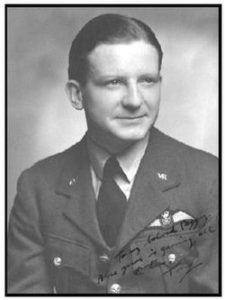
A.R. Barton is a modern English writer. He lives in Zurich and has written a number of literary pieces depicting the contemporary problems and issues. In the present story ‘Going Places’ Barton emphasizes that fantasy and imagination end up in being illusions and empty mirages.

Author NameA R Barton
Born17 December 1913, London, United Kingdom
Died4 April 1943, Llandow, United Kingdom
EducationBritannia Royal Naval College
AwardsDistinguished Flying Cross and bar (DFC and bar)
Battles and warsBattle of Britain, Siege of Malta
Going Places Summary by A.R. Barton

Going Places Introduction to the Chapter

The chapter ‘Going Places’, written by A.R. Barton, discusses about the teenagers and their dreams, f The author says that teen age period is all about aspirations. They believe to achieve the impossible f things in life. Most of the teenagers have a role model, whom they worship as their hero.

Going Places Theme

In this chapter, the author stresses on the fact that it is quite natural for teenagers to have unrealistic dreams, especially when their families are not well off. If the fantasies are beyond our approach, it may lead to miseries. Youngsters usually idiolise successful people and dreams of following their footsteps. Their dreams drive them away from the harsh realities of life. This makes it difficult for them to come in terms with life.

Going Places Summary in English

The story revolves around the life of Sophie, a teenager, who like others of her age, is filled with fantasies and desires. She comes from a poor financial background, but hopes to be sophisticated in the future. Sophie dreams of owning a boutique one day or being an actress or fashion designer, but her friend Jansie believes that both of them were earmarked to work for the biscuit factory. Jansie, who is more realistic, tries to make Sophie see reality, but in vain.

Sophie lives in a small house with her parents and brothers, Geoff and little Derek. Though she voices her feelings and desires, her parents ridicule her because they, unlike her, are more mature and know the truths of life.

Sophie finds a sort of fascination for her elder brother Geoff, who is tall, strong, handsome and reserved. She envies his silence and often wonders about his thoughts and areas of his life that she doesn’t know about.

The centre of this story is that Sophie fantasises about Danny Casey, an Irish football player, whom she had seen playing in innumerable matches. She makes up a story about how she met him in the streets and tells this to Geoff. Geoff, who is more sensible than Sophie, does not really believe her, even if she wants to. It seems an unlikely incident for Sophie to meet the prodigy in their street, but when Sophie describes the meeting in detail, he begins to hope that it could be true. She tells him that Danny has promised to meet her somewhere again.

Sophie gets so pulled into the story she made that she herself begins to believe that it’s true. She waits for the Irish player, but obviously, he never arrives. Then, she makes her way home, wondering how her brother would be disappointed on knowing that Danny Casey never showed up. However, Sophie still fantasises about her hero, unperturbed.

The whole story is about unrealistic dreams and how we love to indulge in them knowing all the while that they have little possibility of coming true. The story seems to hint at dreaming within limits. Unless you are impossibly ambitious, hardworking, and have loads of patience and perseverance, such dreams are best kept under lock and key unless you like the taste of bitter disappointment.

Going Places Main Characters in the Chapter

Jansie

Jansie belonged to a middle class family. She was a sensible and a practical girl. She did not have high ambitions in life as she is aware of the realities of her life. She does not believe in fantasies, unlike Sophie. She already knew that she has to work in a biscuit factory after completing school.

Geoff

Geoff was a soft-spoken person and an introvert. He preferred to live in reality and was very hardworking.

Sophie

Sophie was an outspoken and a daydreamer. She had various dreams and fantasies. She refused to accept the realities of life. Belonging to a middle class family, her fantasies were very far away from her reach.

Going Places Summary Reference-to-Context Questions

Read the extracts given below and answer the questions that follow.

1. Jansie, knowing they are both earmarked for the biscuit factory, became melancholy. She wished Sophie wouldn’t say these things. When they reached Sophie’s street Jansie said, “It’s only a few months away now, Soaf, you really should be sensible.

a. Who became sad?
Answer:
Jansie became sad.

b. What does Jansie know?
Answer:
Janise knows that they both are earmarked for the biscuit factory.

c. What are ‘these things’ referred to here?
Answer:
Here, ‘these things’ are referred to the fantasies of Sophie.

d. “You really should be sensible”. Why did she say so?
Answer:
Jansie says so because Sophie has been daydreaming and fantasising those things which can never happen in real life.

2. He was kneeling on the floor in the next room tinkering with a part of his motorcycle over some newspaper spread on the carpet. He was three years out of school, an apprentice mechanic, travelling to his work each day to the far side of the city.

a. Who is ‘he’ here?
Answer:
Here, ‘he’ is Geoff, Sophie’s brother.

b. What was he doing in the next room?
Answer:
He was kneeling on the floor on the next room tinkering with a part of his motorcycle over some newspaper spread on the carpet.

c. For how long had Geoff been out of school?
Answer:
He had been out of school for three years.

d. What was Geoff’s profession?
Answer:
Geoff was an apprentice mechanic. He travelled every day to the far side of the city.

3. And she was jealous of his silence. When he wasn’t speaking it was as though he was away somewhere, out there in the world in those places she had never been.

a. Who is ‘she’ here?
Answer:
Here, ‘she’ is Sophie.

b. Whom was she jealous of?
Answer:
She was jealous of her brother, Geoff.

c. What was the reason of her jealousy?
Answer:
She was jealous of her brother’s silent nature.

d. What did Sophie feel about her brother when he does not speak?
Answer:
According to Sophie, when Geoff does not speak, his mind is travelling some other places where she had never been.

4. And I knew it must be him because he had the accent, you know, like when they interviewed him oh the television. So I asked him for an autograph for little Derek, but neither of us had any paper or a pen.

a. Who is ‘I’ here?
Answer:
Here, ‘I’ is Sophie.

b. About whom is the speaker speaking?
Answer:
The speaker is speaking about Danny Casey, the footballer.

c. How did she know that he was him?
Answer:
She knew that he must be Danny because she recognised his accent which was familiar with the one, she heard on a television interview.

d. Why did they need paper or pen?
Answer:
They needed paper or pen for an autograph.