The Ailing Planet: The Green Movements Role Summary in English by Nani Palkhivala

We have decided to create the most comprehensive English Summary that will help students with learning and understanding.

The Ailing Planet: The Green Movements Role Summary in English by Nani Palkhivala

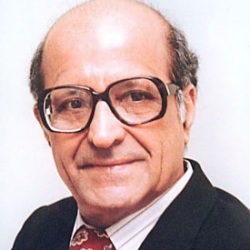
The Ailing Planet: The Green Movements Role by Nani Palkhivala About the Author

Author NameNani Palkhivala
Born16 January 1920, Mumbai
Died11 December 2002, Mumbai
EducationUniversity of Mumbai, St. Xavier’s College (Autonomous), Government Law College, Mumbai
AwardsPadma Vibhushan
SiblingsAmy Ranina, Behram A Palkhivala
The Ailing Planet The Green Movements Role Summary by Nani Palkhivala

The Ailing Planet: The Green Movements Role Summary in English

The article, “The Ailing Planet: The Green Movement’s Role”, was written by Nani Palkhivala and published in The Indian Express on 24 November 1994. The issues that he raised regarding the declining health of the earth continue to have relevance.

The Green Movement, which started nearly twenty-five years ago, is one of the single most important movements that captivated the imagination of the entire human race. In 1972 the world’s first nationwide Green party was founded in New Zealand. Since then, the movement has moved ahead. Today, we have shifted from a superficial view to a view that takes into account all aspects including those related to the environment and ecology of the world.

This shift in human awareness was revolutionary since Copernicus, who stated in the sixteenth century that the earth and the other planets revolved round the sun. For the first time there is a growing worldwide realisation that ‘ the earth itself is a living organism. It has its own metabolic needs and fundamental processes, which need to be respected and preserved.

The earth, like a patient, had begun to show symptoms of failing health. It was then that we started realising our responsibilities to the planet. We are the caretakers of this inheritance, the earth which we need to preserve for our future generations.

The World Commission on Environment and Development popularised the concept of using natural resources while maintaining an ecological balance, without causing harm to the environment in 1987. The Commission defined the idea as growth that fulfils the needs of the present without harming the reserve of future generations to meet their needs. This implied that we ought to progress without depleting the natural resources that the future generations would need.

In the zoo at Lusaka, Zambia, there is a cage with a notice “The world’s most dangerous animal”. Inside the cage is a mirror where you see yourself. Various organisations in different countries helped in creating the awareness in human beings that they should not exploit the planet mindlessly. Human beings have realised the wisdom of shifting from a system based on domination to one based on partnership.

There are about 1.4 million living species that have been listed on the earth. Biologists think that there are about . three to a hundred million other living species that are still unknown.

Mr L.K. Jha in the Brandt Commission Report raised the question whether we wanted to leave behind a scorched, a sick environment for our coming generations. Mr Lester R. Brown in his book, The Global Economic Prospect, pointed out that the earth’smain biological systems are fisheries, forests, grasslands and croplands. These form the basis of the global economic system. They supply our food and provide almost all the raw materials for industry except minerals and petroleum-derived synthetics. In large areas of the world, these systems are reaching a level where their efficiency is being damaged.

Over-fishing is common, and forests are being destroyed for firewood for cooking. As a result, firewood has become so expensive in some places that it is more expensive than food. According to Dr Myres, the tropical forests which are powerhouses of evolution, as they house innumerable species, are facing extinction.

It has been well said that forests precede mankind; deserts follow. Human beings destroy forestland turning it into deserts. The world’s tropical forests are now being destroyed at the rate of forty to fifty million acres a year. As a result, people use dung for burning and this takes away from the soil an important natural fertiliser.
According to the World Bank we need to increase the rate of forest planting by five times to cope with the expected fuel wood demand.

James Speth, the President of the World Resources Institute, stated that we are losing an acre-and- a-half of forests every second. Article 48 A of the Constitution of India provides that the State shall try to protect and improve the environment and to safeguard the forests and wildlife of the country but unfortunately laws are never respected or enforced in India. Despite laws against “casteism, untouchabillity and bonded labour”, even after several years of the functioning of the Constitution, these social evils thrive. Recently, Parliament’s Estimates Committee highlighted the disastrous exhaustion of India’s forests over the last four decades. It stated that India is losing its forests at the rate of 3.7 million acres a year. The actual loss of forests is likely to be about eight times more than this.

A three-year study by the United Nations using satellites and aerial photography studied the environment in eighty-eight countries. It reported that that the environment was ‘critical’ in many of these countries.

Growing population is one of the strongest factors changing the future of human society. In 1800, the population was merely one billion. Another billion was added to it by 1900. By the twentieth century the population increased by another 3.7 billion. The present world population is estimated at 5.7 billion. Every four days the world population increases by one million.

As incomes rise and education spreads, the rate of population will decrease. This will improve health as well. Thus development is the best way to check population. But development may not be possible if the increase in numbers continues.

The rich get richer, and the poor produce children, which is the cause of their poverty. Having more children does not mean more people to work. On the contrary, it adds to unemployed persons.

People should be encouraged to go for voluntary family planning. At present, the population of India is estimated to be 920 million—more than the entire populations of Africa and South America put together. If this is not checked, the poor will die of starvation.

The situation now is alarming; it is not only about the survival of the people but of the planet. The environmental problem may not kill us, but it is our authorisation for a safe and healthy future. This is the “Era of Responsibility” that we need to fulfil for our coming generations. We need to understand the natural balance of the world rather than a separate collection of parts. Industry has a most important role to play in this age. Chairman of Du Pont, Mr Edgar S. Woolard, the company’s Chief Environmental Officer, said that as leading manufacturers, it’was required of them that they excel in environmental performance. The world would be a better place if all businessmen thought like him.

Margaret Thatcher, too, expressed her concern saying that no generation has a freehold on this earth. We live a life like tenants who have a full repairing rental contact. According to Mr Lester Brown, we have not inherited this earth from our predecessors but we are using the property of our future generations.

The Ailing Planet: The Green Movements Role Summary Questions and Answers

Question 1.
What awareness according to Nani Palkhivala is growing worldwide? Why?
Answer:
The movement, which has gripped the imagination of the entire human race, is the worldwide consciousness that the earth itself is a living organism of which we are parts. It has its own metabolic needs and vital processes that need attention because the earth’s vital signs reveal its declining health.

Question 2.
What is propagated by the concept of sustainable expansion?
Answer:
The World Commission on Environment and Development popularized the concept of sustainable development in 1987. It stressed the idea of development that meets the needs of the present, without compromising the ability of future generations to meet their needs, i.e., without stripping the natural world of resources future generations would need.

Question 3.
What is the global concern raised by Mr Lester R. Brown that threatens the very existence of man?
Answer:
Mr Lester R. Brown has noted the earth’s principal biological systems as fisheries, forests, grasslands, and croplands — the foundation of the global economic system. They provide us with our food and virtually all the raw materials for industries. However, human claims are exhausting these resources leading to the collapse and disappearance of fisheries and grasslands.

Question 4.
What are the reasons that are leading to depletion of our natural resources?
Answer:
In a protein-conscious and protein-hungry world, over-fishing is common. In poor countries, local forests are being destroyed in order to procure firewood for cooking. As a consequence, in some places, firewood has ‘ become so expensive that fuel costs more than the food.

Question 5.
What steps has the Indian government taken to ensure the protection of the environment? What is the impact?
Answer:
The Indian government through Article 48A of the Constitution of India provides that the State shall try to protect and improve the environment and safeguard the forests and wildlife of the country. But the law has not had the due impact as laws are neither valued nor enforced in India.

Question 6.
The population in the world is growing at an alarming rate. Comment.
Answer:
The growing world population is deforming the future of human society. Human population reached its first billion around the year 1800. By the year 1900, a second billion was added, and another 3.7 billion in the twentieth century. Presently, the world population is estimated at 5.7 billion. Every day the world population increases by one million.

Question 7.
Why is the growing population detrimental to the world’s progress?
Answer:
Development will not be possible if the present increase in numbers continues. The rich get richer and the poor produce more children, hampering their economic growth. More children do not mean more workers, merely more people without work. Excessive population perpetuates poverty. People would die of hunger unless population growth is controlled.

Question 8.
Why is our age the ‘Era of Responsibility’?
Answer:
A growing anxiety about the survival of our planet has surfaced for the first time in human history. The emerging new world vision—a holistic view of the source of our survival—has steered in the Era of Responsibility; an ecological view of the world as a complete whole and not a disconnected collection of parts.
Landscape of The Soul Summary in English by Nathalie Trouveroy

We have decided to create the most comprehensive English Summary that will help students with learning and understanding.

Landscape of The Soul Summary in English by Nathalie Trouveroy

Landscape of The Soul Summary in English

Wu Daozi, was a painter in the eighth century. His last painting was a landscape that he made for Tang Emperor Xuanzong, to beautify a palace wall. Wu Daozi hid his work behind a screen, so only the Emperor would see it. He told the Emperor that in the cave in the painting, at the bottom of the mountain, lived a spirit. He then, clapped his hands, and the entrance to the cave opened. The painter entered the cave and the entrance closed behind him. Much to the surprise of the Emperor the painting vanished from the wall. After that neither was there any sign of Wu Daozi’s painting nor was he never seen again.

There are many such stories in China’s classical education. The books of great philosophers such as Confucius and Zhuangzi are full of such accounts. These stories helped the master to guide his student in the right direction. They also tell of the general feeling of the people towards art. There is another well-known story about a painter who did not draw the eye of a dragon that he had painted because he feared that it would fly out of the painting.

In fifteenth century there was a story about an accomplished blacksmith called Quinten Metsys. He fell in love with a painter’s daughter. The painter would not accept a son-in-law who was a blacksmith. So Quinten crept into the painter’s studio and painted a fly on his latest painting. It looked so real that the master tried to squash it away. He then realised what had happened. So he immediately took Quinten as his trainee. Quinten married his beloved and later become one of the most famous painters of his times. These two stories show that each form of art was trying to achieve: a perfect, impression of similarity in Europe and the spirit of inner life in Asia.

In the Chinese story, the Emperor appreciates the outer appearance in the painting but the artist shows him the true meaning of his work. The Emperor rules over the land but the artist knows the soul. The European painter would want people to look at a particular landscape just as he saw it while the Chinese painter does not choose a single viewpoint. One can enter a Chinese landscape from any point and travel in it. The artist makes a path for your eyes to travel up and down, and then back again, in a leisurely movement. This is even more true in the case of the horizontal scroll, in which the action of slowly opening the painting, then rolling it up to move on to the other, adds an element of time which is not found in any other form of painting. It also requires the active involvement of the onlooker, as his participation is physical as well as mental. The Chinese painter wants us to enter his mind. The landscape is a spiritual and abstract universe.

This idea is expressed as shanshui, which means ‘mountain water’. It is used together to symbolize the word ‘landscape’. More than two elements of an image represent two complementary poles, reflecting the Daoist view of the universe.

The mountain is Yang. It is depicted upright as if reaching towards Heaven. It is steady, warm, and dry in the sun. On the other hand the water is Yin that is horizontal and resting on the earth. It is fluid, moist and cool. The basic idea of Daoism is depicting the interaction of Yin and Yang. While Yin is the feminine part of universal energy, Yang is the masculine. The vital third element, the Middle Void, is often ignored. This is where the interaction of Yin and Yang takes place. This can be compared with the yogic practice of pranayama; breathe in, retain, breathe out, the suspension of breath is the Void where meditation occurs. The Middle Void is indispensable. Nothing can happen without it.

This is the reason why in the Chinese landscape there is white, unpainted space. This is also where man finds a basic role. In that space between Heaven and Earth, man becomes the medium of communication between both poles of the Universe. His being there is vital, even if there is only a suggestion of his presence. Francois Cheng underlines man’s importance saying that man is neither lost nor oppressed by the lofty peaks, he is in ‘the eye of the landscape’.

It was the French painter Jean Dubuffet who first doubted the theory of ‘art brut’ in the 1940s. Then only a few were interested in the art of the inexperienced creative thinker. However now the interest in ‘outsider art’ is growing internationally. This type of art is described as the art of those who have received no formal training, but are talented and have an artistic insight. Their works are inspiring unlike many of conventional ones.

About the same time that Dubuffet put forward his concept, in India an unqualified but brilliant artist was creating a masterpiece in the realm of art. It was Nek Chand, who changed a little patch of jungle into the Rock Garden, at Chandigarh. He sculpted with stone and used recycled material. This is India’s biggest contribution to outsider art. The Raw Vision, a UK-based magazine that paved the way in outsider art publications, wrote about Nek Chand, and his Rock Garden sculpture ‘Women by the Waterfall’. The view of ‘art brut’ or ‘raw art’ was of works that were in their unrefined state as regards cultural and artistic influences. Nek Chand used everything from a tin to a sink to a broken down car to create a magnificent work of art.

As an appreciation of his art, the Swiss Commission for UNESCO will be honouring him by putting up an exhibition of his works. The five-month interactive show, ‘Realm of Nek Chand’, beginning October will be held at leading museums in Switzerland, Belgium, France and Italy. According to Nek the greatest reward is seeing people enjoy his creation.

Landscape of The Soul Summary Questions and Answers

Question 1.
Briefly narrate the story of the Emperor and the Chinese artist.
Answer:
A painter Wu Daozi, who lived in the eighth century was asked to paint a landscape by the Tang Emperor Xuanzong, to decorate a palace wall. The artist concealed his work behind a screen, so that only the Emperor would see it. For a long time, the Emperor admired the wonderful scene.

One day the painter showed him a cave at the foot of the mountain, and said that a spirit dwelt there. The painter clapped his hands, and the entrance to the cave opened. He then entered the cave and the entrance closed behind him. Since then nothing is known of the artist or the painting as the painting vanished off the wall.

Question 2.
How did stories such as the one about Wu Daozi play an important role in China’s classical education?
Answer:
Such stories played a significant part in China’s classical education. They helped the master to guide his pupil in the right direction. They were not merely tales, but were deeply illuminating of the essence of art. The books of Confucius and Zhuangzi are full of such stories. They reveal that art was considered the essence of inner life and spirit in Asia.

Question 3.
Why did the artist agree to get his daughter married to the blacksmith?
Answer:
Initially the artist was against the blacksmith, Quinten Metsys, marrying his daughter. However, one day Quinten slyly sneaked into the painter’s studio and painted a fly on his latest panel, that was so realistic that the master tried to swat it away. The artist was so impressed that he admitted Quinten as an apprentice into his studio and let him marry his beloved.

Question 4.
What is the difference between the Chinese and European art?
Answer:
The Chinese and European art are different as the European art is trying to achieve a perfect, illusionistic likeness in Europe, and the Chinese the essence of inner life and spirit in Asia. While the European wants you to look at the landscape through his eyes, the Chinese painter wants you to enter it from any point, then travel in it. He creates a path for your eyes to travel up and down, then back again, in a leisurely movement.

Question 5.
How does shanshui express the Daoist view of the universe?
Answer:
Shanshui means ‘mountainwater.’ It expresses the Daoist view. The mountain is Yang and it stretches vertically towards Heaven. It is stable, warm, and dry in the sun, while the water is Yin. It is horizontal and resting on the earth, fluid, moist and cool. The interaction of Yin, the receiver, feminine aspect of universal energy, and Yang, active and masculine, is the fundamental belief of Daoism.

Question 6.
What is lacking in Shanshui?
Answer:
The third element, the Middle Void where their interaction takes place, is lacking in Shanshui. The Middle Void is indispensable. Hence nothing can happen without it. This is the reason why the white, unpainted space in Chinese landscape is important. This is also where Man finds a fundamental role, in that space between Heaven and Earth, he becomes the medium of communication between both poles of the universe.

Question 7.
How is the pranayama compared to the Middle void?
Answer:
The Middle Void is vital as nothing can happen without it. This is the reason why the white, unpainted space in Chinese landscape is imperative. This is also where Man finds a fundamental role, in the yogic practice of pranayama we breathe in, retain and breathe out. The suspension of breath is the Void where meditation occurs.

Question 8.
How did the theory of ‘brut art’ put forward by Jean Dubuffet get credence?
Answer:
French painter Jean Dubuffet challenged the concept of ‘art brut’ in the 1940s. Before that the art of the untrained visionary was of minor interest. At about the same time ‘an untutored genius was creating paradise’. This was none other than Nek Chand, who cleared a little patch of jungle to make himself a garden sculpted with stone and recycled material known to the world today as the Rock Garden, at Chandigarh.

Discovering Tut: The Saga Continues Summary in English by AR Williams

We have decided to create the most comprehensive English Summary that will help students with learning and understanding.

Discovering Tut: The Saga Continues Summary in English by AR Williams

Discovering Tut: The Saga Continues Summary in English

Tut, the last heir of a powerful family that had ruled Egypt, died a teenager. He was buried and, with the passage of time, forgotten. But after the discovery of his tomb in 1922, the modem world wondered about the cause of his untimely death. He was brought out of his tomb and a CT scan was done to ascertain the reason of his death.

It was 6 pm, on 5 January 2005 when King Tut was taken out from his burial tomb after a span of 3,300 years. The weather—dusty, and cloudy—was eerie. The mummy was then put into a CT scanner to investigate the continuing uncertainty of the death of this young ruler who died an untimely death.

Multitudes of tourists from around the world came to visit the tomb to pay their respects. They stared at the murals on the walls of the burial chamber and looked at Tut’s gilded face on the lid of his mummy-shaped outer coffin. The visitors were curious and thoughtful. Some feared the pharaoh’s curse would befall those who disturbed him.

Zahi Hawass, Secretary General of Egypt’s Supreme Council of Antiquities, said that the mummy was in very bad state because of the manner in which Howard Carter, the British archaeologist, who in 1922 had discovered Tut’s tomb, had gone about investigating the contents of the tomb. He had then found the richest royal collection ever. There were the dazzling works of art in gold that had caused a sensation then and continue to draw people’s attention even today. Everyday things such as board games, a bronze razor, linen undergarments, cases of food and wine had also been buried with the young pharoah.

Carter documented the pharaoh’s treasures that were buried with him. He then began looking into his three nested coffins. In the first, he found that the burial cloth was decorated with garlands of willow and olive leaves, wild celery, lotus petals, and cornflowers. This helped him conclude that the King was buried in March or April. When he reached the mummy, he realised that the ritual resins had solidified, cementing Tut to the bottom of his solid gold coffin.

Carter used the hot sun in Egypt to loosen the resins. For a number of hours he put the mummy outside in the sun that heated it to 149 degrees Fahrenheit. But it was futile. He stated that the mummy had to be cut from under the limbs and trunk before it was possible to lift the king’s remains. At that time, Carter had had no option. Had he not done this, thieves would have attacked the guards and robbed the place to remove the gold.

The royals believed that they could take their riches with them after death. Hence King Tut was given abundant jewellery and all of pure gold. To separate Tut from his ornamentation, Carter’s men removed the mummy’s head and cut off nearly every major joint. They then collected and put the remains of the body on a layer of sand in a wooden box with padding.

Lately, the archaeologists have started concentrating less on treasures and more on the details of life and mysteries of death. Moreover, they now have an access to more advanced technology. In 1968, an anatomy professor X-rayed the mummy and revealed that Tut’s breastbone and front ribs were missing.

King Tut’s demise was a big event as he was the last of his family’s lineage. With him, came to an end a dynasty. But the facts of his death and its consequences are unclear.

Amenhotep III, Tut’s father or grandfather, was a powerful pharaoh who ruled for almost four decades at the height of the eighteenth dynasty’s golden age. His son, Amenhotep IV succeeded him. He promoted the worship of the Aten, the sun disk, changed his name to Akhenaten, or “servant of the Aten”, and moved the religious capital from the old city of Thebes to the new city of Akhetaten, known now as Amama. He shocked the country by attacking Amun, a major god, smashing his images and closing his temples. It must have been a terrible time for the people because the family that had ruled for centuries was coming to an end, and then Akhenaten had presumably gone a little crazy.

After Akhenaten’s death, a mysterious ruler named Smenkhkare showed up for a brief period and departed with hardly any sign. It was then that young Tutankhaten (Tut) took the throne. The boy king soon changed his name to Tutankhamun, “living image of Amun”, and during his reign the country witnessed a return of the old ways. He reigned for about nine years and then died suddenly.

The Egyptian Mummy Project has recorded almost 600 mummies so far and is still counting. The next stage is scanning the mummies with a portable CT machine. King Tut is one of the first mummies to be scanned to ascertain the secret of his death.

The million-dollar scanner had stopped functioning because of sand in a cooler fan. The guard there looked anxious and said jokingly that it was because of the curse of the pharaoh. Finally the problem with the scan machine was rectified and the task finished. Tut was carried back to his tomb in less than three hours after he was removed from his coffin.

The scanned images of Tut revealed that nothing had gone seriously wrong. Zahi Hawass was evidently comforted. The wind had stopped, and the winter air was cold and still. Just above the entrance to Tut’s tomb stood Orion, the constellation that the ancient Egyptians knew as the soul of Osiris, the god of the afterlife, as if watching Tut.

Discovering Tut: The Saga Continues Summary Questions and Answers

Question 1.
What generated the interest of the world in King Tut?
Answer:
King Tut was just a teenager when he died. He was the last heir of a powerful family that had ruled Egypt and its empire for centuries. Since the discovery of his tomb in 1922, the modem world wondered about what happened to him and wondered if he could have been murdered.

Question 2.
How did nature seem to echo the unnatural happening?
Answer:
As King Tut was taken from his resting place in the ancient Egyptian cemetery, dark-bellied clouds that had scudded across the desert sky all day, veiled the stars in grey. It seemed that the wind was angry and had roused the dust devils.

Question 3.
Why did the tourists throng to see Tut’s tomb? What was their reaction?
Answer:
The tourists came to pay their respects to King Tut. They admired the murals and Tut’s gilded face on his mummy-shaped outer coffin. They read from the guidebooks in whisper, or stood silently, pondering over Tut’s untimely death, dreading, lest the pharaoh’s curse befall those who disturbed him.

Question 4.
Who was Howard Carter? What did he find?
Answer:
Howard Carter was the British archaeologist who in 1922 discovered Tut’s tomb after years of unsuccessful search. He discovered the richest royal collection ever found that included stunning artefacts in gold that caused a sensation.

Question 5.
Tut was buried in March-April. How did Carter conclude this?
Answer:
On opening a coffin, Carter found a shroud decorated with garlands of willow and olive leaves, wild celery, lotus petals and cornflowers. Since these flowers grow in March or April, Carter concluded that the burial was in these months.

Question 6.
“When he finally reached the mummy, though, he ran into trouble.” Why was it so?
Answer:
When Carter tried to raise the mummy out of the coffin, he could not. The ritual resins had hardened, cementing Tut’s body to the bottom of his solid gold coffin. No amount of force could pull it out.

Question 7.
How did he decide to detach the mummy? Why?
Answer:
First Carter tried to loosen the resins with the heat of the sun. For several hours, he put the mummy outside in blazing sunshine that heated it to 149 degrees Fahrenheit but it was in vain. Then he decided to carve it out from beneath the limbs and trunk as there was no other way of raising the king’s remains.

Question 8.
What were the treasures found in the coffin? Why were they put there?
Answer:
King Tut’s coffin contained precious collars, inlaid necklaces and bracelets, rings, amulets, a ceremonial apron, sandals, sheaths for his fingers and toes, and his inner coffin and mask, all of which were made of pure gold. The royals, in King Tut’s time, hoped to take their riches along with them for their next life.

Question 9.
How has the viewpoint of archaeologists changed with the passage of time?
Answer:
The archaeologists, earlier, focussed on the treasures that the tomb would yield. The centre of attention, now, is more on the fascinating details of life and intriguing mysteries of death. Moreover, now they use more sophisticated tools, including medical technology.

Question 10.
What was the interesting fact about Tut that was brought to light in the late sixties?
Answer:
In 1968, more than forty years after Carter’s discovery, an anatomy professor X-rayed the mummy and revealed a startling fact: beneath the resin that caked his chest, his breast-bone and front ribs were missing.

We Are Not Afraid To Die If We Can All Be Together Summary in English by Gordon Cook and Alan East

We have decided to create the most comprehensive English Summary that will help students with learning and understanding.

We Are Not Afraid To Die If We Can All Be Together Summary in English by Gordon Cook and Alan East

We Are Not Afraid To Die If We Can All Be Together Summary in English

‘We’re Not Afraid to Die… if We Can All Be Together’ is an exciting account of a family’s experience at sea. It not only underlines the difficulties that mariners often face at sea but also brings out, poignantly, the spirit of togetherness in a family, who are prepared to brave death together.

In July 1976, the author who is a thirty-seven-year-old businessman, along with his wife Mary, son Jonathan, six, daughter Suzanne, seven, set sail from Plymouth, England, for a trip around the world, taking the route that Captain Cook had taken 200 years earlier. They had longed to do this for the past sixteen years and had hence spent all their spare time improving their maritime skills in the British waters. Their boat, Wavewalker, was a 23-metre, 30-ton boat that had been efficiently built. It had various fixtures and was tested in the roughest weather they could find.

The first part of their three-year journey passed pleasurably as they sailed down the west coast of Africa to Cape Town. However, before moving to the east, they took two crewmen, American, Larry Vigil, and Swiss, Herb Seigler, to help them cross the southern Indian Ocean since this is known to be one of the world’s roughest seas.

It was just on the second day of their journey out of Cape Town that they began to face windstorms that continued for a few weeks. But worse than the ferocious winds were the waves that rose up as high as the main mast.

By 25 December they had travelled 3,500 kilometres east of Cape Town. The weather was terrible but they celebrated Christmas. By New Year’s Day, the weather became worse and on the morning of 2 January, the waves were extremely large.

They were sailing with only a small storm jib and were still making eight knots. The ship moved to the top of ‘ each wave but the gigantic waves and menacing winds continued to terrorise them. They dropped the storm jib to slow the boat and then lashed a heavy mooring rope in a loop across the stem. Then they fastened everything, went through their life-raft drill, attached lifelines and put on oilskins and life jackets.

At about 6 pm, there was a lull before the storm. The wind stopped and the sky became dark. Then a loud roaring sound was heard and a huge cloud seemed to tower over the ship. It was, in fact, the biggest wave that they had ever seen. It was perpendicular and almost twice as high as the other waves.

The roaring grew louder and the author attempted to ride the wave. But just then there was a great explosion that shook the floor of the ship. Water gushed into the ship. With the impact, the author’s head hit against the wheel and before he knew he was thrown into the sea. He accepted the fact that he was going to die but suddenly his head popped out of the water and he spotted Wavewalker a few metres away. It was on the verge of overturning. Its masts were almost horizontal. Then a strong wave tossed it to a straight position. The author took hold of the guardrails and reached the Wavewalker.

The waves were throwing him around and his left ribs cracked. His mouth filled with blood as he had broken his teeth. Somehow he found the wheel, lined up the stem for the next wave and hung on. The author felt the ship flooding with water. Just then, Mary came in a panic and informed him that the ship was sinking as water was filling in. Putting her at the wheel, the narrator clambered towards the hatch. He saw Larry and Herb pumping out water frantically. He also noticed that the whole starboard had caved inwards and clothes, crockery, charts, tins and toys were floating in deep water.

The author waded with difficulty into the children’s cabin. Sue had a big bump above her eyes but this was insignificant compared to the situation that they were in. He found a hammer, screws and canvas and struggled back on deck. Somehow he managed to stretch the canvas and secure waterproof hatch covers across the gaping holes. Some water continued to come in but most of it could be prevented from entering the ship.

This was not the end of their troubles. The hand pumps started clogging up with the trash floating around the cabins. Soon the electric pump short-circuited. The water level rose menacingly. He went to the deck and found two spare hand pumps and another electric pump under the chartroom floor.

The night was extremely cold. They struggled to pump out water, find direction and also work the radio. There was no response to their desperate calls for help because they were in a distant comer of the world.

Sue’s head had swollen a lot, she had two huge black eyes, and a deep cut on her arm but she did not worry him.

By morning, on 3 January, they had managed to pump out the water to a reasonable level and they could afford to take two hours’ rest, in turns. The author suspected a huge leak somewhere and found that nearly all the boat’s main rib frames were damaged down to the keel. There was nothing holding up a whole section of the starboard hull except a few cupboard partitions.

By now they knew that their ship, Wavewalker, was not sturdy enough to take them to Australia. The author checked the charts and assessed that there were two small islands a few hundred kilometres to the east; one of them was lie Amsterdam. They hoped to reach one of these safely and for better weather as their secondary engine was out of order.

On 4 January, they managed to throw out the water from the ship after thirty-six hours of non-stop pumping. Now, they had to only pump out the water that was still coming in. It was difficult to set any sail on the main mast as the pressure on the rigging would pull the broken section of the hull apart. So they hoisted the storm jib and moved towards the two islands.

They ate their meagre meal of some corned beef and cracker biscuits after almost two days. However, their relief was short-lived and came to an end at 4 pm. Dark clouds gathered again, the wind started blowing fiercely, and the sea rose afresh. The situation worsened and when the narrator tried comforting the children on 5 January, Jon said that they were not afraid of dying if the family could be together.

But the author was determined to fight the sea. To protect the weakened starboard he decided to heave-to—with the undamaged port hull facing the oncoming waves, using a makeshift sea anchor of heavy nylon rope and two 22 litre plastic barrels of paraffin.

Later in the evening, as more water came into the ship they felt defeated again.

But by the morning of 6 January, the speed of the wind decreased. The author tried to calculate their position. All they could find out was that they were somewhere in 150,000 kilometres of ocean looking for a 65 kilometre wide island. Sue, who was injured, moved up to him and gave him a card she had made. It was a message to hope for the best.

The author tried to calculate their position using a spare compass and by estimating the influence of the westerly currents. About 2 pm, he asked Larry to steer a course of 185 degrees. He said that they could expect to see the island at about 5 pm, although inwardly he was doubtful.

Dejected, he went down to his bunk and before he knew, he fell asleep. He woke up at 6 pm, and it was growing dark. Just then, the two children came up to him. Jon told him that he was the best father and the best captain. Sue announced that the island was just in front of them. The author rushed out to the deck and stared with relief at lie Amsterdam. It was a piece of volcanic rock, with little vegetation.

They stayed offshore for the night, and the next morning all twenty-eight inhabitants of the island helped them to the island. When at the island, he admired Larry and Herb’s happy and positive attitude, Mary for being at the wheel for all the critical hours but most of all, Sue who did not want them to worry about a head injury and Jon who was not afraid to die.

We Are Not Afraid To Die If We Can All Be Together Summary Questions and Answers

Question 1.
Who was the narrator? What adventurous task did he take on?
Answer:
The narrator was a thirty-seven-year-old businessman, who along with his family, set from Plymouth, England, on a round-the-world voyage like Captain James Cook had done 200 years earlier in a 30-ton wooden-hulled boat.

Question 2.
How did they prepare for this onerous task?
Answer:
For sixteen years, they spent all their leisure time improving their seafaring skills in British waters. They bought a boat, Wavewalker, a 23-metre, 30-ton wooden-hulled vessel that had been professionally built.

They spent months fitting it out and testing it in the roughest weather that they could find.

Question 3.
How many people were there in the boat?
Answer:
The four of them—the narrator, his wife Mary, son Jonathan, and daughter Suzanne—sailed for 105,000 kilometres to the west coast of Africa to Cape Town. They took on two crewmen with them—an American, Larry Vigil, and a Swiss, Herb Seigler, before settling sail on the southern Indian Ocean.

Question 4.
What was the first indicator of rough weather?
Answer:
On their second day out of Cape Town, they encountered strong winds. For the next few weeks, the gales blew continuously. The gales did not worry the narrator but the sizes of the waves were disturbing.

Question 5.
What ordeal awaited them on 2 January?
Answer:
After they celebrated Christmas, the weather changed for the worse. On the early morning of 2 January, the waves became huge. As the ship rose to the top of each wave, they could see the vast sea rolling towards them. The wind seemed to be howling.

Question 6.
What measures did they take to counter this ordeal?
Answer:
They dropped the storm jib and lashed a heavy mooring rope in a loop across the stem to slow the boat, and then double-lashed everything, went through their life-raft drill, attached lifelines, put on oilskins and life jackets.

Question 7.
What happened on the evening of 2 January?
Answer:
On the evening of 2 January there was a lull before the storm. As the sky grew dark, they heard a growing roar, and saw a massive cloud rising at the rear of the ship. To their dismay, it was a huge wave, almost twice the height of other waves, with a fearsome breaking top.

Question 8.
What happened when they tried to ride over the wave?
Answer:
When they tried to ride over the wave, there was a loud blast that shook the deck. Water gushed over the ship, the narrator’s head hit the wheel and he was thrown overboard into the water. He accepted his impending death, and while he was losing consciousness, he felt peaceful.

Question 9.
How did the narrator get back to the ship after having been thrown into the sea?
Answer:
After the narrator felt he was losing consciousness, his head suddenly popped out of the water. A few metres away, he saw Wavewalker, nearly overturned. Then, a wave threw it upright. He grabbed the guardrails and sailed through the air into Wavewalker’s main boom. The waves tossed him onto the deck like a rag doll.

Question 10.
How did they manage to throw out water from the ship?
Answer:
With the narrator’s wife, Mary, at the wheel, the narrator half-swam, half-crawled into the children’s cabin, where he found a hammer, screws and canvas, and struggled back on deck. He secured waterproof hatch covers across the wide-open holes. With Herb and Larry’s assistance, he managed to throw out the water.

The Portrait of A Lady Summary in English by Khushwant Singh

We have decided to create the most comprehensive English Summary that will help students with learning and understanding.

The Portrait of A Lady Summary in English by Khushwant Singh

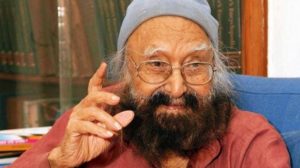
The Portrait of A Lady by Khushwant Singh About the Author

Author NameKhushwant Singh
Born2 February 1915, Hadali, Pakistan
Died20 March 2014, Sujan Singh Park, Delhi
SpouseKawal Malik (m. 1939–2001)
EducationGCU, Panjab University, King’s College London, The Dickson Poon School of Law, St Stephen’s College
AwardsPadma Bhushan, Padma Vibhushan, Punjab Rattan Award
The Portrait of A Lady Summary by Khushwant Singh

The Portrait of A Lady Summary in English

“The Portrait of a Lady” is a heart-warming pen picture of Khushwant Singh’s grandmother who brought him up.

The author describes his association with his grandmother and the changes that came about in their relationship with the passage of time. Her simplicity and beauty left an indelible imprint on the poet’s mind.

Khushwant Singh’s grandmother was short, old and slightly bent, and hobbled around the house telling the beads on her rosary. He had seen her look the same for twenty years and to him it seemed that she was really old and could not grow older. It was difficult for him to conceptualise that she could have been young and . pretty; to believe that she had had a husband. His grandfather’s portrait hung on the wall of the drawing room.

He too looked very old arid very grandfatherly. Looking at his portrait one could visualise that he had many grandc hildren but one could not imagine him in his youth with his wife and children.

When Khushwant Singh was still young, his parents left for the city leaving him to the care of his grandmother.

They were good friends. She woke him up each morning, bathed him, dressed him, plastered his wooden slate, gave him breakfast—a stale, buttered chapatti with sugar sprinkled on it and walked him to school. The school was attached to a temple. While Khushwant Singh and the other children sat in the veranda learning the alphabets and morning prayers, his grandmother sat inside the temple reading scriptures. After they had both finished, they would head back home. On their way, she fed the dogs each day with the stale chapattis that she carried with her. When the writer’s parents had settled in the city, they sent for them. This proved to be a turning point in their relationship. The only thing that remained unchanged was their common bedroom.

She could not accompany him to school as he went by the school bus. Now, he went to an English school where they taught science. She could not understand English and did not believe in science. The fact that they were not taught about god made her unhappy. Khushwant Singh’s learning music in school made her unhappier as she felt it was not meant for gentle folk. Her communication with him deteriorated further. But it was when he went to the university and got a separate room that even this link was snapped.

When the writer was going abroad, she went to the railway station to see him off but did not speak a word, only kissed his forehead. The writer believed this was their last physical contact as he was going away for five years. But she was there when he returned and was delighted to see him back. In the evening she collected women from the neighbourhood and beat the drum and sang for hours of the homecoming of warriors. For the first time she missed her prayers.

She was then taken slightly ill. The doctors reassured the family that there was nothing to worry but she stopped talking. She said her end was near. She began to tell the beads of her rosary and her lips moved in a silent prayer before she died.

After her death, her body was laid on the floor, covered in a red shawl. Thousands of sparrows came and sat quietly all around her body. The writer’s mother threw breadcrumbs but the sparrows took no notice of them.

After her cremation they flew away without touching the crumbs.

The Portrait of A Lady Summary Questions and Answers

Question 1.
Why was it hard for the author to believe that the grandmother was once young and pretty?
Answer:
It was difficult for the author to believe that his grandmother was once young and pretty. In fact, the thought was almost revolting. He had seen her old for the last twenty years. He felt she could age no further. The very thought of her playing games as a child seemed quite absurd and undignified.

Question 2.
The grandmother has been portrayed as a very religious lady. What details in the story create this impression?
Answer:
The author recalls his grandmother as a very religious woman. He remembers her hobbling about the house, telling the beads of her rosary. He recalls her morning prayers and her reading scriptures inside the temple. The author recounts how, during the last few days, she spent all her time praying.

Question 3.
The grandmother had a divine beauty. How does the author bring it out?
Answer:
The grandmother was not pretty but had a divine beauty. She dressed in spotless white. Her silver locks were scattered untidily over her pale, puckered face, and her lips constantly moved in an inaudible prayer. The author describes her “like the winter landscape in the mountains”—a personification of “serenity, breathing peace and contentment.”

Question 4.
What proofs do you find of friendship between the grandmother and grandson in the story?
Answer:
The grandmother and grandson were good friends. She got him ready and walked him to and back from school. In the city, they shared a common bedroom. The author’s grandmother saw him off, silently, but kissing him on his forehead, when he went abroad and celebrated his return five years later.

Question 5.
The grandmother was a kind-hearted woman. Give examples in support of your answer.
Answer:
The grandmother was a kind-hearted woman. On her way back from school, she would feed the village dogs with stale chapattis. In the city, when she could not move out, she took to feeding sparrows that came and perched on her legs, shoulders, and head.

Question 6.
“This was the turning point in our friendship.” What was the turning point?
Answer:
The turning point in the friendship arrived when they shifted to the city. They saw less of each other as she could neither accompany him to school, nor understand English. She did not believe in science. She could not keep pace with the author’s modem education that he received in the city school.

Question 7.
Draw a comparison between the author’s village school education and city school education.
Answer:
The village school was attached to a temple and the students were taught the alphabet and morning prayers. The author and his grandmother walked to the school in the village. However, in the city he went by the school bus. He was taught science and English but not taught about god. He was also taught music.

Question 8.
What was the happiest moment of the day for the grandmother?
Answer:
The happiest moment of the day for the grandmother in the city was when she was feeding the sparrows.
They perched on her legs, shoulders, and head but she never shooed them away.

Question 9.
What was ‘the last sign’ of physical contact between the author and the grandmother? Why did the author think that to be the last physical contact?
Answer:
The author was going abroad for five years. His grandmother kissed his forehead. He presumed this as the last sign of physical contact between them. He feared that she would not survive till he returned since he was going away for five years.

Question 10.
Everybody including the sparrows mourned the grandmother’s death. Elaborate.
Answer:
When the grandmother died, thousands of sparrows collected and sat in the courtyard. There was no chirruping. When the author’s mother threw some breadcrumbs for them, they took no notice of the breadcrumbs. They were full of grief at her death and flew away quietly after the cremation.