We have decided to create the most comprehensive English Summary that will help students with learning and understanding.
The Voice of The Rain Poem Summary in English by Walt Whitman
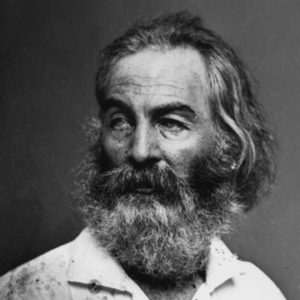
The Voice of The Rain Poem by Walt Whitman Poet
Name
Walt Whitman
Born
31 May 1819, West Hills, New York, United States
Died
26 March 1892, Camden, New Jersey, United States
Poems
Leaves of Grass, Song of Myself, O Captain! My Captain!
Awards
Golden Kite Award for Picture Book Illustration
The Voice of The Rain Poem Summary by Walt Whitman
The Voice of The Rain Poem Summary in English
The poet gazed at the gentle spell of rain and asked of the rain who it was. Much to the surprise of the poet, it answered him. The rain said that it is the poetry of the earth. It is never-ending. It is intangible as it rises out of the land, from the endless sea before it ascends towards heaven. There it changes its form, yet, in essence, it is the same. It once again comes down to earth to refresh the dry earth, to bathe tiny particles and settle the dust-layers of the world. As it falls on the earth, the seeds that hitherto lay dormant and lifeless, spring to life. The rain says that the earth is its creator and it gives back life to it. Rain makes the globe wholesome and beautifies it.
Thus, the rain takes a full circle and comes back to its creator, just like the song that originates from its birthplace and after completion, travels around the earth, whether one takes heed of it or not, and then comes back to its place of origin with love.
The Voice of The Rain Poem Summary Questions and Answers
1. And who art thou? said I to the soft-falling shower, Which, strange to tell, gave me an answer, as here translated: I am the Poem of Earth, said the voice of the rain,
a. Who are the two people in conversation? Answer: The poet and the rain are the two people in conversation.
b. What did the poet ask? Answer: The poet asked the rain who it was.
c. Why was it ‘strange to tell’? Answer: The rain replied to the poet’s query and gave an extraordinary answer.
d. What does the rain call itself? Why? Answer: The rain calls itself the rhyme of the earth. Like a song, it travels back to its source.
2. Eternal I rise impalpable out of the land and the bottomless sea, Upward to heaven, whence, vaguely form’d, altogether changed, and yet the same, I descend to lave the droughts, atomies, dust-layers of the globe, And all that in them without me were seeds only, latent, unborn; And forever, by day and night, I give back life to my own origin, And make pure and beautify it,
a. Where does the rain rise from? Answer: The rain rises from the land and the sea.
b. Why is it impalpable? Answer: It is intangible—in the form of vapour.
c. Where does it rise to? Answer: It rises upward towards heaven.
d. What happens there? Answer: The cloud changes its form.
e. What impact does it have on earth? Answer: The rain, once again, comes down to earth to wash away paucity, to bathe tiny particles and the dust- layers of the world.
f. What is the effect on seeds? Answer: The rain puts life into the seeds; helps them germinate.
g. What is the impact on earth? Answer: The rain purifies and beautifies the earth.
h. How does the rain complete its cycle? Answer: The rain sets out from the land; goes heavenwards; and comes back again to the land.
3. (For song, issuing from its birth-place, after fulfilment, wandering, Reck’d or unreck’d, duly with love returns.)
a. What does the song do? Answer: The song sets out, wanders, completes its journey and comes back.
b. How is it like the rain? Answer: It comes back after a full cycle and so is like the rain.
c. What do the words ‘reck’d or unreck’d’ suggest? Answer: Cared or uncared.
d. How does a song seek its fulfilment? Answer: A song seeks its fulfilment by roaming; travelling places before it returns.
We have decided to create the most comprehensive English Summary that will help students with learning and understanding. A Photograph Summary Explained in this article
A Photograph Summary in English by Shirley Toulson
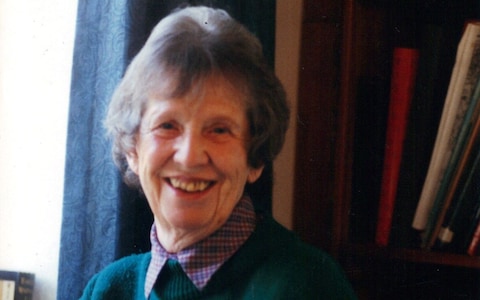
A Photograph by Shirley Toulson About the Poet
Name
Shirley Toulson
Born
20 May 1924, Henley-on-Thames, United Kingdom
Died
15th May 2014
Education
B.A Literature from Brockenhurst College in London
Books
The Drovers, The Celtic Year a Celebration of Celtic Christian Saints Sites and Festivals More
A Photograph Summary by Shirley Toulson
A Photograph Summary in English
The poet views the photograph, taken before she was bom, of her mother and her two cousins. It was of the three girls, when they went to the beach. The two cousins were younger than the narrator’s mother, who was about twelve years old then. Both the cousins were on either side of the mother holding her hands. The three of them smiled at the camera as the uncle clicked the photograph. The camera had caught them smiling as the breeze ruffled their hair.
The poet notices her mother’s sweet face of a time before she was bom. Her face had changed much, unlike the sea which had remained unchanged. The sea washed their unbearably short-lived feet. The mother is now dead. The poet recalls how twenty or thirty years later her mother would look at the photograph and recall with amusement how, as young girls, they had been dressed for the beach. She had been out for a holiday to the beach years ago and felt nostalgic about it, just as the poet felt when she relived the memories of her mother. She recalled with pain the memories of her mother’s laughter. She found it difficult to come to terms with her mother’s death. She remembers her mother who died a long time ago: she has now lived without her for almost half of her life; and this fact overwhelms her into silence.
A Photograph Summary Questions and Answers
Read the lines and answer the questions that follow.
Question 1. The cardboard shows me how it was When the two girl cousins went paddling, Each one holding one of my mother’s hands, And she the big girl—some twelve years or so. All three stood still to smile through their hair At the uncle with the camera….
a. What does the ‘cardboard’ denote? Answer: It is a photograph.
b. What is seen on the cardboard? Answer: On the ‘cardboard’ three girls can be seen—one of whom is the poet’s mother.
c. What were they doing? Answer: They were playing in water near the seashore.
d. Why were the girls holding the poet’s mother’s hand? Answer: The poet’s mother was a little older than the two of her cousins, around twelve years old, and was thus holding on to their hands.
e. What was the uncle doing? Answer: The uncle was clicking their photograph.
f. Where is the mother now? Answer: The poet’s mother is dead.
g. “All three stood still to smile through their hair.” What does this suggest? Answer: They were smiling with tousled hair over their faces because of the breeze.
h. Who were the other two girls? Answer: The two girls were the poet’s mother’s cousins—Betty and Dolly.
2. A sweet face, My mother’s, that was before I was born. And the sea, which appears to have changed less, Washed their terribly transient feet.
a. Who is the ‘I’ in these lines? Answer: The poet is the ‘I’ in these lines.
b. What did she feel about her mother? Answer: The poet thought her mother had a sweet face.
c. What has not changed? Answer: The sea has remained unchanged over the years.
d. What has changed? Answer: The faces of the people have changed. They are older. The poet’s mother is dead.
e. What is suggested by the words ‘transient feet’? Answer: The words suggest the transience of life.
f. Name the poetic device used in the line: “Washed their terribly transient feet.” Answer: (a) transferred epithet (b) synecdoche
3. Some twenty—thirty—years later She ’d laugh at the snapshot. ‘See Betty And Dolly, ’ she ’d say, ‘and look how they Dressed us for the beach. ’ The sea holiday Was her past, mine is her laughter, Both wry With the laboured ease of loss.
a. Who is the ‘she’ in these lines? Answer: The poet’s mother is referred to as ‘she’ in these lines.
b. What was she looking at? Answer: She was looking at her photograph that was clicked twenty to thirty years back.
c. Who were Betty and Dolly? Answer: Betty and Dolly were cousins of the poet’s mother.
d. Why was she amused? Answer: She was amused at the way she and her cousins were dressed for the beach.
e. What are the two things that are ‘a matter of the past’? Answer: (a) To the poet’s mother, her childhood is a thing of the past. (b) To the poet, her mother’s laughter was a thing of the past.
f. What is suggested by ‘the laboured ease of loss’? Name the poetic device used. Answer: It was a painful effort to recall the time that has so easily slipped away. The poetic device used is oxymoron.
4. Now she’s been dead nearly as many years As that girl lived. And of this circumstance There is nothing to say at all. Its silence silences
a. Who had been dead many years? Answer: The mother has been dead for many years.
b. Who is that girl? Answer: The young girl is the mother, aged twelve.
c. Why does the poet say “As that girl lived”? Answer: To the mother, the little girl was the past that was true a long time back just as the mother was a living reality to the poet years back.
d. Explain: “Its silence silences”. Name the poetic device used. Answer: The stillness of the photograph and the overwhelming sense of her mother’s loss mutes the poet. The poetic device used is paradox.
We have decided to create the most comprehensive English Summary that will help students with learning and understanding. in this article we are covered Silk Road Summary.
Silk Road Summary in English by Nick Middleton
Silk Road by Nick Middleton About the Author
Author Name
Nick Middleton
Born
1960 (age 60 years), London, United Kingdom
Books
Going to Extremes, Global Casino, Rivers: A Very Short Introduction
Awards
The Royal Geographical Society’s Ness
Silk Road Summary by Nick Middleton
Silk Road Summary in English
The narrator was leaving Ravu and heading towards Mount Kailash to complete the kora. It was in the early hours of the morning that they were set to leave. Lhamo gave the narrator a long-sleeved sheepskin coat, which all the men wore, as a farewell present. Tsetan assessed him as they got into his car. They took a short cut to get off the Changtang. Tsetan knew a route that would take them south-west, almost directly towards Mount Kailash. It involved crossing several fairly high mountain passes, he said. Going that way would not be a problem if there was no snow but that one could never know till one reached there.
From the gently rising and falling hills of Ravu, the short cut took them across vast open plains, dry grazing land, with nothing in them except a few small antelopes. Moving ahead they noticed that the plains became more stony than grassy. Here they saw a herd of wild ass that were racing around and of which Tsetan had told them even before they appeared.
The drive again became steep. They crossed drokbas tending their flocks. Thickly clad men and women stared at their car and at times waved at them while the sheep would turn away from the vehicle. They passed nomads’ dark tents pitched in the isolated places usually with a huge black dog, a Tibetan big, smooth-haired dog guarding them. These dogs would observe them from a distance and as they drew closer, they would rush towards them and chase them for about a hundred metres. These hairy dogs were pitch black and usually wore bright red collars and barked angrily with enormous jaws. They were absolutely fearless of their vehicle and would run straight onto their way. Tsetan had to brake and turn sharply to avoid them. It was because of their ferocity that these Tibetan mastiffs were brought from Tibet to China’s imperial courts as hunting dogs.
As they entered a valley, they could see snow-capped mountains and the wide river but mostly blocked with ice that was sparkling in the sunshine. As they moved ahead, on their upward track, the turns became sharper and the ride bumpier. The rocks around were covered with patches of bright orange lichen. Under the rocks, seemed unending shade. The narrator felt the pressure building up in his ears so he held his nose, snorted and cleared them. Just then Tsetan stopped and the three of them—Tsetan, Daniel and the narrator walked out of the car.
It continued to snow. The snow that had collected was too steep for their vehicle to scale, so there was no way of going around the snow patch. The narrator looked at his wristwatch and realized that they were at 5,210 metres above sea level.
The snow didn’t look too deep, but the danger was that if the car slipped it could turn over. Tsetan grabbed handfuls of soil and threw it across the frozen surface of ice. Daniel and the narrator stayed out of the vehicle to lessen Tsetan’s load. He backed and drove towards the dirty snow, and with no difficulty the car moved on. But after ten minutes of driving, there was another obstruction. Tsetan assessed the scene and this time he decided to drive round the snow. It was a steep slope scattered with big rocks, but Tsetan got past them. The narrator checked his watch again; they were 5,400 metres above sea level and his head began to ache terribly. He gulped a little water for relief.
When they reached the top of the pass at 5,515 metres, they noticed large rocks decorated with white silk scarves and ragged prayer flags. All of them took a clockwise round them as is the tradition and Tsetan checked the tyres on his vehicle. He stopped at the petrol tank. The lower atmospheric pressure was allowing the fuel to expand.
The narrator was soon relieved of headache as they went to the other side of the pass. At two o’clock, they stopped for lunch and ate hot noodles inside a long canvas work tent, put up beside a dry salt lake. The plateau was covered with spots of salty desert area and salt lakes, leftovers of the Tethys Ocean, which surrounded Tibet before the steep climb. Here there was a lot of activity, men with pickaxes and shovels were moving around wearing long sheepskin coats and salt-covered boots. All of them were wearing sunglasses against the bright light of the trucks as they came laden with piles of salt.
By late afternoon they reached a small town, Hor, back on the main east-west highway that followed the old trade route from Lhasa to Kashmir. Daniel took a ride in a truck and went to Lhasa. Tsetan and the narrator bade him farewell.
Hor was a gloomy place covered with dust and rocks and devoid of vegetation. It was scattered with a lot of refuse that had gathered over the years. It was regrettable as this town was on the shore of Lake Manasarovar, Tibet’s most honoured lake. Ancient Hindu and Buddhist study of the universe pinpoints Manasarovar as the source of four great Indian rivers: the Indus, the Ganges, the Sutlej and the Brahmaputra. Actually, only the Sutlej flows from this lake, but the headwaters of the others all rise nearby on the sides of Mount Kailash. They had tea in Hor’s only cafe which, like all the other buildings in town, was built from badly painted concrete and had three broken windows but they had a good view of the lake through one of the windows.
After half an hour’s stop, they drove westwards out of the town towards Mount Kailash.
The narrator was surprised to see Hor because it was absolutely different from what he had read about it. Ekai Kawaguchi, a Japanese monk who had been there in 1900, was so stirred by the holiness of the lake that he burst into tears. A few years later, the place had a similar effect on Sven Hedin, a Swede visitor.
They reached a guesthouse in Darchen after 10.30 p.m. They were 4,760 metres above the sea level. It was a disturbed night. The narrator had terrible cold because of the open-air rubbish dump in Hor. With his nostrils blocked he found it difficult to breathe. He was tired and hungry and thus started breathing through his mouth.
But barely had he slept when he woke up abruptly. His felt a peculiar heaviness in his chest; he sat up and cleared his nasal passages. He felt relieved but the moment he lay down he intuitively felt that something was wrong. He was not breathless but simply could not sleep. The fear of dying in his sleep kept him awake.
The next morning Tsetan took him to the Darchen Medical College. It was a new building that looked like a monastery from the outside. It had a very solid door that opened into a large courtyard. In the consulting room was a Tibetan doctor who did not have the equipment that a doctor would have. Clad in a thick pullover and a woolly hat, he listened to the narrator’s symptoms and said it was because of the altitude and cold. He assured the narrator that he would be fine and gave him a brown envelope stuffed with fifteen screws of paper that contained brown powder that tasted like cinnamon. He was asked to take them with hot water. The narrator did not like the look of the contents but took them anyway. He slept very soundly.
When Tsetan was assured that the narrator was going to be well, he left him and returned to Lhasa. As a Buddhist, it didn’t really matter if the narrator died but he thought it would be bad for business. After the narrator got his rest and a good night’s sleep, Darchen didn’t look so awful. It was still dusty, and had heaps of rubble and refuse, but the bright sun gave him a view of the Himalayas. He saw the snow-capped mountain, Gurla Mandhata, with a small cloud hanging over its peak.
The town had a few general stores selling Chinese cigarettes, soap and other basic provisions, as well as the usual strings of prayer flags. In front of one, men collected in the afternoon for a game of pool on a strange table in the open air, while nearby women washed their long hair in the icy water of a narrow brook near the guesthouse. Darchen felt stress-free and slow but for the narrator this was a major disadvantage. There were no pilgrims. He had been told that in the peak of the pilgrimage season, the town was full of visitors. That was the reason for his being there in the beginning of the season, but it seemed that he was too early.
One afternoon he sat with a glass of tea in Darchen’s only cafe thinking about the paucity of pilgrims and the fact that he hadn’t made much progress with his self-help programme on positive thinking. After some contemplation, he felt he could only wait. He did not like the idea of going alone on a pilgrimage.
The kora was seasonal because parts of the road were likely to be blocked by snow. He had no idea if the snow had cleared, but he saw the large pieces of dirty ice on the banks of Darchen’s stream. From the time when Tsetan had left, he had not met anyone in Darchen who could answer even the basic questions in English till he met Norbu.
The narrator was in a small, dark cafe with a long metal stove that ran down the middle. The walls and roofs were covered with multi-coloured sheets of plastic that is made into shopping bags in many countries. Plastic is one of China’s most successful exports along the Silk Road today. He sat beside a window so that he could see the pages of his notebook. He also had a novel with him. Norbu saw the book, came to him, sat opposite and asked the narrator if he was ‘English’. They stated a conversation. The narrator could make out that he did not belong to that place as he was wearing a windcheater and metal-rimmed spectacles of Western style. He told the narrator that he was a Tibetan, but worked in Beijing at the Chinese Academy of Social Sciences, in the Institute of Ethnic Literature. He, too, had come to do the kora.
Norbu had been writing academic papers about the Kailash kora and its importance in various works of Buddhist literature for many years, but he had never actually done it himself. When the narrator told him what brought him to Darchen, he was excited and wanted to work with him as a team. He soon realized that Norbu was as ill-equipped as him for the pilgrimage. He kept telling the narrator how fat he was and how tough it was going to be for him to walk. He wasn’t really a practising Buddhist, it became known, but he had enthusiasm and he was a Tibetan.
Although at first the narrator had thought that he would make the trek in the company of religious people but then felt that Norbu would turn out to be the ideal companion. Norbu suggested that they hire some yaks to carry the luggage, as he said it was not possible for him to prostrate himself all round the mountain as that was not his style, and anyway his tummy was too big.
Silk Road Summary Questions and Answers
Question 1. Why did the narrator undertake the journey to Mount Kailash? Describe his memories of the day when they set out on their journey. Answer: The narrator was moving towards Mount Kailash to complete the kora. He recalls the day, when they set out from Ravu, with nostalgia. It was a ‘perfect’ early morning to start a journey. The clouds looked like long French loaves glimmering pink as the rising sun shone on them. The far-away mountain peaks glowed with a rose-tinted colour. Lhamo presented him with one of the long-sleeved sheepskin coats that all the men there wore, for protection against cold.
Question 2. Describe the initial phase of their journey. Answer: As they set out, they took a shorter route to get off the Changtang. It was a road that would take them south¬west, almost directly towards Mount Kailash. It required crossing several quite high mountain passes. Tsetan was confident that if there was no snow they would have a comfortable journey but that they would not know till they got there.
From the gently sloping hills of Ravu, the short cut took them across vast open plains with nothing in them except a few antelopes grazing in the arid pastures. As they moved ahead, the plains became more stony than grassy. There, the antelopes were replaced by herds of wild ass.
Question 3. What did the narrator notice about the ‘drokbas’? Answer: As the narrator went further up the hills from the rocky wasteland, he noticed the solitary drokbas tending their flocks. Sometimes these well-wrapped figures would halt briefly and stare at their car. They seldom waved as they crossed. When the road took them close to the sheep, the animals would swerve away from the speeding car.
Question 4. The narrator was fascinated by the awesome mastiffs. Why? Answer: Crossing the nomads’ dark tents pitched in remoteness, the narrator noticed that a huge black dog, a Tibetan mastiffs, guarded most of the tents. These monstrous creatures would tilt their great big heads when someone moved towards them. As they drew closer, these dogs would race straight towards them, like a bullet from a gun. These dogs were pitch black and usually wore bright red collars. They barked furiously with their gigantic jaws and were so fearless that they ran straight into the path of their vehicle. They would chase them for about a hundred metres. The narrator could understand why Tibetan mastiffs became popular in China’s imperial courts as hunting dogs.
Question 5. How did Tsetan manoeuvre across the first patch of snow that they came across? Answer: Tsetan stopped at a tight bend and got out because the snow had covered the path in front of them. This unexpected-depository was too steep for their vehicle to mount. Tsetan stepped on to the covered snow, and stamped his foot to determine how sturdy it was. The snow was not deep but the car could turn over. Tsetan took handfuls of dirt and threw them across the frozen surface. Daniel and the narrator, too, joined in. When the snow was spread with soil, Tsetan backed up the vehicle and drove towards the dirty snow. The car moved across the icy surface without noticeable difficulty.
Question 6. When did the narrator feel unwell or the first time? What did he do? Answer: When they went further up the trail and were 5,400 metres above the sea level, the narrator got an awful headache. He took gulps from his water bottle, which is supposed to help during a speedy uphill journey. His headache soon cleared as they went down the other side of the pass.
Question 7. What was the sight on the plateau ruins of the Tethys Ocean? Answer: The narrator and his friends stopped for lunch in a long canvas tent, part of a work camp erected beside a dry salt lake. The plateau was covered with salty desert area and salty lakes that were remnants of the Tethys Ocean. This place was bustling with activity.
Men with pickaxes and shovels were moving back and forth in their long sheepskin coats and salt-covered boots. All wore sunglasses as protection against the dazzling light of blue trucks that energed from the lake with piles of salt.
Question 8. Why was the narrator sorry to see the miserable plight of Hor? Answer: Hor was a dismal place with no vegetation. It only had dust and rocks coupled with years of accumulated refuse. He found this unfortunate because this town was on the banks of Lake Manasarovar, Tibet’s most venerated stretch of water.
Question 9. What is the belief about Lake Manasarovar? What is the fact? Answer: According to ancient Hindu and Buddhist cosmology Manasarovar is the source of four great Indian rivers: the Indus, the Ganges, the Sutlej and the Brahmaputra. In actuality only the Sutlej flows from the lake, but the headwaters of the all others rise nearby on the flanks of Mount Kailash.
Question 10. The narrator ‘slept very soundly. Like a log, not a dead man’. Explain. Answer: After going to the Tibetan doctor the narrator soon recovered. Unpalatable as it seemed, the medicine led him to a quick recovery. Hence the narrator had a healthy and sound sleep unlike when he was ailing and restless. He slept undisturbed. He was not tossing and turning because he was sound a sleep, not because he felt lifeless.
We have decided to create the most comprehensive English Summary that will help students with learning and understanding. in This article, we introduce The Adventure Summary
The Adventure Summary in English by Jayant Narlikar
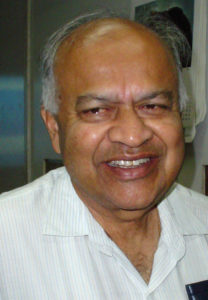
The Adventure by Jayant Narlikar About the Author
Name
Jayant Narlikar
Born
19 July 1938 (age 81 years), Kolhapur
Spouse
Mangala Narlikar
Awards
Padma Vibhushan, Adams Prize, Padma Bhushan, Prix Jules Janssen
Known for
Steady-state model, Hoyle–Narlikar theory of gravity
The Adventure Summary by Jayant Narlikar
The Adventure Summary in English
Professor Gangadharpant Gaitonde was travelling in the Jijamata Express on the Pune-Bombay route. This train was much faster than the Deccan Queen and he noticed that there were no industrial townships outside Pune. The train first stopped at Lonavala, 40 minutes after it started from Pune and then for a little while at Karjat. It went on even faster through Kalyan.
In the meantime, Professor Qaitonde, being a historian, was thinking of going to a big library in Bombay and looking through history books. He wanted to understand the present situation. He also decided to return to Pune and discuss with Rajendra Deshpande, who would surely help him understand what had happened. He hoped that a person called Rajendra Deshpande existed.
When the train stopped at a small station, Sarhad, an Anglo-Indian ticket-checker went around checking tickets. Khan Sahib informed Gangadharpant that that was where the British Raj began. He inquired if Gangadharpant was going to Bombay for the first time. Gangadharpant had not been to this Bombay before. He asked Khan Sahib how he would go to Peshawar. Khan Sahib replied that he would go to the Victoria Terminus and would take the Frontier Mail. It would go from Bombay to Delhi, then to Lahore and then Peshawar. He would reach the next day.
Then Khan Sahib discussed his business and Gangadharpant listened eagerly. As the train passed through the suburban rail traffic, Khan Sahib explained that the blue carriages carried the letters, GBMR, that meant Greater Bombay Metropolitan Railway. The Union Jack painted on each carriage was a reminder that they were in British territory.
When the train reached Victoria Terminus, the station looked remarkably neat and clean. Most of the staff was Anglo-Indian and Parsee along with a few British officers.
As Gangadharpant came out of the station he found himself facing an impressive building. It was the East India house headquarters of the East India Company. He was shocked, because as per the history books The East India Company had been shut down soon after 1857. But here it was prospering.
He walked ahead along Hornby Road but he found there was no Handloom House building. Instead, there were Boots and Woolworth departmental stores, grand offices of Lloyds, Barclays and other British banks, as in a typical high street of a town in England.
He entered the Forbes building and asked the English receptionist that he wished to meet Mr Vinay Gaitonde, his son. She searched through the telephone list and said that there was nobody with that name there. He was shocked. He had a quick lunch at a restaurant; he went to the Town Hall to the library of the Asiatic Society to solve the mystery of history.
In the library he started browsing through the five volumes of history books including his own. Volume one was about the history up to the period of Ashoka, volume two up to Samudragupta, volume three up to Mohammad Ghori and volume four up to the death of Aurangzeb. Reading volume five, Gangadharpant finally arrived on the precise moment where history had taken a different turn. That page in the book described the Battle of Panipat, and it mentioned that the Marathas won the battle. Abdali was defeated and he was chased back to Kabul by the triumphant Maratha army led by Sadashivrao Bhau and his nephew, the young Vishwasrao.
The book did not give a detailed explanation of the battle but explained in detail its impact for the power struggle in Ipdia. Gangadharpant read the account eagerly. The style of writing was definitely his, but much to his surprise he was reading the explanation for the first time.
Their victory in the battle had not only increased the confidence of the Marathas but it also established their domination in northern India. The East India Company, observing these developments for the time being postponed its policy of expanding in India’s territory.
For the Peshwas it resulted in an increased power of Bhausaheb and Vishwasrao who succeeded his father in 1780 A.D. The threat, Dadasaheb, was pushed to the background and he finally left state politics.
The East India Company was disappointed, as the new Maratha ruler, Vishwasrao and his brother, Madhavrao, combined political sharpness with bravery and extended their control all over India. The Company’s hold was then limited to places near Bombay, Calcutta and Madras. This was exactly like that of the Portuguese and the French.
The Peshwas kept the Mughal rule alive in Delhi to manipulate the situation. In the nineteenth century these rulers from Pune were shrewd enough to recognise the beginning of the technological age in Europe. They set up their own centres for science and technology. The East India Company saw another chance to enlarge its influence. It offered aid and experts. They were accepted only to make the local centres self-sufficient.
In the twentieth century more changes were brought about because of the Western influence.
Now, India moved towards a democracy. By then, the Peshwas had lost their zeal and democratically elected bodies slowly replaced them. The Sultanate at Delhi survived this change, mainly because it exercised no influence. The Shahenshah of Delhi was just a nominal head to rubberstamp the suggestions made by the parliament.
Gangadharpant began to understand India as a country that had learnt to be self-reliant and knew what self-respect was. It was in a position of strength but for only business reasons, it had allowed the British to be there. Bombay was the only colony on the subcontinent. That lease was to expire in the year 2001, according to a treaty of 1908.
Gangadharpant could not help comparing the country he knew with what he was viewing now. But he had to find how the Marathas had won the battle. For this he started looking for reports of the battle itself. Finally he found Bhausahebanchi Bakhar. Even though he rarely trusted the Bakhars for historical verification, he found them entertaining to read. He managed to find a brief mention of how Vishwasrao luckily survived his close brush with death.
At eight o’clock the library was to close. As Gangadharpant left the table he put some notes into his right pocket. Forgetfully, he also thrust the Bakhar into his left pocket.
After a measly meal at the guesthouse, he leisurely walked towards the Azad Maidan. There a lecture was to take place. Professor Gaitonde walked towards the pandal and was awestruck staring at the platform. The presidential chair was vacant. He was drawn to it. The speaker stopped his lecture, as he was too surprised to continue. But the audience shouted at him to leave the chair.
Professor Gaitonde went to the mike and expressed his views. He said that an unchaired lecture was like Shakespeare’s Hamlet without the Prince of Denmark. The audience was in no mood to listen but Gangadharpant was an experienced orator. He braved a shower of tomatoes, eggs and other objects. Finally, the audience came to the stage to throw him out but Gangadharpant had disappeared in the crowd.
This was all he had to tell Rajendra. All he knew was that he was found in the Azad Maidan in the morning. He was back in the world he was familiar with. But he did not know where he had spent the two days when he was absent from there.
The story astonished Rajendra. He asked him where he had been, just before his accident with the truck. Professor Gaitonde said that he was thinking of the disaster theory and its consequences for history. Professor Gaitonde produced the page tom out of a book as evidence that he had not been imagining things. Rajendra read the text and seemed equally surprised.
Gangadharpant said that he had intended to return the book to the library but in the episode of Azad Maidan, the book was lost and only this tom-off page remained. And that had the essential evidence.
Rajendra read the page; how Vishwasrao narrowly missed the bullet; and how that event, taken as a sign by the Maratha army, turned things to their advantage. Then Gangadharpant took out his own copy of Bhausahebanchi Bakhar, where the bullet hit Vishwasrao.
Rajendra and Professor Gaitonde were both very curious to know the facts.
Rajendra tried to explain Professor Gaitonde’s experience on the basis of two scientific theories. He explained that Professor Gaitonde had heard a lot about the upheaval theory at that seminar. He wanted to relate it to the Battle of Panipat. He said that wars fought face to face on open grounds offered excellent examples of this theory. The Maratha army was facing Abdali’s troops on the field of Panipat. There was no great disparity between them as their protection was similar. So, a lot depended on the leadership and the confidence of the troops.
When Vishwasrao was killed, it proved to be the important moment of change. His uncle, Bhausaheb, rushed into the fight and was never seen again. The troops were thoroughly demotivated as they had lost their important leaders. This led to their crushing defeat. The tom page was the path taken by the battle, when the bullet missed Vishwasrao, thus its effect on the troops was also just the opposite. Gangadharpant said that there was a likelihood of this as similar statements are made about the Battle of Waterloo, which Napoleon could have won. But since we live in a unique world, which has a unique history, this might just be guesswork but not reality.
Rajendra made his second point. He said ‘reality’ is what we experience directly with our senses or indirectly via instruments. But it is not limited to what we see.
Experiments on atoms and their constituent particles have proved that reality may not be exclusive. The Physicist discovered that the behaviour of these systems cannot be forecast conclusively even if all the physical laws governing those systems are known. For example if a bullet were fired from a gun in a given direction at a given speed, one would know where it would be at a later time. But one cannot make such an assertion for the electron. It may be here, there, anywhere. Professor Gaitonde felt that the quantum theory offered a lack of determinism.
Rajendra argued his case further. He asked Professor Gaitonde to imagine many world pictures. In each world the electron could be found in different location. Once the observer found where it was, he would know which world we were talking about. But all those alternative worlds could exist just the same.
Professor Gaitonde wanted to know if there was any contact between those many worlds.
Rajendra said that there was a possibility both ways. We know the exact route of the planet. The electron could be orbiting in any of a large number of specified states. These states may be used to identify the world. In state no. 1 the electron was in a state of higher energy. In state no. 2 it was in a state of lower energy. It could make a jump from high to low energy and send out a pulse of radiation. Or a pulse of radiation could knock it out of state no. 2 into state no. 1. Such transitions were common in microscopic systems. These transitions could happen on a macroscopic level as well.
He felt that Gangadharpant could have made a transition from one world to another and back again. He said that his theory was that disastrous situations offer completely different options for the world to proceed. It seemed that so far as reality was concerned all alternatives were viable but the observer could experience only one of them at a time.
By making a shift, Gangadharpant was able to experience two worlds although one at a time. The one he lived in and the one where he spent two days. One had the history we know, the other a different history. The separation or split took place in the Battle of Panipat. He had neither travelled to the past nor to the future but was in the present but experiencing a different world. There must be many more different worlds at different points of time.
Gangadharpant wanted to know why had he made the transition. Rajendra said that there were many unsolved questions in science and this was one of them. However, he made a guess. He felt that Gangadharpant needed some contact to cause a transition. Perhaps, at the time of the collision he was thinking about the catastrophe theory and its role in wars or perhaps he was wondering about the Battle of Panipat and the neurons in his brain activated the transition.
Professor Gaitonde said he found the explanation probable. He had been wondering what path history would have taken if the result of the battle had gone the other way. That was what he was going to speak about in the Azad Maidan.
Rajendra laughed and said that now he was in a better position, as he would talk of his real life experience rather than just an assumption. But Gangadharpant looked serious. He said that his thousandth address was made on the Azad Maidan where he was so rudely interrupted. The Professor Gaitonde who disappeared while defending his chair on the platform will now never be seen presiding at another meeting as he had expressed his regrets to the organisers of the Panipat seminar.
The Adventure Summary Questions and Answers
Question 1. ‘That is, assuming that in this world there existed someone called Rajendra Deshpande!’ Why does Professor Gaitonde feel so? Answer: Professor Gaitonde had gone through a strange and a harrowing experience. He had been literally transported into an alternative universe. In the alternative world the reality was very different. History had altered its course. Now back into the real world Professor Gaitonde, as a historian felt he would go to a big library and browse through history books and would return to Pune and have a long talk with Rajendra Deshpande, to help him understand what had happened. After the queer happening, he was unsure about the reality and wondered if Rajendra Deshpande existed.
Question 2. What were the things that Professor Gaitonde noticed as the train entered the British Raj territory? Answer: As the train touched Sarhad, from where the British Raj began, an Anglo-Indian in uniform went through the train checking permits. The blue carriages of the train carried the letters GBMR on the side—an acronym for ‘Greater Bombay Metropolitan Railway’. There was the tiny Union Jack painted on each carriage as a . reminder that they were in British territory. As the train stopped at its destination, Victoria Terminus, the station looked remarkably neat and clean. The staff was mostly made up of Anglo-Indians and Parsees along with a handful of British officers.
Question 3. Where was Khan Sahib going? How did he intend to reach there? Answer: Khan Sahib was going to Peshawar. After the train reached Victoria Terminus he would take the Frontier Mail out of Central,-the same night. From Bombay he would go to Delhi, then to Lahore and then Peshawar. It would be a long journey and he would reach Peshawar two days later.
Question 4. What was the strange reality that Professor Gaitonde saw as he stepped out of the station? Answer: As Professor Gaitonde came out of the station, he saw an impressive building. The letters on it revealed that it was the East India headquarters of the East India Company. He was shocked as it was supposed to have had stopped operating soon after the events of 1857 but here it was flourishing.
Question 5. What came as the biggest blow to Professor Gaitonde? Answer: Professor Gaitonde was shocked to see the East India Company flourishing, a different set of shops and office buildings at Hornby Road. But when he turned right along Home Street and entered Forbes building, a greater shock awaited him. He asked for his son Mr Vinay Gaitonde but the English receptionist, looked through the telephone list, the staff list and then through the directory of employees of all the branches of the firm but could not find anyone of that name.
Question 6. What did Professor Gaitonde decide to do when the reality that he was living seemed very strange? Answer: When Professor Gaitoride saw unfamiliar sights and felt that he was reliving history he was very surprised but not finding his son as an employee in Forbes baffled him completely. He decided to go to the library of the Asiatic Society to solve the riddle of history. So he made his way to the Town Hall.
Question 7. What books did he browse through in the library? What did he discover? Answer: In the Town Hall library, he asked for a list of history books including his own.
When he got the five volumes, he started looking through them from the beginning. Volume one dealt with the history up to the period of Ashoka, volume two up to Samudragupta, volume three up to Mohammad Ghori, and volume four up to the death of Aurangzeb. This was history as he had known. However in the last (fifth) volume, history had taken a different turn during the Battle of Panipat. The book mentioned that the Marathas won it handsomely and Abdali was chased back to Kabul by the triumphant Maratha army led by Sadashivrao Bhau and his nephew, the young Vishwasrao.
Question 8. How did the victory of the Peshwas in the Battle of Panipat help them? Answer: The victory in the battle was not only successful in building their confidence tremendously but it also established the supremacy of the Marathas in northern India. The East India Company, watching these events temporarily deferred its plan to spread out further.
For the Peshwas the immediate result was that the influence of Bhausaheb and Vishwasrao increased and Vishwarao succeeded his father in 1780 A.D. The rabble-rouser, Dadasaheb, had to retire from state politics.
Question 9. What was the effect of the victory of the Peshwas on the East India Company? Answer: The East India Company was alarmed when the new Maratha ruler, Vishwasrao, and his brother, Madhavrao, expanded their influence all over India. The Company was limited to pockets of influence near Bombay, Calcutta and Madras. However, in the nineteenth century the Marathas were aware of the importance of the technological age starting in Europe. Hence when they set up their own centres for science and technology, the East India Company saw another chance to extend its influence, it offered support and experts. But they were accepted only to make the local centres self-sufficient.
Question 10. What was the final outcome of the Peshwas? Answer: During the twentieth century, inspired by the West, India moved towards a democracy. By then, the Peshwas had lost their enterprise and democratically elected bodies slowly but surely replaced them. The Sultanate at Delhi survived even this change because it exerted no real influence. The Shahenshah of Delhi was a nominal head to rubber-stamp the ‘recommendations’ made by the central parliament.
We have decided to create the most comprehensive English Summary that will help students with learning and understanding.
The Browning Version Summary in English by Terence Rattigan
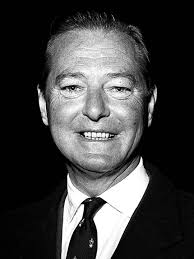
The Browning Version by Terence Rattigan About the Author
Writer Name
Terence Rattigan
Born
10 June 1911, South Kensington, London, United Kingdom
Died
30 November 1977, Hamilton, Bermuda
Movies
The Browning Version, The Winslow Boy
Education
Trinity College, University of Oxford, Harrow School
Awards
Cannes Film Festival Award for Best Screenplay, New York Drama Critics’ Circle Award for Best Foreign Play
The Browning Version Summary by Terence Rattigan
The Browning Version Summary in English
Terence Rattigan’s play, ‘The Browning Version’, was first performed on 8 September 1948 at the Phoenix Theatre, London. The play is about the last few days in the career of Andrew Crocker-Harris, an old Classics teacher at a British public school, where he’s been teaching for eighteen years. The man’s academic life is fading away and he deeply feels he has become obsolete. He is forced to retire prematurely owing to ill- health. Lack of success with his pupils has blighted his youthful ambition and promise, and he faces a future of poverty and disappointment. His talk at the end of the year prize giving is replaced by that of the popular sports master and the school will not give him his pension because of his early retirement, although he was depending on it.
This is an extract from the play. This part of the play underlines the bitter feelings of a student towards his teacher. These are brought out through a conversation between Frank Hunter, a young schoolmaster, and Taplow the student. Taplow has come for his tutoring session with Crocker-Harris, although it is the last day of school, but Crocker-Harris has not yet arrived. Frank, the science teacher, finds Taplow and starts talking to him.
Frank asks Taplow, if they had met earlier. Taplow introduces himself and informs him that he is a student in the lower fifth grade. He feels that he would specialise next term if he got his class. He also tells Frank that Mr Crocker-Harris doesn’t tell the students the results like the other teachers. As a rule, the class results should only be announced by the headmaster on the last day of term, but Taplow feels that none other than Mr Crocker-Harris seems to be so fastidious about the rule. Hence, Taplow would have to wait to know his result.
On Frank’s asking, Taplow tells him if the grades are good he would opt for science. Frank laments sadly that they get all the idlers. Taplow objects saying that he has opted for science because he is extremely interested in science. He feels science is more interesting than studying Classics such as The Agamemnon, which he calls “muck”. Thinking that he has gone too far, he corrects himself saying the plot is good. It is about a wife murdering her husband, he says. But what he did not like was the way it was taught to them. It had a lot of Greek words and Mr Crocker-Harris punished them for not getting them right.
Frank realised that Taplow sounded bitter, and got to know from him that Taplow had been given extra work to do as he had missed a day of school the previous week when he was ill. It was the last day of school and he wished to play golf instead. Taplow continues saying that one would think that Mr Harris had enough to do as he was leaving the next day, instead of calling Taplow for extra work.
Frank consoles him saying that for being a good boy in taking extra work he would get his class the next day. Taplow feels that would be true of other teachers and not of Mr Harris. It was just the previous day that he had told Taplow—he had got what he deserved. Taplow feels that Mr Harris might have given him less marks to make him do extra work. He adds that Mr Harris is “hardly human”. After saying so, he apologises to Frank for talking too much.
Frank pretends to be unhappy but asks Taplow to repeat what Mr Harris had said to him. Taplow imitates him. Frank pretends to look strict and asks him to read Aeschylus and be quiet. He then asks Taplow at what time he was supposed to meet Mr Crocker-Harris. Taplow informs him that he was called at six-thirty. Frank tells Taplow that Mr Crocker-Harris was already ten minutes late. He suggests that Taplow could go off and play golf.
Taplow is shocked and expresses his apprehension if Mr Crocker-Harris should know. He was certain that nobody had ever done that with Mr Crocker-Harris.
Frank envies the effect Mr Crocker-Harris seems to have on the boys in the class; they seem to be scared to death of him. Taplow says that a few teachers, including Mr Crocker-Harris, are sadists, who get pleasure out of giving pain.
Frank asks him about the others. Taplow says that he would not like to name them, as everyone knows who they are. Students understand everything. He compliments Frank saying that he is different and fairly young.
Frank pretends to be outraged. Taplow continues calling Mr Crocker-Harris, the Crock; Taplow says that he is worse than a sadist. If he were a sadist, he wouldn’t be so frightening because in that case, at least, it would show he had some feelings. His inner being, feels Taplow is emotionless and withered like a dried-up nut and he seems to hate people liking him.
Frank tries to instigate Taplow by saying that the boys would have exploited that for their own advantage. Taplow then admits that strangely, despite everything Mr Crocker-Harris does, he still likes him. Taplow says that he has also noticed Mr Crocker-Harris feels uncomfortable about people liking him. To elaborate on this, he recalls an episode when in class Mr Crocker-Harris made one of his classical jokes. Nobody laughed because nobody understood it. However Taplow knew that it was meant to be funny, so he laughed. Mr Crocker-Harris, at once remarked, that he was pleased at the advance in Taplow’s knowledge of Latin since he had without difficulty understood what the rest of them did not. Mr Crocker-Harris then wanted him to explain what he had said to the rest of the class.
Just then the door opens and Millie Crocker-Harris enters. She is a thin woman in her late thirties, and more smartly dressed than the other schoolmasters’ wives. She stands looking at Taplow and Frank a few seconds before they notice her.
Frank is trying to ridicule Mr Crocker-Harris when Millie Crocker-Harris enters. But he seems infinitely relieved at seeing her. Taplow is a little worried. He asks Frank if Millie could have heard their conversation. Frank feels that she had overheard as she has been standing there for quite some time. Taplow is all the more worried about his ‘remove’. But Frank feels his fears are unfounded. Millie asks Taplow if he is waiting for her husband Mr Crocker-Harris. She informs him that he is at the Bursar’s and might be there quite some time. She suggests that he leaves.
Taplow is hesitant at first as Mr Crocker-Harris had asked to meet him. Millie suggests that he goes away for a quarter of an hour and then returns. Taplow asks her what if Mr Crocker-Harris was to arrive before he is back; Millie assures him that she would take the blame. She then takes a prescription out of the basket and asks him to do a job for Mr Crocker-Harris, by going to the chemist. Taplow leaves happily.
The Browning Version Summary Questions and Answers
Question 1. Where does Taplow meet Frank? What does Taplow feel about being there? Answer: Taplow meets Frank at Mr Crocker-Harris’s office, at school. Taplow had been given extra work to do as he had missed a day of school the previous week when he was ill. It was the last day of school and he wished to play golf instead.
Question 2. What subjects does Taplow want to opt for and why? Answer: Taplow wishes to opt for science if he manages good grades. He claims to be really interested in science and feels it is more interesting than studying classics such as ‘The Agamemnon’, which he calls “muck”—it had a lot of Greek words, and Mr Crocker-Harris punished them for not getting them right.
Question 3. Why does Taplow feel that Mr Harris is “hardly human”? Answer: Taplow feels that putting in extra work would make no difference to Mr Harris. He had told Taplow that he had got what he deserved. Taplow suspects he might be awarded with fewer marks to make him do extra work. He feels Mr Harris is unfeeling—worse than a sadist, and thus calls him “hardly human”.
Question 4. What does Frank suggest to Taplow about waiting for Mr Harris? Answer: When Taplow tells Frank that he was supposed to meet Mr Crocker-Harris at six-thirty, Frank tells Taplow that Mr Crocker-Harris was already ten minutes late. He suggests that Taplow could go and play golf. But Taplow is shocked and expresses his apprehension if Mr Crocker-Harris should know. He was certain that nobody had ever done that with Mr Crocker-Harris.
Question 5. Why does Taplow feel that Mr Harris has no feelings? Answer: Taplow calls Mr Harris worse than a sadist. One is required to admit to feelings if considered a sadist. Mr Harris’s inside, feels Taplow, is like a nut and he seems to hate people liking him. He did not appreciate Taplow appreciating his jokes and embarrassed him in return.
Question 6. How did Taplow try to express his liking for Mr Harris? What was the outcome? Answer: Taplow admits to liking Mr Harris and realized he felt uncomfortable about people liking him. He recalls an episode, in class, where Mr Crocker-Harris made one of his jokes to which nobody laughed. Taplow knew that it was meant to be funny, and laughed. To which, Mr Crocker-Harris teased Taplow about his knowledge of Latin and asked him to explain the joke to the class.
Question 7. Who was Millie Crocker-Harris? What was she like? Answer: Millie Crocker-Harris was the young wife of Mr Crocker-Harris. She was a thin woman in her late thirties, and was more smartly dressed than the other schoolmasters’ wives.
Question 8. How does Millie Crocker-Harris send Taplow away? Answer: Millie learns from Taplow that he was waiting for her husband and suggests he leaves for quarter of an hour since Mr Harris might be a while. Taplow is hesitant; Millie assures him she would take on the blame if Mr Harris arrives before that. She finally sends Taplow off to the chemist.