We have decided to create the most comprehensive English Summary that will help students with learning and understanding.
The Tale of Melon City Summary in English by Vikram Seth
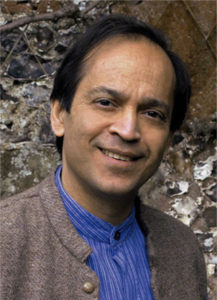
The Tale of Melon City by Vikram Seth About the Author
Poet Name
Vikram Seth
Born
20 June 1952 (age 67 years), Kolkata
Education
Corpus Christi College, St. Michael’s High School
Nominations
National Book Critics Circle Award for Autobiography
Awards
Padma Shri, Sahitya Akademi Award
The Tale of Melon City Summary by Vikram Seth
The Tale of Melon City Summary in English
The poem is set in a city that was ruled by an impartial and mild-mannered king. He announced, one day, that an arch should be built in the city that would extend over the major main road to improve the condition for the masses. The workmen obeyed the orders and constructed the arch as they were directed. After it was built, the king rode through the street and while crossing below the arch, his crown fell off because it was built too low.
His mild expression turned into a scowl. He took this as a dishonour and sentenced the chief of builders to be hung till death. The rope was brought and gallows prepared. When the chief of builders was brought, he pleaded that it was the fault of the workers. The King stopped the procedures because he was fair and ordered that all the workmen be put to death. The workmen protested to the king that they were not the ones at fault but it was the masons who had made bricks of the wrong size.
The king called the masons and as they stood trembling in fear, they blamed the architect. The architect was sent for. When he arrived, the king proclaimed that he be hanged. The architect reminded the king that he, himself, had made certain changes in the plans when they were shown to him.
When the king heard this, he was so angry that he almost lost his ability to reason. Since he was righteous and tolerant, the king admitted that this was a difficult situation. He required advice, so he called for the wisest man in the country. The wisest man was found and carried to the royal court as he could neither walk, nor see. He was an old and an experienced man. He said in a trembling, feeble voice that the offender must be penalised—the arch that had thrown the crown off, must be hanged. Thus the arch was taken to the platform where the criminals are executed when, suddenly, a councillor said that it would be a disgrace to hang something that touched the honourable head.
The king was thoughtful and felt that the point raised was valid, indeed. But by this time, the crowd that had gathered around became restless and started grumbling. The king noticed their mood and was worried. Addressing all the people gathered there, he said that they must put off thinking about points like faults and responsibilities, as the country wanted to see the execution. Hence, someone must be hanged immediately.
The loop in the rope was got ready and was set up. It was a little high. Hence all the people were measured, one by one, to see who would reach the noose. Finally they found the man—it was none other than the king. Thus he was hanged as per the royal ruling. The ministers were glad that they had found someone to keep the unmanageable people in the town from rebelling against the king.
After his execution, they shouted, “Long live the King! The King is dead.” They pondered over the difficulty of the situation and being good at finding solutions, they sent out the messengers to announce that the next person to cross the city gate would decide the ruler of the kingdom. According to their practice, this decision would be made obligatory in a suitable ceremony.
The next man who crossed the city gate was a fool. The guards asked him to decide who ought to be the king.
The fool replied it ought to be “a melon”. This was his usual answer to all questions because he liked melons. The ministers crowned a melon and accepted it as their king. They carried the melon to the throne and respectfully placed it on it.
This event took place many years ago. Now, when the people, are questioned how a melon came to be their king, they say that the decision was based on “customary choice”. They argue that if the king is delighted in being a melon, they have no reason to criticise him as long as he left them live in peace and liberty. In that kingdom, the philosophy of laissez faire (refusal to interfere) seems to be well established.
The Tale of Melon City Summary Questions and Answers
Question 1. What do the words ‘just and placid’ imply? Answer: The phrase implied that the king was fair and mild. The king, ‘a great believer injustice’ ensured justice was meted out to his subjects. He was also mild mannered and rarely showed any displeasure—and even if he did frown, he quickly wiped the frown off his face.
Question 2. Where did the king want the arch constructed? Why? Answer: The king wanted an arch to be erected which extended over the major main road. He felt, the road would edify the spectators—it would improve the morals and knowledge of the onlookers there.
Question 3. What happened to the king as he rode down the road? Answer: After the arch was built, the king rode through the street. He wanted to edify the spectators there. But as he was crossing below the arch, his crown fell off as the arch was built too low. This angered the king.
Question 4. What order did the king give when his crown was knocked off his head? Answer: The king was angry because his crown was knocked off his head as he tried to ride under the arch. He ordered the chief of the builders, responsible for building the arch, to be hanged.
Question 5. How did the chief of the builders escape hanging? Answer: When the chief of the builders was led away to be hanged, he pleaded innocence. He claimed that it was the fault of the workers that the arch was built so low. He escaped hanging as the ‘just and placid’ king could not bear to punish an innocent man.
Question 6. Why were the workmen to be hanged? How did they escape hanging? Answer: The king ordered the workmen to be put to death as they were painted responsible, for building the low arch, by the chief of the builders. The workmen protested that they were not the ones at fault and blamed the masons who had made bricks of the wrong size. They, too, escaped death by hanging.
Question 7. Whom did the architect lay the blame on? Answer: The masons blamed the architect for the poor design of the arch. The architect, in turn, passed on the blame to the king who had made certain changes in the architectural plans of the arch.
Question 8. How did the king react to the architect’s accusation? Why did he react that way? Answer: When the king heard the architect’s accusation, he was so angry that he almost lost his ability to reason.
Since, he was righteous and tolerant, he admitted that this was a difficult situation. The king solicited advice and called for the wisest man in the country for counsel.
Question 9. How was the wise man brought to court? What advice did he offer? Answer: The wisest man was found and carried to the royal court, as he could neither walk nor see. He was an old and experienced man. He said in a trembling, feeble voice that the offender must be penalized. He condemned the arch, guilty, for throwing the crown off the king’s head.
Question 10. The arch was not punished in the end. Why? Answer: The wise man declared that it was the arch that had thrown the crown off, and it must be hanged. A councillor objected to the arch being hanged; he called it a disgrace to hang something that had touched the honourable head of the king. The king agreed with the councillor and the arch was spared.
We have decided to create the most comprehensive English Summary that will help students with learning and understanding.
Birth Summary in English by A.J. Cronin
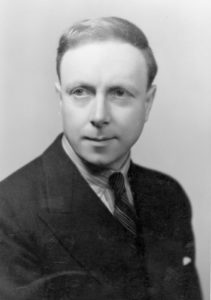
Birth by A.J. Cronin About the Author
Author Name
A.J. Cronin
Born
19 July 1896, Cardross, United Kingdom
Died
6 January 1981, Montreux, Switzerland
Full Name
Archibald Joseph Cronin
Movies and TV shows
Citadel, The Stars Look Down
Awards
National Book Award for Fiction
Birth Summary by A.J. Cronin
Birth Summary in English
Andrew reached Bryngower at almost midnight. Joe Morgan was waiting for him, walking up and down, looking visibly disturbed, but at the sight of Andrew his face showed his relief. He wanted the doctor to accompany him home, as his wife was about to deliver their first child. Andrew put away his personal thoughts, got his bag and accompanied him to his place, Number 12 Blaina Terrace. Andrew now felt dull and lacking in energy. He did not know that this night would be unusual and would affect his entire future in Blaenelly.
They reached the door of Number 12 and Joe did not go in but told Andrew, he was confident that he would do them good. Andrew went up a narrow stairway and reached a poorly furnished small bedroom that was lit only by an oil lamp. He saw Mrs Morgan’s mother, a tall woman of nearly seventy, and the stout, elderly midwife waiting besides Mrs Morgan. Mrs Morgan’s mother offered to make him a cup of tea. He realised that she was afraid of him leaving the case, saying he would return later. He assured her that he would not run away.
Down in the kitchen he drank the tea. Though he was stressed, he realised the patient would demand all his attention. He decided to remain until everything was over. He went to the bedroom, recorded the progress and once more sat by the kitchen fire. It was a still night. The only sound that he could hear was the crackle of ember in the fireplace, the slow tick-tock of the wall clock and Morgan’s footsteps as he moved to and fro in the street outside. Mrs Morgan’s mother sat opposite him quiet and still. Her eyes, extraordinarily alive and wise, looked inquiring.
He was confused and thought about the depressing incident that he had seen at the station in Cardiff. He thought of Bramwell, who was foolishly loyal to a woman who deceived him and of Edward Page, tied to the quarrelsome Blodwen, and of Denny, living unhappily, separately from his wife. He believed that all these marriages were miserable let-downs. He wished to think of marriage as a peaceful state in which he would be happy with Christine. There was a conflict between his mind that doubted and his heart that was overflowing with emotion. This made him feel resentful and confused. He was thinking of this, when Mrs Morgan’s mother addressed him. She was thinking of her daughter, Susan Morgan. She said that Susan did not want to be given chloroform if it would harm the baby. She was really looking forward to having this baby. In fact, all of them were. Andrew assured her that it would not do any harm.
At half-past three, the nurse called for him. He went up to the bedroom and understood that it was time to begin his work. After an hour’s difficult struggle, towards the early hours of the morning, the child was bom lifeless. Andrew was horrified. He had promised them that all would be well. His face, heated with his own effort suddenly seemed to grow cold. He was indecisive, to save the child, or the mother who was in a hopeless state. There was no time to think. He had to make a quick decision. Impulsively, he gave the child to the nurse and turned his concentration towards Susan Morgan who lay collapsed and almost pulse-less. In an instant, he broke a glass ampule and injected the medicine. He struggled to restore the lifeless woman and after a few minutes of intense effort, her heartbeat became steady. Ensuring that she was safe, he quickly turned his attention to the child.
The midwife had placed it beneath the bed. Andrew swiftly knelt down and pulled out the child. It was a perfectly formed boy. The lifeless body was warm and white. The umbilical cord lay like a broken stem. He inferred that this unconscious condition was caused by the lack of oxygen and excess of carbon dioxide in the blood.
He shouted in urgency for hot water, cold water, and basins. He laid the child upon a blanket and attempted to artificially induce respiration. The nurse came with the basins, the ewer, and the big iron kettle. He poured cold water into one basin and warm water into the other. Then, with quick movements, he hurried the child from one basin to the other. This continued for fifteen minutes. Andrew was panting and his eyes were blinding with sweat.
But the child did not breathe. He felt utterly dejected. The midwife and the old woman were watching him with utter attentiveness. He remembered the old woman’s longing for a grandchild, and her daughter’s longing for this child. But the situation was grim, and efforts futile.
The floor was in a state of mess. As Andrew stumbled over a sopping towel, the midwife cried that the baby was a stillborn. But Andrew did not pay attention to her. He continued his efforts for half an hour. In his last resort, he rubbed the child with a rough towel, crushing and releasing the little chest with both his hands, trying to get breath into that limp body.
Then miraculously, the tiny chest began heaving. Andrew felt giddy with the sense of life springing beneath his fingers; it almost made him faint. He intensified his efforts till they heard the child’s cry. The nurse sobbed hysterically as Andrew handed her the child. He felt weak and dazed. The room was in a state of mess and the mother lay still on the bed, still not out of the effect of the anaesthetic. The old woman still stood against the wall with her hands together and her lips moving in silent prayer.
Andrew went downstairs, took a long drink of water and as he stepped out he found Joe standing on the pavement with an anxious, eager face. Andrew told him that both were well.
It was nearly five o’clock and a few miners were already in the streets moving out after their first of the night shift. Andrew walked with them, tired, but eternally relieved at having “done something real at last.”
Birth Summary Questions and Answers
Question 1. Why was Joe Morgan waiting for Andrew? Answer: Joe Morgan and his wife had been married nearly twenty years and were expecting their first child. At nearly midnight, Joe was worried and walked up and down, waiting for Andrew to reach Bryngower.
Question 2. “Andrew now felt dull and listless.” Give two reasons. Answer: On Joe Morgan’s call, Andrew, along with Joe, set out for Joe’s house. The night air was cool and deep with quiet mystery but Andrew felt dull and listless because it was past midnight and he was reflecting about his own relationship with Christine, the girl he loved.
Question 3. What did Andrew notice as he entered Joe’s house? Answer: As Andrew entered the door of Number 12, he saw a narrow stair which led up to a small bedroom, clean but poorly furnished, and lit only by an oil lamp. Here, Mrs Morgan’s mother, a tall, grey-haired woman of nearly seventy, and a stout, elderly midwife waited beside the patient.
Question 4. What was the old woman’s fear? How did Andrew reassure her? Answer: When the old woman returned with a cup of tea, Andrew smiled faintly. He noticed the old woman, her wisdom in experience, and realized that there had been a period of waiting.
She was afraid he would leave the case, saying he would return later. But he assured her that he would not run away.
Question 5. What were the only sounds that Andrew heard in the thick of the night? Answer: As Andrew sat by the kitchen fire, he noticed that it was a still night. The only sound that he could hear was the crackle of embers in the fireplace, the slow tick-tock of the wall clock and Morgan’s footsteps as he moved to and fro in the street outside.
Question 6. What was weighing on Andrew’s mind as he waited with the patient? Answer: Andrew’s thoughts were heavy and muddled. The episode he had witnessed at Cardiff station still gripped him and made him gloomy. He thought of Bramwell, foolishly loyal to a woman who deceived him. He thought of Edward Page, tied to the shrewish Blodwen and of Denny, living unhappily, apart from his wife.
Question 7. Why does the writer say that the old woman’s ‘meditation had pursued a different course’? Answer: While Andrew was thinking about the futility of marriage and relationships, the old woman was thinking about her daughter. She was concerned about both the mother and the child. She said that her daughter,
Susan, did not want chloroform if it would harm the baby. She really looked forward to having the child.
Question 8. What dilemma was Andrew caught in? How did he resolve it? Answer: After an hour-long struggle, the child was bom lifeless and the mother was in a critical state. Andrew was tom between his desire to attempt to save the child, and his obligation towards the mother. He overcame the dilemma, instinctively; he gave the child to the nurse and turned his attention to Susan Morgan.
Question 9. How did he revive the mother? Answer: To revive Susan Morgan, who lay collapsed and almost pulse-less, Andrew smashed a glass ampule, instantly, and injected the medicine. Then he flung down the hypodermic syringe and worked, ceaselessly, to revive the almost lifeless woman. After a few minutes of intense effort, her heart strengthened and she was safe.
Question 10. What did Andrew think was wrong with the child? What did he do? Answer: Andrew saw the child was a perfectly formed boy. The head lolled on a thin neck and the limbs seemed boneless. He knew that the whiteness meant asphyxia pallida. He thought of the treatment, he remembered being used at the Samaritan. He applied the same to the stillborn child.
We have decided to create the most comprehensive English Summary that will help students with learning and understanding.
The Ghat of The Only World Summary in English by Amitav Ghosh
The Ghat of The Only World by Amitav Ghosh About the Author
Writer Name
Amitav Ghosh
Born
11 July 1956 (age 63 years), Kolkata
Education
Delhi School of Economics, University of Oxford
Awards
Jnanpith Award, Sahitya Akademi Award, Ananda Puraskar, Dan David Prize, Padma Shri
Nominations
Booker Prize, International Booker Prize
The Ghat of The Only World Summary by Amitav Ghosh
The Ghat of The Only World Summary in English
On 25 April 2001, for the first time Agha Shahid Ali spoke to Amitav Gosh about his impending death although he had been getting treatment for cancer for about fourteen months. Amitav had telephoned to remind him of a friend’s invitation to lunch. He was to pick Shahid from his apartment. Despite treatment he seemed healthy except for irregular momentary failures of memory. That day, the writer heard him going through his engagement book when suddenly he said that he could not see anything. After a short silence he added that he hoped this was not an indication of his death.
Although they had talked a great deal but Shahid had never before talked of death. At first Amitav Ghosh thought . that he was joking and he tried to tell him that he would be well. But Shahid went on to say that he hoped that Amitav Ghosh would write something about him, after his death.
From the window of his study Amitav Ghosh could see the building in which he had shifted just a few months back. Earlier he had been living a few miles away, in Manhattan, when his malignant brain tumour was detected.
He then decided to move to Brooklyn, to be close to his youngest sister, Sameetah, who taught at the Pratt Institute. Shahid ignored Amitav’s reassurances. It was only when he began to laugh that he realised that Shahid was very serious. He wanted to be remembered through the written word. Shahid knew that for some writers things become real only in the process of writing. With them there is an inherent battle for dealing with loss and grief. He knew that Amitav would look for reasons to avoid writing about his death. Hence he had made sure that he would write about him. Therefore, Amitav noted all he remembered of his conversations with him. It was this that made it possible to write an article on him.
Amitav was influenced by Shahid’s work long before he met him. His voice was incomparable. It was highly lyrical and disciplined. It was engaged and yet deeply inward. His was a voice not ashamed to speak in a poetic style. None other than him could have written a line like: ‘Mad heart, be brave.’
In 1998, Amitav quoted a line from The Country Without a Post Office in an article that had a brief mention about Kashmir. Then all that he knew about Shahid was that he was from Srinagar and had studied in Delhi. The writer had been at Delhi University at about the same time but they had never met. Later, some common friend had got him to meet Shahid. In 1998 and 1999 they talked several time on the phone and even met a few times.
It was only after Shahid shifted to Brooklyn, the next year, that they found that they had a great deal in common. By this time Shahid’s condition was already serious, but their friendship grew. They shared common friends, and passions. Because of Shahid’s illness even the most ordinary talks were sharply perceptive.
One day, the writer Suketu Mehta, who also lives in Brooklyn, joined them for lunch. They decided to meet regularly. Often other writers would also join them. Once when a team arrived with a television camera, Shahid said: ‘I’m so shameless; I just love the camera.’
Shahid had a magical skill to change the ordinary into the enchanting. The writer recalls when on May 21, he accompanied Iqbal and Hena, Shahid’s brother and his sister to get him home from hospital. He was in hospital again, after several unsuccessful operations, for an operation of a tumour, to ease the pressure on his brain. His head was shaved and the tumour was visible with its edges outlined by metal stitches. When he was discharged he said that he was strong enough to walk but he was weak and dizzy and could not take more than a few steps.
Iqbal went to bring the wheelchair while the rest of them held him upright. Even at that moment his spirit had not deserted him. Shahid asked the hospital orderly with the wheelchair where he was from. When the man said ‘Ecuador’, Shahid clapped his hands cheerfully and said that he always wanted to learn Spanish to read the Spanish poet and dramatist Lorca.
A sociable person, Shahid, had a party in his living room everyday. He loved people, food and the spirit of festivity. The journey from the lobby of Shahid’s building to his door was a voyage between continents. The aroma of roganjosh and haale against the background of the songs and voices that were echoed out of his apartment, coupled with his delighted welcome was unforgettable. His apartment was always full of people. He also loved the view of the Brooklyn waterfront slipping, like a ghat, into the East River, under the glittering lights of Manhattan from his seventh floor apartment.
Almost to the very end he was the centre of everlasting celebration—of talk, laughter, food and poetry. Shahid relished his food. Even when his eyesight was failing, he could tell from the smell exactly the stage of the food being cooked and also the taste. Shahid was well known for his ability in the kitchen. He would plan for days planning and preparing for a dinner party.
It was through one such party, in Arizona, that he met James Merrill, the poet who completely changed the direction of his poetry. Shahid then began to try out strict, metrical patterns and verse forms. So great was the influence on Shahid’s poetry that in the poem in which he most clearly anticipated his own death, ‘I Dream I Am At the Ghat of the Only World,’ he honoured the evocative to Merrill: ‘SHAHID, HUSH. THIS IS ME, JAMES. THE LOVED ONE ALWAYS LEAVES.’
Shahid had a special passion for the food of his region, one variant of it in particular: ‘Kashmiri food in the Pandit style’. He said it was very important to him because of a repeated dream, in which all the Pandits had vanished from the valley of Kashmir and their food had become extinct. This was a nightmare that disturbed him and he mentioned it repeatedly both in his conversation and his poetry.
However, he also mentioned his love for Bengali food. He had never been to Calcutta but was introduced to it through his friends. He felt when you ate it you could see that there were so many things that you didn’t know about the country. It was because of various kinds of food, clothes and music we have been able to make a place where we can all come together because of the good things.
To him one of the many ‘good things’ was the music of Begum Akhtar. He had met her as a teenager and she had become a long-lasting presence and influence in his life. He also admired her for her ready wit. He was himself a very witty person. Once at Barcelona airport, he was asked by a security guard what he did. He said he was a poet. The guard woman asked him again what he was doing in Spain. Writing poetry, he replied. Finally, the frustrated woman asked if he was carrying anything that could be dangerous to the other passengers. To this Shahid said: ‘Only my heart.’
These moments were precious to Shahid. He longed for people to give him an opportunity to answer questions.
He was a brilliant teacher. On May 7, the writer attended Shahid’s class when he was teaching at Manhattan’s Baruch College in 2000. Unfortunately, this was his last class that he ever taught. The class was to be a brief one for he had an appointment at the hospital immediately afterwards. It was apparent from the moment they walked
in that the students adored him. They had printed a magazine and dedicated the issue to him. But Shahid was not in the least downcast by the sadness of the occasion. He was sparkling with life and brimming with joy. When an Indian student walked in late he greeted her saying that his Tittle sub-continental’ had arrived. He pretended to faint with pleasure. He felt meeting another South Asian evoked in him patriotic feelings.
He felt that the time he spent at Penn State was sheer pleasure as there he grew as a reader, as a poet, and as a lover. He became close to a lively group of graduate students, many of whom were Indian. Later he shifted to Arizona for a degree in creative writing. After this he worked in various colleges and universities. After 1975, Shahid lived mainly in America. His brother was already there and their two sisters later joined them. However, Shahid’s parents continued to live in Srinagar where he spent the summer months every year. He was pained to see the increasing violence in Kashmir from the late 1980s onwards. This had such an impact on him that it became one of the fundamental subjects of his work. It was in his writing of Kashmir that he produced his finest work. Ironically Shahid was not a political poet by choice.
The suffering in Kashmir tormented him but he was determined not to accept the role of victim. If he had he done so, he would have benefited by becoming a regular feature on talk shows and news programmes. But he never failed in his sense of duty. He respected religion but advocated the separation of politics and religious practice. He did not seek political answers in terms of policy and solutions. On the contrary he was all for the all-encompassing and universal betterment. This secular attitude could be attributed to his upbringing. In his childhood when he wanted to create a small Hindu temple in his room in Srinagar, his parents showed equal enthusiasm. His mother bought him murtis (idols) and other things to help him make a temple in his room.
He wanted to be remembered as a national poet but not a nationalist poet. In the title poem of The Country Without a Post Office, a poet returns to Kashmir to find the keeper of a fallen minaret. In this representation of his homeland, he himself became one of the images that were revolving around the dark point of stillness. He saw himself both as the witness and the martyr with his destiny tied with Kashmir’s.
On May 5, he had a telephonic conversation with the writer. This was a day before an important test (a scan) that would reveal the course of treatment. The scan was scheduled for 2.30 in the afternoon. The writer could get in touch with him only the next morning. Shahid told him clearly that his end was near and he would like to go back to Kashmir to die. His voice was calm and peaceful. He had planned everything. He said he would get his passport; settle his will as he didn’t want his family to go through any trouble after his death. And after settling his affairs he would go to Kashmir. He wanted to go back as because of the feudal system in Kashmir there would be so much support. Moreover his father was there. He did not want his family to have to make the journey after his death, like they had to with his mother.
However later, because of logistical and other reasons, he changed his mind about returning to Kashmir. He was content to be buried in Northampton. But his poetry underlined his desire to die and be buried in Kashmir.
The last time the writer saw Shahid was on 27 October, at his brother’s house in Amherst. He could talk erratically. He had come to terms with his approaching end. There were no signs of suffering or conflict. He was surrounded by the love of his family and friends and was calm, satisfied and at peace. He had once expressed his desire to meet his mother in the afterlife, if there was one. This was his supreme comfort. He died peacefully, in his sleep, at 2 a.m. on December 8.
Although his friendship with the writer spanned over a short duration, it left in him a huge void. He recalls his presence in his living room particularly when he read to them his farewell to the world: ‘I Dream I Am At the Ghat of the Only World…’
The Ghat of The Only World Summary Questions and Answers
Question 1. When and why did Shahid mention his death to the writer? Answer: The first time that Shahid mentioned his approaching death was on 25 April 2001 although he had been under treatment for malignant brain tumour for about fourteen months. He was going through his engagement book when suddenly he said that he couldn’t see anything. Then after a pause he added that he . hoped this didn’t mean that he was dying.
Question 2. What was the strange request that Shahid made to the writer? Answer: After Shahid broached the subject of death for the first time with the writer, he did not know how to respond. The writer tried to reassure him that he would be well but Shahid interrupted him and in an inquiring tone said that he hoped after his death, he would write something about him.
Question 3. How did the writer realize that Shahid was serious about him writing about his death? Answer: When the writer tried reassuring him, Shahid ignored his reassurances. When he began to laugh the writer realised that he was very serious about what he had said. He wanted the writer to remember him not through the spoken words of memory and friendship, but through the written word.
Question 4. Why did he want the writer to write something? Answer: Perhaps, Shahid knew all too well that for those writers for whom things become real only in the process of writing, there is an inherent struggle to deal with loss and sorrow. He knew that the writer’s nature would have led him to search for reasons to avoid writing about his death.
Question 5. Where was Shahid staying during his illness? Answer: Earlier Shahid was staying a few miles away, in Manhattan. But after the tests revealed that he had a malignant brain tumour, he decided to move to Brooklyn, to be close to his youngest sister, Sameetah, who was teaching at the Pratt Institute, a few blocks away from the street where the writer lived.
Question 6. ‘Shahid, I will: I’ll do the best I can.’ What best did the writer want to do? Answer: The writer would have had various excuses for not writing about Shahid. He would have said that he was not a poet, their friendship was recent or that there were many others who knew him much better and would be writing from greater understanding and knowledge. Shahid seemed to have guessed this and insisted . that he wrote about him. The writer promised to try his best in doing justice to the memory of Shahid in his piece of writing.
Question 7. What did the writer do in order to fulfill his promise to Shahid? Answer: The writer, from the day he was committed to writing an article, picked up his pen, noted the date, and wrote down everything he remembered of each conversation after that day. This he continued to do for the next few months. This record made it possible for him to fulfill the pledge he made that day.
Question 8. What did Amitav Ghosh think of Shahid, the poet? Answer: Amitav Ghosh was introduced to Shahid’s work long before he met him. His 1997 collection, The Country Without a Post Office, had made a powerful impression on him. His voice was like none that had ever heard before. It was at once lyrical and fiercely disciplined, engaged and yet deeply inward. He knew of no one else who would even conceive of publishing a line like.- ‘Mad heart, be brave.’
Question 9. ‘….his illness did not impede the progress of our friendship.’ Why does the writer feel so? Answer: The writer got to know Shahid only after he moved to Brooklyn the next year, as he, too, lived in the same neighbourhood. Then they began to meet sometimes for meals and quickly discovered that they had a great deal in common. By this time of course Shahid’s condition was already serious, but despite that their friendship grew rapidly.
Question 10. What were the interests that Shahid and Amitav shared? Answer: They had many a common friends, in India, America, and elsewhere, they shared a love for roganjosh, Roshanara Begum and Kishore Kumar; a mutual indifference to cricket and an equal attachment to old Bombay films.
We have decided to create the most comprehensive English Summary that will help students with learning and understanding.
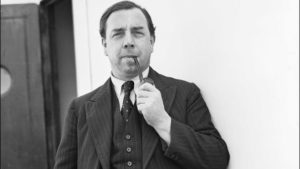
Mother’s Day Summary in English by J.B Priestley
Writer Name
J.B Priestley
Born
13 September 1894, Manningham, Bradford, United Kingdom
Died
14 August 1984, Stratford-upon-Avon, United Kingdom
Spouse
Jacquetta Hawkes (m. 1953–1984)
Movies
Dangerous Corner, An Inspector Calls
Mother’s Day Summary by J.B Priestley
Mother’s Day Summary in English
When the play opens, Mrs Anne Pearson, in her forties, is talking to her friend Mrs Fitzgerald. Mrs Fitzgerald has been predicting Mrs Pearson’s fate, as the play opens. Mrs Pearson is a pleasant but worried-looking woman while Mrs Fitzgerald is older, heavier and a strong and intimidating personality. Mrs Fitzgerald tells Mrs Pearson to assert herself as the head of the family. She adds that it is high time Mrs Pearson let her family know how important she is to them.
Mrs Pearson tells her friend, apologetically, that it was not as easy as it seemed, because although her family was very thoughtless and selfish, she loved them. She felt that they didn’t mean to be as terrible as they were. However, Mrs Fitzgerald insists that they ought to learn to treat her appropriately. She tells her not to run after them all time and take their orders as if she were the servant in the house. She stayed at home every night while they went out enjoying themselves. She feels that this situation was harmful for all of them.
Mrs Pearson agrees with Mrs Fitzgerald, but is uncertain whether it would have any effect on them. She does not want to create any unpleasantness in the family. Moreover, she has thought of it often but does not know how to begin. She glances at her watch and jumps up to cook for her children and her husband, as they would be home any minute. Mrs Fitzgerald holds her back and tells her to begin asserting herself immediately. Mrs Pearson is a little hesitant as she is not sure of herself. Mrs Fitzgerald offers to help her but Mrs Pearson is reluctant as her family would hate an outsider’s interference. But Mrs Fitzgerald has an idea.
She tells Mrs Pearson that they could exchange their bodies, i.e., instead of looking like themselves they would look like the other. Mrs Fitzgerald then holds her hand and asks her to keep quiet for a minute. They stare at each other and Mrs Fitzgerald mumbles ‘‘Arshtatta dum—arshtatta lam—arshtatta lamdumbona…” and they assume each other’s personality. The roles are now reversed. Mrs Pearson becomes bold and dominating and Mrs Fitzgerald is nervous and trembling.
The first evident change is that Mrs Pearson notices the cigarette in Mrs Fitzgerald’s mouth, snatches it and puts it in her own. Mrs Fitzgerald, now with Mrs Pearson’s personality, looks down at herself and sees that her body has changed and screams out of fright. Now, Mrs Fitzgerald is nervous and Mrs Pearson, confident. Mrs Fitzgerald is afraid what would happen if they could not change back to their original forms but Mrs Pearson jokes that she would enjoy herself more as Mrs Fitzgerald. She then assures her friend that they would change back easily. Mrs Pearson, who is Mrs Fitzgerald in reality, goes out leaving the actual Mrs Fitzgerald in Mrs Pearson’s body behind.
Mrs Pearson is playing patience and smoking when her daughter Doris Pearson, a pretty girl in her early twenties, enters. She tells her mother to iron her yellow silk dress as she had to wear it that night. She notices her mother, sitting at the table playing ‘patience’ and smoking, to her amazement. She asks her what she is doing. Mrs Pearson, answers her complacently that she was not whitewashing the ceiling. She adds that there is no law against smoking. She also tells her that she had not made her tea and would have her meal at the Clarendon.
Doris cannot believe her ears. She is angry and insists that her mother make tea and iron her dress. However, Mrs Pearson firmly tells her not to talk rubbish as she was working twice as hard and getting no wages or thanks for it. She then asks Doris where she wanted to wear her yellow dress to. Doris tells her that she was going out with Charlie Spence. Mrs Pearson tells her to find someone better than the buck-toothed, half-witted man.
Doris is offended and runs out. Mrs Pearson laughs and starts putting the cards together when her son Cyril walks in and asks for tea. She behaves nonchalantly, but he insists on her getting the tea and his clothes ready.
He reminds her of the promise she had made that morning, to mend his clothes. He is surprised to hear that she doesn’t “like mending”. She goes on to tell him that when he does not want to do something, he does not do it. She planned to do the same. Cyril could not believe his ears.
Just then, Doris enters and Mrs Pearson, seeing that Doris has been crying, says that she wouldn’t look so pale and red-eyed even for Charlie Spence. Doris accuses her mother of making her cry. Doris and Cyril are even more surprised when their mother asks for strong beer.
When Mrs Pearson walks out, Doris and Cyril discuss that there is something wrong. Doris tells Cyril that she was smoking and playing cards when she came in. Doris feels that she looks a little different but Cyril has not noticed that. They try to fathom what the problem with her is, whether she had gone crazy or had a concussion. They laugh at the idea of her having gone crazy and decide to wait till their father returns.
Mrs Pearson returns, carrying a bottle of beer and a half-filled glass. She tells them to tell her the reason for their amusement. Doris retorts that she had never understood their jokes. Mrs Pearson rudely tells her that she was bored at their jokes even before they were bom. Doris is tearful and Mrs Pearson tells her that all they do is come in, ask for something, go out again, and return when there is nowhere else to go. Cyril again asks for tea, telling her that he had been working for an eight-hour day. Mrs Pearson says that she had done her eight hours and henceforth she would work only for forty-hours a week. At the weekend she would have her two days off. Both the children are surprised. Doris tries to re-confirm if the mother would not do anything on Saturday and Sunday.
Mrs Pearson replies that she might make a bed or two and do a bit of cooking “as a favour” but that would be conditional to the fact that she is asked very nicely and thanked for everything and generally made a fuss of. Mrs Pearson tells her daughter that in case they do not like the arrangement, she would go elsewhere for the weekend. When Doris questions her, Mrs Pearson tells her they had no right to question her as to where she would go and with whom she should go. These were the replies that she had got from them, and she was certainly a lot older and better able to look after herself. When Doris breaks into tears, she tells her not to be a baby. If she was old enough to go out with Charlie Spence, she ought to be old enough to behave properly.
Soon Mr George Pearson, Mrs Pearson’s husband, enters. He notices Doris crying and he wants to know the cause. She tells him that he would soon know the cause. George then notices Mrs Pearson sipping beer and is shocked. He expresses his surprise and tells her that “it doesn’t look right”. Mrs Pearson replies that it is “a nice change” and it had been quite some time since he was surprised at her.
When he tells her that he did not want tea as he was going for a special snooker match night at the club, she tells him the tea is not ready, in the first place. He is angry and she reminds him that he was annoyed because he didn’t get the tea that he did not event want. She adds that if he did that at the bar—did not ask for beer but showed irritation since it had not been poured out for him—they would laugh at him even more than they did. George was indignant and she added that he was one of their standing jokes and that he was called “Pompy-ompy Pearson” because they thought that he was slow and pompous.
She was surprised that he spent so much time at a place where people always ridiculed him, leaving his wife at home.
Just then, Cyril enters and George tries to confirm these facts with him. Cyril is embarrassed and reluctant but admits to it. George is shocked and Cyril accuses his mother of not being fair and sensitive. She says that sometimes it does people good to have their feelings hurt. The truth ought not to hurt anybody for long. If George didn’t go to the club so often, perhaps people there would stop laughing at him. When Cyril disagrees with her, she tells him that his opinion was irrelevant as he knows nothing, and spends too much time and money at greyhound races, dirt tracks and ice shows.
There is a knock on the door. Cyril tells his mother that the silly old Mrs Fitzgerald from next door is there. She informs her son that Mrs Fitzgerald was a very nice woman, with a lot more sense than he would ever have.
She invites Mrs Fitzgerald in. Mrs Fitzgerald has come to inquire if all was well. Cyril said it was not, but Mrs Pearson insists that all was well. When Mrs Pearson shouts at Cyril, Mrs Fitzgerald protests but Mrs Pearson tells her not to interfere. When Cyril goes to the kitchen, Mrs Pearson assures her that she had only done what was required—putting them back in their place.
Mrs Pearson tells Mrs Fitzgerald that she had told George what they thought of him at the club and assures her that all would turn out well. George enters and uneasily asks Mrs Fitzgerald if she had just dropped in Mrs Fitzgerald, in her nervousness, calls him George (She is in reality his wife, Mrs Pearson, who is in Mrs Fitzgerald’s body). George is surprised but Mrs Pearson covers up for Mrs Fitzgerald saying that his name was George, and not the Duke of Edinburgh. George is angry and he lists all that she had done since evening. Mrs Fitzgerald is upset but George tells her to stay out. Mrs Pearson defends Mrs Fitzgerald, saying that George had no manners as he had just marched in and sat down without even wishing her. She asks George to go to the club. George loses his temper and asks Mrs Pearson what was wrong with her. Mrs Pearson jumps up savagely to slap, his face. Mrs Fitzgerald tries to stop her, calling her Mrs Fitzgerald and this confuses George.
Just then, Doris enters and Mrs Fitzgerald asks her why she is not out with Charlie Spence. Doris tells her to mind her own business but Mrs Pearson cuts her short. She says that she would not have her daughter talking to anybody like that. Doris looks at her father for help but he expresses his helplessness. Mrs Pearson asks Doris to answer Mrs Fitzgerald politely. Doris tells her that she has cancelled her going out with Charlie Spence as her mother had said that he had buckteeth and was half-witted. When Mrs Fitzgerald protests, Mrs Pearson tells her that she could manage her family. George expresses his surprise when he sees Mrs Pearson insulting her friend, Mrs Fitzgerald, but Mrs Pearson snaps back at him telling him to go to the club.
This was too much for the real Mrs Pearson to bear. She protests, telling the real Mrs Fitzgerald that it was quite enough. George and Doris are confused. Mrs Fitzgerald tells them that she wants to have a private talk with Mrs Pearson, and would be obliged if they left them alone for a few minutes. George and Doris go out. The real Mrs Pearson (now Mrs Fitzgerald) wants to change back as she could see a great difference already. Mrs Fitzgerald chants the same words and they revert to their original personalities.
While Mrs Fitzgerald had enjoyed the change, Mrs Pearson had not. Mrs Fitzgerald advises Mrs Pearson not to be soft and waste all these efforts. Mrs Pearson feels that her family would behave better but is not sure how she would explain her behaviour. Mrs Fitzgerald tells her not to be soft and make sure that they behave well. She asks Mrs Pearson if she would not enjoy them staying at home, at times, or helping out whether they enjoyed or not. Mrs Pearson admits that she too would enjoy her leisure at times and spend that time playing cards.
When Mrs Fitzgerald leaves, the three—George, Doris, and Cyril—look anxiously at Mrs Pearson, who smiles. They are much relieved, and smile back at her. Mrs Pearson tells them that since they have decided to stay at home, they would have a nice family game of rummy—and then the children could get the supper ready while she talked with their father.
All of them agree. Mrs Pearson wishes Mrs Fitzgerald goodbye and the family comes together around Mrs Pearson.
Mother’s Day Summary Questions and Answers
Question 1. Who is Mrs Fitzgerald? What does she advise Mrs Pearson? Answer: Mrs Fitzgerald is Mrs Pearson’s neighbour and friend. A fortune teller, who had learnt the art from the East, she tells Mrs Pearson that her fortune could turn either way. With effort and counsel, the situation would swing in her favour. She advised her to assert herself as the boss of the house.
Question 2. What was Mrs Pearson’s reaction to Mrs Fitzgerald’s advice? Answer: Mrs Pearson said that it would not be easy to put her family members in place as she was very fond of them. She knew that they were thoughtless and selfish but felt, perhaps, they did not mean to be so.
Question 3. What was Mrs Fitzgerald’s opinion of Mrs Pearson’s attitude? Answer: Mrs Fitzgerald said that Mrs Pearson’s family was undoubtedly spoilt. She felt that it was Mrs Pearson’s attitude that did them no good, tending to their needs, taking their orders, and staying at home every night while they went out enjoying themselves.
Question 4. What does Mrs Fitzgerald offer to do for her? Answer: Mrs Fitzgerald sensed that Mrs Pearson was far too gentle, submissive and generous to tackle her family.
Mrs Fitzgerald offered to make them realize the error of their ways not as Mrs Fitzgerald but as Mrs Pearson. She offered to change their bodies and change back again.
Question 5. How did the two women react after their bodies were changed? Answer: When Mrs Pearson looked down at herself in Mrs Fitzgerald’s body, she gave a scream of fright. On the other hand, Mrs Fitzgerald is rather pleased and feels that the transition was so neat that she did not even know that she had it in her.
Question 6. What is Doris’s first reaction on seeing her mother? Why? Answer: Doris was taken aback to see her mother smoking and playing cards. When Doris asks her what she was doing, she is startled to get her answer ‘whitewashing the ceiling.’ Moreover, her conduct was not nervous and apologetic but cool and incisive.
Question 7. What did Doris want her mother to do? How did the mother react? Answer: Doris wanted her to iron her yellow silk dress that she ‘must wear’ that night. She also wanted her mother to make tea for her. She refused to get her tea and iron her dress, telling her that she put in twice the hours Doris did but got neither wages, nor thanks for it.
Question 8. What does Mrs Pearson say to Doris that really bothered her? Answer: Mrs Pearson asked where Doris would wear her yellow silk dress. She said that she planned to go out with Charlie Spence. Mrs Pearson told her to find somebody better, and insulted Charlie Spence by calling her buck-toothed and was half-witted.
Question 9. What does Mrs Pearson have to say to Cyril that shocks him? Answer: When Cyril walk in and insists on her getting the tea and his clothes ready, he is stunned to hear that she doesn’t ‘like mending’. She goes on to tell him that when he does not want to do something, he does not do it. She planned to do the same. Cyril could not believe his ears.
Question 10. What do Doris and Cyril feel about Mrs Pearson’s changed behaviour? Answer: Doris and Cyril discuss that there is something wrong with their mother as she is not behaving in character. They discuss how Mrs Pearson behaved oddly with each of them. They try to fathom if she had gone crazy or had a concussion.
We have decided to create the most comprehensive English Summary that will help students with learning and understanding.
Albert Einstein At School Summary in English by Patrick Pringle
Albert Einstein At School by Patrick Pringle About the Author
Author Name
Patrick Pringle
Born
1917 (age 103 years), London, United Kingdom
Books
Jolly Roger: The Story of the Great Age of Piracy
Nominations
Edgar Award for Best Fact Crime
Albert Einstein At School Summary by Patrick Pringle
Albert Einstein At School Summary in English
Young Albert Einstein was studying for his diploma in a school in Munich, Germany. He hated learning dates and facts by heart. This forever displeased Mr Braun, his history teacher. Despite his teacher telling him the date of the year that the Prussians had defeated the French at Waterloo, Albert failed to recall them. He candidly confessed that he did not see any point in learning dates as they could be looked up in books.
The teacher was infuriated and said that it applied to most of the facts taught at school. He also taunted him calling his views the “Einstein theory of education”. Albert argued that it was ideas that were important. He was not interested in knowing when the battles were fought but why they were fought.
Mr Braun was shocked and furious. He believed that Albert had no desire to learn and was wasting his father’s money. He punished him by detaining him for an extra period at school. Albert was miserable when he went to his lodging. His father, being poor, had got him a room in an area that was ugly. Albert had no comfort there and did not like the food there. The atmosphere was bad as his landlady kept beating her children and her husband came drunk and beat her. All this made him miserable and what was worse, he had to go to a school that he hated.
Albert was interested in reading books on science. He read about geology that was not taught in school. His cousin Elsa pointed out to him that it would not help him pass his diploma but he said that he did so because he liked reading. He also liked playing the violin and played it till the landlady stopped him. Also, the wailing and howling of the children irritated him.
He had only two friends—Elsa and Yuri. Elsa lived in Berlin, where her father had his business. She visited him occasionally. She encouraged him in his studies and tried to assure him that it was not difficult to pass his examination. All he had to do was learn like a parrot, like stupid boys who did that and passed.
Yuri was a student, who shared his accommodation with the others, and felt Einstein was fortunate to have one to himself. Yuri also told him about the uncivilised students who studied with him, who fought with one another. The authorities did not take action and merely told them not to engage in these fights.
Albert told Yuri, he was convinced that he did not want to continue school but if he went back to Milan he would be sent back. He had a plan. If a doctor certified that he had a nervous breakdown and it would be bad for him to go back there, he could get away from it.
Yuri knew of no doctors but referred him to his friend, a medical student, Ernst Weil. He asked Albert to tell him of his problem honestly. Albert was a sensitive boy and worry made him nervous. By the time, he went to the doctor, Yuri had told him everything. The doctor had been a student till recently and understood his problem. He said that had Albert not been close to a nervous breakdown he would not have gone to a doctor. So he certified that Albert keep away from school for six months.
Albert took Yuri to supper for this favour but Yuri informed him that eventually he would have to go back to school. But Albert decided to meet the head teacher and said that he hoped to get a recommendation from his teacher of mathematics, Mr Koch. On Yuri’s advice he went to Mr Koch first. Mr Koch admired Albert and confessed that he could not teach Albert anymore, rather he could leam from him. Albert got a recommendation from him that said, he was fit to join an institute for higher education in mathematics.
However, before he could go to the head teacher, he was summoned. The teacher informed him that he was not prepared to keep him in school, as his work was horrible, he was a rebel and hindered teaching work in class. Albert did not have to use his medical certificate as he was expelled from school. He was happy leaving the place where he had spent five miserable years.
He just wanted to meet Yuri before leaving as Elsa was in Berlin. Yuri hoped that he would be happy in Milan.
Albert Einstein At School Summary Questions and Answers
Question 1. “I think it’s not facts that matter, but ideas.” To whom did Einstein say this and why? Answer: Einstein said it to Mr Braun, the history teacher, in his Munich school. He hated learning dates and facts by heart. He argued that ideas were more important than rote learning. He was not interested in knowing when the battles were fought but why they were fought.
Question 2. Do you think Albert is being impolite while answering the history teacher’s questions? Give your reasons. Answer: Though Albert addresses his history teacher politely, he is being impudent. If he did have a problem, he should have spoken to the teacher separately. Questioning the teacher’s views on education in a class was impolite and rude. OR Albert addresses his history teacher politely. His answers are straightforward and blunt but his opinions are strong. A firm conviction cannot be termed as rudeness.
Question 3. What characteristic of Einstein’s nature is highlighted by the exchanges between him and the teacher? Answer: The exchanges between Einstein and the teacher show him to be a person with firm convictions; he is frank and straightforward. Even at the cost of punishment he is not willing to compromise on his views. He comes across as one who will chart his own course rather than follow the beaten track.
Question 4. Why did Albert see no point in learning dates and facts? Answer: Einstein told Mr Braun, the history teacher, “I think it’s not facts that matter, but ideas.” He hated learning dates and facts by heart. He argued that ideas were more important than learning by rote. He was not interested in knowing when the battles were fought but why they were fought.
Question 5. What was Einstein’s reaction to the history teacher’s sarcasm? Answer: Mr Braun, his history teacher, was unhappy with Albert unwilling to leam facts or dates. When he admitted that he did not see any point in learning dates, the teacher taunted him by calling his views the ‘Einstein theory of education’. Albert argued that it was ideas that were important but nevertheless, felt miserable.
Question 6. Why did Albert feel miserable when he left school that day? Answer: When he left school that day, Albert felt miserable because his day at school, like most other days, had been bad and he had gotten into an argument with his teacher for which he had been punished. Secondly, he had to go back to the same school the next day. Moreover, the idea of going back to his lodgings with the atmosphere of domestic violence did not cheer him up.
Question 7. Why and what did his history teacher report to the head teacher? Answer: Mr Braun was shocked and furious with Albert’s candid reply. He believed that Albert had no desire to learn and was wasting his father’s money. He punished Albert by detaining him after school. He also reported to the head teacher that his work was horrible; he was a rebel and hindered teaching work in class.
Question 8. Albert was equally unhappy at his lodging. Why? Answer: Albert was miserable at his lodging. His father was a man of modest means, had got him a room in an ugly area. Albert.had no comfort and did not like the food there. The atmosphere was bad as his landlady kept beating her children and her husband came drunk and beat her.
Question 9. What did Yuri say to him about violence in the hostel? Answer: Yuri told Einstein that he was fortunate to have an accommodation to himself. The people around him were poor but not uncivilized like the ones with whom he shared his accommodation. Yuri also told him about the uncivilized students, sharing his accommodation, who fought. The authorities did not take action but merely told them not to do so.
Question 10. Who was Elsa? What was her advice to Albert? Answer: Elsa was Einstein’s cousin who lived in Berlin. She visited him of and on. She encouraged him in his studies and tried to assure him that it was not difficult to pass his examination. All he had to do was learn like a parrot, like the stupid boys who did that and passed.