The Little Girl Summary in English by Katherine Mansfield

We have decided to create the most comprehensive English Summary that will help students with learning and understanding.

The Little Girl Summary in English by Katherine Mansfield

The Little Girl by Katherine Mansfield About the Author

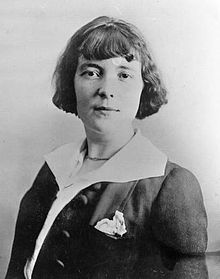
Katherine Mansfield Beauchamp (1888-1923) was a n prominent short story writer who was bom and brought up in colonial New Zealand and wrote under the pen name of Katherine Mansfield. At 19, Mansfield left New Zealand and settled in the United Kingdom, where she became a friend of writers such as D.H. Lawrence and Virginia Woolf. In 1917, she was diagnosed with tuberculosis, which led to her death at age 34. Master of the short story, Katherine Mansfield had much influence on the development of the short story as a form of literature. She evolved a distinctive prose style with many overtones of poetry. Her delicate stories, focused upon psychological conflicts, have an obliqueness of narration and a subtlety of observation that is reminiscent of Anton Chekhov. She was a prolific writer in the final years of her life. Much of her work remained unpublished till her death.

Author NameKatherine Mansfield
Born14 October 1888, Wellington, New Zealand
Died9 January 1923, Fontainebleau, France
Short StoriesThe Garden Party, Miss Brill, The Doll’s House
SiblingsLeslie Heron Beauchamp, Jeanne Beauchamp
The Little Girl Summary by Katherine Mansfield

The Little Girl Introduction to the Chapter

In The Little Girl by Katherine Mansfield we have the theme of family relationships. Taken from Mansfield’s Something Childish and Other Stories, the story is narrated in the third person by an unnamed narrator.

Kezia’s father is a busy man, so lost in his business that he has no time for his family. Being a very disciplined man, he is strict with Kezia to the point of harshness. He never displays any soft feelings for his little daughter, nor does he pet her for a while. All he does is give her a perfunctory kiss rather than a loving one. His presence at home frightens Kezia and she is relieved when he goes off to work. Kezia, who is able to speak without stuttering to everyone else, stutters in her father’s presence. Yet, in spite of all, Kezia’s father had a loving heart and is concerned about his daughter’s welfare.

The Little Girl Summary in English

Katherine Mansfield’s story The Little Girl is the story of a young girl, Kezia, and her relationship with her domineering father. His stem behaviour shakes his little daughter’s faith in him, and also in herself, to such an extent that she develops a strong dislike for him; to her he is a figure to be feared and avoided. She feels relieved when he leaves for his job every morning. His goodbye kiss seems too casual and perfunctory to her.

In the evening, when he returns home, Kezia hears him ask for his tea and the paper and give instructions in a loud voice. As the whole household rushes around to do his bidding, her mother asks Kezia to take off her father’s shoes. The girl is so terrified of him that, much to his annoyance, she stutters while answering his casual queries. Interestingly, Kezia’s speech is normal when she talks to other people; it is only his sternness that she finds so intimidating that she cannot bring herself to speak properly in his presence. To Kezia, her father, a tall man of few words, is a giant with big hands, a big neck and a big mouth.

Kezia’s grandmother tries to make efforts to improve Kezia’s relationship with her parents by telling her to talk nicely to them when they are relaxing on Sunday afternoons. But little Kezia always finds her mother absorbed in reading the newspaper and father sleeping on the sofa in their drawing-room. As he sleeps, Kezia sits on a stool and waits for him to wake up, looking at him, wide-eyed in her fear, until he wakes up, stretches, and asks the time — then looks at her, saying in an irritated tone, “Don’t stare so, Kezia. You look like a little brown owl.”

One day, Kezia’s grandmother suggests that she should make a pin-cushion to present to her father on his birthday. Kezia gets a yellow silk piece, stitches it on three sides. Now she needs something to stuff it with. She finds some very fine papers that she finds on the bed-table in her Mother’s room. She tears these papers into small bits before stuffing them into her pin-cushion and stitching up the fourth side.

That night, there is a lot of commotion in the house; her father’s great speech for the Port Authority cannot be found. Rooms are searched; servants questioned. Finally Mother comes into Kezia’s room and asks her if she has seen some papers that had been kept on a table in her room. Kezia owns up to her innocent mistake and the poor child is dragged down to the dining-room where her father is pacing up and down anxiously. When mother explains everything to him, he asks the scared girl to confirm her wrong-doing. She stutters a scared ‘no’ in a whisper. However, her angry father is not in a forgiving mood. He asks the grandmother to put Kezia to bed that instant and the child lies alone in her bed crying.

A little later, her father comes to Kezia’s room with a ruler. She screams and tries to hide under the bedclothes, but he pulls her out and orders her to hold out her hands so as to be taught a lesson not to touch someone else’s things. She tries to reason that it is for his birthday but he does not listen and hits her little pink palms with the ruler. The beating leaves deep scars on Kezia’s mind. From then on, she puts both her hands behind her back whenever she sees her father.

One day, Kezia sees her neighbours – the children in the Macdonald family – playing with their father. The Macdonalds are an exuberant, lively, playful family. Looking through the vegetable garden-wall, Kezia sees the five children playing with their father, turning a hose at him and the father tickling the children. When compared with her scary father who never played with her, Kezia sees the love between father and children next door and she observes that Mr Macdonald is playful, jolly, and liberal unlike her own father who is extremely strict. This leads her to reach the conclusion that all fathers are not alike.

Days pass and one day, when her mother is ill and has to be hospitalised, Kezia’s opinion about her father changes drastically. Grandmother accompanies Kezia’s mother to hospital and Kezia is alone in the house with their cook, Alice. Daytime is fine but when Alice put Kezia to bed at night, the child is terrified to be alone. She is afraid of the nightmares, for grandmother is not there to take her into her bed and comfort her grandmother as always. Alice cautions her not to scream and wake her father at night.

That day, Kezia again has the horrible dream again and she wakes up shivering and crying for her grandmother. However, she sees her father beside her bed with a candle in his hand. On learning that she is scared because of her terrible dream, her father takes her in his arms and carries her to his room. He tucks her in his bed and makes her sleep close to him. He is so tired that he goes off to sleep earlier than her. Little Kezia looks closely at her father and realises that he is not the giant that she had thought him to be. He may not pamper her like Mr Macdonald because he works harder than him. She lays her head on his heart and realises he has a big heart full of warmth and Care.

The Little Girl Title

The title of the story The Little Girl is apt because Katherine Mansfield wants to accentuate the idea that the story is about Kezia. The title highlights the fact that the girl is rather young and small; this makes her father’s size and behaviour appear larger and more frightening to her. The title is effective as the author shows the relationship between Kezia and her father and how she is affected by him. She is afraid of her father. He wants her to be obedient, disciplined, and organized but all she wants is his love and his company. She lacks self confidence and doesn’t feel free to talk to him. The little girl is so scared of him that she stutters in his presence. In fact, all the episodes in the story describe the experiences, opinions and observations made by Kezia. Her views, not just about her father, but also her mother, her grandmother, their cook Alice, and their neighbours, the Macdonalds, let the reader know what a little girl thinks and how she feels regarding the people around her.

The Little Girl Setting

The story is set in a town in England in the late nineteenth or early twentieth century. Kezia’s father goes to work in a carriage. He is a dominating male, who expects to be served and obeyed.

Kezia, her mother and the servants in the house are answerable to her father. The little girl barely engages with her father. She stutters when she talks to him as if she is in fear of him. However, things are beginning to change. Mr Macdonald plays with his children.

The Little Girl Theme

The main theme in The Little Girl is a young child’s point of view about her father. Children take time to understand the actions of their elders. Till such time, they may look upon their parents with negativity and fear. However, as kids grow older, their attitude towards their parents undergoes a change. The theme of this story is based on this process of change that makes little children notice the soft and caring heart of their overtly strict parents.

Another theme is the theme of control. Mansfield also highlights the control that the male exerts over the female. Kezia’s father is the only male in the household and Kezia, her mother and the servants in the house are answerable to her father. Kezia is dominated by her fear of her father and she stutters when she talks to him. Rather than having a loving relationship or a close bond with her father, she lives her life not only in fear of him but being wary of him too as she seems unsure of how he might treat her. Even though she’s a child, Kezia has duties to fulfil as soon as her father arrives home just like her mother and the servants in the house. At all times her father’s needs must be met. None of the female characters in the story have any independence due to having to accommodate each and every need (or whim) that Kezia’s father might have.

The Little Girl Message

The author’s message in the story is that although there is a very strong bond between parents and children, the bond must be nurtured otherwise children may develop fear and mistrust. It is not always easy for children to understand the true motive behind the stem actions of their parents. Parents may, at times, resort to strict punishment in order to prepare their little children for the hardships of adult life. As a result, children may view them as being harsh and frightening and may develop negativity. Therefore, the story gives a strong message to both the children and parents. Children should trust their parents and the parents should understand that fear and physical punishment can leave emotional scars.

The Little Girl Characters

Kezia

Kezia, the protagonist of the story The Little Girl, is a young girl. Though we do not know her exact age it can be assumed from the title of the story, and her behaviour that she is still very young, possibly not more than four or five.

She is an emotional and sensitive girl, deeply affected by her father’s disciplinarian attitude. She is afraid of him because she finds him large, loud and frightening. To the little girl he is a figure to be feared and avoided. Every morning before going to work he comes into her room and gives her a casual kiss, to which she responds with “Goodbye, Father”. And there is a glad sense of relief when she hears the noise of the carriage growing fainter and fainter down the long road! She is so scared that she stammers in his presence, although she doesn’t do that with the others.

This behaviour of Kezia is typical of a young girl. She sees her father as the boss of the family who must be served properly all the time. So, she feels relieved when he leaves for work every morning.

A timid child, Kezia goes down to the drawing-room when her grandmother sends her there to have a “nice talk with Father and Mother”, but the little girl sits on a stool, gravely watching her father with apprehensive eyes until he wakes up and stretches, and tells her, “Don’t stare so, Kezia. You look like a little brown owl.”

Kezia is obedient. Though she is very afraid of her father, she slowly slips down the stairs, and more slowly still across the hall, and pushes opin the drawing-room door to take off her father’s boots when her mother tells her to.

However, so great is her fear of her father that sometimes she even thinks that there should not have been any fathers in this world. She is envious, too, when she compares herself to other children, like the Macdonalds’ children. She is pained to observe that her father does not pamper her like Mr Macdonald does as he plays with his.

Kezia is innocent but impulsive. She makes a pin-cushion for her father as his birthday present but innocently picks up his important papers as stuffing for the pin-cushion. Impulsively, she tears those papers without seeking permission and hence gets into serious trouble.

Kezia quick to observe her father’s affection for herbon the night she is alone at home with him and is terrified by her recurrent nightmare. She feels happy when her father protectively takes her to his bed and comforts her. Her distrust for him changes into appreciation for his hard work. She admires his big heart and discovers her love for him. She changes from a resentful and frightened girl to an understanding and affectionate daughter.

Kezia’s Father

Kezia’s father displays two divergent characteristics in the story. Initially, he appears as a domineering, head of the family and demands complete obedience from other members. He is so distant and aloof, that Katherine Mansfield does not give him a name—we know him only as Kezia’s father, quite unlike the jolly, friendly Mr Macdonald. This could partly be because Father is seen mostly through the eyes of the little girl.

Physically, he is a figure to be feared and avoided. He has a loud voice, wears spectacles. He looks at the little girl in a terrifying way. He appears so big and terrifying to the little girl—his hands and his neck, especially his mouth when he yawns. Thinking about him alone was like thinking about a giant.

Father is a busy and hardworking man. He seems to have an important job and sometimes has to deliver speeches – as his great speech to the Port Authority—so he is often preoccupied. Every morning before going to work he comes into Kezia’s room and gives her a casual kiss. Thus, despite his preoccupation, he still has time to kiss her daughter goodbye each morning. He could be tired with his work, too. For on Sunday afternoons when Grandmother sends Kezia down to the drawing-room to have a “nice talk with Father and Mother”, Kezia finds him stretched out on the sofa, his handkerchief on his face, his feet on one of the best cushions, sleeping soundly and snoring.

An authoritative man, Father wants his entire household to be at his beck and call. As soon as he returns home in the evening, he gives orders, “Bring my tea into the drawing-room… Hasn’t the paper come yet? Mother, go and see if my paper’s out there—and bring me my slippers.” Instead of taking off his shoes himself, he makes Kezia do it for him.

He is not a very perceptive person and is so strict with his daughter that the poor girl stutters in his presence.

He does not understanding his fear of her and mocks her stutter by copying her; “You d-d-don’t know? If you stutter like that Mother will have to take you to the doctor.” He does not realise Kezia is so scared of him, she feels relieved when he leaves for work in the morning. This severe aspect of his personality is highlighted even more when he punishes Kezia with a ruler. He fails to understand the innocent emotions of his daughter who accidentally damages his papers.

However, the positive aspect of his persona surfaces when he takes care of his little girl in the absence of the women of the household. He not only carries her in his arms to his room but also tucks her comfortably in his bed. He asks her to rub her feet with his legs to make them warm. This reveals he loves his daughter dearly.

Kezia’s Grandmother

Kezia’s Grandmother comes across as a mature and understanding person with the wisdom of age. She does not interfere in any matters of the household and simply provides background support. When Kezia’s father punishes Kezia with a ruler, Grandmother soothes her hurt by wrapping her in a shawl and rocking her in a chair clinging her to her soft body. She realises this is a delicate issue and parents must discipline their children in a way they see fit.

She does not question the authoritarian attitude of her son. She also realises Kezia is afraid of her father. So as a wise elder, she urges her young granddaughter to make efforts to bond with her parents. She advises Kezia to talk nicely to her parents when they are relaxing on Sunday afternoons. When Father beats Kezia, it is grandmother who tries first to reason with her son and then consoles and comforts Kezia.

Grandmother’s supportive character can also be seen when she accompanies her daughter-in-law to the hospital. We also learn that she soothes Kezia whenever she has a nightmare and takes her into her bed. Hence, Grandmother is an important character even though she remains mostly in the background.

Kezia’s Mother

Kezia’s Mother is not at all a strong character. She is physically weak, too, and in the end has to be rushed off to the hospital. We do not hear much of her except for when Father returns home. She looks to his comforts and caters to his needs. She ensures he gets his paper, his slippers and his tea.

Mother is not a very observant or understanding person. She does not notice, or she ignores the fact that Kezia is so scared of her father that she stutters in his presence. She calls out to her to take her father’s shoes off. She does not really notice when Kezia comes to sit with them in the drawing room on Sunday afternoons but continues to read.

Mother is severe, though not as strict as Father. She screams at Kezia and drags her down when she leams it is Kezia who has tom up her father’s papers without bothering about her husband’s wrath. However, Kezia is not as scared of her as she is of her father.

Kezia’s mother comes across as a very unapproachable, aloof figure, quite unlike a loving mother a young girl desires and needs. Perhaps her ill-health and her strict and domineering husbands demands leave her with very little room to pay the desired attention to her daughter.

The Little Girl Summary Questions and Answers

Question 1.
Why was Kezia scared of her father?
Answer:
Kezia’s father was a busy man and had little time for the little girl. Being a very disciplined man, he was strict with Kezia as well and she would at times get harsh words of scolding and physical punishment from him. He never displated any soft feelings for his little daughter nor did he play with her like Mr Macdonald. All he did was giving her a perfunctory kiss rather than a loving one. Moreover, he was a large man, and his size, too, terrified the little girl. So scared was Kezia of him that she felt relieved when he was gone from home.

Question 2.
Who were the people in Kezia’s family?
Answer:
There were four people in Kezia’s family – her father who was very strict, her mother who was stem and aloof, her soft-hearted and loving grandmother and little Kezia herself.

Question 3.
What was Kezia’s father’s routine before going to office and after coming back in the evening?
Answer:
Before going to office, Kezia’s father would come to her room, give her a perfunctory kiss and leave for work. He would return in the evening and in a loud voice ask for his tea, the papers and his slippers to be brought into the drawing-room. He would wait for Kezia to help him take off his shoes and exchange a few words with Kezia.

Question 4.
What was Kezia’s routine when Father returned from office?
Answer:
When Father returned home from office, mother would tell Kezia to come downstairs and take off her father’s shoes. She would also be told to take the shoes outside. Father would ask her a couple of questions and she would stutter out her replies. He would order her to put his teacup back on the table and then she would make good her escape from his presence.

Question 5.
What was Father’s and Kezia’s morning routine?
Answer:
Before going to his office, Kezia’s father would come to Kezia’s room and give her a perfunctory kiss. She would respond with “Goodbye, Father”. Since she was afraid of him, she always felt relieved after his departure.

Question 6.
Why did Kezia go slowly towards the drawing-room when mother asked her to come downstairs?
Answer:
Kezia was afraid of her dominating father. He always scolded her for one thing or the other and did not display any soft feelings or affection for his little daughter. So frightened was she of him that she went very slowly towards the drawing-room when she was asked to come downstairs to take off his shoes.

Question 7.
Why was Father often irritated with Kezia?
Answer:
Kezia was very scared of her father. She stuttered when he spoke to her. Also, the terrified expression on her face irritated him. In his presence she wore an expression of wretchedness. He felt that with such an expression, she seemed as if she were on the verge of suicide.

Question 8.
What was unusual about Kezia’ stuttering?
Answer:
Kezia was able to speak without stuttering to everyone in the household but her father. In her father’s formidable presence she could barely speak and she stuttered as she attempted to speak to him.

Question 9.
Why did Kezia stutter while speaking to Father?
Answer:
Kezia’s father’s had a loud and domineering personality and he frequently frequent rebuked her for her behaviour and appearance. His constant criticism and scolding shook her self-confidence. Moreover, his large size frightened her. Though Kezia tried her best to please him, she found herself tongue-tied while talking to him. This made her stutter in his presence.

Question 10.
Why did Kezia feel that her father was like a giant?
Answer:
Kezia felt that her father was like a giant because he had very big hands and neck. His mouth seemed big especially when he yawned. He had a loud voice and would often call out orders. In addition, his stem and cold behaviour made the little girl think of him as a giant.
The Sound of Music Summary in English

We have decided to create the most comprehensive English Summary that will help students with learning and understanding.

The Sound of Music Summary in English

The Sound of Music Summary Part 1 by Deborah Cowley About the Author

Deborah Cowley was born in India, grew up in Toronto, Canada graduated in English from the University of Western Ontario and moved to Ottawa for a job with the Unitarian Service Committee. She then spent two years with the United Nations Relief and Works Agency (UNRWA) in Beirut, Lebanon before moving back to Ottawa to join the Canadian International Development Agency (CIDA). Her broadcasting career began when she was ported to Washington with her husband. She worked as a freelance reporter for CBC radio. When she and her husband were posted to Cairo, Egypt, she was commissioned to write the first official guidebook of Cairo and is currently in its 17th edition. Subsequent postings to London and Brussels gave Deborah the opportunity to write articles for the British and International editions of Reader’s Digest.

The Sound of Music Summary Part 1 in English

In the biographical feature Evelyn Glennie Listens to Sound without Hearing It Deborah Cowley gives an account of percussionist Evelyn Glennie, a Scottish musician, who has been profoundly deaf since the age of 12. Instead of yielding to the handicap, Evelyn pursued her dream developed her ability to hear through the rest of her body. She eventually made her way to the Royal Academy of Music in London. Evelyn Glennie, who can play more than a thousand instruments to perfection, a most sought after musician internationally.

Evelyn’s mother came to know about her daughter’s deafness when at the age of eight, the latter was to give her performance on the piano in school but could not hear her name being called. For quite a while Evelyn managed to conceal her growing deafness from friends and teachers. But by the time she was eleven her marks had deteriorated. When her deafness was confirmed at the age of eleven, the headmistress of her school suggested that she should be sent to the school for deaf children. But Evelyn was not the kind of girl who could be discouraged. Once, when she was dissuaded by the teachers from playing upon a xylophone, Ron Forbes, a great percussionist, came to her rescue. He saw great potential in her and guided her how to sense music through different parts of her body without listening through ears. This proved to be the turning point. She leamt to open her body and mind to the sounds and vibrations. After that she never looked back. She had mastered the art of interpreting different vibrations of sound on her body.

Evelyn did not look back from that point onwards. She toured the United Kingdom with a youth orchestra and by the time she was sixteen, she had decided to make music her life. She joined the prestigious Royal Academy of Music and scored the highest marks in the history of the Academy when she gave an audition for it. Afterwards, she moved from orchestra to solo performances. At the end of her three-year course at the Academy, Evelyn had bagged most of the top awards.

With her unfaltering determination, Evelyn became the world’s most sought-after multipercussionist with a mastery of some thousand instruments, and hectic international schedule.

Despite her lack of hearing, Evelyn not only speaks flawlessly, but has also managed to learn French and basic Japanese. According to Evelyn, she can feel music pouring in through every part of her body – her skin, her cheek bones, even her hair. She can feel the vibrations of instruments penetrate into her body through her bare feet. In 1991, she received the prestigious ‘Soloist of the Year Award’ presented by the Royal Philharmonic Society.

A person with humane attitude, Evelyn gives free concerts in prisons and hospitals. With her efforts, she secured a significant place for percussion instruments in orchestra. Infact, Evelyn Glennie is a great inspiration for all those who suffer from physical disabilities. She makes them believe that if she could do it, so can they.

The Sound of Music Summary Part 2 in English

The Sound of Music Part II – The Shehnai of Bismillah Khan throws light on the origin of shehnai and the life of Bismillah Khan, the shehnai maestro, recipient of Padma Vibhushan and Bharat Ratan awards for his invaluable contribution to the musical world of shehnai. Hailing from a family of musicians, Bismillah Khan secured for the shehnai a place among the classical musical instruments. His improvisation of many new raagas and his originality won him accolades at the international level as well.

Pungi, a reeded musical instrument, was banned by the Mughal emperor Aurangzeb because he found its sound to be jarring and shrill. However, it was revived when a barber, who belonged to a family of professional musicians, modified and perfected it. He took a hollow stem which was wider than the pungi, made seven holes in it and produced music that was soft and melodious. The barber (nai) played it in the royal chambers (in the court of Shah) and the instrument was named shehnai. Its sound was so appreciated that it was made a part of naubat – the traditional ensemble of nine instruments found at royal courts. From that time onwards, the music of shehnai came to be associated with auspicious occasions. It was played in temples and during weddings, particularly in northern India till Ustad Bismillah Khan brought instrument onto the classical stage.

Born in 1916 in Dumroan, Bihar, Bismillah Khan belonged to a well-known family of musicians. His grandfather, Rasool Bux Khan was a shehnai player in the court of the king of Bhojpur. His father, Paigambar Bux, and his paternal and maternal uncles were also great shehnai players. Bismillah khan took to music early in life when he was 3 years old in the company of his maternal uncle. At the age of five, he used to regularly go to the nearby Bihariji temple to sing the Bhojpuri chaita at the end of which he would be awarded a big laddu by the Maharaja.

Bismillah Khan got his training in Benaras from his maternal uncle, Ali Bux, who played shehnai in the Vishnu temple. His talent came to be recognised when Bismillah Khan was fourteen, in the Allahabad Music Conference. Later, when All India Radio was established in

Lucknow in 1938, he often played shehnai on the radio. In Benaras, the Ganga provided him much inspiration and in harmony with the flowing waters of the Ganga, Bismillah Khan discovered new raagas for shehnai. He developed such a devotion for the Ganga and for Dumraon that he declined the opportunity to settle down in America when it was offered to him.

Bismillah Khan’s shehnai ushered in a new era when he played the shehnai prior to the speech of Pandit Jawahar Lai Nehru declaring the independence of India in 1947.

Unlike other musicians, the glamour of the film industry failed to captivate Bismillah Khan. Although he contributed to the music of two films, Vijay Bhatt’s Gunj Uthi Shehnai and Vikram Srinivas’s Kannada venture, Sanadhi Apanna, he did not pursue this option further as he couldn’t come to terms with the artificiality and glamour of the film world. He was rewarded with national awards – the Padmashri, the Padma Bhushan and the Padma Vibhushan. In 2001, he received the highest civilian award of India, the Bharat Ratna. He was the first Indian invited to perform in Lincoln Central Hall, USA. He also took part in the World Exposition in Montreal, in the Cannes Art Festival and in the Osaka Trade Fair. So well known did he become internationally that an auditorium in Teheran was named after him —Tahar Mosiquee Ustaad Bismillah Khan.

Ustad Bismillah Khan’s life embodies the rich, cultural heritage of India as a devout Muslim like him played the shehnai every morning at the Kashi Vishwanath temple.

The Sound of Music Summary Part 2 in English

We have decided to create the most comprehensive English Summary that will help students with learning and understanding.

The Sound of Music Summary Part 2 in English

The Sound of Music Summary Part 2 Introduction to the Chapter

The article The Shehnai of Bismillah Khan is an effort to understand the origin of shehnai, an Indian musical instrument as an improved version of the pungi, a reed instrument, which was banned by Aurangzeb for its unpleasant sound. It also narrates the journey of Indian classical musician Bharat Ratan Bismillah Khan whose playing of the shehnai enabled him to win national and international acclaim.

The Sound of Music Summary Part 2 in English

The Sound of Music Part II – The Shehnai of Bismillah Khan throws light on the origin of shehnai and the life of Bismillah Khan, the shehnai maestro, recipient of Padma Vibhushan and Bharat Ratan awards for his invaluable contribution to the musical world of shehnai. Hailing from a family of musicians, Bismillah Khan secured for the shehnai a place among the classical musical instruments. His improvisation of many new raagas and his originality won him accolades at the international level as well.

Pungi, a reeded musical instrument, was banned by the Mughal emperor Aurangzeb because he found its sound to be jarring and shrill. However, it was revived when a barber, who belonged to a family of professional musicians, modified and perfected it. He took a hollow stem which was wider than the pungi, made seven holes in it and produced music that was soft and melodious. The barber (nai) played it in the royal chambers (in the court of Shah) and the instrument was named shehnai. Its sound was so appreciated that it was made a part of naubat – the traditional ensemble of nine instruments found at royal courts. From that time onwards, the music of shehnai came to be associated with auspicious occasions. It was played in temples and during weddings, particularly in northern India till Ustad Bismillah Khan brought instrument onto the classical stage.

Born in 1916 in Dumroan, Bihar, Bismillah Khan belonged to a well-known family of musicians. His grandfather, Rasool Bux Khan was a shehnai player in the court of the king of Bhojpur. His father, Paigambar Bux, and his paternal and maternal uncles were also great shehnai players. Bismillah khan took to music early in life when he was 3 years old in the company of his maternal uncle. At the age of five, he used to regularly go to the nearby Bihariji temple to sing the Bhojpuri chaita at the end of which he would be awarded a big laddu by the Maharaja.

Bismillah Khan got his training in Benaras from his maternal uncle, Ali Bux, who played shehnai in the Vishnu temple. His talent came to be recognised when Bismillah Khan was fourteen, in the Allahabad Music Conference. Later, when All India Radio was established in

Lucknow in 1938, he often played shehnai on the radio. In Benaras, the Ganga provided him much inspiration and in harmony with the flowing waters of the Ganga, Bismillah Khan discovered new raagas for shehnai. He developed such a devotion for the Ganga and for Dumraon that he declined the opportunity to settle down in America when it was offered to him.

Bismillah Khan’s shehnai ushered in a new era when he played the shehnai prior to the speech of Pandit Jawahar Lai Nehru declaring the independence of India in 1947.

Unlike other musicians, the glamour of the film industry failed to captivate Bismillah Khan. Although he contributed to the music of two films, Vijay Bhatt’s Gunj Uthi Shehnai and Vikram Srinivas’s Kannada venture, Sanadhi Apanna, he did not pursue this option further as he couldn’t come to terms with the artificiality and glamour of the film world. He was rewarded with national awards – the Padmashri, the Padma Bhushan and the Padma Vibhushan. In 2001, he received the highest civilian award of India, the Bharat Ratna. He was the first Indian invited to perform in Lincoln Central Hall, USA. He also took part in the World Exposition in Montreal, in the Cannes Art Festival and in the Osaka Trade Fair. So well known did he become internationally that an auditorium in Teheran was named after him —Tahar Mosiquee Ustaad Bismillah Khan.

Ustad Bismillah Khan’s life embodies the rich, cultural heritage of India as a devout Muslim like him played the shehnai every morning at the Kashi Vishwanath temple.

The Sound of Music Summary Part 2 Title

The Shehnai of Bismillah Khan is the subtitle of Part II of The Sound of Music. The title is apt as this section deals with the evolution of the shehnai, a reeded musical instrument and the celebrated shehnai player, Bismillah Khan. Shehnai evolved from the pungi which had an unpleasant sound. Pungi’s tonal quality was improved by a nai (barbar) and it was played in the court of the Shah (emperor Aumangeb); hence it came to be known as shehnai. The title also celebrates the melodious music produced by Bismillah Khan’s shehnai. It recounts Bismillah Khan’s achievements and awards as a shehnai player.

The Sound of Music Summary Part 2 Theme

The main theme in The Shehnai of Bismillah Khan deals with the theme that music transcends all barriers. The author, along with highlighting Bismillah Khan’s achievements in the field of shehnai vaadan points out that it was Bismillah Khan’s secular approach to music that honed his skill in music and enabled him to create new raagas. A devout Muslim, Bismillah Khan began his musical career by singing Chaita in Bihariji temple and practicing shehnai in Vishnu temple and Mangala Maiya temple of Varanasi. He used to spend most of his time practicing on the banks of the River Ganges. The themes of his music were deeply affected by the sounds of flowing water of the Ganga. This legendary musician is an example of the secular cultural heritage of India that respects talent, irrespective of the religion of the artist.

The Sound of Music Summary Part 2 Message

Through the life and achievements of Bismillah Khan, the celebrated shehnai player, the writer teaches us an important lesson that Indian music and culture has a very rich and secular tradition. It is a tradition that has been enhanced and enriched through centuries by great musicians like Bismillah Khan, who,not only inherited traditional music but also enhanced it with their original contributions. In the words of Bismillah Khan: “Teach your children music, this is Hindustan’s richest tradition; even the West is now coming to learn our music.” The article also gives the message of patriotism and secularism.

The Sound of Music Summary Part 2 Characters

Bismillah Khan

Bismillah Khan, the shehnai maestro was a extraordinarily talented musician, a committed patriot, and a broad-minded human being.

Bismillah Khan is one of the most eminent musicians of India who not only inherited and propagated the rich, cultural heritage of Indian music, but also enhanced it by creating new ragaas. Bom and brought up in a family of musicians, he inherited and leamt a lot from his paternal and maternal families. His passion for music started at the early age of three and continued up to his death at ninety. Starting with playing music in temples and on the banks of the Ganga, Bismillah Khan rose to fame with international conferences and concerts. Such was his fame that he was invited to play shehnai at the Red Fort on the occassion of the independence of India on August 15, 1947.

A devout Muslim, Bismillah Khan was a liberal human being who had respect for all religions. He used to sing Chaita in Bihariji temple and play shehnai in Vishnu temple and Mangala Maiya temple of Varanasi. He played shehnai everyday in the Kashi Vishwanath temple, Benaras. He also further enriched the shehnai music with his improvisation of raagas which he based on the waves of the Ganga.

Bismillah Khan played shehnai in Afghanistan before King Zahir Shah, was invited to perform at Lincoln Central Hall, USA and participated in the World Exposition in Montreal, in the Cannes Art Festival and Osaka Trade Fair. Such is his international fame that in Teheran, an auditorium has been named after him.

Bismillah Khan was a great patriot who declined the offer of his student to settle down in the USA. He had a profound love for the Ganga in Benaras and his birthplace, the estate in Dumraon, Bihar.

His love for the rich cultural heritage of India did not allow him to succumb to the allure and glamour of the film world. Bismillah Khan’s contribution to music earned him many national awards including the Padamshri, the Padma Bhushan and the Padma Vibhushan were conferred on him. He has also been honoured with the Bharat Ratan, the greatest civilian award in India.

The Sound of Music Summary Part 2 Questions and Answers

Question 1.
Why did Aurangzeb ban the playing of the pungi?
Answer:
Aurangzeb banned the playing of musical instrument pungi because it had a loud, shrill, and unpleasant sound. He prohibited its play in the royal court.

Question 2.
Why did the pungi become a generic name for “reeded noisemakers”?
Answer:
The pungi was made from a reed and it produced noisy, unpleasant sounds. It became a generic name for “reeded noisemakers”.

Question 3.
How is a shehnai different from a pungi?
Answer:
Shehnai has a better tonal quality than pungi. It is a natural hollow stem pipe with holes on its body and is longer and broader than the pungi. When some of the holes are closed and opened while it is played on, soft and melodious sounds are produced instead of the loud, jarring sound of a pungi. Thus, shehnai is, in a way, an improvement upon the pungi.

Question 4.
How was the pungi revived?
Answer:
After Aurangzeb had banned the playing of the pungi in the royal residence, a barber who belonged to a family of professional musicians revived it by taking a wider and longer hollow stem and making seven holes in it. The opening and closing of these holes in the improved pungi produced soft and sweet sounds.

Question 5.
How did the improved and modified pungi get its new name?
Answer:
It is believed that the barber (nai) who improved the pungi, played his improved and modified instrument in the chamber of the emperor {shah). From the combination of the two words shah and nai, the new instrument got is new name shehnai.

Question 6.
Where was the shehnai played traditionally? Why?
Answer:
The music of the shehnai was melodious and soft. It was made a part of the naubat or or traditional ensemble of nine instruments found at royal courts. Soon, it came to be believed that it was auspicious. Therefore, it came to be played in the holy temples and on the happy auspicious occasions of weddings.

Question 7.
Although the shehnai was played in temples and at weddings. How did Bismillah Khan change this?
Answer:
The shehnai was traditionally played in royal courts, temples and weddings. Ustaad Bismillah Khan, an undisputed shehnai maestro, brought the instrument onto the classical stage by adding new raagas and modifying old ones.

Question 8.
Where and how did Bismillah Khan begin his career in music?
Answer:
Bismillah Khan began his career in music at the age of five by singing the Bhojpuri Chaita in the Bihariji temple regularly in his native town Dumraon in Bihar. At the end of the song the local Maharaja would give him a big laddu weighing 1.25 kg as a prize.

Question 9.
How did Bismillah Khan inherit music from his paternal and maternal ancestors?
Answer:
Bismillah Khan hailed from a family of musicians in Bihar. His paternal grandfather Rasool Bux Khan was a shehnai player in the royal court of the king of Bhojpur. His father Paigambar Bux and many paternal and maternal uncles were also shehnai vaadaks. In fact, Bismillah Khan was apprenticed with his maternal uncle Ali Bux to learn how to play the shehnai.

Question 10.
Write a short note on Ali Bux.
Answer:
Ali Bux was the maternal uncle of Bismillah Khan. He was a great shehnai player and was employed to play the shehnai in the Vishnu temple of Benaras. In fact, at a very young age Bismillah was apprenticed to his uncle. Bismillah Khan started accompanying him and got lessons in playing the shehnai from him. The young boy would sit for hours listening to his uncle and later practise throughout the day. As such he and may be regarded as his mentor and trainer.

The Sound of Music Summary Part 1 in English

We have decided to create the most comprehensive English Summary that will help students with learning and understanding.

The Sound of Music Summary Part 1 in English

The Sound of Music Summary Part 1 Introduction to the Chapter

Life doesn’t always go our way. Often we may face challenges and disabilities. How we respond to these challenges is important. We may develop a negative attitude and cynical outlook or become absorbed in all the problems and misfortune we are experiencing or we may rise above our problems and turn any challenge into an opportunity. Deborah Cowley in her biographical feature Evelyn Glennie Listens to Sound without Hearing It writes about the achievements of the multi-percussionist, Evelyn Glennie who overcame her handicap of hearing impairment with great determination and confidence.

The feature describes how, under the able guidance of Ron Forbes, Evelyn Glennie found a way out of her problem by developing an ability to sense music through different parts of her body. Part II is an effort to understand Indian classical musicians and instruments especially the origin of shehnai and shehnai maestro Ustad Bismillah Khan. Shehnai replaced pungi which had an unpleasant sound. Pungi’s tonal quality was improved by a nai (barber) and was played in the chambers of the shah (emperor Aumangeb); hence it was named as shehnai.

The Sound of Music Summary Part 1 in English

In the biographical feature Evelyn Glennie Listens to Sound without Hearing It Deborah Cowley gives an account of percussionist Evelyn Glennie, a Scottish musician, who has been profoundly deaf since the age of 12. Instead of yielding to the handicap, Evelyn pursued her dream developed her ability to hear through the rest of her body. She eventually made her way to the Royal Academy of Music in London. Evelyn Glennie, who can play more than a thousand instruments to perfection, a most sought after musician internationally.

Evelyn’s mother came to know about her daughter’s deafness when at the age of eight, the latter was to give her performance on the piano in school but could not hear her name being called. For quite a while Evelyn managed to conceal her growing deafness from friends and teachers. But by the time she was eleven her marks had deteriorated. When her deafness was confirmed at the age of eleven, the headmistress of her school suggested that she should be sent to the school for deaf children. But Evelyn was not the kind of girl who could be discouraged. Once, when she was dissuaded by the teachers from playing upon a xylophone, Ron Forbes, a great percussionist, came to her rescue. He saw great potential in her and guided her how to sense music through different parts of her body without listening through ears. This proved to be the turning point. She leamt to open her body and mind to the sounds and vibrations. After that she never looked back. She had mastered the art of interpreting different vibrations of sound on her body.

Evelyn did not look back from that point onwards. She toured the United Kingdom with a youth orchestra and by the time she was sixteen, she had decided to make music her life. She joined the prestigious Royal Academy of Music and scored the highest marks in the history of the Academy when she gave an audition for it. Afterwards, she moved from orchestra to solo performances. At the end of her three-year course at the Academy, Evelyn had bagged most of the top awards.

With her unfaltering determination, Evelyn became the world’s most sought-after multipercussionist with a mastery of some thousand instruments, and hectic international schedule.

Despite her lack of hearing, Evelyn not only speaks flawlessly, but has also managed to learn French and basic Japanese. According to Evelyn, she can feel music pouring in through every part of her body – her skin, her cheek bones, even her hair. She can feel the vibrations of instruments penetrate into her body through her bare feet. In 1991, she received the prestigious ‘Soloist of the Year Award’ presented by the Royal Philharmonic Society.

A person with humane attitude, Evelyn gives free concerts in prisons and hospitals. With her efforts, she secured a significant place for percussion instruments in orchestra. Infact, Evelyn Glennie is a great inspiration for all those who suffer from physical disabilities. She makes them believe that if she could do it, so can they.

The Sound of Music Summary Part 1 Title

The Sound of Music is an apt title for the two features that narrate the inspiring success stories of two talented musicians – Evelyn Glennie and Ustad Bisillah Khan. The title also alludes to the famous movie with the same name. The subtitle Evelyn Glennie Listens to Sound Without Hearing It makes the readers wonder how Evelyn Glennie can listen to the sounds of music without actually being able to hear them. It leaves them eager to learn how Glennie developed sensitivity to the sounds of music despite her deafness. She could sense the sounds and vibrations of music through her skin, her hair, her cheek bones, her feet – in fact, through every part of her physical frame.

The Sound of Music Summary Part 1 Theme

Evelyn Glennie Listens to Sound Without Hearing It is based on the theme that determination, sincere efforts and able guidance are the way to success. Evelyn Glennie, a multi-percussionist, overcame the challenge posed by physical disability and became a source of inspiration for thousands of disabled persons. She was eleven years old when it was discovered that she had a hearing disability. Though her teachers discouraged her from pursuing her career in music, it was Ron Forbes who recognized her potential and supported her in achieving her goal.

He advised her not to listen through her ears but try to sense and feel the vibrations in every part of her body. These tingle in her skin, her cheekbones and even in hair. She leamt to open her body and mind to the sounds and vibrations. She overcame the challenge of her impaired hearing through her firm belief in herself and great confidence in her will.

The Sound of Music Summary Part 1 Message

Evelyn Glennie’s achievements give us the message that handicaps may be countered, problems may be overcome, and aspirations can be realized if one is firmly resolute and confident. Those who do learn to overcome hardships certainly achieve the highest goals. In the words of James Blades, master percussionist, “God may have taken her hearing but he has given her back something extraordinary. What we hear, she feels—far more deeply than any of us. That is why she expresses music so beautifully.”

The Sound of Music Summary Part 1 Characters

Evelyn Glennie

Evelyn Glennie, the internationally renowned percussionist, comes across as an embodiment of unflinching determination, strong self-belief, dedication and courage. Although challenged by a severe hearing impairment, she was able to follow a career in music and achieve extraordinary success in the field. Despite her deafness, Evelyn gives solo performances and has command over a large number of percussion instruments.

Despite losing her hearing faculty at the very young age of eleven, Evelyn did not give up. She faced the challenge bravely and with strong determination. Though the headmistress of her school advised her to join a school for the deaf, she decided to lead her life normally. Not only that, she was unshaken in her resolve to follow a career in music. She was encouraged in her resolve to study music by percussionist, Ron Forbes. Under his guidance, Evelyn learnt how to develop sensitivity to musical sounds through different parts of her body. She managed to sense musical notes through her skin, her hair, her fingers, and even her bare feet.

Her hard work and self-confidence enabled Evelyn to get admission to the Royal Academy of Music, London, the most prestigious institution for music. Here, too, she worked hard to receive the highest awards in percussion music. Such is her contribution to the field that it has earned percussion instruments a special place in the orchestra.

A compassionate and benevolent person, Evelyn performs in prisons and hospitals. She She also gives high priority to classes for young musicians. Evelyn has, thus, revealed to the world that disabilities disappear before dedication and determination. Her achievements are a source of inspiration for those who suffer from handicaps.

The Sound of Music Summary Part 1 Questions and Answers

Question 1.
What were Evelyn’s feelings as she stood on the platform waiting for the London underground?
Answer:
As she stood on the platform Evelyn felt both nervous and excited because she was waiting for a train in London to take her to her dream destination – to join the prestigious Royal Academy for Music. She was apprehensive as she was a young, seventeen-year-old from Scotland going to join such a prestigious music institute. Moreover, she was profoundly deaf and despite her disability, she had made it to the Music Academy.

Question 2.
How old was Evelyn when she went to the Royal Academy of Music? Why was she nervous on her way to the academy?
Answer:
Evelyn was only seventeen years of age when she was selected to the Royal Academy of Music, London. She had come straight from a farmland in Scotland, she had not experienced much of the world. In addition, she was profoundly deaf and was going to a big institute like The Royal Academy of Music. Her nervousness was the result of her young age, her lack of exposure and her hearing disability.

Question 3.
Why was Evelyn “nervous yet excited” as she waited for the train?
Answer:
While leaving for the Royal Academy of Music, Evelyn was excited despite her nervousness as going to the Royal Academy of Music, London was a dream come true for her. She was going to join a three-year course in an institute she had dreamed of joining. It excited her to think that despite her hearing impairment she had made her way to such a prestigious institute.

Question 4.
Why was Evelyn Glennie going to face a bigger challenge at the prestigious Royal Academy of Music in London?
Answer:
Evelyn Glennie was passionate about music, and would not let anything stand in her way, but studying music at the prestigious Royal Academy of Music in London was a challenge for her for two reasons: in the first place she was deaf and in the second, she was brought up on a Scottish farm. It was a challenge for a deaf village girl to compete with other singers who had perfect hearing.

Question 5.
When and how was Evelyn’s hearing problem noticed?
Answer:
Evelyn was only eight-year-old when her hearing problem was noticed by her mother when she was eight years old and she did not respond to a call for a performance on piano. However, her loss of hearing was gradual and her deafness was confirmed at the age of eleven when her poor academic performance forced her parents to consult a specialist.

Question 6.
Who advised Evelyn’s parents to take her to a specialist? Why?
Answer:
Evelyn managed to hide her growing deafness from students and teachers for some time. However, by the time she was eleven years old, her performance in school deteriorated and her marks began to fall. It was then that the headmistress advised her parents to consul a specialist.

Question 7.
When was Evelyn’s deafness confirmed? What advice was given to her?
Answer:
Evelyn’s deafness was gradual. By the time she was eleven, her marks had deteriorated. Her teachers advised her parents to take her to a specialist. The specialist discovered that her hearing was badly impaired because of gradual nerve damage. He advised her parents that she should be fitted with hearing aids and sent to a school for the deaf.

Question 8.
“Everything suddenly looked black”. Why did Evelyn feel this way?
Answer:
When Evelyn was advised to use hearing aids and join a school for the deaf, she felt that her future was bleak and dark. She was depressed, as she felt she would not be able to lead a normal life nor pursue her interest in music.

Question 9.
How did Evelyn Glennie respond to the discovery of her deafness?
Answer:
On learning about her deafness due to gradual nerve damage, Evelyn Glennie, felt at first that her future was dark and bleak. However, instead of giving up, she decided to lead a normal life like other children and pursue her dream of learning music.

Question 10.
How did Evelyn’s teachers respond when she expressed her desire to play a xylophone?
Answer:
Evelyn had always loved music and despite her deafness, she expressed a desire to play the xylophone when she saw another girl playing it. However her teachers felt that she would not be able to play it because of her impaired hearing and they discouraged her from doing so.

The Fun They Had Summary in English by Isaac Asimov

We have decided to create the most comprehensive English Summary that will help students with learning and understanding.

The Fun They Had Summary in English by Isaac Asimov

The Fun They Had by Isaac Asimov About the Author

Isaac Asimov (1920-1992) was bom in Petrovichi, Russia. His family immigrated to the United States in 1923. He was a Professor of Biochemistry at Boston University and a popular writer of science-fiction. He published his first novel, Pebble in the Sky, in 1950. An immensely prolific author who penned nearly 500 books, he published influential sci-fi works like I, Robot and the Foundation trilogy. In fact, Isaac Asimov is widely considered a master of the science-fiction genre.

Author NameIsaac Asimov
Born2 January 1920, Petrovichi, Russia
Died6 April 1992, Brooklyn, New York, United States
Short StoriesThe Last Question, The Fun They Had
MoviesI, Robot, Bicentennial Man, Nightfall, The End of Eternity
The Fun They Had Summary by Isaac Asimov

The Fun They Had Introduction to the Chapter

Science Fiction is a genre of fiction in which the stories are largely based on science and technology of the future. It is important to note that science fiction has a relationship with the principles of science. Stories involve laws or theories of science which are partially true and partially fictitious. The plot creates situations different from those of both the present day and the known past. Science fiction texts explain what effect new discoveries, happenings and scientific developments will have on us in the future. These stories are often set in the future, in space, on a different world, or in a different universe or dimension.

Isaac Asimov’s The Fun They Had is a science fiction story which first appeared in a children’s newspaper in 1951 and was reprinted in the February 1954 issue of The Magazine of Fantasy and Science Fiction, as well as the collections Earth Is Room Enough (1957), 50 Short Science Fiction Tales (1960), and The Best of Isaac Asimov (1973). According to Asimov, the story The Fun They Had, written as a personal favor for a friend, became “probably the biggest surprise of my literary career”. He reported that it had been reprinted more than 30 times with more being planned. “Why? I don’t know why.” It is about computerized home schooling, and what children miss out on by not being in school together.

The Fun They Had Summary in English

The Fun They Had is a story set about 150 years in the future; to be precise on 17 May 2157. The writer describes a time in the future when every child has his own machine teacher and schools like today do not exist anymore. There are telebooks, in which words move across the screen. Considering that this story was written in 1951 before personal computers were around, it is amazing how well the author predicts the future. We are not living in 2155 yet, but it is already possible for us to read digital books on handheld devices. Perhaps in the future, children really will be taught by mechanical teachers!

On that particular day, Tommy, a thirteen-year-old boy, finds a ‘real book’ in the attic of his house. The book, which is really old, has been printed on paper and its pages are yellow and crinkly. He and his friend, eleven- year-old Margie, take a look at the book together. Both Margie and Tommy are amazed by the book that is different from the books they are accustomed to. The book has words that are fixed on the pages and do not move as on a screen. Books like these don’t exist anymore. Margie recalls her grandfather had once told her about stories being printed on paper in the time of his grandfather. Tommy thinks of the book as being impractical because, unlike their telebooks that have a million books and are good for plenty more, the book would have to be thrown away after one had finished reading it.

Tommy tells Margie that the book is about school, but Margie, who hates school and cannot understand why someone would write about it, is disappointed. She has been having problems with learning geography from her ‘mechanical teacher’. It teaches Margie, gives her exercises and asks her questions, all in a special room in her own house. It can also calculate the marks in no times. Margie hates the slot where she has to insert her homework or test papers.

Lately, her dislike for her school has intensified because the geography sector of her mechanical teacher is malfunctioning. It has been giving her test after test in geography and she has been doing worse and worse.

Her mother has sent for the County Inspector to look at the mechanical teacher and to rectify the error. The Inspector takes the mechanical teacher apart and finds that Margie is not at fault for her poor performance.

The geography sector in the teacher has been fixed at a speed that is too fast for the little girl. Margie has been hoping he wouldn’t know how to put it together again, but he knows how to repair it all right, and, after an hour or so, the Inspector is able to set the speed to Margie’s level. This leaves Margie disappointed as she had hoped her teacher would be taken away for some time and she would be relieved of the trouble of taking so many tests.

Tommy, who has been reading the book, tells Margie that the book is not about their kind of school which has mechanical teachers with a TV, but rather, it was about the schools hundreds of years ago when students had a person as a teacher who taught the girls and boys, gave them homework and asked them questions. School was a special building the children went to. And they learned the same thing if they were the same age.

At first, Margie does not understand how a person could be a teacher and how the students were taught the same thing because her mother says that education must fit each child’s mind.

Nevertheless, she wants to read more about it. They haven’t even read half the book, when Margie’s mother reminds her it is time for school. Though Margie’s schoolroom is right next to her bedroom, she has to study at regular hours because her mother considers it right to study at fixed timings every day.

Margie goes to the schoolroom in her house, where the mechanical teacher is already on because the lessons are always at regular hours. As the mechanical teacher teaches the addition of proper fractions, Margie is lost in her thoughts about the working of schools in old times. Though at first Margie had been skeptical about the notion, by the end of the story she believes that the kids must have enjoyed going together to school. They must have had fun going to the same school, studying the same things and being able to help one another.

The Fun They Had Title

The title of the story The Fun They Had has been derived from the closing words of the story. They reflect the opinion of Margie, a young girl in the year 2157, about the students centuries ago. In 2157, children are taught individually by mechanical teachers who are adjusted to fit the mind of each boy and girl they teach and each kid is taught differently. Their “school” is just another room in the house. They have no interaction with a human teacher or with other children during school hours. Tommy finds the book about schools, centuries ago when students had a person as a teacher who taught the girls and boys. School was a special building, the children went to. And they learned the same thing if they were the same age. Margie thinks about the old school system and how much fun the children must have had, learning and spending time together.

The Fun They Had Setting

The setting of the story is 17 May 2157. Two children, thirteen-year-old Tommy and eleven-year-old Margie are at Margie’s house looking at a ‘strange’ book Tommy found in his attic. Their life is different from that of children today. Children no longer have a person as a teacher, nor do all children go to a school house and learn the same thing with other children of the same age. In 2157 children are taught individually by mechanical teachers who are adjusted to fit the mind of each boy and girl they teach and each kid is taught differently. Children read telebooks and have no interaction with a teacher and little interaction among themselves.

The Fun They Had Theme

The main theme in The Fun They Had by Isaac Asimov is that of education. Specifically, the story deals with the future of education which will become increasingly computerized. As a result, students will become estranged from social interactions.

By contrasting the schools of present day with those expected to exist in the twenty second century, the writer draws the conclusion that present day schools are much more fun. Schools in the future schools will impart knowledge but students will miss out on the fun they can have while going to the same school, studying the same things, adjusting with the same teacher and being able to help one another. The author’s message is one of warning against the dangers of computerized homeschooling which deprives children of the benefits of the personal interaction between students and teachers, which helps them develop social skills.

The Fun They Had Message

The author’s message in the story is that education is not merely accumulation of information. Computerised homeschooling can certainly help gain information in a better way, but present day schooling is much more than acquisition of facts. It is a life-experience where children interact with others, have fim and leam the values of sharing and caring. If in the future schools have mechanical teachers attuned to specific needs of every student and books available only in electronic form, our children will be deprived of the privilege of interaction with human teachers and other students and developing of social skills.

The Fun They Had Characters

Margie

Margie is an eieven-year-old girl who lives in the twenty second century. She is taught by a mechanical teacher in the comfort of her home. The mechanical teacher is highly personalised and adjusted to suit her level. Yet, Margie dislikes her school. Probably this is because she is confined to a room and has to study alone at a fixed time every day.

Margie is a curious girl. When she finds a real book in Tommy’s hands, she is eager to know about its contents.

In fact, she wants to read the book herself. However, she is surprised that the book describes a school of the yesteryears which had real men as teachers and classes were conducted in a special building. She is fascinated to leam that in those times the students of the same level studied together.

Margie seems to be a friendly and social girl. She concludes that the old system was much better as the students had so much fun when they studied together and could help each other, rather than studying in isolation.

Tommy

Tommy, a thirteen-year-old, plays an important role in the story as he is the one who finds a book about the schools from yesteryears. The entire action of the story begins after that. He, too, like Margie represents the students of the future era when education will be mechanised and automated.

Tommy is very curious. He has gone looking in the attic and found the old book. As soon as he discovers it, he starts reading it. However, he does not like the idea of printed books which, according to him, are a waste once they have been read. Compared to Margie, he is not as sensitive to the contents of the book.

He has an air of superiority—he snubs Margie when she expresses her ignorance about old schools.

However, Tommy is warm and friendly and he does believe in sharing. When Margie’s mother calls her to attend school he assures her that they can finish the book later.

The Fun They Had Summary Questions and Answers

Question 1.
Who are Margie and Tommy? How old are they?
Answer:
Margie and Tommy are students from the year 2157. Tommy is a thirteen-year-old boy and Margie is an eleven-year-old girl. Both are neighbours and good friends who like to spend time together like children of their age usually do.

Question 2.
What did Margie write in her diary?
Answer:
On 17 May 2157 Margie recorded in her diary about the discovery of a “real” book by Tommy. It was a very old book printed on paper and had yellow and crinkly pages, unlike the telebooks of the twenty-second century.

Question 3.
Where had Tommy found the book? How was it different from the books Margie and Tommy were used to?
Answer:
Tommy found a real book in the attic of his house. The book was at least two hundred years old so pages had turned yellow and crinkly. It was a different from the books Margie and Tommy were used to because they had teiebooks to read from while the book Tommy found was printed on paper.

Question 4.
Had Margie ever seen a real book before? Did she know about such books?
Answer:
No, Margie had never seen a book before till she saw the one Tommy found in the attic of his house. She had only heard about books from her grandfather who himself had not seen any. He too had heard about a printed book from his own grandfather.

Question 5.
What things about the book did Margie and Tommy find strange?
Answer:
Margie and Tommy read telebooks where words moved on a screen. Books were stored in a machine that could store a million books on it and still be good for plenty more. So they found it strange that the words in the printed book remained fixed unlike the moving ones on their television screen.

Question 6.
“What a waste!” What is Tommy referring to as a ‘waste’? Is it really a waste? Why/Why not?
Answer:
Tommy thought the paper book he found in his attic with words that were printed and did not move was a waste. Once a book had been read, it became useless and must be thrown away because it had the same content.

YES: Printed books are a waste as telebooks are more accessible. They can be stored in a television and read again and again. They occupy very little space as compared to the printed books and need not be discarded once they have been read. In addition, paper books consume resources like trees from which paper is made and water that is consumed in the process of making paper.

NO: Printed books are not a waste as they can be read by many people over and over again and can be preserved for future generations. Moreover, the data in a telebook can be lost or stolen, but in a printed book, the data printed on a page remains for ever.

Question 7.
What do you think a telebook is?
Answer:
A telebook is a book made available in text on a television screen. Many books can be stored and read in this manner. (The telebook is the author’s imagined version of an e-book as this story was written in 1951, long before their advent.)

Question 8.
Did Margie like the printed book? Why/Why not?
Answer:
Margie was really excited to see the ‘real’ book Tommy found as it was unlike the telebooks the two were used to reading. It was such a novelty that she recorded the discovery in her diary. As she turned the yellow and crinkly pages of the book with Tommy, she found it quite fascinating, unlike Tommy who found it a waste. In fact, she was really reluctant to stop reading the book and go to study. She wanted to read the book again after school.

Question 9.
Where was Margie’s school? Did she have any classmates?
Answer:
Margie’s school was a room next to her bedroom in her house. No, she did not have any classmates as her school was a customised school, set up exclusively for her according to her level and needs.

Question 10.
What kind of teachers did Margie and Tommy have? How were they different from teachers in the book?
Answer:
Margie and Tommy had mechanical teachers, which were large and black and ugly, with a big screen on which all the lessons were shown and the questions were asked. There was a slot where they had to put homework and test papers and the mechanical teacher calculated the marks in no time. Margie and Tommy’s teachers were different from the teachers in the book as the teachers in the book were men and not mechanical teachers.