Journey to the end of the Earth Extra Questions and Answers Important Questions Class 12 English Vistas

Here we are providing Journey to the end of the Earth Extra Questions and Answers Important Questions Class 12 English Vistas, Extra Questions for Class 12 English was designed by subject expert teachers.

Journey to the end of the Earth Extra Questions and Answers Important Questions Class 12 English Vistas

Journey to the end of the Earth Extra Questions and Answers Short Answer Type

Question 1.
How do geological phenomena help us to know about the history of humankind?
Answer:
Geological phenomena helps us to know more and more about the history of humankind as only through it we come to know about the present, past and future of the Earth. How life was then and gradually how it shaped now. Scientists admit that world’s geological history is trapped under the layers of Antarctica.

Question 2.
What are the indications for the future of human kind?
Answer:
Deplection of ozone layer, Reforestation, melting of glaciers, and the collapse of ice shelves clearly give the indications for the future of mankind that it is not safe if global warming continues, soon this mankind will banish from the planet ‘Earth’.

Question 3.
‘Akademik Shokalskiy’ was heading towards Antarctica, why?
Answer:
‘Akademik Shokalskiy’, a Russian Vessel was heading towards Antarctica with a troop of 52 peoples, to study and research the history of humankind under the guidance of Canadian Geoff Green.

Question 4.
Name the programme and its objectives.
Answer:
The programme was ‘Students on Ice’ with the motive to give high school students, the educational opportunity to do the study of Antarctica.

Question 5.
After reaching Gondwana, what were their reactions?
Answer:
They were highly exicted as they were at a remote area of the Earth where no mankind could sustain and totally peaceful environment existed, a place without trees, billboards and buildings.

Question 6.
Gondwana existed before six hundred and fifty million years. Explain.
Answer:
Six hundred and fifty million years ago, a giant amalgamated Southern super continent ‘Gondwana’ did indeed exist, centred roughly around the present- day Antarctica.

Question 7.
How is Antarctica, a subject for debate for environmentalists?
Answer:
Antarctica is always a subject for debate for environmentalists because only Antarctica is undisturbed by human beings, whether it would melt, will the Gulf Stream ocean current be disrupted or will it be the end of the world; such many concerned issues are raised for debate.

Question 8.
How did they reach Antarctica?
Answer:
They travelled over 100 hours in combination of a car, an aeroplane and a ship. In this way, they reached Antarctica.

Question 9.
What was wondrous about Antarctica?
Answer:
Expansive white landscape and uninterrupted blue horizon and its immensity and isolation was wondrous about Antarctica.

Question 10.
What is the pretty mind-boggling fact, one can observe?
Answer:
By the study of Antarctica, the fact: India pushing north words, South America driffting off to join North America and many others boggle the mind and produce many imaginations.

Question 11.
What types of sounds can be noticed/heard there?
Answer:
The sound of occasional avalanche or calving of ice sheets can only be heard in Antarctica.

Question 12.
Why Geoff Green started to bring only students to Antarctica?
Answer:
Geoff Green noticed that celebrities and retired rich persons visit Antarctica only for entertainment but the students, who are the future policy-makers, took interest and ready to accept the challenge.

Question 13.
Why Antarctica is the perfect place to study nature?
Answer:
Antarctica is the perfect place to study nature be-cause it has simple ecosystem and lack of biodiversity; above all, it is untouched by human beings.

Question 14.
Why the programme ‘Students on Ice’ became so successful?’
Answer:
The programme became so successful because its impossible to go anywhere near the South Pole and not be affected by it. Through this programme, students got the educational opprotunities.

Question 15.
What is photosynthesis?
Answer:
The process of converting light energy into chemical energy by plants is called photosynthesis.

Question 16.
What various expanses did they cross to reach Antarctica?
Answer:
Nine time zones, six checkpoints, three bodies of water and many ecospheres were crossed by them to reach Antarctica.

Question 17.
What are Geoff Green’s reasons for including high school students in the ‘Students on Ice’ Expedition?
Answer:
Canadian Geoff Green started this programme, ‘Students on Ice’ before six years of writing this chapter. The reasons for including high school students were to provide them most inspiring educational opportunities which would make them aware about the depletion of our ecosystem, create an understanding to save our planet as those teenagers still have an ideology to absorb, learn, and most importantly act.

Question 18.
‘Take care of the small things and the big things will take care of themselves: What is the relevance of this statement in the context of the Antarctic environment?
Answer:
Antarctic, because of her simple ecosystem and lack of biodiversity, is the perfect place to study/tell us how little changes in the environment can have big consequences. Single celled microscopic phytoplankton use the Sun’s energy to do the process of photosynthesis. And any obstacle in this process will affect the lives of all the marine animals and birds of that region, the global carbon cycle. Scientists warn and advise to take care of the small things and the big things will fall into plape.

Question 19.
Why is Antarctica the place to go to, to understand the earth’s present, past and future?
Answer:
Only Antarctica on this earth presently is in its purest and original form as it holds in its ice-cores half million-year-old carbon records trapped in its layers of ice. Antarctica has never sustained a human propulation and therefore remains relatively ‘pristine’ in this respect. So Antarctica is the place to go to understand the Earth’s present, past and future.

Journey to the end of the Earth Extra Questions and Answers Long Answer Type

Question 1.
How did the writer justify the title journey to the end of the earth?
Answer:
The title ‘Journey to the end of the Earth is quite justified by the writer ‘Tishani Dosi’ through this chapter. A visit to Antarctica thrilled the whole troop and made them realized that Antarctica is the world’s coldest, driest and windiest continent. Their visit seemed to be very fruitful because without reaching there physically, one can’t experience the immensity and importance of Antarctica and its great role in balancing the ecosystem.

Writer found Antarctica still undisturbed by human beings and tried to understand where we’ve come from and where we could possibly be heading; through the deep study of this island. Writer presumed that without controlling the rapidly increasing global warming; we can’t stop the melting of ice specially glaciers and as it is known that Antarctica covers 90 per cent of the Earth’s ice, its sustainment is mandatory. Or in near future, Antarctica would be responsible (if not ceased the global warming) for the ruination of the Earth’s lives and in this way, the end of the Earth would be brought by Antarctica.

Question 2.
Describe the journey to the Antarctica by the Vessel ‘Akademik Shokalskiy’.
Answer:
The journey starts with a troop of 52 peoples under the guidance of experienced Canadian Geoff Green, an educator and adventurer. He started the mission ‘Students on Ice’ to aware the teenagers about the present need of the escapement of Antarctica. Akademik Shokalskiy, a Russian Vessel headed towards the coldest, driest and windiest continent in the world: Antarctica.

Journey began 13.09 degress North of the equator in Madras, and involved crossing nine time zones, six checkpoints, three bodies of water, and at least as many ecospheres. They trevelled over 100 hours in combination of a car, an aeroplane and a ship and finally they reached to view Antarctica’s expansive white landscape and uninterrupted blue horizon where immensity and isolation made them wondorous and tireless.

Question 3.
‘Take care of small things and big will take care of themselves’. What is the relevance of this statement in the context of the Antarctica?
Answer:
The small things are having their own importance at their own place. Small things are combined produce their effect on big things. As phytoplankton are very tiny single-celled plants, but they nourish and sustain the entire Southern Ocean’s food proceedings, s Phytoplankton is the grass of Southern Ocean and 1 through the process of photosynthesis, they convert light energy into the chemical energy and supply food and provide oxygen to all the marine life (animals and birds). So very tiny plants are responsible for the survival of the life.

But global warming can affect the activity of these plants and also the whole ecosystem of the Earth. Sun’s energy is used to assimilate carbon and synthesize organic compounds by these plants. The rapidly increasing depletion of the Ozone layer will surely adversely affect this natural system. By any means, the depletion should be stopped to preserve our ecological balance and save whole mankind and all creatures from extinction. So, opening our eyes, we should take care of little things to care the big things automatically and naturally.

Question 4.
‘A lot can happen in a million years, but what a difference a day makes’. Explain.
Answer:
The author with a troop of 52 peoples visited the Earth’s coldest, driest and windiest continent of the world i.e. Antarctica where she was highly exicted finding the untouched, unhumane land without trees, billboards and buildings. The history of the world started from Antarctica itself and the secret of evolution and extinction can be studied through the study of Antarctica.

There is a prompt need to aware ourselves with this reality that if we’ve to save the mankind from extinction, we need to save the nature and Antartica is the best place for this purpose because it is covering 90 per cent of the Earth’s ice and hiding, under its layers, the mystery of the world. Writer spent two weeks with a group of teenagers under the leadership of Canadion Geoff Green, and after assuming the need of action, said, that a lot could happen in a million years, but what a difference a day makes.

Question 5.
Geoff Green, a Canadian explorer and educator started to include high school students on the expedition ‘Students on Ice’. Explain why?
Answer:
Geoff Green, who, since -the starting, started to include celebrities, retired rich, curiosity-seekers to the Antarctica but they remained unhappy and dis-satisfied and also those men in power and position did not understand the problems facing mankind. They never gave any response in return and didn’t seem worried about the ecology.

Geoffs efforts remained futile and totally time wastage could be noticed. Geoff, then started to inculude the learners, willing persons and school students for the mission and it was also an opportunity for beginners to study more and more about our planet and ecosystem. These youngsters seem ready to absorb, learn and act immediately.

They realize the threat of global warming and can actually do something as they are the future policy-makers and also expected to act and solve the environmental problems. Thus, the expedition/movement started to give its results in a positive manner and people seemed to be aware for global warming.

Question 6.
‘The world’s geological history is trapped in Antarctica.’ How is the study of this region useful to us?
Answer:
The study of Antarctica is useful to us in very mysterious and revealing way. Six hundred and fifty million years ago, ‘Gondwana’ a super continent existed, centred roughly around the present day Antarctica. The climate was much warmer, hosting a huge variety of flora and fauna. For 500 million years Gondwana thrived.

Around the time, the landmass was forced to separate into countries, shaping the globe much as we know it today. A grasp of where we’ve come from and where we could possibly be heading; the evolution and extinction, can easily be understood through the study of this region.
The Tiger King Extra Questions and Answers Important Questions Class 12 English Vistas

Here we are providing The Tiger King Extra Questions and Answers Important Questions Class 12 English Vistas, Extra Questions for Class 12 English was designed by subject expert teachers.

The Tiger King Extra Questions and Answers Important Questions Class 12 English Vistas

The Tiger King Extra Questions and Answers Short Answer Type

Question 1.
What were the different names given to the King of Pratibandapuram?
Answer:
The king of Pratibandapuram was known as many different names. He may be identified as His Highness Jamedar-General, Khiledar-Major, Sata Vyaghra Samhari, Maharajdhiraj Visva Bhuvana Samrat, Sir Jilani Jung Jung Bahadur, M.A.D., A.C.T.C. or C.R.C.K.

Question 2.
How did the Tiger King acquire his name?
Answer:
The king of Pratibandapuram got the name of Tiger King as it was prophesized that his death would come from the hundredth tiger. Therefore he decided to kill hundred tigers before pursuing any other affairs. He killed so many tigers that he came to be known as the Tiger King.

Question 3.
When he was only ten days old, a prediction was made about the future of the Tiger King. What was ironic about it?
Answer:
When the Tiger King was born, the astrologers predicted that one day the royal infant had to die. They further said that the death would come from the hundredth tiger. The Tiger King did die because of the hundredth tiger. But ironically, the tiger was not the real tiger. It was a toy tiger made of wood.

Question 4.
Why did the Maharaja decide to get married?
Answer:
The Maharaja had killed all the tigers in his kingdom. But the number of killed tigers was only seventy. He still needed thirty more tigers to kill to fulfil his vow. Therefore, he decided to marry the princess from the kingdom which had a large number of tiger population.

Question 5.
When was the Tiger King stand in danger of losing his kingdom?
Answer:
A British officer wanted to hunt a tiger in the Tiger King’s kingdom. But the king denied him the per-mission. Then the officer sent the word that the actual killing could be done by the king himself, he only wanted to stand on the carcass of the tiger and be photographed. But the king even refused to do that. As a result the king was standing in danger of losing his kingdom.

Question 6.
How did the Tiger King manage to retain his kingdom?
Answer:
The king ordered fifty diamond rings from a famous jeweller. He sent all the rings to the wife of the officer. He thought that the lady would keep one or two rings and send back the remaining. But she kept all the fifty rings. The king had to bear the expense of three lac rupees for it, but he managed to save his kingdom.

Question 7.
Why did the Maharaja ban tiger hunting in his state?
Answer:
The Maharaja had to fulfil his vow of killing hundred tigers. Therefore the tiger hunting was banned by anyone except the Maharaja. A proclamation was issued that if anyone dared to throw even a stone at a tiger, all his wealth and property would be confiscated.

Question 8.
What sort of hunt did the Maharaja offer to organise for the high-ranking British officer? What trait of the officer does it reveal?
Answer:
The Maharaja offered to organise a boar hunt, a mouse hunt, even a mosquito hunt for him, but not a tiger hunt. However, the officer sent word that he only wanted to stand on the carcass of the tiger and be photographed. But the king even refused to do that. This shows the vanity and shallowness of the officer.

Question 9.
How did the king ‘kill’ the tiger?
Answer:
In fact, the king did not kill the tiger. The bullet had missed it. It had fainted from the shock of the bullet whizzing past. One of the hunters took aim from a distance of one foot and shot the tiger.

Question 10.
Why did the king order the dewan to double the tax?
Answer:
The king could not find the hundredth tiger to hunt. As the days passed, his anxiety reached alarmingly. One day when his rage was at its height, the king called the dewan and ordered him to double the land tax.

Question 11.
Why was the dewan not in favour of doubling the tax? What did the king then ordered him to do?
Answer:
The dewan told that in case the tax is doubled the people would become discontented. Then their state would fall a prey to the Indian National Congress. Then the king ordered the dewan to resign from his post.

Question 12.
How was the royal infant brought up?
Answer:
The royal infant drank the milk of an English cow, was brought up by an English nanny, tutored English by an Englishman, saw nothing but English films. His life was exactly like the other crown princes of the other Indian states.

Question 13.
Why did one of the hunters kill the hundredth tiger?
Answer:
When the hunters went near the tiger, they found that the tiger was not dead; the bullet had missed it. They decided that the king must not come to know that he had missed his target. They thought they would lose their jobs. Therefore, one of the hunters took aim from a distance of one foot and shot the tiger.

Question 14.
Why did the dewan arrange the hundredth . tiger for the king?
Answer:
When the king could not find the hundredth tiger he ordered the dewan to resign from his post. To save his post, the dewan went to the People’s Park in Madras and brought a tiger from there. It was a very old tiger.

Question 15.
What happened to the tiger provided by the dewan?
Answer:
The tiger provided by the dewan was very old. The dewan left it in the forest where the king was hunting. The tiger wandered into the presence of the king. The king took a careful aim and shot at him. The tiger fell in a crumpled heap.

Question 16.
What present did the king brought for his son on his third birthday? How much did he pay for it?
Answer:
The king brought a wooden tiger on the third birth-day of his son. The shopkeeper quoted its price to be three hundred rupees. But the king did not pay him anything and took the tiger with him saying that it would be the offering to the crown prince from the shopkeeper.

Question 17.
How did the Tiger King meet his death?
Answer:
The king brought a wooden tiger as a birthday gift for his son. It was made by some unskilled carpenter. One of the slivers of its body pierced the king’s hand. Soon the infection developed. Three surgeons operated the king’s hand. But the king could not be saved.

Question 18.
Why was the Maharaja sunk in gloom even after having killed seventy tigers?
Answer:
The Maharaja had managed to kill seventy tigers, during ten years. As a result, the tiger population became extinct in his kingdom. This made the Maharaja gloomy because he thought he would not be able to achieve his target of killing a hundred tigers and so his life would be in danger.

Question 19.
How did the royal infant grew up?
Answer:
The royal infant grew taller and stronger day by day. He drank the milk of an English cow, was brought up by an English nanny, tutored English by an Englishman, saw nothing but English films. His life was exactly like the other crown princes of the other Indian states. When he came at the age of twenty, the state, which had been with the Court of Wards, came into his hands.

Question 20.
What did the Maharaja do to find the required number of tigers to kill?
Answer:
The Maharaja had killed all the tigers in his kingdom. But the number of killed tigers was only seventy. He still needed thirty more tigers to kill to fulfil his vow. Therefore, he married the princess from the kingdom which had a large number of tiger population.

Question 21.
How will the Maharaj a prepare himself for the hundredth tiger which was supposed to decide his fate?
Answer:
The Maharaja must be extra careful with the hundredth tiger. He still remembered the astrologer’s word, “Even after killing ninetymine tigers, the Maharaja should beware of the hundredth.” The Maharaja thought that after killing the hundredth tiger, he would leave tiger hunting for good.

The Tiger King Extra Questions and Answers Long Answer Type

Question 1.
How did the Tiger King stand in danger of losing his kingdom? How was he able to avoid the danger? Explain.
Answer:
A British officer wanted to hunt tiger in the Tiger King’s kingdom. But the king denied him the per-mission. Then the officer sent the word that the actual killing can be done by the king himself, he only wanted to stand on the carcass of the tiger and be photographed. But the king even refused to do that. As a result the king was standing in danger of losing his kingdom.

The king ordered fifty diamond rings from a famous jeweller. He sent all the rings to the wife of the officer. He thought that the lady would keep one or two rings and sent back the remaining. But she kept all the fifty rings. The king had to bore the expense of three lac rupees for it, but he managed to save his kingdom.

Question 2.
What rumour was rife in Pratibandapuram about the crown prince Jung Jung Bahadur?
Answer:
When the king was born, the astrologers foretold that one day the Tiger King would actually would have to die. A great miracle took place. An astonishing phrase emerged from the lips of the tenday old Jilani Jung Jung Bahadur. He said, “All those who are born will one day have to die. There would be some sense if you could tell us the manner of that death.”

At this the chief astrologer said that the prince was born in the hour of Bull. The Tiger and the Bull are enemies, therefore, the death would come from the Tiger. At this the crown prince thundered, “Let tigers beware!” This rumour was quite rife in Pratibandapuram. When the crown prince came of age of twenty, the state came to his hands. Then he also heard about this rumour.

Question 3.
The astrologers predicted about the king, “The child will grow up to become the warrior of warriors, hero of heroes, champion of champions.” Do you think this prediction was right?
Ares.
The astrologers predicted about the king that he would grow into warrior of warriors, hero of heroes and champion of champions. However, this prediction was nothing but flattery. The second part of the prediction was that the death of the king would come from a tiger. The king do nothing in his life but killed tigers.

There is no bravery in killing innocent animals with the help of a gun. In fact, the king was not a warrior but a coward. To safeguard his life, he didn’t care about the ecology, about his people and the interests of his kingdom. Ironically, his death was also like his life. He didn’t die while fighting in the battlefield. But a wooden tiger became the cause of his death.

Question 4.
The astrologer’s prediction about the death of the Tiger King came to be true. Do you agree with this statement?
Answer:
To some extent, we can agree with the statement that the astrologer’s prediction about the death of the Tiger King came to be true. The astrologer had predicted that the death of the Tiger King would come from the hundredth tiger. The king started killing tigers recklessly. The hundredth tiger was not killed by the king himself but by the hunters, who found out that the old tiger had not died by the bullet of the king but only fainted by the bullet whizzing past him.

The hundredth tiger was a wooden toy tiger which the king had presented to his three- year old son. It killed the king merely by a sliver of wood protruding from it that pierced his right hand. The wound developed puss and it soon spread all over the arm. The best surgeons failed to save the king and thus, the astrologer’s prediction about the death of the Tiger King proved to be correct.

Question 5.
What values of life does the story “Tiger King” give us?
Answer:
This story tells us that there is a dire need to con-serve the wild life on this Earth. The protagonist of this story is a comical king whom the story writer calls the Tiger King. On the basis of a mere prediction he stared killing tigers recklessly in his kingdom. As a result the tigers in his state became extinct. Then he started killing tigers in the kingdom of his father-in-law and there also the tigers became extinct.

The story writer wants to tell us that there is need to maintain the ecological balance of this earth. In the absence of this balance the life can’t be sustained. The author also exposes the folly, cruelty and heartlessness of humans with regard to their attitude towards the wild animals.

Question 6.
How can you say that the dewan was a comical character?
Answer:
The dewan in this story is indeed a comical character. He is sycophant, hypocrite and flatterer. When the tigers became extinct in the Tiger King’s kingdom, the king decided to marry a princess of a kingdom where there was a large population of tigers. The king sent for his dewan and told him brandishing his gun that there remained thirty more tigers to be killed.

The dewan became frightened and told the king that he was not a tiger. He thought perhaps the king wanted to kill him. Then the king told him that he wanted to get married. The foolish dewan thought that perhaps the king wanted to marry with him. He replied, “Your Majesty, I have two wives already.” Then the king told him, “What I want is a …” The foolish dewan before completing the king’s statement said, “A Tiger King is more than enough for this state. It doesn’t need a Tiger Queen as well!” All these statements of the dewan indicate that he was a comical character.

Question 7.
Who was the Tiger King? Why did he get that name?
Answer:
The King of Pratibandapuram was known as the Tiger King. When he was born, the astrologers fore¬told that his death would come from a Tiger. When the king came of age at twenty years, he learnt about the prophesy. There were many forests in his state. The Maharaja started on a tiger hunt. He was thrilled beyond measure when he killed his first tiger. He showed it to the state astrologer. But the state astrologer replied, “Your majesty may kill ninety-nine tigers in exactly the same manner.

But, you must be very careful with the hundredth tiger.” The Maharaja decided to kill hundred tigers first before doing anything else. Tiger hunting was banned by anyone except the Maharaja. A proclamation was issued that if anyone dared to throw even a stone at a tiger, all his wealth and property would be confiscated. Maharaja faced many dangers also while hunting but he braved all the dangers. As a result the king came to be known as the Tiger King.

Question 8.
What happened to the astrologer? Do you think the prophecy was indisputably disproved?
Answer:
The astrologer had already died, therefore he could neither be awarded nor punished. His prophesy was true but not indisputably. The astrologer had said that the king must be careful with the hundredth tiger. But the king was not careful about it. He didn’t stop to ascertain whether the hundredth tiger had been killed or not.

In fact the hundredth tiger was killed by a hunter not the king. We can say that for the king, the hundredth tiger was the wooden tiger and he died because of it. The king didn’t die because of any real tiger.

Question 9.
The story is a satire on the conceit of those in power. How does the author employ the literary device of dramatic irony in the story?
Answer:
This story on the surface level appears to be a very simple story of a cranky king, who just on the basis of a prophesy starts killing tigers ruthlessly. This story is a bit comical and also has an element of suspense in it.But on the deeper level, this story is in fact a satire on the conceit of those in power. As a king, Jilani Jung Jung Bahadur has a lot of responsibilities. But he focuses his whole attention on the killing of tigers.

For his personal purposes, he proclaims that anybody in his kingdom is not allowed even to throw a stone at a tiger. All his activities are centred on the tiger hunting. The astrologer has told him that his death would come from the hundredth tiger. The king died but ironically the cause of his death is not a real tiger but only a wooden king. Thus, in this story, the writer satirised those in power by using the device of irony.

Question 10.
What is the author’s indirect comment on subjecting innocent animals to the willfulness of human beings?
Answer:
In this story, the author brings out the cruelty of human beings towards the wild animals. On the basis of a mere prophesy, the king starts killing tigers ruthlessly in his kingdom. He has killed so many that the tigers became extinct in his state. Then he killed all the tigers in his father-in-law’s state also. When he has killed ninety-nine tigers, he could not find the hundredth one to complete his vow.

His dewan arranges an old tiger from Madras People’s Park. This tiger is so weak and old that it could not cause any harm to the king. But even then the king shows no mercy and aims at it. Though the tiger couldn’t be killed by him, a hunter later kills him. In this story, we are also told about the cruelty and conceit of a British officer who is quite fond of tiger hunting. Thus, in this story, the author exposes the cruelty and folly of human beings regarding their behaviour towards the wild animals.

Question 11.
How would you describe the behaviour of the ‘ Maharaja’s minions towards him? Do you find them truly sincere towards him or are they driven by fear when they obey him? Do we find a similarity in today’s political order?
Answer:
The Maharaja’s minions are very selfish, hypocrite and flatterers. They are not at all sincere towards him. They are just yes men. No one among those tried to tell the king that his ruthless hunting of tigers was not good. Rather his dewan brings for him an old tiger from the People’s Park in Madras. They are all driven by fear. They obey him only because of fear.

And fear can never bring sincerity. We can find the same position in modern political system also. Though in our country there is democracy, political parties rule the country. In almost every politics, the power is centralized and the normal workers follow their leaders blindly. We can say that they are just like copies of the king’s minions.

Question 12.
Can you relate instances of game-hunting among the rich and the powerful in the present times that illustrate the callousness of human beings towards wildlife?
Answer:
There have been a number of examples in the present times that show the rich and the powerful people drive pleasure in game-hunting. These people think that they are above law and with the help of high class lawyers they can’t be punished. A former nawab and cricketer was found indulged in gamehunting. A case against a Bollywood star is still pending in the court. This shows the callousness of human beings towards wild life.

Question 13.
We need a new system for the age of ecology a system which is embedded in the care of all people and also in the care of the Earth and all life upon it. Discuss.
Answer:
Our present system of ecology is badly distorted. The nature has provided us an ecosystem to maintain the perfect balance between human beings and animals. This system provides us the best way to sustain our life on this Earth. It is an excellent system. But man in his greed has disturbed this cycle or ecosystem.

Due to deforestation, poaching and other development activities of man, the species of wild animals are becoming extinct. The forests are turning to concrete jungles. This is very harmful for us and for our coming generations. Therefore, the time has come to evolve a new system that can help to sustain life on this Earth.

The Third Level Extra Questions and Answers Important Questions Class 12 English Vistas

Here we are providing The Third Level Extra Questions and Answers Important Questions Class 12 English Vistas, Extra Questions for Class 12 English was designed by subject expert teachers. In this article, we are explained how did charley reach the third level

The Third Level Extra Questions and Answers Important Questions Class 12 English Vistas

The Third Level Extra Questions and Answers Short Answer Type

Question 1.
What was the psychiatrist’s reaction when Charley told him about ‘The Third Level’?
Answer:
The psychiatrist told him that it was a walking-dream wish fulfillment. He also told that Charley was unhappy.

Question 2.
What is the world filled up with?
Answer:
The world is filled up with insecurity, fear,war .worry and a lot of tensions. On the other hand, there is joy, satisfaction, security and positivity in the world also.

Question 3.
What, according to the author is ‘Stamp Collecting ?
Answer:
According to the author, stamp collecting is a ‘temporary refuge from reality’. Its an escapement from worldly worries.

Question 4.
What happened with Charley at Grand Central Station?
Answer:
At Grand Central Station, Charley entered into a subway to get the train to his home but he was misdirected and entered into an another way that was, according to him ‘The Third Level’.

Question 5.
What did Charley find there?
Answer:
At the third level, Charley saw the people wearing old-fashiond dress, an old locomotive, newspaper dated June 11, 1894, brass spittoons, flickering gas same lights and many other things related to that century.

Question 6.
What do you understand by escapement?
Answer:
Escapement, in this sense means the saving of oneself from worldly worries like insecurity, fear, war, worry and a lot.

Question 7.
I’ve taken the obvious step’. Explain.
Answer:
Nobody believed on Charley’s statement about ‘The Third Level’. His wife was alarmed and brought him to the psychiatrist. Charley himself needed to meet the psychiatrist. It was an ‘obvious step’.

Question 8.
What was Charley’s vision about Galesburg town?
Answer:
Charley thought that Galesburg was still a wonderful town. In that century in 1894, people used to sit on their lawns, having sufficient time to talk to each other, smoking cigars, women waving palm-leaf fans in very long summer evenings, overall, it was a peaceful and friendly place.

Question 9.
Why did Charley return from the third level?
Answer:
With the wings of imagination, Charley returned to collect enough money to buy two tickets to Galesburg town for himself and his wife Louisa. (As the clerk was not accepting the currency which Charley was having related to the modem world.)

Question 10.
When and how did Charley find the letter of Sam?
Answer:
One night, while fussing with his stamp collection, Charley found, among his oldest first-day covers, the letter of Sam with a six-cent stamp mailed to his Granddad earlier into his collection.

Question 11.
How much old currency did Sam buy?
Answer:
Sam bought the old currency worth eight hundred dollars.

Question 12.
What business did Sam want to do?
Answer:
Sam wanted to do the business of hay, feed and grain.

Question 13.
What did the ticket clerk say to Charley?
Answer:
The ticket-clerk scolded Charley that that was not the real currency which he was having. Additionally, he warned Charley that if he was trying to skin him, he would not go very far. He would be prisoned.

Question 14.
‘But now we are both looking….’ What does this refer to? Explain.
Answer:
The above mentioned words were said by Charley as he and his wife Louisa, both every weekend started to search the third level because they had the proof. Charleys friend Sam was disappeared. So, they both Charley Louisa were looking for the third level.

Question 15.
What does the third level refer to?
Answer:
The third level refers to the subway of the Grand Central Station in New York. Though this ‘Third level’ was not present there physically, but Charley claimed it to be present there.

Question 16.
Would Charley ever go back to the ticket- counter on the third level to buy tickets to Galesburg for himself and his wife?
Answer:
No, Charley would never go back to the ticket-counter on the third level to buy tickets to Galesburg for himself and his wife because he would never find that third level again possibly.

Question 17.
Do you think that the third level was a medium of escape for Charley? Why?
Answer:
Yes, The third level was a medium of escape for Charley because he might be unhappy and fearful form worldly worries. He explained that he meant the modern world is full of insecurity, fear, war, worry and all the rest of it, and he just wanted to escape from that and this happens when any person is unable to face and fight such abstract aggressors.

Question 18.
What do you infer from Sam’s letter to Charley?
Answer:
Sam’s letter to Charley proves that Sam has found and reached to the third level. He is staying there in Galesburg since last two weeks and watching various activities and explains to Charley. He invites both Charley and his wife Louisa and motivates them . to continue their search of the third level. So, we can say that Sam was also a victim of worldly worries and seeking the escapement, like Charley.

Question 19.
“The modern world is full of insecurity, fear, war, worry and stress”. What are the ways in which we attempt to overcome them?
Answer:
No doubt, the modern world is full of insecurity, fear,war worry and stress. And to overcome them, people start to adopt their own ways. As some people start to imagine and develop their own unreal world, whereas some people start to use alcoholic products and destroy their lives. These all ways are just only escapement and not the solution.

The Third Level Extra Questions and Answers Long Answer Type

Question 1.
Do you think that the third level was a medium of escape for Charley? Why?
Answer:
Actually, the third level did not exist at the Grand Central Station. It was confirmed by the station master. Charley, during returning his home only imagined about the third level to escape himself from the dissonant truth of this world. He often used to think to move to Galesburg which existed in 1894. It was considered that the people at that time were without worldly tensions.

He himself also wanted to reach there and imagined his presence in that century. Once he returned to the real life but was continously thinking about that world. At the same time, his friend Sam’s disappearance compelled him-fo believe about it and then again he as well as his wife Louisa, both started to search the third level. In this way, we can say that the third level was surely a medium of escapement for Charley. Though it was an imagination, but gave him more satisfaction.

Question 2.
Why did Charley again wanted to go to the third level?
Answer:
As once Charley had visited the third level in his imaginations, he found and noticed a big difference and as Galesburg was in his thought since starting to find the peace, he became totally satisfied but after reaching to the ticket-window, he came to know that he was unable to buy tickets or to do any trans¬action due to lack of the currency of those days. He realised it and returned to the real life to buy some old time currency from the exchange and than to return to the third level and Galesburg to stay there permanently.

He, actually wanted to buy two tickets to Galesburg for himself and his wife as he was sure that in Galesburg, people live without worldly worries and have enough time to spend with each other. Things were also very cheap and with the money with him, he would be able to survive there easily. So, Charley wanted to return to the third level for his escapement and satisfaction, though the third level actually did not exist, it was only his imagination.

Question 3.
Philately helps keep the past alive. Discuss other ways in which this is done. What do you think of the human tendency to constantly move between the past, the present and the future?
Answer:
Philately Stamp collecting, the study of postage stamps, postal routes, postal history etc. is a way adopted by many persons to keep the past alive in their minds. Except this way, various other ways keep our past alive as through museums, historical buildings & monuments, things used by the past persons, photographs, old books; we travel into our past.

Its the common tendency of human beings to travel or to constantly move between the past, the present and the future. Actually, we live in present but through the gift of memory given by God, we go years back and through the power of imagination, we try to step into future also. This shifting is controlled by our conscious and unconscious both parts of mind and thus we find satisfaction and enjoy and survive in this world in the present.

Question 4.
You have read ‘Adventure’ by Jayant Narlikar in Hombill Class XI. Compare the inter weaving of fantasy and reality in the two stories.
Answer:
The lesson ‘Adventure’ written by ‘Jayant Narlikar’ describes about the past’s happening and its major effect on history of the world. Professor Gaitonde made transition from one world to another during his unique experience about battle of Panipat and the professor went back to that time, supposing Maratha’s victory, thus he experienced a different world.

In ‘the third level’, Charley and Sam both escaped from the present situations and experienced a different world. Both the stories are the interweaving of fantasy and reality, facing past and present experiences of the characters and define their mental condition and imaginations.

Question 5.
Do you see an intersection of time and space in the story?
Answer:
Yes, an intersection of time and space is seen in the story. Charley, as an escapist moves in past from present. He reaches in the last century in 1894, that is practically impossible but due to his imagination he was shifted to the third level and found himself at Galasburg, Illinois. That seems to be psychological and his psychiatrist friend Sam is also the victim of modem worldly worries and he himself also shifts to the third level. The author Jack Finney is a science fiction writer and presents the intersection of time and space both in a very logical way and proves its possiblity due to escapement.

Question 6.
Apparaut illogicaly sometimes turns out to be a futuristic projection? Discuss.
Answer:
Apparant illogicality sometimes turns out to be a futuristic projection as most of the things we see around, once were in somebody’s thoughts and seemed to be impossible, but later proved possible. Science has made it possible. Our unconcious mind is responsible for such happenings.

With the combination of these, we sometimes able to invent or discover the amazing things and facts that are totally unknown for the world till its physical appearance. ‘So, at its early stage, impossiblity arrives but soon, due to right projection, comes in the view and startles the common mass.

Aunt Jennifer’s Tigers Extra Questions and Answers Important Questions Class 12 English Flamingo

Here we are providing Aunt Jennifer’s Tigers Extra Questions and Answers Important Questions Class 12 English Flamingo, Extra Questions for Class 12 English was designed by subject expert teachers.

Aunt Jennifer’s Tigers Extra Questions and Answers Important Questions Class 12 English Flamingo

Aunt Jennifer’s Tigers Extra Questions and Answers Short Answer Type

Question 1.
How do ‘denizens’ and ‘chivalric’ add to our understanding of the tiger’s attitudes ?
Answer:
Tigers are the denizens of the world of green. The . tiger is considered very brave and courageous animal. They are not afraid of anyone.

Question 2.
Why do you think Aunt Jennifer’s hands are ‘fluttering through her wool’ in the second stanza ? Why is she finding the needle so hard to pull ?
Answer:
Aunt Jennifer has become so old that it appears that her fingers are trembling through wool. She has become so weak that she even finds the needle hard to pull. The poet means to say that unending household chores have made aunt very weak.

Question 3.
What is suggested by the image ‘massive weight of Uncle’s wedding band’ ?
Answer:
The poet says that Uncle’s wedding band lies very heavily on Aunt Jennifer’s hand. She has to work endlessly from morning till night and also have to bear Uncle’s tyranny. Aunt Jennifer has to slavishly follow all the orders of uncle.

Question 4.
Of what or of whom is Aunt Jennifer terrified with in the third stanza ?
Answer:
Aunt Jennifer is terrified of endless household chores and Uncle in the third stanza. She thinks that even after her death she will not be free from these household chores.

Question 5.
What are the ‘ordeals’ Aunt Jennifer is surrounded by, why is it significant that the poet uses the word ‘ringed’ ? What are the meanings of the word ‘ringed’ in the poem ?
Answer:
Aunt Jennifer is surrounded by household chores. These chores are no less than ordeals for her be-cause willingly or unwillingly she has to do them. The word ‘ringed’ has been used to convey that Aunt Jennifer is so surrounded by her ordeals that she can never think to come out of them.

Question 6.
Why do you think Aunt Jennifer created animals that are so different from her own character ? What might the poet be suggesting, through this difference ?
Answer:
Aunt Jennifer is old and submissive woman. But the tigers she is embroidering on the panel appear to be bold and chivalric. The suggestion given here is that women give birth to men but the same men tyrannise women when they grow up.

Question 7.
Interpret the symbols found in this poem.
Answer:
The poet has used the symbol of tigers in this poem. The tigers represent creative energy of women. The tigers also represent the male-dominant society. The poet wants to say that the women give birth to men, but the same men tyrannise women when they grow up.

Question 8.
Do you sympathise with Aunt Jennifer ? What is the attitude of the speaker towards Aunt Jennifer ?
Answer:
Yes, we do sympathise with Aunt Jennifer. Aunt Jennifer symbolises particular housewife. She has to do all the household chores without any respite. Her husband is very cruel and often tyrannises her. The poet says that perhaps Aunt Jennifer will have to continue with her household chores even after death.

Question 9.
For Aunt Jennifer what do the tigers symbolise ?
Answer:
The tigers symbolise creative energy of women. The tigers also represent the male-dominant society. The poet wants to say that the women give birth to men, but the same men tyrannise women when they grow up.

Question 10.
What will happen to Aunt Jennifer’s tigers when she is dead ?
Answer:
Aunt Jennifer has embroidered tigers on a panel. These tigers represent not only women’s creativity but also tyranny of men towards women. It will continue even after the death of Aunt Jennifer. Therefore her tigers will also keep prancing on the panel.

Question 11.
Why did Aunt Jennifer choose to embroider tigers on the panel ?
Answer:
Aunt Jennifer has been tyrannised by her husband all her life. Her husband has become a picture of terror for her. She is in fact venting out all her inner feelings by embroidering tigers on the panel. In the form of tigers she has in fact embroidered the fearful face of her husband.

Question 12.
Aunt Jennifer’s efforts to get rid of her fear proved to be futile. Comment.
Answer:
Aunt Jennifer embroidered tigers on the screen. These tigers are symbol of her husband, whom she is very afraid. She thinks that by embroidering tigers she will get a sort of relief from her fear. But it proves quite futile. The poet says that even after her death, the fear of her husband’s tyranny will keep on haunting Aunt Jennifer.

Question 13.
Why does Aunt Jennifer create animals that are so different from her own character ?
Answer:
Aunt Jennifer is old and submissive woman. But the tigers she is embroidering on the panel appear to be bold and chivalric. The suggestion given here is that women give birth to men but the same men tyrannise women when they grow up.

Question 14.
What picture of male chauvinism (tyranny) do we find in the poem, ‘Aunt Jennifer’s Tigers’ ?
Answer:
Ours is a male-dominated society. Aunt Jennifer is a typical housewife. She has to follow her husband’s orders slavishly. Her husband tyrannises her and she has accepted her fate submissively. In fact this poem reflects a true picture of male chauvinism.

Aunt Jennifer’s Tigers Extra Questions and Answers Long Answer Type

Question 1.
Write in brief the summary of the poem.
Answer:
The poet refers to an old woman, Aunt Jennifer. She has embroidered some tigers on a screen. These tigers are jumping across the screen. The poet says that these tigers appear so real as if they were actually the inhabitants of the jungle. Some men are shown beneath the tree. But these tigers are fear¬less. They are not afraid of these men. Aunt Jennifer has become so old that it appears that her fin¬gers are trembling through wool. She has become so weak that she even finds the needle hard to pull.

The poet says that the uncle wedding band lies very heavily on Aunt Jennifer’s hand. The poet means to say here that Aunt Jennifer has to slavishly follow all the orders of uncle. Aunt Jennifer is terrified of endless household chores and Uncle. She thinks that even after her death she will not be free from these household chores.

Question 2.
Write in brief the central idea of the poem.
Answer:
In this poem the poet narrates the tale of an old woman Aunt Jennifer. She is a typical housewife. She is embroidering tigers on a frame. Aunt Jenni-fer has suffered all her life because of male-dominance. The tigers she is embroidering are in fact symbol of her husband. They can also be seen as a symbol of a woman’s creative energy. The women give birth to men and the same men tyrannise women when they grow up. The poet says that Aunt is crushed due to male chauvinism and it appears she won’t be free from the bondage of her household chores even after her death.

Aunt Jennifer’s Tigers Extra Questions and Answers Stanza For Comprehension

Stanza 1

Aunt Jennifer’s tigers prance across a screen,
Bright topaz denizens of a world of green.
They do not fear the men beneath the tree;
They pace in sleek chivalric certainty.

Questions
(a) Why are the tigers called Aunt Jennifer’s tigers ?
(b) How are they described here ?
(c) How are they different from Aunt Jennifer ?
(d) What does the word, ‘chivalric’ mean ?
Answers
(a) Aunt Jennifer has embroidered the tigers on a screen, therefore they are called Aunt Jennifer’s tigers.
(b) These tigers are of bright yellow colour; they are in-habitants of the forests.
(c) Aunt Jennifer is a very submissive and timid woman. On the other hand the tigers are shown very brave and full of energy.
(d) It means ‘confident and brave’.

Stanza 2

Aunt Jennifer’s finger fluttering through her wool
Find even the ivory needle hard to pull.
The massive weight of Uncle’s wedding band
Sits heavily upon Aunt Jennifer’s hand.

Questions
(a) What is Aunt Jennifer doing with her wool ?
(b) Why does she find it difficult to pull the ivory needle ?
(c) What does ‘wedding band’ stand for ?
(d) Describe the irony in the third line.
Answers
(a) She is embroidering beautiful tigers with her wool. Aunt Jennifer is finding hard to pull her needle because her hands have become very weak.
(b) Wedding band in these lines stands for the marital duties that every woman has to perform.
(c) They never get any respite and they have to do household chores from early morning till late night.
(d) The wedding is generally considered union of two souls and blessed by God Himself. But ironically in this poem, the wedding is considered as a painful experience of Aunt Jennifer.

Stanza 3

When Aunt is dead, her terrified hands will lie
Still ringed with ordeals she was mastered by.
The tigers in the panel that she made
Will go on prancing, proud and unafraid.

Questions
(a) Name the poem and the poet.
(b) What was Aunt mastered by ?
(c) What will her terrified hands be ringed with ?
(d) What will happen to tigers after Aunt Jennifer’s death ?
Answers
(a) The name of the poem is ‘Aunt Jennifer’s Tigers’ and the name of the.poet is Adrienne Rich.
(b) Aunt was mastered by her ordeals.
(c) Her terrified hands will be ringed with ordeals.
(d) The tigers will keep on prancing on the screen even after Aunt Jennifer’s death.

The Beggar Summary in English by Anton Chekhov

We have decided to create the most comprehensive English Summary that will help students with learning and understanding.

The Beggar Summary in English by Anton Chekhov

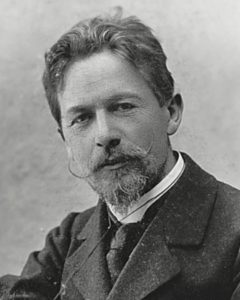
The Beggar by Anton Chekhov About the Author

Anton Pavlovich Chekov was a Russian playwright and short story writer. Chekov shared a strained relationship with his abusive father and this influenced his writing. After his father went bankrupt, Chekov had to pay for his own education by selling his family’s possessions, tutoring and selling short sketches to newspapers. After enrolling in a medical school, he became the sole financial support for his family. After he became a physician, he continued writing and eventually started gaining popularity. Chekov’s works have established him as one of the most famous figures in literature, hailed for his contribution to the form of the modem short story. He also wrote plays, many of which continue to be staged all over the world. His simple style of writing, his probing of human nature and his refusal to provide easy solutions continue to make his works relevant even today.

Author NameAnton Pavlovich Chekhov
Born29 January 1860, Taganrog, Russia
Died15 July 1904, Badenweiler, Germany
BooksThe Lady with the Dog, Stories of Anton Chekhov
Short storiesThe Chameleon, Misery, Gooseberries
The Beggar Summary by Anton Chekhov

The Beggar Summary in English

The story begins with a beggar’s pleas to an advocate, Sergei. The beggar says that he has not eaten in three days. For eight years he was a village schoolteacher and fell victim to a conspiracy that cost him his reputation and his job. For a year he has had no employment. Sergei looks at the beggar’s overcoat and face; he thinks he has seen him elsewhere.

The beggar further explains that he has been offered a position in the province of Kaluga; but to take it up, he needs money. Sergei observes the beggar’s overshoes: one is higher than the other. He suddenly remembers where he had seen the beggar before. He tells the beggar that two days ago, he had met him In Sadovya Street and the latter had claimed that he had been a student who had been expelled. The beggar is surprised and claims that he has papers to prove that he was a village schoolteacher. Sergei turns away from him, disgusted.

Sergei says that for this fraud, he will call the police. At this, the beggar confesses that he used to be part of a Russian choir and had been expelled for drunkenness. He says he has no choice but to lie as no will help him if he tells them the truth.

Sergei tells him to work; he asks the beggar if he would like to chop wood for him. The beggar accepts. Sergei takes the beggar home and tells his cook, Olga, to take him to the woodshed. It becomes apparent from the beggar’s body language that he has accepted this job only out of pride and shame and not because he wants to work. It is also apparent that the beggar has become frail because of drinking vodka and does not have the slightest will to do hard work.

Sergei observes Olga and the beggar from the window in the dining room. He sees them making their way through the snow to the woodshed. Olga does not seem to take kindly to the beggar. Upon reaching the shed,

Olga shoves the beggar aside with her elbow and angrily bangs the door. He then sees the beggar seat himself upon a log and look lost in thought. Olga flings an axe at his feet, spits angrily and appears to be scolding him. At this point, the beggar begins to make half-hearted attempts to chop a piece of wood. By now Sergei’s anger has vanished and he begins to feel ashamed at having sent a spoiled, drunken and perhaps sick man to do hard labour in the cold weather.

After an hour, Olga informs Sergei that all the wood has been chopped. Sergei tells her to pay the beggar half a rouble and also tell him that he can come back to cut wood on the first day of every month. There would always be work for him to.

On the first date of the next month, the waif comes to chop wood and earns half a rouble again, though he can barely stand steady on his feet. After that, he returns to Sergei’s yard many times and is given work every time— he shovels snow, organises the woodshed and dusts the rugs and mattresses. Every time he is paid 20 to 40 copecks, and one time he is also given a pair of old trousers. When Sergei moves to a new house, the waif is hired to help with the packing and moving of furniture. This time, he comes silent, sober and gloomy. He does not even pretend to be working. He shivers in the cold and becomes embarrassed when the carters laugh at his behaviour and his tattered overcoat.

Sergei sends for him and says he is happy that the waif is working and is sober. He asks the latter for his name. The waif says his name is Lushkoff. Sergei offers him a better job and asks Lushkoff if he can write. When Lushkoff says that he can write, Sergei asks him to take a letter to someone the next day where he will be given copying work. Sergei reminds him to work hard, be sober and remember his words. Sergei is happy at having set Lushkoff on the right path. Lushkoff takes the letter and after that day, does not return to work for Sergei.

Two years go by. One day, when Sergei is buying tickets at a theatre’s ticket window, he notices a small man beside him, wearing a coat collar of curly fur and a worn sealskin cap. This man timidly asks for a ticket and pays in copper coins. Sergei realises this man is Lushkoff and asks him what he has been doing. Lushkoff says he is doing well; he is a notary and earns 35 roubles a month. Sergei is delighted and tells Lushkoff that he is almost like a godson to him. He reminds Lushkoff of the scolding he had given him and thanks him for not forgetting his words.

Lushkoff thanks Sergei as well and says that had it not been for Sergei’s help, Lushkoff would probably still be lying and begging. He expresses his gratitude to Sergei but says that it was Olga who saved him. He explains that when he used to go to Sergei’s house, Olga would sit opposite him, become sad and weep saying that Lushkoff was an unfortunate drunkard who would find no happiness in this life or the next. She would cry and be miserable, but most importantly, she would chop the wood for him. He confesses that he never chopped a single piece of wood and that she had done it all. He cannot explain how this act changed him and saved him. All he knows is that her words and kind deeds changed his heart; set him on the right path and he would never forget that. Then the theatre’s bell rings and Lushkoff bows and goes inside the gallery.

The Beggar Title

The title ‘The Beggar’ is symbolic. On the surface, it appears to be a story about a beggar, a young man who had no aim or ambition, who had taken to lying to make some money. He is fully entrenched in thisTife until he is redeemed by the compassion of a lady who feels so sorry for him that she sheds tears and works in his stead so that he can earn money and save himself from starvation. The transformation that takes place due to her kindness forms the crux of the story. Thus, the title is thought-provoking, as it leaves the reader to dwell on the human failing of judging people and labelling them for life.

The Beggar Setting

The story is set in a city of the erstwhile USSR. The story spans a period of two years with most of the action concentrated in the winter months.

The Beggar Theme

The story revolves around the theme of kindness and compassion. It also highlights the human failing of being judgmental and labelling people, while highlighting the ability of a person to change with the right motivation.

The Beggar Message

The strongest message of the story is the effect that kindness can have on another human being. It shows how a selfless act can have a life-changing effect on the receiver, to the extent that it gives him the incentive to change a way of life that he had become entrapped in.

The Beggar Characters

The Beggar, Lushkoff: The character of Lushkoff undergoes a great transformation during the story. Initially, he appears to be a good for nothing liar, whose only work is to get some money to buy himself a few drinks.

He is thin, emaciated, with a waif-like appearance, weak and listless. He dressed in cast-off clothes and shoes. However, as the story progresses, his character transforms. He becomes sober and accepts Sergei’s offer of working as a copier with his friend. By the end of the story, we find him wearing a coat collar of fur, and a work sealskin cap, buying himself a seat at the theatre. From a beggar, he has become a notary earning 35 Roubles a month. He remains grateful to Sergei, and especially to his cook Olga, who he reveals actually did all the work Sergei had paid him to do. He reveals that it was the selflessness and nobility of the cook that saved his life and inspired him to become a better person. Her empathy and the tears she shed for his sake had helped him change.

Sergei: He is a wealthy advocate with a kind heart. Though he is observant enough to recognise the beggar, he offers him some work at his house in return for money. He even offers the beggar a way of redeeming himself by giving him odd jobs to do. In the end he sends him to him friend, who needs someone to do some copying work. This helps the man to get a stable job and make a decent living.

At first, he takes the credit for the beggar’s transformation, but later he is humble enough to accept that though he provided the opportunity, it was his cook Olga who deserved the credit for inspiring the beggar to change. Sergei appears to be a practical man who tries to stop Lushkoff from begging by giving him an alternative method of earning a living. He is also resourceful as he keeps engaging Lushkoff in different tasks, which are helpful for both the beggar and him.

The Cook: The cook is the most noble and compassionate character in the story. Initially, she appears to be angry with the arrival of the beggar, and seems to ill-treat and abuse him. In reality, however, she is the one performs all the tasks for the beggar and lets him take the credit and money for them. She is empathetic to the extent that she cries seeing the state the beggar is in, and his fate if he continues to be a wastrel and drunkard. It is her selflessness and compassion that brings about a change in the beggar’s character. Because of her empathy, he is able to remain sober and starts working hard, becoming a notary earning a stable salary within two years. She is thus able to save the life of the beggar, even though she isn’t actually aware of the profound effect she has on him.

The Beggar Summary Questions and Answers

Question 1.
What is the excuse that the beggar gives Sergei for begging when he meets him for the second time?
Answer:
He says he had been a village schoolmaster for eight years but had lost his job due to intrigues at his place of work. He had not eaten for three days and had no money for lodging. ^

Question 2.
How did Sergei respond to the beggar’s request for money?
Answer:
He looked closely at him and recognised him as the same person who he had seen on Sadovya Street a few days back, when he had introduced himself as a student who had been expelled.

Question 3.
Why was Sergei disgusted with the beggar?
Answer:
He was disgusted at his dishonesty because he had seen him on another street pretending that he had was an expelled student in need of money, and now he claimed to be a village schoolmaster who had lost his job due to intrigues at the school. His lies disgusted Sergei.

Question 4.
What was the beggar’s real identity?
Answer:
He had been part of the Russian choir, but had lost his place there due to drunkenness.

Question 5.
How does the beggar react to Sergei’s offer to chop wood for him in return for money?
Answer:
The beggar accepts the offer readily and follows Sergei home. He says that he can’t refuse because in those days even skilled woodcutters found themselves sitting without food and work.

Question 6.
Who did Sergei hand over the beggar to on reaching home? What were his instructions?
Answer:
He called his cook, Olga, and handed over the beggar to her. He asked her to take him to the wood-shed and get him to chop some wood.

Question 7.
Why has the beggar been described as a scarecrow?
Answer:
He has been described as a scarecrow because he was as thin as a scarecrow and shabbily dressed in ill- fitting, mismatched clothes.

Question 8.
What was the real reason the beggar agreed to work for the writer?
Answer:
The real reason was that he was a proud man and he felt ashamed at having been trapped by his own words in front of Sergei. He wanted to prove that he could do honest work when given the opportunity.

Question 9.
How did the narrator realise that the beggar had not come willingly with him?
Answer:
The narrator realised this from his gait. He shrugged his shoulders as if in perplexity and went irresolutely after the cook. It was also obvious that he was unhealthy and under the influence of liquor. It did not seem as though he had the strength to chop wood.

Question 10.
How did Olga react to the beggar?
Answer:
She glanced at the beggar with anger, shoved him aside with her elbow, unlocked the shed and angrily banged the door. She then flung down an axe at his feet, spat angrily and appeared to be scolding him.