After Blenheim Summary by Robert Southey

We have decided to create the most comprehensive English Summary that will help students with learning and understanding.

After Blenheim Poem Summary by Robert Southey

After Blenheim Summary by Robert Southey About the Poet

Robert Southey (1774 – 1843) was one of the three renowned ‘Lake Poets’ associated with the Romantic school (the other two being William Wordsworth and Samuel Taylor Coleridge). He was ‘Poet Laureate’ of England for around three decades, starting from 1813 until his death in 1843.

During his long literary career, Southey wrote a number of lyrics, ballads, and comic-grotesque poems. His poetry was first published in 1795 in a collection, titled Poems; containing The Retrospect, Odes, Sonnets, Elegies, &c. by Robert Lovell and Robert Southey of Balliol College, Oxford.

The collection included 21 poems by Southey and 11 by Lovell. Joan of Arc, My days among the Dead are past, After Blenheim, English Eclogues and The Inchcape Rock are some of his best-known poems. English Eclogues anticipates Alfred Tennyson’s English Idylls as lucid, relaxed, and observant verse accounts of contemporary life.

Besides being a poet, Southey was also a prolific letter writer, literary scholar, essay writer, historian, a polyglot-translator and biographer. His biographies include the life and works of John Bunyan, John Wesley, William Cowper, Oliver Cromwell and Horatio Nelson. One of his most outstanding contributions to literary history that earned him great fame is the children’s classic The Story of the Three Bears, the original story of Goldilocks, first published in his prose collection The Doctor. He also served for a brief period of time, as a Tory Member of Parliament.

After Blenheim Summary About the Poem

“After Blenheim”, also known as “The Battle of Blenheim”, is a famous anti¬war poem written by Robert Southey. The poem, published in 1798, is in the form of a ballad and its theme is the famous Battle of Blenheim of 1704. It was fought between the combined forces of France and Bavaria representing one side, and the forces of England and Austria representing the rival side.

The poem is set at the site of that Battle, the Anglicised name for the German village of Blenheim, situated on the left bank of the Danube River in the state of Bavaria in southern Germany. The poem starts with the queries of two little kids about a skull which has been found by one of them while playing near their cottage. As the kids are surprised and curious, they approach their grandfather and ask him about it.

The grandfather, Kaspar, then tells the two kids about a war that had been fought years ago. He describes the horrors of war. Despite that, he does not categorically criticize the war as such. The poem ends on a rather baffling note, suggested by the repeated use of the phrase “a famous victory” that the war reminds him of at present.

After Blenheim Summary of the Poem

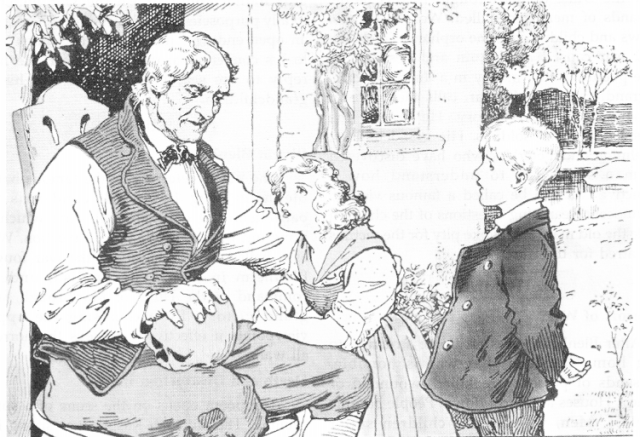
The poem opens on the scene of a summer evening. An elderly farmer named Kaspar was sitting in the sun in front of his cottage, watching his grandchildren, Wilhelmine and Peterkin, playing on the field. Wilhelmine saw her brother Peterkin who was rolling something large and round that he found near a stream.

He then takes it to Kaspar and asks what it is. The old man took it from the curious boy and with a natural sigh replied that it was some poor man’s skull that died in the war. He further added that he had found many such skulls while ploughing the fields as thousands of brave men died in the ‘Battle of Blenheim’, known for its famous victory. The young Peterkin became more curious to know all about the Battle of Blenheim and for what did the men fought with each other.
After Blenheim Poem Summary

To this Kaspar said that it was the English who defeated the French, but he was not sure as to why they fought but could only say that everybody said that it was a ‘famous victory’.Kaspar said that his father lived at Blenheim at that time who had suffered heavy” loss by the war, his house was burnt and he had to tlee with his wife and children and became homeless.

Kaspar added that the war rage, its fire and sword caused much destruction all over the country and many pregnant women and new born babies died. But things like that are quite common for every war with a famous victory.

It is said that it was a shocking sight as after the battle was won, thousands of copses lay rotting in the sun but he again repeated that things like that must happen after a famous victory. Everybody praised Duke of Marlborough and Prince Eugene for their triumph over French.

Wilhelmine said that this was a bad thing but Kaspar again said that “Nay…nay…my little girl, It was a famous victory”. Everybody praised the Duke for the great fight but. Peterkin questioned as if any good came at last. To which Kaspar could say anything but only repeated that it was a famous victory”.

After Blenheim Summary Critical Analysis

Robert Southey’s poem “After Blenheim” comprises II stanzas, each containing 6 lines. It has been written in’the form of a ballad, capturing a piece of conversation between an old man named Kasper and his two grandchildren. Kaspar explains to the children the story of the battle, that the Duke of Marlborough routed the French, although he admits he never understood the reason for the war himself.

He also mentions that his father had a cottage by the rivulet (small stream). The soldiers burned it to the ground, and his father and mother had fled, with their child. Thousands of corpses lay rotting in the fields, but he shrugs it off, as part of the cost of war. Wilhelmine says it was a wicked thing, but he contradicts her saying, no, it was a great victory”. Kaspar does not come up with any concrete answer, when the grandchild Peterkin asks him what good came out of the war. This is because Kaspar is focusing more on what we would call today the “spin” about the war and this specific battle. He is emphasizing “the great victory” more.

The poem is replete with the terrible consequences of war – its wastefulness and how this affects the people and the land. The irony is that war wreaks havoc on the victor and the vanquished alike. The victors, in their success do receive terrible consequences as well. It’s quite likely that the grandpa is looking to shield Peter kin from this reality, since Peter kin is of a tender age.

Maybe the grandpa wants to wait till the boy is more mature to reveal to him what war is really all about. In addition, it is possible that Grandpa Kaspar doesn’t really know what came out of the war. Maybe he feels nothing positive and constructive as to what did come out of this war and that is also why he doesn’t provide an answer – or at least a suitable answer for Peterkin.

Throughout the poem the phrases “great victory” and “famous victory” are repeated but with no boast behind it. In the sixth stanza Kaspar tells them that it was the English and French who fought for some unimportant reason, but it was a great victory. The next two stanzas explain all the collateral damage in the battle, for example women and children fleeing from burning homes, the country side wasted and dead babies and mothers. The ninth stanza paints the image of the battlefield with thousands rotting in the sun.

The tenth, which shows the people praising the victory of the Duke of Marlborough and Prince Eugene to which the little girl reacts by saying how terrible it was. But, as if rehearsed he said it that was a famous victory. The final stanza is the boy Peterkin asking whaf good came from all this death and destruction and the grandfather responds again ‘Why that I cannot tell,’ said he ‘But ’twas a famous victory’.

The repetition of the old man words builds up an ironic climax. The moral of the poem is that there is no real rationale for destructive war among human beings and nations that should learn to get along.

After Blenheim Summary Word-Meanings

  1. sported – played
  2. rivulet – a small stream
  3. expectant – eager, hopeful
  4. ploughshare – broad cutting blade of a plough
  5. slain – killed
  6. rout – defeat
  7. quoth – said
  8. yon – beyond
  9. dwelling – house
  10. fly – run away
  11. wasted far and wide – destroyed or ruined up to a great distance
  12. childing – expecting a child
  13. praised – admired
  14. nay – no.

The Bangle Sellers Summary by Sarojini Naidu

We have decided to create the most comprehensive English Summary that will help students with learning and understanding.

The Bangle Sellers Poem Summary by Sarojini Naidu

The Bangle Sellers Summary by Sarojini Naidu About the Poet

Sarojini Naidu (1879-1949), commonly known as Nightingale of India, was a poet and politician. She was the first Indian woman to become the President of Indian National Congress, and also the governor of an Indian state. In 1905, her first coliection of poems, named The Golden Threshold was published. Her poems were admired by many prominent Indian politicians.

Subsequently, other widely acclaimed collections including The Bird of Time, The Broken Wing and The Sceptred Flute were published during her life-time. The Feather of the Dawn, her collection of poems, was edited and published posthumously in 1961.

The Bangle Sellers Summary About the Poem

The poem Bangle Sellers was first published in 1912 by Sarojini Naidu in her collection of poems called The Bird of Time’. Naidu’s poetry is best known for her use of imagery and contemporary Indian themes. Among her other poems, this poem stands out as a social message that not only discusses the lives of Indian women but also the lives of bangle sellers.

Although the poem focuses extensively on the stages in the life of women, yet it portrays the lives of the bangle sellers as well. Not once is the poverty or the hardship of their vocation is mentioned in the poem and the “shining loads” denotes the heaviness of the bangles.

The bangle seller employs a joyful voice which makes us forget that their livelihoods depend on the sale of these bangles. The women in their lives are all portrayed as happy., probably because the happiness of the bangle seller relies upon the happiness of these women.

The Bangle Sellers Summary of the Poem

The poem is about a group of bangle sellers who are on their way to the temple fair to sell their bangles. One of them is the narrator of this poem. The bangle sellers take their bangles to the temple fair to sell them. The bangles are termed as “lustrous tokens of radiant lives” which symbolize love and happiness in people’s lives particularly the daughters and wives who become happy to possess them.

The poet says that some of the bangles are made for the unmarried women that are silver and blue in colour. The bangles made for the brides glow like corn fields radiating in the morning and like her marriage flame, ricli like her heart’s desires. The bangles are tinkling, tender and clear with ‘luminous’ colours like the bride’s laughter and tears. Some bangles are made for the elderly women who have journeyed a great deal in their life.

These bangles are purple in colour flecked with gold and grey colours suitable for the middle-aged women who have served their household well, cradled their sons and have worshipped the Gods with their husbands beside them.

The Bangle Sellers Summary Critical Analysis

The poem is divided into four stanzas, each comprising six lines. Each stanza consists of three couplets and has the rhyming pattern- abahab.Bangle sellers take their load of bangles to the temple fair to sell them. The bangles are termed as “lustrous tokens of radiant lives” which mean that they are symbols of love in people’s lives. The bangles are made for happy daughters arid happy wives.

The poet says that some of the bangles are made for the unmarried women and they are of silver and blue in colour. The other bangles made for the bride glows like the fields of corn during morning and some glow like the bride’s marriage flame rich in colour like her heart’s desires. The bangles are tinkling with ‘luminous’ colours like the bride’s laughter or tears. Some bangles are made for the elderly women who have journeyed through half of their life.

These bangles are of purple and grey colours with gold fleckers. These women have served their household well, cradled their sons and have worshipped the household gods with their husbands beside them.

Shining loads, delicate, bright, rainbow-tinted circles of light and lustrous tokens of radiant lives are a few other ways of referring to bangles. People usually buy bangles on temple fairs and such are occasions of happiness. Both the rich and poor buy these bangles and gift them to their wives and daughters. Some of these bangles are perfectly suiting for young girls. They are silver and blue in colour as “the mountain mist”.

Some are flushed red like buds dreaming of their blooming on the tranquil banks of woodland streams. Some have the light like clear glow of the glorious leaves that are just recently born. The bangles mentioned above possess purity and tranquillity in common.

The poem brilliantly and soulfully explores the imagery associated with bangles and the implications for women’s roles in a traditionalist Indian social setting. The speaker makes strong connections between the bangles and their role in providing “happy daughters and happy wives.” The subsequent stanzas describe lush and natural imagery, the beauty of the bangles and their precious values.

Some of these descriptions invoke the passion of “marriage’s fire” and, in the last stanza: help to bring to light the socially accepted role of women in this setting. The purple and grey bangles, flecked with gold colour symbolize a woman who “serves her household in fruitful pride, and worships the gods at her husband’s side.” The grey colour indicates the maturity that comes with age. It is not very clear in the poem if the bangle seller is a man or a woman, and perhaps, some level of meaning might change if one plays with the gender of the speaker.

The Bangle Sellers Summary Word-Meanings

  1. rainbow tinted – rainbow coloured
  2. lustrous – shining
  3. tokens – symbols; meet suitable
  4. tranquil brow – calm and quiet bank of a river, lake, pond, etc.;
  5. limpid – clear
  6. hue – colour
  7. luminous – glowing
  8. cherished – care tenderly
  9. blest – blessed; gold flecked
  10. grey – sprinkling of gold colour over grey colour
  11. cradled- brought up.


The Cold Within Summary by James Patrick Kinney

We have decided to create the most comprehensive English Summary that will help students with learning and understanding.

The Cold Within Poem Summary by James Patrick Kinney

The Cold Within Summary by James Patrick Kinney About the Poet

James Kinney (1923-1974) was born in a very poor Irish family in Cincinnati and had a very tough childhood. He went to the 10th grade of high school, when he dropped out to take care of his mother. Because of that, he spent his whole life self-educating and in the process, started reading and writing poetry.

After a brief stint with the Civilian Conservation Corps, he joined the army and was stationed in the Philippines as a radio man. On his return to USA, he started writing more extensively. Apart from The Cold Within, which is his best-known piece, he wrote a number of poems that were published in different magazines.

Some of these include OJA Rejected Poem, Of Life’s Sad Moments, I Can’t Change You, This Dream Bemusing, Tomorrow’s Another Day, Never Alone and What is Success. During his lifetime, none of his collections was brought out. Now, all his poems are available on the blog ‘ALL THINGS IF’ run by his wife and son.

The Cold Within Summary About the Poem

“The Cold Within” was written in the 1960s by the American poet James Patrick Kinney. In almost five decades since its publication, the poem has achieved great popularity, appearing in countless church bulletins, websites and teaching seminars, as well as magazines and newspapers.

The poem was first submitted to the Saturday Evening Post, but it was rejected as “too controversial for the time”. Kinney sent it later to Liguorian, a Catholic magazine, which was the first commercial publication to print it. At the outset, the poem was read at an ecumenical council meeting, after which the ministers, priests and rabbis in attendance requested copies of it. They read the poem to their congregations and, before long, The Cold Within became well known throughout the United States.

The Cold Within Summary of the Poem

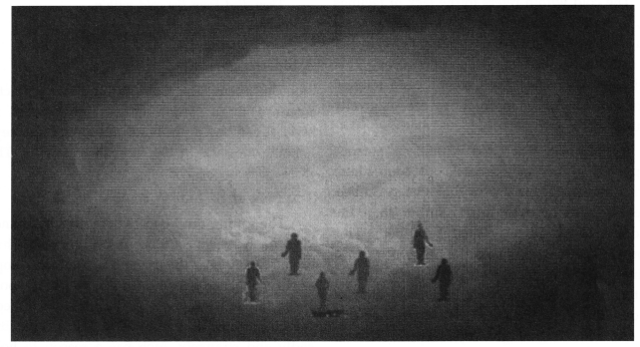
Simple yet powerful this poem is about the consequences of ‘letting your prejudices control your decisions’. It opens with six people trapped by chance in the biting cold weather and each had a stick of wood. The fire which is keeping them warm is about to die anytime but none is ready to put his/her log to use. The people have different reasons for this. Beginning with the lady who didn’t wanted to save a black man in the group.

The Cold Within Poem Summary

The next man saw a person not being of his religion. The third one being poor dressed in rags, envied the rich. The rich man did not want to give anything to the undeserving poor. The black man thought it to be a chance to take revenge on the white people and the last man was full of selfishness who would help only if there is something beneficial in return.

In the end, it appears as the sticks they all held tightly in their hands, stood as the symbol of revenge and hatred. They lacked the aura of humanity. The selfish souls invited the death and they died by the coldness of their hearts.

The Cold Within Summary Critical Analysis

The poem “The Cold Within” by James Patrick Kinney consists of 8 stanzas of 4 lines each. The rhyming pattern is abcb for all the stanzas. Each stanza presents a person who has a different prejudice against someone else around the fire. They all make the same decision and all pay the same price for that decision as seen in the end.

Here, the poet employs diction, figurative language, and rhyme to project his point that certain prejudices control people’s lives and actions. Due to these prejudices, we often tend to lose sensitivity towards others regarding them as inferior, hostile or different.

The line that Kinney starts his poem with is “six humans trapped by happenstance”. His diction in this line is very important to the overall theme of the poem. By saying “six humans”, it is almost as if he is talking about all humans. If he would have said “people” then we might have different associations with the words. Another curious use of diction is by saying “trapped in happenstance”.

Happenstance means an event that might have been arranged although it is accidental. This use of diction is important because by saying that it is accidental, it almost seems arranged, and gives the reader a sense that they are supposed to be there. The fact that he says they are trapped suggests that they do not want to be in the situation, but also they cannot escape.

Figurative language plays a vital role in developing the poem’s theme. “Their dying fire in need of logs” literally means the fire that is keeping them warm, but also stands as a metaphor for their sinful souls. They are committing sins such as racism, envy, arrogance, revenge, and greed.Opening up and not being greedy would have warmed their souls and saved them.

Unfortunately, they are so much blinded by their prejudices against one another that their survival becomes impossible. The rhyme of the poems sets up an easy read. This allows for your eyes to simply guide and take in Kinney’s message: the frigidness of people is what ends up killing them. The rhythm is important to the theme of the story because it makes reading the poem faster. This is important because this indirectly shows how fast arrogance, greed, and sin can. “kill” you.

James Patrick Kinney effectively portrays his point about hatred killing. His persuasion in this poem is really helpful in understanding the entirety behind his point. This poem really makes us think about ourselves and the heights to which we would go to either hurt someone else, or save ourselves. The poet uses symbolism to help the reader understand the consequences of holding back their “logs.” The logs represent their prejudices. And because they can’t give them up to keep the fire going, they all die.

The Cold Within Summary Word Meanings

  1. happenstance – a chance occurrence; coincidence
  2. possessed – kept
  3. logs – pieces of wood
  4. tattered – torn
  5. idle – inactive
  6. shiftless – good-for-nothing; lazy;
  7. bespoke – showed signs of something
  8. spite – retaliate with malice
  9. forlorn- sad; dejected
  10. nought – nothing

The Wonderful Words Summary in English by Mary O Neill

We have decided to create the most comprehensive English Summary that will help students with learning and understanding.

The Wonderful Words Summary in English by Mary O Neill

Poet NameMary O Neill
Born7 November 1941 (age 78 years), Toronto, Canada
EducationUniversity of Toronto – St. George Campus
PartyProgressive Conservative Association of Alberta
The Wonderful Words Summary by Mary O Neill

The Wonderful Words Summary in English

All people think as well as speak. It is God’s special gift to man. Every person speaks at least one language to express his thoughts.

The poet advises us to master a language, at least, our mother tongue. We must not let a great or good thought die because we don’t know how to say it.

English is a wonderful and rich language. One can express one’s thoughts in this language effectively. What we need is to look for proper words to put forth our ideas clearly. It is wrong to think that there are no lovely thoughts left to be expressed.

Words are a wonderful medium to communicate. If you have some new and beautiful thing to say, eveiyone is willing to hear it.

Every thought is like a prisoner in our mind. We can set that idea free with the help of words. It is just possible that the thought may be marvellous.

The Wonderful Words Summary in Hindi

सभी मनुष्य सोचते और बोलते हैं। यह परमात्मा की मानव को विशेष देन है। हर व्यक्ति कम से कम एक भाषा तो अपने विचार व्यक्त करने हेतु बोलता ही है।

कवि हमें सलाह देता है कि हम कम से कम अपनी मातृभाषा में निपुणता हासिल कर लें। हमें अपने किसी महान या सुन्दर विचार को केवल इस कारण मरने नहीं देना चाहिये कि हम उसे प्रगट करने की शैली नहीं जानते।

अंग्रेजी एक अद्भुत तथा समृद्ध भाषा है। व्यक्ति इस भाषा में अपने विचारों को प्रभावोत्पादक तरीके से व्यक्त कर सकता है। हमें ज़रूरत इस बात की होती है कि हम उसके लिये उपयुक्त शब्द खोज लें ताकि हमारी बात स्पष्ट हो जाये। यह सोचना गलत है कि अब कोई भी सुमधुर विचार कहने के लिये बचे ही नहीं।

शब्द, संचार के अद्भुत साधन हैं। यदि आपको कोई नयी और सुन्दर बात कहनी है तो उसके लिये श्रोताओं की कमी नहीं है।

हर विचार हमारे मस्तिष्क में एक कैदी की भाँति होता है। शब्दों के सहारे हम उस विचार को मुक्ति दे सकते हैं। नितान्त संभव है कि वह विचार बहुत उच्च कोटि का हो।

Where Do All the Teachers Go? Summary in English by Peter Dixon

Where Do All the Teachers Go? Summary in English by Peter Dixon

Where Do All the Teachers Go? Summary in English

For a little child, his/her teacher is special, not an ordinary person. So he wonders where the teachers go after the school hours.

He wants to know if they live in houses and also wash their clothes. He wonders if they feel relaxed at home, wear pyjamas and watch TV. He is also eager to know if the teachers have their parents at home, and if they too were naughty at school, spelt the words wrongly, ate chocolates in the class, and were told to stand in the comer as punishment.

The child compares his own habits with those of the teachers in their childhood. They too must have lost their prayer book, wore dirty jeans and scribbled on the desk tops.

The child plans to follow his teacher to find out what he/she does at home. He will then record that in a poem. The teacher will read that poem to other children as a fun.

Where Do All the Teachers Go? Summary in Hindi

एक छोटे बच्चे के लिये उसका शिक्षक कोई साधारण व्यक्ति नहीं, विशेष व्यक्ति होता है। उसे हैरानी होती है कि स्कूल की छुट्टी होने के पश्चात शिक्षक जाते कहाँ हैं।

वह जानना चाहता है कि शिक्षक भी क्या घरों में रहते हैं तथा अपने वस्त्र स्वयं धोते हैं। वह सोच नहीं पाता कि क्या शिक्षक घर पर सहज हो जाते हैं, पैजामा पहन कर टी.वी. देखते हैं। वह यह जानना चाहता है कि क्या उनके भी माता-पिता घर पर होते हैं, क्या वे भी अपने विद्यार्थी जीवन में शैतानी करते थे, शब्द गलत लिखते थे, चाकलेट कक्षा में चबाते थे; तथा उन्हें दण्ड स्वरूप कक्षा के एक कोने में खड़ा कर दिया जाता था।

बच्चा अपनी आदतों की तुलना शिक्षक के बचपन की आदतों से करता है। हो सकता है शिक्षक भी अपनी प्रार्थना पुस्तिका खो देते हों, गंदी जीन्स पहनते हों तथा डेस्क के ऊपर कछ लकीरें खींचते हों।

बच्चा योजना बनाता है कि वह शिक्षक के पीछे उसके घर तक जाकर उनकी गतिविधियों की जानकारी लेगा। फिर वह जानकारी को कविताबद्ध कर देगा। शिक्षक उस पुस्तक को मजा लेने के लिये दूसरे बच्चों को पढ़कर सुनायेगा।