I Know Why The Caged Bird Sings Summary by Maya Angelou

We have decided to create the most comprehensive English Summary that will help students with learning and understanding.

I Know Why The Caged Bird Sings Poem Summary by Maya Angelou

I Know Why The Caged Bird Sings About the Poet

Poet and novelist Maya Angelou (birth name: Marguerite Ann Johnson) was born in St. Louis, Missouri, in 1928. In 1940, she moved to San Francisco with her mother and brother, and gradually became associated with a professional theatre. After a few years, she moved to San Diego.

She auditioned for an international tour of Porgy and Bess and won a role. From 1954 to 1955, she toured 22 countries. In 1959, she moved to New York and got involved with the civil rights movement. In 1961, she moved to Egypt and got a job with the Arab Observer.

Subsequently, she headed to Ghana, where she took a job at the African Review, and stayed for several years. Her writing and personal development flourished under the African cultural renaissance that was taking place.

On the Pulse of Morning, The Rock cries out to us today, I Know Why the caged bird sings, Phenomenal Woman, Human Family, When I Think About Myself Still I Rise, are some of her famous poetries. She was best known for her seven autobiographical books some which include Mom & Me & Mom, Letter to My Daughter, All God’s Children Need Traveling Shoes, The Heart of a Woman, Merry Like Christmas, Gather Together in My Name, Singin’ and Swingin’ and Gettin’ Merry Like Christmas which was nominated for the National Book Award.

In 1992, Angelou was designated as a poet laureate by the 42nd President of the United States, Bill Clinton. She composed and recited an original poem for his inauguration titled On the Pulse of Morning. In 2000, she received the National Medal of Arts, and in 2010 she was awarded the Presidential Medal of Freedom by President Barack Obama. Angelou died on May 28, 2014, in Winston-Salem, North Carolina, where she had served as Reynolds Professor of American Studies at Wake Forest University since 1982.

I Know Why The Caged Bird Sings Summary About the Poem

T Know Why the Caged Bird Sings’ by Maya Angelou is one of the most acclaimed poetic pieces written by the prominent African American poet, Maya Angelou. Inspired by Paul Laurence Dunbar’s poem “Sympathy,” this poem first appeared in 1983, in the collection of poems titled Shaker, ‘Why Don’t You Sing?’ Angelou’s autobiography also had the same title, which only suggests that the title of this poem and the motif it carries was immensely significant to Angelou.

She often felt that her words were not heard because of the colour of her skin. She felt that in some ways, she was still experiencing slavery. Although African American people were free people in Angelou’s time, there were still many restrictions on them in society, that many black Americans did not feel free at all. This poem reveals the depth of those feelings.

Text from her autobiography reveals that Angelou often felt like the ‘bird in cage’ in this poem. She felt restricted from enjoying the freedom that should have been her right as a human being. Responding to this with great courage and determination, she wrote and sang and danced because it was her way of expressing her longing for freedom.

I Know Why The Caged Bird Sings Summary of the Poem

The poem describes the comparison of lives of a free bird and a caged bird. The first stanza spectacles a free bird who is fearlessly soaring with the winds through the sky. It is sunset and the orange rays of the sun colour the sky in beautiful shades. The stanza unfolds a bird flying carefree along the wind currents in the sky, enjoying the nature’s beauty and claiming the sky to be her possession. The poet here alludes to the aura of ‘freedom, a delightful experience’ i.e., what it feels to be free.
I Know Why The Caged Bird Sings Poem Summary

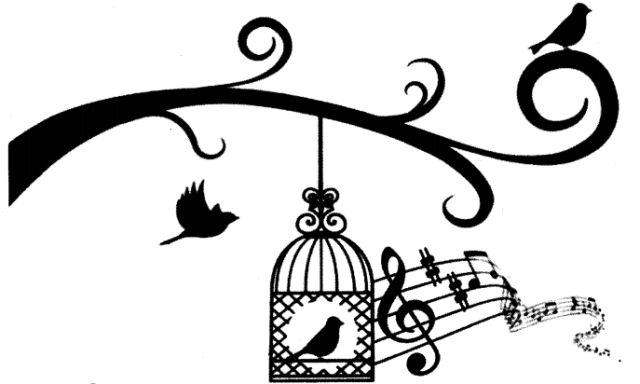
The second and third stanza shows a caged bird whose wings are clipped and feet tied, preventing him from flying away. The bird can seldom see from the ‘bars of rage’ i.e., he is hardly able to get a glimpse of the sky which makes him angry. He longs to be free out of his sorrowful life in the cage. He is helpless so only opens his mouth to sing the songs of freedom. The bird is shown to be afraid of many strange or undisclosed things but still that fear doesn’t affect his singing and he continues to sing with a trill. His cry for freedom, to be free from the clutches of the cage is heard far and wide.

The fourth stanza again takes us to the life of the free bird where he “thinks of another breeze” i.e., he thinks to make a flight with another breeze or a different air current of the soft trade winds that on blowing cause the leaves of the trees to move or shake to produce a pleasant sighing sound which he enjoys and can freely find his own food in the bright gardens and fearlessly claims the entire sky to be his own.

On the contrary, the fifth stanza depicts the sorrowful caged bird with his dead or suppressed dreams. Being in utter restrictions he cries out like someone who has had a nightmare. This appears as a frightening spectacle. Under helplessness in captivity of the cage, the bird thus only opens his throat to sing.

The final stanza is a repetition of the third stanza that again emphasises the captive bird devoid of freedom, being unknown of many strange things but still sings the songs of freedom in quaver. His longing for freedom is so intense that his cries Eire heard far and wide.

In other words, the poet seeks to draw the attention of the readers towards the downtrodden African Americans Emd their experiences. The free bird stands as a metaphor for the white people and the caged bird stands for black Americans who would continue to fight against the discrimination by their skin sind struggle for the freedom which is their birth right.

I Know Why The Caged Bird Sings Summary Critical Analysis

The poem is based on an earlier poem by an African American author, Paul Laurence Dunbar. The poem compares the plight of a caged bird to the flight of a free bird. Comprising six stanzas the poem is often interpreted as a metaphor suggesting the free bird as the white people and the caged bird as the black Americans.
Maya Angelou uses a myriad of poetic devices in “Caged Bird,” including metaphor, rhyme, imagery, alliteration, personification, and repetition. The poem is quite symbolic so there are various hidden messages of freedom and captivity, the longing for freedom, and the nature and effect of expressing a deep, genuine outcry which she tries to convey about her feelings mostly indirectly.

The “caged bird” actually stands for none other than the oppressed blacks, including the poet herself. Devoid of liberty and basic human rights, the blacks have led hellish lives, full of pains and sufferings, for centuries. Maya Angelou also uses irony to be cleverer and effective but less direct in conveying her feelings. The caged bird sings with a fearful trill’. This sentence is ironic as the caged bird is the one singing not the free bird as we expect. However, the words ‘fearful’ and ‘trill’ makes us realize that actually it is not a happy tune but a desperate cry for freedom. This enables us to reach to more depth and appreciate freedom.

The contrasting environments the freedom of the open world and the restrictive surroundings of the caged bird create the setting for the poem. The reader can feel the breeze, see the sun, imagine the rich feast of fat worms, and hear the sighing trees of the world of the free creature; in contrast, the reader feels the fear and restricted movement, sees the bars, imagines the wants.

Another device Maya Angelou uses to emphasize the beauty of freedom is by repetition. The poet repeats stanza 3 as stanza 6; because it reflects the two birds that are different. ‘For the caged bird sings of freedom’ is the last line of the poem and it delivers a very important message for the reader the caged bird wants to be like the free bird. This tells us that we should be aware and thankful for the freedom we have and basically this sums up the whole poem.

I Know Why The Caged Bird Sings Summary Word-Meanings

  1. leaps – jumps
  2. claim the sky – avow the full as one’s own
  3. stalk – follow, trail
  4. narrow cage – restricted place
  5. rage – anger
  6. clipped – cut short
  7. trill – warble, quaver
  8. sighing trees – sound produced by the leaves of trees in winds
  9. grave of dreams – dreams that seemed to be dead
  10. longed – desired.

What if Summary in English by Shel Silverstein

We have decided to create the most comprehensive English Summary that will help students with learning and understanding.

What if Summary in English by Shel Silverstein

What if Summary in English

The narrator is a young girl. Her mind is sometimes filled with doubts and fears. At night such unpleasant situations haunt her.

She wonders what will happen if she loses her power to speak, or if the school closes the swimming pool, or if she gets beaten up, or if somebody puts poison in her cup. It is also possible that she may get sick and die, or fail in the examination, or stop growing in height, or is hit by lightning. The other such bad situations are that the wind may tear up the kite, or a war breaks out, or her teeth grow irregularly, or she may never learn to dance.

When she wakes up next morning, everything looks fine and normal. But her fears return at night again.

What if Summary in Hindi

लेखक एक युवा बालिका है। उसके दिमाग में कभी-कभी संशय और भय भर जाते हैं। रात को ये दुखदायी स्थितियाँ उसके दिमाग को मथती रहती हैं।

उसे हैरानी है कि क्या परिणाम होगा यदि वह अपनी वाशक्ति खो बैठे, अथवा उसका स्कूल स्विमिंग पूल के इस्तेमाल पर पाबन्दी लगा दे, अथवा कोई व्यक्ति उसकी धुनाई कर दे अथवा उसके प्याले में विष घोल दे। यह भी संभव है कि वह स्वयं बीमार पड़कर भगवान को प्यारी हो जाये, अथवा वह परीक्षा में फेल हो जाये अथवा उसका कद बढ़ना थम जाये अथवा उस पर आकाशीय बिजली गिर जाये। अन्य ऐसी बुरी स्थितियाँ हैं कि पवन उसकी पतंग फाड़ दे, अथवा विश्व में युद्ध छिड़ जाये अथवा उसके दाँत टेढ़े-मेढ़े उगे अथवा वह कभी भी नृत्यकला न सीख पाये।

जब वह अगली सुबह उठती है तो सब कुछ ठीक-ठाक और सामान्य पाती है। पर उसके भय पुनः रात को उसे तंग करने लगते हैं।

Daffodils Summary by William Wordsworth

We have decided to create the most comprehensive English Summary that will help students with learning and understanding.

Daffodils Poem Summary by William Wordsworth

Daffodils Summary by William Wordsworth About the Poet

William Wordsworth was a 19th century literary stalwart and the most influential pioneer of English romantic poetry.He was born on 7th April, 1770 at Cockermouth, in Cumbria. He lost both his parents at an early age. He began to write poetry while he was at school. As a young man, Wordsworth developed a love of nature, a theme reflected in many of his poems. While studying at Cambridge University, Wordsworth spent summer holidays on a walking tour in Switzerland and France. He became an enthusiast for the ideals of the French Revolution.

In 1797, Wordsworth and his sister Dorothy moved from Dorset to Somerset, where he met and befriended Samuel Taylor Coleridge, another great poet of his generation. They collaborated on a collection of poems titled ‘Lyrical Ballads’, which included many of Wordsworth’s poems along with Coleridge’s long poem, The Rime of the Ancient Mariner. Brought out in 1798, this collection of poems marked the beginning of the Romantic Movement in English poetry.

In 1799, Wordsworth and Dorothy settled at Dove Cottage in Grasmere in the Lake District. In 1802, Wordsworth married a childhood friend, Mary Hutchinson. It was during his stay in Grasmere that Wordsworth wrote his poem, I Wandered Lonely as a Cloud, in 1804. In 1813, Wordsworth moved from Grasmere to nearby Ambleside. In 1843, he became the poet laureate.

Wordsworth died on 23 April, 1850 and was buried in Grasmere churchyard. His great autobiographical poem, The Prelude was published after his death. The Excursion, Ode: Intimations of Immortality from Recollections of Early Childhood, Tintern Abbey, She was a Phantom of Delight, The Solitary Reaper, Michael: A Pastoral Poem, The Leech Gatherer, The World is Too Much with Us are some of his other best-known poems that have established him as One of the most outstanding figures in the history of English literature.

Daffodils Summary About the Poem

The poem ‘Daffodils’ or ‘I Wandered Lonely as a Cloud’ is one of the loveliest and best-known poems of William Wordsworth. The poem was written in the year 1802. It was first published in “Poems in Two Volumes” in 1807. The very starting line of the poem “I wandered lonely as a cloud” informs the poet’s profound sentiments of being left alone. It was actually the death of his brother John that led him to “loneliness.” The poem was thus not a result of imagination, but that of actual visualization.

Daffodils Summary of the Poem

The poet or the speaker in this poem, says that, once while “wandering like a cloud floating above hills and valleys”, he came across a field of daffodils beside a lake. The dancing, fluttering flowers stretched endlessly along the shore, and though the shining waves of the lake danced beside the flowers, yet the daffodils outdid the water with their beauty.

Daffodils Poem Summary

The poet says that the golden daffodils twinkled and stretched in a continuous line just like the stars in the Milky Way galaxy for putting a greater implication in indicating that the flowers are heavenly as the stars. He seems the endless view of the golden daffodils as a never-ending line. The poet’s exaggeration of the number of flowers by saying “Ten thousand saw I at a glance” indicates that he has never seen so many daffodils at once. The poet could not help to be happy in such a joyful company of flowers.

He says that he stared and stared, but did not realize what wealth the scene would bring him. For now, whenever he feels “vacant” or “pensive” the memory strikes “that inward eye” that is “the bliss of solitude” and his heart fills with pleasure, “and dances with the daffodils.”

Daffodils Summary Critical Analysis

In this poem, which reads like a piece of memory etched deep in the poet’s heart, praises the beauty of the daffodils which leaves a lasting impression on him. Divided into four stanzas, the poem deals with the subjects of nature and memory, which were close to the hearts of all the romantic poets. The style of poetic expression as well as diction employed by Wordsworth is easy and uncomplicated, bearing a kind of musical eloquence. The four six-lined stanzas of this poem follow a quatrain-couplet rhyme scheme: ababcc. Each line is metered in iambic tetrameter.

In this poem, the poet tells us what he observed and experienced while walking through the hills and valleys one day. He was lonely and melancholy. Suddenly, as he passed a lake, he noticed a cluster of yellow daffodils waving in the breeze. This wasn’t just an isolated or scattered patch of daffodils. There were thousands and thousands of them that he saw dancing in the breeze. The speaker’s loneliness was replaced by the sheer joy of seeing this lovely spectacle, and its impact was strong enough to become a piece of memory that he would love to recall in future fondly as a great gift of nature. Now, whenever he feels depressed, he just thinks of the daffodils, and his heart finds back the joy of living.

The poem starts with the poet’s description of himself as a ‘cloud’ that floats over the hills. This presents an idea of seclusion. The idea of being alone is contradicted by the phrase “crowd” (line 3). This is actually the ‘setting of the poem. As human form Wordsworth prefers seclusion but the ‘crowd’ of daffodils bewilders his senses. The feeling of ecstasy suddenly makes a dive.

The plot is extremely simple, depicting the poet’s wandering and his discovery of a field of daffodils by a lake, the memory of which pleases him and comforts him when he is lonely, bored, or restless. The characterization of the sudden occurrence of a memory—the daffodils “flash upon the inward eye”, which is “the bliss of solitude”—is psychologically acute, but the poem’s main

brilliance lies in the reverse personification of its early stanzas. The speaker is metaphorically compared to a natural object, a cloud, as comprehended by—“1 wandered lonely as a cloud/That floats on high…”, and the daffodils are continually personified as human beings, dancing and “tossing their heads” in “a crowd, a host.” This technique implies an inherent unity between man and nature, making it one of Wordsworth’s most basic and effective methods for instilling in the reader the feeling, the poet so often describes himself as experiencing.

Nature permeates the entire poem. Phrases like “a crowd, a host…. continuous as the stars…they stretched in never-ending lines…ten thousand saw I at a glance” present deep implications of nature’s extensiveness. Daffodils, an everyday found flower has been portrayed in magical verses and blended with transcendental romanticism that leaves an everlasting mark in the minds of the readers of this poem.

Daffodils Summary Word-Meanings

  1. margin – edge, periphery
  2. sprightly – agile, energetic
  3. sparkling – shining brightly
  4. outdid – surpassed, excelled, outclassed
  5. gazed – saw
  6. glee – delight, joy:- gay – happy, glad, pleased;
  7. jocund – cheerful
  8. vacant – empty
  9. pensive – sad, melancholy
  10. bliss – ecstasy, great pleasure
  11. solitude – loneliness, seclusion.

Television Summary by Roald Dahi

We have decided to create the most comprehensive English Summary that will help students with learning and understanding.

Television Poem Summary by Roald Dahi

Television Summary by Roald Dahi About the Poet

Roald Dahl (1916 – 1990) was a versatile Norwegian-British novelist, short story writer, poet and screenwriter. Dahl served in the Royal Air Force during the Second World War, in which he became a flying ace and intelligence officer, and rose to the rank of acting wing commander. In 1953, he published the best¬selling story collection Someone like You. It was followed by a couple of bestselling children’s books, James and the Giant Peach (1961) and Charlie and the Chocolate Factory (1964). The latter was subsequently adapted into a film. Matilda, The Witches, Fantastic Mr Fox, The BFG, The Twits and George’s Marvellous Medicine are some of his other best-known books written for children.

Regarded as one of the greatest storytellers for children of the 20th century, he wrote 19 children’s books. Besides, he also wrote a number of stories for the mature, adult reading public, including the popular Tales of the Unexpected. In recognition of his outstanding contribution to literature, he was awarded the 1983 World Fantasy Award for Lifetime Achievement, and the British Book Awards’ Children’s Author of the Year in 1990. In 2008, The Times placed Dahl 16th on its list of ‘The 50 greatest British writers since 1945’. His books have sold more than 250 million copies worldwide.

Television Summary About the Poem

The poem “Television” by the British poet Roald Dahl was written in 2003. Though the poem is about children, it is addressed to their parents, i.e., adults. In this respect, it is different from his other poems, particularly the ones collected in “Revolting Rhymes” that are directly addressed to children. The use of rhymed couplets is another striking aspect of this long poem that lends it an almost musical quality. Since its publication, the poem has received worldwide popularity and attention for its brilliant style, earthy and uncomplicated tone, and a message that is extremely significant today, when we are uncritically accepting the dominance of technology in all walks of life usually even at the expense of the actual needs of our own kids.

Television Summary of the Poem

The poem ‘Television’ by Roald Dahl states that the television is a hypno- tizer which dulls the imagination of children by all the filth it telecasts. According to Dahl, children who watch the television just constantly stare at the screen bedazzled by the shows which completely control their minds, so much so that they find it impossible to do or think of anything else. He further says that the television set and its morbid shows that are turning our young generation into zombies where thinking is concerned. Values, morals & ethics

are thrown into the dustbin & bizarre information provided by the media is being constantly chewed & digested by children these days. He further states that before the television had come, children used to spend their time reading quality books which, as he appears to be stating in an indirect manner, develops their imagination; sharpens their senses; transports them to the most wonderful places; and allows them to spend their leisure time qualitatively.

Sadly however, it is very difficult today to rid the idiot box from our homes. Of course there are some good points about television watching especially, where the news is concerned to make the pupil aware of what is happening in society. But most of the time, the television is unable to censor the content being broadcast which ultimately leads to a sort of ‘early maturation’ of young students. Books on the other hand can be controlled where information is concerned & always benefits the minds of the scholar. In the poem, Roald Dahl also describes the way an adult can initiate the reading habit in children.

Television Summary Critical Analysis

The poem ‘Television’ consists of a total of 94 lines. These lines are not separated into stanzas. Here they are divided into meaningful segments for ease of comprehension. Roald Dahl follows the same simple rhyme scheme throughout this poem – aabb and so on in a series of rhyming couplets. Only on one occasion does he diverge from this when the end words of the lines rhyme in lines 31, 32 & 33.

The poet uses the device of apostrophe when he addresses his poem to English parents and advises them on doing away with their television sets. He also uses the rhetorical device of personification to give human qualities to something that is incapable of human actions. Dahl uses the device of personification in two cases – first, when he gives television the human ability to kill something, and second, when he gives ‘imagination’ the human ability to die at its hands. The tone of this poem is contrary to what has led the poet to pen his thoughts here.

Dahl is a man who lived through a period of great many inventions, including that of television. However, he is not excited by this so- called progress and development of the human race. He hankers for the olden days when life was simpler, and little pleasures were more easily experienced.

He associates television with the loss of Innocence in children. He is saddened to see that children do not any longer read books as ardently as they used to, when he was younger. He longs to change this, and ‘Television’ comes out of his meagre attempt to do so. In characteristic style, his aim is both to entertain and edify his readers – young and old alike.

The poet talks about the importance of books in the lives of the children and most importantly, how this passion for books has been substituted with the addiction for television. The poet makes the television set like an evil which hinders the growth of brains for the children and hampers their creativity. The poet highlights the vitality of books which are, however, ignored because of this television.

The author, at the end, requests the parents to do away with the television sets from their homes and instead place a nice book shelf at its place and fill it with good books. This will aid the children to build their knowledge, creativity and at the end, will make them successful. No matter, now, the children might rebel at this change and even argue and fight with the parents for throwing away their favourite television, but at the end, they will be benefitting out of it.

And a day will come, when they will acknowledge and thank the parents for doing so.In all, the poem focuses on the concerns about the ill-effects of television on the young minds of young children. The poet is of the opinion that television kills the imagination of children. It also distracts them from the joy of reading. The poem is written not from a child but from an adult’s point of view.

Television Summary Word-Meanings

  1. install – set up
  2. idiotic – foolish
  3. gaping – seeing with mouth wide open
  4. loll – lie back: slop – spill; splatter
  5. lounge about – sprawl
  6. stare – gaze
  7. hypnotized – spellbound; entranced
  8. absolutely – completely
  9. ghastly – terrible; frightening
  10. junk – waste
  11. rot – decay; putrefy
  12. clog – block; choke
  13. clutter up – jam; block; obstruct
  14. contented – satisfied
  15. galore – in sufficient quantity
  16. isles – islands
  17. rotter – an unpleasant person: nauseating – disgusting
  18. repulsive – hateful.

Vocation Summary in English by Rabindranath Thakur

We have decided to create the most comprehensive English Summary that will help students with learning and understanding.

Vocation Summary in English by Rabindranath Thakur

Vocation by Rabindranath Thakur About the Poet

Poet NameRabindranath Thakur
Born7 May 1861, Kolkata
Died7 August 1941, Jorasanko Thakur Bari, Kolkata
ArtworksDancing Woman, Woman’s Face
On viewNational Gallery of Modern Art
The Wonderful Words Summary by Mary O Neill

Vocation Summary in English

The child walks to his school at ten in the morning, Everyday he meets a bangle-seller. The man goes about at ease all day long. The child is tempted to adopt the vocation of that happy hawker.

In the afternoon the child comes back from the school. He sees a gardener working with spade in a kothi. The gardener is his own master. He soils his clothes and gets wet in the rain. But nobody scolds or punishes him. The child wishes he too were a gardener, free to do what he liked.

At night the child sees the watchman on duty. The lone man carries a lantern and keeps walking in the lane all night. The child envies the watchman. He too wants to go about freely and do what he likes.

Vocation Summary in Hindi

बच्चा प्रात: दस बजे स्कूल के लिये निकल पड़ता है। हर दिन वह एक चूड़ी विक्रेता को देखता है। वह व्यक्ति सारा दिन मौज से घूमताफिरता है। बच्चे की भी इच्छा होती है कि उस सुखी फेरी वाले का धंधा अपना ले।

दोपहर बाद बच्चा स्कूल से घर लौटता है। वह एक कोठी में किसी माली को फावड़ा चलाते देखता है। माली अपनी मर्जी का मालिक स्वयं होता है। वह अपने वस्त्र भी गंदे कर लेता है और वर्षा में गीले कर लेता है। पर कोई भी व्यक्ति उसे न डाँटता है, न दण्ड देता है। बच्चे की तमन्ना होती है कि काश वह भी माली बन जाये और अपनी इच्छानुसार काम स्वतंत्र रूप से किया करे।

रात को बच्चा चौकीदार को ड्यूटी देते देखता है। वह अकेला व्यक्ति हाथ में लालटेन लिये सारी रात गली में घूमता रहता है। बच्चे को चौकीदार से भी ईर्ष्या होने लगती है। वह कामना करता है कि वह स्वच्छन्द विचरण करे और अपनी इच्छानुसार काम करे।