The Little Match Girl Summary by Hans Christian Andersen

We have decided to create the most comprehensive English Summary that will help students with learning and understanding.

The Little Match Girl Story Summary by Hans Christian Andersen

The Little Match Girl Summary by Hans Christian Andersen About the Author

Hans Christian Andersen was a Danish writer who was best known for writing children stories like ‘The Little Mermaid’ and ‘The Ugly Duckling’. He was born in Odens, Denmark on 2nd April, 1805. He was famous for writing innovative and influential fairy tales as his family was not so wealthy, young Hans was educated Boarding School for privileged.

His childhood was not very happy and therefore his stores reflect the sadness, loss and death. In 1819, Andersen travelled to Copenhagen to work as an actor. He returned to school after a short time. He began writing during this period but was discouraged by his teachers. He gained recognition in 1829, when his first short story A Journey on Foot from Holmen’s Canal to the East Point of Amager was published.

After this his play, a book of poetry and a travelogue was published. The promising young author won a grant from the king. He began producing fairy tales in 1835. He continued writing both for children as well as adults. In 1845, translation of Andersen’s folktales and stories attracted the foreign audiences. Andersen sustained a serious injury in 1872 after falling from bed in his Copenhagen home. His final publication, a collection of stories appeared the same year. By this time the signs of liver cancer were visible due to which he died on 4th August in 1875 in Copenhagen.

The Little Match Girl Summary of the story

This is a short story written by Danish writer Hans Christian Andersen which was first published in 1845. He was inspired by the drawing of a Danish artist, Johan Thomas, where a girl was selling matches on the street. The title actually means “The little girl with matchsticks”. It is based on the dreams and aspirations of a child who was dying out of cold and poverty as well as hunger.

The story opens with a cold and dark last evening of the year. A poor girl is selling matchsticks in the dark and cold streets. She has lost her slippers and is shivering from cold. To protect herself from chilling cold, she takes shelter in a corner and sits down. She doesn’t want to go back home as she has not sold a single matchbox and her father would beat her for that reason. Even there is no use going home as it is not a comfortable place for this particular weather.
The Little Match Girl Summary

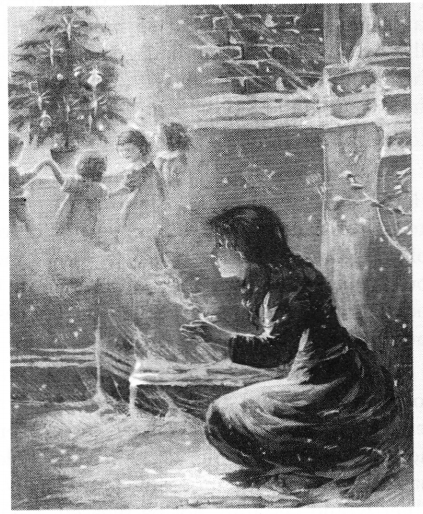
To keep herself warm, she lights a matchstick. In the glow she sees various pictures. Every time she lights a matchstick, she sees a dream and as soon as it blows out, the dream vanishes. She sees shining dinner service, steaming roast goose, beautiful Christmas tree and sometimes a falling star which reminds her of her grandmother, the only person who loved her and is now dead. As she doesn’t want her grandmother to vanish, she lights one match after another to keep her vision alive. When all the matches are lit up, the child dies and is taken up to the heaven by her grandmother.

Next morning, when the passersby look at her face, it seems frozen with a smile. They make different guesses on seeing the burnt matches beside her. They feel pity for her without knowing the amazing visions she saw before her death. They can’t imagine that she is celebrating the New Year joyously with her grandmother in the heaven.

The Little Match Girl Summary Theme

The unfortunate fate of the little girl is portrayed here. Death has been represented in bright images. The theme projected is of hope which is symbolized by the matches and the cold winter is a symbol of hopelessness. There is parallelism between the girl’s condition and the weather condition outside. She was miserable and going through many difficulties. She fought to survive till end.

It signifies that one must not lose hope howsoever the adverse conditions are. It is a sad story of a little girl who doesn’t lose hope till the last match. In bitter cold weather she tried her best to sell the matches. In the end she got relief from all the troubles when hope and faith came hand in hand to help her and she was out of all miseries. Almost frozen to death, when no one can even dream of a splendid life, she enjoyed the joys of New Year with her grandmother.

There are certain religious beliefs too in the story. Author had a firm belief in religion and God that He would bestow upon us all the things we wish for and therefore an innocent child entered a world where there was no more pain, agony and suffering. The story depicts the value of relations too. The girl had a close connection with her grandmother that even after her death also she used to talk to her as if she was alive.

She did not want to lose her for which she lighted the whole bundle of matches. Superstition in the form of falling star also finds its place in the story. According to the author when a star falls, a soul goes up. Thus one can say that the story is a mixture of many elements.

The Little Match Girl Summary Characters

The Young Girl

The little match girl is the main character of the story as the whole story revolves around her. Other characters are in the background. One may guess the age of the girl by the slippers she was wearing as they were of her mother and too big for her, thus she might not be more than nine or ten years. Her hands and feet were tiny. The story projects the girl’s life which is miserable and has touched the heart of many readers.

She belonged to an extremely poor family which is clear from the description of her house,” it was so cold at home, for they had nothing but the roof above them and the wind whistled through that, even though the largest cracks were stuffed with straw and rags”. Moreover she was not loved by her father otherwise he would not have sent her out in blistering cold to sell the matches on the eve of festival when she did not have enough warm clothes.

She was so docile that she did not oppose her father and preferred to freeze to death rather than going back home to face the harshness of her father. He did not have any concern for her and used to treat her badly. She portrays the picture of a pathetic, sorrowful child whose age allows her to dream, imagine and fancy but her father restricted her doing so, and she was leading the life of maturity. She was deprived of all the love and affection which she should get from her father. She longed for the love which she used to get from her grandmother who was now dead.

All those dreams came alive in the form of visions when she freezes to death. Her hallucinations when she lit the matchstick showed her desire. At first she saw herself sitting in front of a great iron stove as she was in need of warmth that time. Then she saw lavish food laid on the table which showed her need for food.

In her third vision she saw a beautiful Christmas tree depicting her desire for celebration. In the last vision she saw her grandmother whom she pleaded her to take to heaven as she was left alone after her. It seemed as if her last wish was fulfilled. Then also there was radiance on her face when she met and talked to her grandmother in her subconscious mind.

The Little Match Girl Summary Word-Meanings

  1. terribly – unpleasant, shockingly bad
  2. gloom – semi darkness, depression
  3. bareheaded – not wearing anything to cover head
  4. barefoot – not wearing anything on foot
  5. carriages – a horse drawn vehicle
  6. rattled – short harsh sound
  7. cradle – a baby’s bed
  8. apron – a protective garment covering the front of clothes
  9. shivering – trembling with cold or fever
  10. crept along – move slowly
  11. snowflakes – ice crystals that fall as snow
  12. stuffed – filled with
  13. sputtered – series of soft explosive sounds
  14. vanished – disappear completely
  15. veil – something that conceals
  16. steamed – cook food by heating it in steam from boiling water
  17. gloriously – splendidly
  18. prunes – dried plum
  19. waddled – swaying movement, walk with short steps
  20. mounted – get up on to
  21. leaned – in a sloping position
  22. pathetic – miserable
  23. stiff – not easily bent, rigid.

The Story of Cricket Summary in English by Ramachandra Guha

We have decided to create the most comprehensive English Summary that will help students with learning and understanding.

The Story of Cricket Summary in English by Ramachandra Guha

The Story of Cricket Summary in English

Part I

Cricket is a very popular game today. It entertains and attracts the young and the old alike. It has left hockey, football and tennis far behind. This lesson traces the history of this sport.

Cricket grew out of the stick-and-ball games played in England 500 years ago. It is played with a bat which means stick or club. Till the 18th century bats were shaped like hockey sticks. The reason was that the ball was bowled along the ground.

The strange feature of cricket is that a test match can go on for five days, and still remain undecided. A football match is over in an hour-and-a-half.

Another notable thing of cricket is its pitch. It has to be 22 yards in length, but there is no limit on the dimension of the playing ground as in hockey or football.

Cricket grounds differ greatly in size. Laws of cricket were first drawn up in 1744. It has two umpires. The stumps are 22 inches high, and the ball across them is six inches.

The world’s first cricket club was organised in 1760. The bat was made straight. In 1774, the first leg-before law was published. Even today both the bat and ball are hand made. Once the bat was cut out of a single piece of wood. Now it consists of two pieces, made out of the willow wood. Plastic, fibreglass and metal are not used at all.

The pads were introduced in 1848, followed by gloves. The modern game is not imagined without helmets, made of light weight materials.

Part II

Indian cricket had its origin in Bombay. The Parsis were the first to adopt it. They founded the first Indian Cricket Club in 1848. It was funded by the Tatas and the Wadias. Initially they had some problem about the use of park or field.

Modern cricket is dominated by Test and One day internationals. C.K. Nayudu was an outstanding batsman of his times. He played for India in its first Test matches against England in 1932. India entered the world of Test Cricket in 1932, 15 years before it became an independent nation.

Part III

Television coverage changed cricket. It took the game to towns and villages. Children got the opportunity to watch International Cricket and learn how to play well. Cricket has got a global market. India has got the largest number of viewers for the game. Indian players are the best-paid and most famous in the game. They are paid professional. One day game has overshadowed Test Cricket.

The Story of Cricket Summary in Hindi

Part I

क्रिकेट आज बहुत लोकप्रिय खेल बन गया है। यह युवा और वृद्ध सभी को समान रुप से आकर्षित तथा आनन्दित करता है। इसने तो हॉकी, फुटबाल तथा टेनिस आदि को बहुत पीछे छोड़ दिया है। यह पाठ हमें इस खेल के इतिहास की जानकारी देता है।

क्रिकेट का जन्म इंग्लैण्ड में 500 वर्ष पूर्व खेले जाने वाले डंडा गेंद से हुआ था। इसे एक बैट अर्थात् डंडे या मुग्दर जैसी वस्तु से खेला जाता है। 18वीं शताब्दी तक बैट का आकार हॉकी स्टिक की भाँति मुड़ा हुआ होता था। कारण यह था कि गेंद को जमीन पर ही फेंका जाता था।

क्रिकेट की एक विशेषता यह है कि टेस्ट मैच पाँच दिनों तक चलते रहने के पश्चात भी अनिर्णायक रह सकता है। फुटबाल मैच तो डेढ़ घंटे में समाप्त हो जाता है।

क्रिकेट का दूसरा विचित्र गुण है इसका पिच। इसकी लम्बाई 22 गज होनी आवश्यक है पर हॉकी या फुटबाल की तरह खेल के मैदान के आकार पर कोई पाबन्दी नहीं होती।

क्रिकेट के मैदान आकार में बहुत भिन्न होते हैं। क्रिकेट संबधी नियम 1744 में पहली बार बने। इसके दो अंपायर या निर्णायक होते हैं। स्टम्पस 22 इंच ऊँचे होते हैं और गेंद 6 इंच व्यास की होती है।

विश्व में सर्वप्रथम क्रिकेट क्लब की स्थापना 1760 के दशक में हुई। बैट सीधा सपाट होता था। 1774 में पहली बार विकेट के सामने टाँग की अड़चन आने का नियम छपा। एक समय बल्ला लकड़ी के एक ही टुकड़े से बना होता था। अब इसमें दो भाग होते हैं, जिन्हें विलो की लकड़ी से बनाया जाता है। प्लास्टिक, फाइबर शीशे अथवा धातु का इस्तेमाल नहीं किया जाता।

टाँगों के बचाव के लिये पैड का इस्तेमाल 1848 में हुआ, इसके पश्चात दस्ताने भी पहने जाने लगे। आधुनिक खेल हल्के वजन वाले हेलमेट के बिना खेले जाने की कल्पना भी नहीं की जा सकती।

Part II

भारतीय क्रिकेट का जन्म बम्बई में हुआ था। सर्वप्रथम पारसी लोगों ने इसे अपनाया। उन्होंने पहला भारतीय क्रिकेट क्लब 1848 में बनाया। इसके लिये धन देने वाले टाटा तथा वाडिया व्यवसायी थे। प्रारम्भ में उन्हें एक पार्क अथवा क्रीड़ा स्थल को लेकर परेशानी हुई।

आजकल क्रिकेट में टेस्ट तथा एक दिवसीय मैचों का बोल-बाला है। अपने समय में सी के नायडू प्रसिद्ध खिलाड़ी थे। उन्होंने 1932 में पहला मैच भारत-इंग्लैण्ड के बीच होने वाला खेला था। भारत तो क्रिकेट जगत में आजादी के 15 वर्ष पूर्व 1932 में ही प्रवेश कर गया था।

Part III

टेलीविजन प्रसारण ने क्रिकेट में बहुत बदलाव ला दिया। इसने क्रिकेट को दूर-दूर के कस्बों तथा गाँवों में पहुँचा दिया। बच्चों को अंतर्राष्ट्रीय स्तर के क्रिकेट मैच देखने तथा उनसे सीखने का अवसर मिल गया। क्रिकेट की आज विश्व भर में माँग है। इस खेल के सबसे अधिक दर्शक भारत में हैं। भारतीय खिलाड़ियों को सर्वाधिक पैसा मिलता है और वे विश्वविख्यात भी हैं। वे पैसों के लिये खेलते हैं। एक दिवसीय क्रिकेट ने टेस्ट क्रिकेट मैचों से अधिक लोकप्रियता पाई है।

A Bicycle in Good Repair Summary in English by Jerome K Jerome

We have decided to create the most comprehensive English Summary that will help students with learning and understanding.

A Bicycle in Good Repair Summary in English by Jerome K Jerome

A Bicycle in Good Repair Summary in English

Part I

The narrator, one evening, accepted his friend’s proposal to go for a long bicycle ride on the following day. He got up early and started waiting for his friend. His friend came half an hour late. He examined the narrator’s bicycle. He shook the front wheel with force. He didn’t heed the narrator’s request not to hurt the machine.

The friend declared that the front wheel was unsteady and it could prove dangerous. He asked for a hammer. He took the front wheel off the fork and held it between his legs. He found fault with the bearings. He set about repairing the machine. He unscrewed it, and the little iron balls rolled away. They collected some sixteen of them. The narrator put them for safety in his hat.

Part II

Next, the friend handled the chain. He took off the gear case. He claimed to know all about a bicycle. He removed the gear box but lost the screws.

The narrator was too weak to check the friend from doing further mischief. The friend went ahead. He tightened the chain till it would not move. Then he made it very loose. He finally decided to fix the front wheel in place. The narrator then changed places with him, and put the wheel in tight position. He laughed and admitted that he was an ass. The reason was that they had forgotten to put the iron balls in place.

The narrator looked for his hat in which he had put the balls safely. But the hat lay upturned and the balls were scattered. They could find only eleven. They fixed six on one side and five on the other, and half an hour later the wheel was put in its place again. But it wobbled even then.

The narrator was impressed not so much by his friend’s skill at repairing the bicycle as by his confidence in himself and his hopeful attitude.

The friend got encouraged. He then set to refix the gear-box. He put the bicycle in different places and positions for the job. He lost his balance and hurt himself on the head. Then he lost his temper and tried to punish the bicycle. It was a sort of fight between man and machine. The tough bicycle showed spirit. It freed itself from his hold and hit him over the head with its handle.

At a quarter to one, the man thought that the work was done. He himself was dirty and bleeding. He cleaned himself and the narrator then sent him home. It was difficult to decide who had suffered more—the friend or the bicycle.

A Bicycle in Good Repair Summary in Hindi

Part I

लेखक ने अपने मित्र का लम्बी साइकिल भ्रमण का प्रस्ताव स्वीकार कर लिया। वह प्रातः समय से पहले उठ गया तथा अपने मित्र की प्रतीक्षा करने लगा। उसका मित्र आधा घंटा लेट आया।

उसने लेखक की साइकिल देखी। उसने उसके अगले पहिये को जोर से हिलाया। उसने लेखक के निवेदन को अनसुना कर दिया कि मशीन को चोट न पहुँचाये।

मित्र ने कहा कि अगला पहिया डगमग हो रहा है तथा उससे खतरा हो सकता है। उसने हथौड़ी मांगी। उसने अगले चक्र को चिमटे से बाहर निकाल लिया तथा अपनी टाँगों के बीच दबाकर बैठ गया। उसे वियरिंग में कुछ खराबी दिखी। उसने साइकिल की मरम्मत का काम शुरु कर दिया। उसने सारे पेंच खोल लिये और दूसरे ही क्षण छोटी-छोटी लोहे की गोलियां निकल कर लुढ़क गईं। दोनों ने मिलकर उनमें से सोलह गोलियों को इकट्ठा किया। लेखक ने उन को अपने हैट में रख लिये।

Part II

इसके पश्चात मित्र ने चेन से छेड़छाड़ की। उसने गियरबॉक्स खोलकर अलग कर लिया। उसने दावा किया कि उसे साइकिल के बारे में पूरी जानकारी है। उसने गियरबॉक्स तो खोल लिया पर उसके पेंच खो दिये।

लेखक में इतना साहस न था कि मित्र को साइकिल से छेड़छाड़ करने से रोक सके। मित्र काम में लगा रहा। उसने चेन को इतना कस दिया कि चलना बन्द हो गया। फिर उसने उसे अधिक ढीली कर दिया। अंत में मित्र ने अगले चक्र को फिट करने का विचार किया। लेखक ने यह काम स्वयं करने का बीड़ा उठाया और पहिए को ठीक हालत में फिट कर दिया। मित्र हँस दिया तथा बोला मैं भी कितना गधा हूँ। कारण यह था कि वे धुरी में लोहे की गोलियाँ रखना भूल गये थे।

लेखक ने अपना हैट तलाशा जिसमें उसने छर्रे सुरक्षित रखे थे। पर हैट तो उलटा पड़ा था और छरें बिखर गये थे। उन्हें केवल ग्यारह छर्रे ही मिल पाये। उन्होंने 6 को एक ओर तथा 5 को दूसरी ओर लगा दिये। उसने पहिया फिट कर दिया था। पर वह अभी भी डगमग हो रहा था।

लेखक को मित्र की साइकिल मरम्मत करने का कौशल इतना प्रभावपूर्ण नहीं लगा जितना कि उसका आत्मविश्वास तथा आशावादी दृष्टिकोण।

मित्र फिर गियरबॉक्स को पुनः फिट करने में जुट गया। उसने साइकिल को विभिन्न स्थानों पर तथा स्थितियों में इस काम के लिये रखा। उसका संतुलन खो गया तथा उसके सिर में चोट आ गई। फिर वह क्रोधित हो गया तथा उसने साइकिल को दण्ड देने की कोशिश की। यह लड़ाई थी मनुष्य और मशीन के बीच। मजबूत साइकिल ने साहस दिखाया। वह मित्र की पकड़ से फिसल गई तथा उसे अपने हैण्डल से चोट मार दी।

पौने एक बजे मित्र ने सोचा कि काम पूरा हो गया है। वह स्वयं गंदा हो गया था तथा खून कई जगह से बहने लगा था। उसने सफाई की तथा लेखक ने उसे घर लौट जाने को बोला। लेखक के लिए यह निश्चित कर पाना कठिन था कि दोनो में किस योद्धा को अधिक चोट आई थी- मित्र को या साइकिल को।

An Angel in Disguise Summary by T. S. Arthur

We have decided to create the most comprehensive English Summary that will help students with learning and understanding.

An Angel in Disguise Story Summary by T. S. Arthur

An Angel in Disguise Summary by T. S. Arthur About the Author

T.S. Arthur was a famous 19th Century American writer born in 6th June 1809. He was the editor and author of fiction and non-fiction works such as Ten Nights in a Bar Room. Ten Nights was the biggest and most successful of Arthur’s career but equally he was a great editor and publisher. His full name was Timothy Shay Arthur. He was weak in health since childhood; therefore his mother took up the job of a teacher so that she could read him the Bible stories and tell him the many tales of a father who was an officer in the revolutionary war.

Around 1833, he served for a few weeks with the Susquehanna Bridge and Banking Company before this venture failed. At the same time, he was involved with Young Men’s Paper as editor. In 1839, he began editing the Baltimore Merchant. He soon became a well-known writer on morals, advice, suggestions, compassion, values and ideas. He died in the year 1885.

An Angel in Disguise Summary of the story

The story basically is about a poor, miserable and wretched child who turns out to be an angel for Thompson family. A poor woman who is hated throughout her life by almost all the people of the village is now surrounded by the same people. when she dies in a drunken state on the threshold of her own house. She dies in front of her three children who included two daughters and a son. The village people take pity on these children.

An Angel in Disguise Summary

The boy was taken in by a farmer and Katy is taken away by Mrs. Ellis. The youngest Maggie, who is disabled and bedridden, is left alone because nobody is ready to take her in that condition. Mr. Thompson, the wheel wright, decides to take her home so that he can take her to the poor house the next day as he knows his wife would not like her to stay at home forever or accept her. When he carries her in his arms and reaches home, his wife Mrs. Thompson becomes angry and her face is in a flame. She bursts out for bringing that ‘sick-brat’ into her house.

Joe begs her to tolerate Maggie for a single day. He asks her to 16ok at her kindly and speak to her gently. He reminds her of Maggie’s dead mother and of sorrow and loneliness Maggie would be having in future. When Joe goes out for work, Mrs. Thompson is all alone with Maggie the whole day, her attitude towards Maggie changes and slowly she becomes fond of her. Mr. Thompson notices this change and realizes that it has been dark, cold and miserable, in his house for a long time because his wife had nothing to love and care for, which was the reason for becoming her irritable, ill-tempered and self-afflicting.

Now the sweetness of that sick child is described as honey to her soul. She carries her in her heart as well as in her arms. It a precious burden for her, she is an angel in their house disguised as a sick and helpless child.

An Angel in Disguise Summary Theme

The story has a symbolic title. The main theme of the story is that people can change and can get emotionally attached to others. It depicts love, kindness and human feelings. The importance of love has been emphasized and it is essential for human survival. The story is about a girl Maggie with open heart and pure soul who proves to be an angel for Thompson family. Her own life is full of darkness but she fills the life of Thompson’s family with happiness and gives them reason to live. The story opens with a sad note but gradually it gears up into a happy one.

Compassionate Mr. Thompson takes her home in spite of her hopeless disease. Thus selfishness is defeated by the selfless love. There is no proper description of the place but we could imagine that the setting is in a village which is dark and gloomy. The story is narrated in the third person. The story develops in a sequential way. It opens with the death of the mother and how the people gather in front of her house, how they behave and how they react. The two among the three children are taken away by different people and for Maggie who is suffering from the spinal problem, it is suggested to take her to the poor house.

But Mr. Thompson takes pity on her and carries her home. In the final paragraph of the story Mr. and Mrs. Thompson finds her as an angel who has come into their house disguised as a sick, helpless and miserable child and fills all its dreary chambers with the sunshine of love. The message conveyed is to help other people. We should be kind, sympathetic and soft-hearted. A truly meaningful life is made up of a series of daily acts of kindness. Not only Maggie needs care and attention but Mrs. Thompson also needs the same in return.

An Angel in Disguise Characters

Maggie

Maggie is the youngest child of the three children whose mother died due to intoxication. She is hopelessly diseased. Two years back she fell from a window and injured her spine and because of that she has not been able to leave her bed since except when her mother lifted her in her arms. She is the reflection of innocence, purity, dependency as she cannot survive without the love and care of someone else.

She seems to be burden for anyone but in the story she proves to be a blessing for the Thompson family because she gives Mrs. Thompson a purpose to live. She won her heart who is supposed to be short tempered and hard hearted woman. She attracts the attention of many by giving them a thought of her well-being. They feel pity on her and so brought discarded clothes for her. But it is sad that nobody wants to adopt her as if she will prove to be a burden for them. Maggie is aware of all these things but she remains quiet. She talks a little but her eyes reflect everything.

She possesses the childlike qualities like afraid of being alone and so she asks Mr. Thompson not to leave her alone. She is called to be brat by some lady but she proves her wrong. She is well behaved and well mannered. She is polite, meek, and humble. She always gives brief replies to Mr. Thompson like ‘Yes sir’, ‘No sir’. He feels like giving her fatherly love due to her innocence and purity of soul.

On seeing her carefully, he finds her face attractive. The disease has not stolen her childish sweetness.Initially she was a burden but now she is a precious burden for Thompson family. Her character shows that humans cannot survive without other human’s love and care.

Mr. Thompson

Joe Thompson’s character is compassionate in the story. He finds it cruel thing to leave Maggie alone when her mother is dead and elder brother John and Sister Kate are taken away by farmer Jones and Mrs. Ellis. He does not want to leave her to the poor house as suggested by others because he knows it’s not good for her. He cries a little when she is left alone and begs him not to leave her alone. He takes pity on her and brings her home lifting her in his strong arms. He is rough from outside like a nutshell but soft from inside.

He likes children very much and gets success in convincing his vinegar-tempered wife to allow her to stay in their home for a day before sending her to the poor house. He calms down his wife by giving her examples from the Bible on how Christ loves the children and rebukes his disciples who do not receive them.

He asks his wife to be kind and gentle towards the poor child. Although he is not interested in the starting to bring her home but the feeling of humanity doesn’t allow him to leave her alone in that situation and then there is something attractive in her eyes and childish sweetness which catches his attention. His decision proves to be fruitful as their house has been changed from dark, cold and miserable place to a happy and joyful home.

Mrs. Thompson

Mrs. Thomson is introduced as a childless woman who is harsh and ill- tempered with no compassion at all for Maggie. She calls her a ‘sick brat’. She has no willingness to do any good to others. When her husband brings Maggie home, she becomes agitated and doesn’t talk to him. She asks him to drop her to the poor house as soon as possible. But soon when she spends time with her, she is completely changed and her feelings towards the little girl are transformed. She becomes calm and quiet. She is a woman of little words and doesn’t counter her husband much on the question of Maggie.

She finds a purpose for living. When Mr. Joe is ready to take her to the poor house she expresses her feelings to keep her for few more days which then turn into the rest of her life. As she has been childless for many years, that may be the reason of her ill-nature. She has nothing to love or care for, so she becomes extra careful for Maggie and gives up the idea of sending her to the poorhouse. She accepts her as her child and carries her in her heart as well as arms.

An Angel in Disguise Word-Meanings

  1. intemperance – lack of moderation
  2. threshold – entry
  3. despised – worthless, regardless, feeling of contempt
  4. scoffed – mocked
  5. denounced – condemned
  6. denunciation – criticizing
  7. interment – burial
  8. wan – pale; hovel – a small miserable dwelling
  9. resolutely – determined
  10. vague – not clearly explained
  11. ruffling – annoying
  12. vinegar tempered – bitter tempered
  13. non-combative – no battle, no opposition
  14. errands – short journey to do a job
  15. gainsaying – denying
  16. irrepressible – not able to restrain
  17. unwonted – unusual
  18. eloquence – fluent and persuasive language
  19. manifest – show clearly
  20. bustle – move around in a busy way, excited activity
  21. asperity – harshness
  22. obliterate – destroy, remove, hide
  23. quivered – trembled
  24. sonic moments – speedy moments
  25. slumbering – sleeping
  26. desolation – feeling of being lonely or unhappy
  27. gratitude – being grateful
  28. disguise – concealing something
  29. dreary – dull.

Fire Friend and Foe Summary in English by Roald Dahl

We have decided to create the most comprehensive English Summary that will help students with learning and understanding.

Fire Friend and Foe Summary in English by Roald Dahl

Fire Friend and Foe by Road Dahl About the Author

Author NameRoald Dahl
Born13 September 1916, Llandaff, Cardiff, United Kingdom
Died23 November 1990, Oxford, United Kingdom
MoviesCharlie and the Chocolate Factory, Matilda
Short storiesThe Landlady, Lamb to the Slaughter
The Invention of Vita-Wonk Summary by Roald Dahl

Fire Friend and Foe Summary in English

Fire is a necessary evil. It is a boon as well as a curse. It has made our life comfortable, but we cannot touch it. It was the first great invention made by early man.

Early man didn’t know how to make fire. But he must have seen the destructive power of fire. He must have watched lightning and volcanoes. He was afraid of it. What is fire? Fire is, in fact, the result of a chemical reaction. The air has oxygen, while fuels have carbon and hydrogen. When the two combine, energy is released in the form of heat and light. This is Vhat we call fire.

Three things are needed to make fire-fuel, oxygen and heat. The common fuels are wood, coal, gas and petrol. Oxygen comes from the air. That is why, when we blow on burning paper, it bursts into flame. Fuel and oxygen do not make fire themselves. They need heat. A lighted match provides that heat. Every fuel begins to bum at a particular temperature.

Fire is a good servant but a bad master. It is useful as long as it is under control. The moment it becomes out of control, it spreads havoc. Every year thousands of homes and trees are damaged by fire. Forest fire destroys trees and kills people.

Fire can be put out in three ways. We can take away the fuel, or stop oxygen from reaching the burning material. The third way is to bring down the temperature below the flash point. Remove the hot air around the burning candle, and it will go out. Water also lowers the temperature and puts out the fire.

Some fires cannot be put out with water. Oil fire is one such example. The oil floats to the top of water and continues to bum as well as spread. Electrical fire also can’t be controlled with water. It is fought by using carbon dioxide.

On the whole, we have learnt well to control fire and make good use of it in everyday life. Long ago there were no firemen. The people used to bring and throw bucketfuls of water on the flames. Now there are laws to stall fire extinguishers in every big building. There are fire brigades in every town. Trained fire fighters use their skills like cutting off power supply, pulling down weak walls and spraying water to bring fire under control. They are also trained to provide first aid to injured people.

Fire is still worshipped in many parts of the world. It helped early man to keep off animals and settle down in safe places.

Fire Friend and Foe Summary in Hindi

आग एक आवश्यक बुराई है। यह वरदान भी है और अभिशाप भी। इसने हमारे जीवन को सुविधाजनक बना दिया पर हम इसे छू नहीं सकते। यह आदि मानव द्वारा किया गया पहला आविष्कार था।

आदिकाल में मानव को आग जलाना नहीं आता था न ही उसके द्वारा भोजन पकाना। पर उसने अवश्य ही आग, मेघ, बिजली और ज्वालामुखी द्वारा किये गये विनाश को देखा होगा। उसे इन चीजों से भय लगता था। आग है क्या? दरअसल आग तो एक रासायनिक प्रतिक्रिया है। वायु में आक्सीजन होता है जब कि ईधन में कार्बन तथा हाइड्रोजन होता है। जब दोनों मिल जाते हैं तो ऊर्जा पैदा हो जाती है जो ताप तथा प्रकाश देती है।

आग प्रज्वलित करने के लिये तीन चीजों की जरूरत होती है। ये हैं ईंधन, आक्सीजन तथा ताप। आम ईंधन हैं लकड़ी, गैस कोयला तथा पेट्रोल। हवा में ऑक्सीजन है। यही कारण है कि जब हम जलते हुए कागज पर फूंक मारते हैं तो लपटें उठ जाती हैं। ईंधन और आक्सीजन स्वयं आग का रूप नहीं ले सकते। उन्हें एक ताप की जरूरत होती है। माचिस की जलती सींक वह ताप दे देती है। हर ईंधन एक निश्चित तापमान पर ही आग पकड़ता है।

अग्नि एक उपयोगी सेवक है पर दुष्ट मास्टर। जब तक वह नियंत्रण में रहती है, वह उपयोगी होती है। जैसे ही नियंत्रण से बाहर होती हैं चारों तरफ एक विनाश फैल जाता है। हर वर्ष वह हजारों घरों, तथा वृक्षों को जला देती है। जंगल की आग तो वृक्षों को नष्ट कर देती है और लोगों को मार देती है।

आग को तीन प्रकार से बुझाया जा सकता है। हम या तो ईंधन को हटा दें, या उसे अक्सीजन न मिलने दें। तीसरा उपाय है ताप को ज्वलनशील स्तर से नीचे ले आयें। किसी प्रज्वलित मोमबत्ती के चारों ओर की गर्म हवा को यदि हम रोक दें तो वह बुझ जायेगी। पानी भी ताप को कम करके आग बुझा देता है।

पर कुछेक किस्म की आग को पानी से नहीं बुझाया जा सकता। एक उदाहरण है तेल में लगी आग। तेल पानी की सतह पर उतरने लगता है तथा वह न केवल जलता रहता है वरन् फैल भी जाता है। बिजली के कारण लगी आग भी पानी से नहीं बुझती। उसे कार्बनडायक्साइड के इस्तेमाल से बुझाया जा सकता है।

समग्र रूप से हमने आग पर नियन्त्रण करना सीख लिया है तथा दैनिक जीवन में उसका सदुपयोग भी हम कर लेते हैं। बहुत समय पूर्व आग बुझाने वाले कर्मचारी नहीं हुआ करते थे। लोग स्वयं ही मिलजुल कर बालटियों में पानी भरकर लाते थे तथा आग की लपटों पर डालते थे। आज नये बड़े भवनों को आदेश है कि वे अग्निशमक यन्त्र लगायें, प्रत्येक नगर में फायर ब्रिगेड होते हैं। प्रशिक्षित अग्नि-शमक आग बुझाने के लिए अपने कौशल का इस्तेमाल करते हैं जैसे बिजली की आपूर्ति बन्द कर देना, कमजोर दीवारों को ढा देना, तथा पानी की बौछार करना। उन्हें आग से जले व्यक्तियों को प्रथम उपचार करने का भी प्रशिक्षण दिया जाता है।

आग की पूजा विश्व के अनेक भागों में की जाती है। आग ने ही आदि मानव को जंगली पशुओं को दूर रखने तथा सुरक्षित स्थानों पर बसने में मदद की थी।