All Summer in a Day Summary by Ray Douglas Bradbury

We have decided to create the most comprehensive English Summary that will help students with learning and understanding.

All Summer in a Day Story Summary by Ray Douglas Bradbury

All Summer in a Day Summary by Ray Douglas Bradbury About the Author

Ray Douglas Bradbury was born on 22nd August, 1920 in Waukegan, Illinois, US. He was an American fantasy, science fiction, horror and mystery fiction author and screenwriter. He was widely known for his novel Fahrenheit 451 as well as his science fiction and horror story collections. Bradbury was one of the most celebrated twentieth and twenty first century American writers.

He wrote in several genres such as the Coming-of-age, novel Dandelion Wine or the fictionalized memoir Green Shadows and White Whale. He received numerous awards including Pulitzer Citation in 2007. Bradbury also wrote and consulted on screenplays and television scripts which included Moby Dick and It Came from Outer Space.He died on 5th June, 2012 the age of 91 in California, US. On his death, the New York Times called Bradbury ‘the writer most responsible for bringing modern science fiction into the literary mainstream’.

All Summer in a Day Summary of the Story

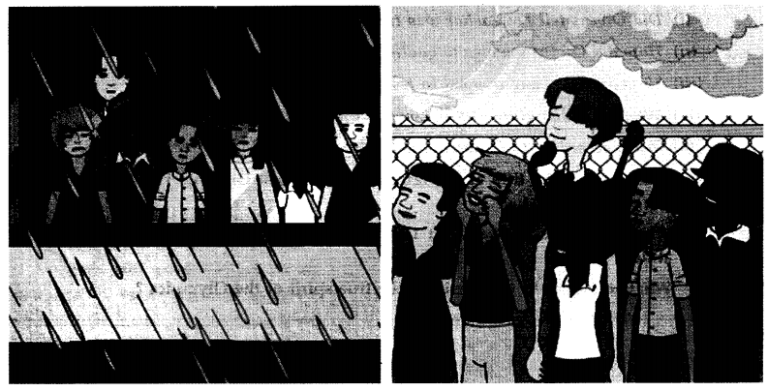
The story is set on the planet Venus, where the sun shines only for two hours and that too once in every seven years. The story opens on the day when the sun is going to appear. A group of school children live on this planet with their families. They are nine years old. It has been raining continuously since five years. The scientists have predicted that the sun will appear only for a brief period of time. The children have seen the sun once in their lives, when they were only two years old, the sun first appeared and so they don’t remember how it looks. Whole day they have been reading about the sun.
All Summer in a Day Summary by Ray Douglas Bradbury

One of the children Margot who is a thin and pale girl has lived in Ohio till she was four. She remembers the sun and the sky. She tells them about its size and color. She is going again to earth according to her parent’s wish. She doesn’t participate in any classroom activity which doesn’t include sun and that is why children hated her.

The children are waiting anxiously for the sun to come out. The other children are upset with Margot and start pushing and taunting her. They make fun of her. A boy even seizes her saying that there will be no sun that day and all is a joke.

While there teacher is gone, they hide her in a closet in spite of her protest. The teacher comes back and they all .turn towards the tunnel’s exit. The teacher confirms if all are present and moments later the rain stops and sun appears. All the children feel happy and begin to enjoy. They run, laugh, slip and fell among the jungle trees that cover the Venus. And then sun faded behind the mist. The sky darkens and rain falls harder. All the children stopped for a moment before entering the tunnels.

As they enter, they ask their teacher, “Will it be seven more years?” a student gives a muffled cry and they remember that Margot is still in the closet. She was there in the closet when all were enjoying the sun. They walk slowly towards the closet, no noises are heard. They open the closet and Margot emerges out.

All Summer in a Day Summary Theme

The writer has tried to depict the image of life on Venus, an image that is completely unfamiliar for a common man. But by using various metaphors and language, he tried to present a crystal clear image of planet Venus. It had been raining for seven years on the planet and it is the day when the sun would appear. The importance of sun has been emphasized. How the people who urged to find life on another planet were dying to get a glimpse and warmth of sun. The children were happy to feel the sun on their cheeks and wanted it to burn their arms.

Most of them squinted at the sun until the tears rolled down their cheeks. Moreover, the impact of sun-less planet is also notable. In the absence of sun, the faces were pale and colorless. They were not only physically weak but emotionally too. It had not only faded the colors of their skin but had also faded the, sympathy and pity for others. Until and unless the sun rays fell upon them just as energy boosters, they lacked feelings.

Another theme is of coexistence of people from different planet. Margot was isolated and faced difficulties just because she came from another community. She tried hard to fit in their planet but they resent her about her past experiences on earth. They felt jealous and angry. Thus the theme of ignorance has also been highlighted. The children were ignorant of the benefits of the sun but once they experienced it, their attitude changed.The illustrated language of the writer has enabled the reader to draw the picture of life and landscape on Venus.

All Summer in a Day Summary Characters

Margot

She is the main character in the story. She is a delicate and pale child. She is an introvert and doesn’t want to mix up with anybody. She moved to Venus when she was only four years old and she remembers the sun. She remembers the beautiful life on earth with the yellow light and without constant sound of raindrops. Here on Venus, the life without the golden sunshine is very boring and depressing. Because she doesn’t want to play with the other children when they sing or draw or do any activity which doesn’t include sun, the children tease her and taunt her in various ways. They are unable to understand the mental position of Margot. They bully her and that’s why she remains aloof. She is sensitive and true to herself.

William

William is the antagonist in the story. He is the main culprit who talks or takes actions on behalf of other children. He is a jealous kind of boy who is devoid of any feelings and this may be due to the absence of the sunlight on the planet Venus on which he lives since his childhood. His power of thinking has lost and limited to certain activities only. He fails to understand Margot and speaks to her in a harsh tone. He shoves her and asks the other children to behave in the same manner. There is no mention of his appearance so one can only understand him by his nature.

The Children

The children Eire in the background of the story after the main characters Margot and William. They provide support to these characters and help in the development of the story. They follow WilliEim without giving a single thought to the results. They are all the victims of depression created on Venus due to lack of sunlight for continuous seven years. They have been traumatized by the constant rain. They experience joys and displeasure in accordance with nature. When there is no sun, they seem dull sind lethargic but as soon as sun appears Edthough for a short span of time, they feel excited and show energetic activities. They play, laugh, fall, slip and do many actions because we know that sun is the main source of energy.

The Teacher

The role of teacher is momentary. The name of the teacher is not mentioned and nothing much is told about her but still her presence is felt and still she is a part of the children’s world. She does her duty, scolds William, keeps an eye on children but all Eire very limited. She is unable to know where the children have kept Margot. But she is vigilant and it is clear from her instructions to the children not to go too far when the sun appears.

All Summer in a Day Summary Word-Meanings

  1. concussion – temporary unconsciousness
  2. slackening – slowing down, negligent
  3. shove – rough push
  4. drenched – wet
  5. clutched – grasped tightly
  6. vital – important
  7. seized – take hold forcibly
  8. closet – cupboard
  9. surged – moved forward
  10. muffled – less loud, deadened sound
  11. avalanche – ice or snow falling rapidly down the side of a mountain
  12. tornado – violent storm, twister
  13. hurricane – storm with violent wind
  14. volcanic eruption – mountain that has opening through which lava comes out
  15. repercussions – consequences
  16. tumultuously – making an uproar
  17. squeak – short high pitched cry
  18. resilient – springing back when pressed
  19. squinted – look through small opening
  20. tumbled – fall headlong
  21. gigantic – very lsirge
  22. stake – pointed stick.

My Greatest Olympic Prize Summary by Jesse Owens

We have decided to create the most comprehensive English Summary that will help students with learning and understanding.

My Greatest Olympic Prize Story Summary by Jesse Owens

My Greatest Olympic Prize Summary by Jesse Owens About the Author

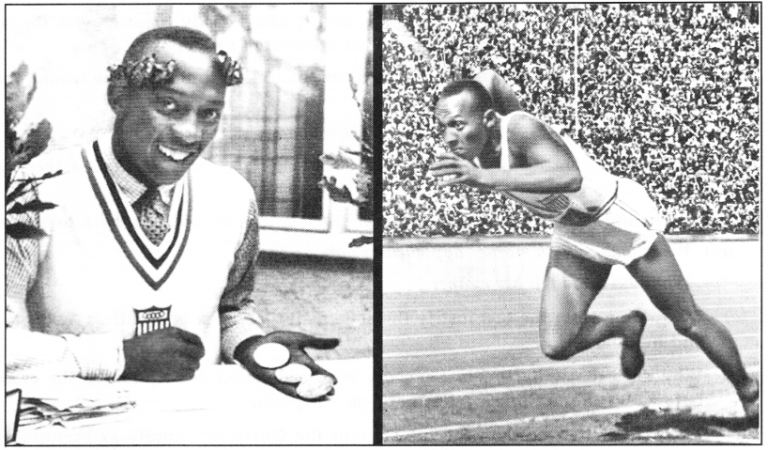
James Cleveland or Jesse Owens was born on 12th September, 1913 in Oakville Alabama, IJ.S. He was the youngest of the ten children born to Henry Cleveland Owens and Marry Emma. He was called as J.C. When he was nine years old, his family moved to Ohio for better opportunities and when his new teacher asked his name, he replied J.C. which she understood as Jesse due to his Southern accent.

From then only he was known as Jesse. He took different jobs when he was young. At that time he realized his passion for running. He attributed his success to his junior high track coach at Fairmount Junior High School.He is recognized as the greatest and the most famous athlete in track and field history who won four time Ofympic gold medals in 1936 games, 100 meters, 200 meters, long jump and 4 x 100 meter relay in Berlin.

He was a sprinter and a long jump specialist. He set another three world records and tying another in less than an hour at the 1935 Big Ten Track meet in Ann Arbor, Michigan and nobody has ever been able to equal this record. He is counted as the most successful athlete who crushed the Hitler’s myth of ‘Aryan supremacy’. He was not called to shake hands with the President at White House due to his race. He was ranked as the sixth greatest North American athlete of the 20th century by ESPN.

My Greatest Olympic Prize Summary of the Story

Jesse Owens, the son of a sharecropper has written this story to share his Olympic experience and the friendship he won. He has achieved what no other Olympian before him had accomplished. It was the time when the patriotic feeling was at its top in Germany. Hitler was of the view that the Nazis were the highest race among others. He denied accepting that any ‘Black’ could ever win the race or be successful.

My Greatest Olympic Prize Summary

This had a great impact on Jesse Owens who was an African-American athlete. Initially, he didn’t bother about all this as he had faith in his abilities but when he saw Luz Long, he was surprised by his performance. He expressed his determination to win the medal and prove to the world who was superior and who was not. He referred to the anger he showed against Germans which resulted in faults in trials.-He failed twice in the qualifying jumps. Luz Long appeared on the scene and asked him the reason which bothered him.

Luz Long spoke to Jesse in encouraging words and advised him to mark a line few inches behind the board and take off from there. Owens felt relaxed and confident. Luz Long knew that if Owens won, it would mar his chances of winning the gold medal but he took the risk and continue to urge him. This made Owens to win the medal and set a stunning record and he has been remembered as the best athlete in Olympic history. But Owens feels that his friendship with Luz Long was greater than that of all the medals he won. The friendship ended only when Luz Long was killed in World War II.

My Greatest Olympic Prize Summary Theme

“My Greatest Olympic Prize” deals with the friendship of Owens and Luz Long.
Another important thing that has been emphasized is that one should not loose temper or display anger even at the time of adversity. To remain cool and calm is the greatest key to success. Anger only leads to failure and this happened with Jesse Owens also when he committed fowls.

Apart from this one must give ears to opponents also which Owens did. He was least bothered about German’s hostile feelings towards him and listened to Luz Long’s advice. Yes frustration did raise its head high when Owens failed twice in the qualifying jumps but soon it was overcome after talking to Luz Long.

The anti-rivalry feelfngs also found space in the essay when Luz Long became the first person from the opponent team to congratulate Jesse on his historic win. Also determination, dedication and devotion are must to achieve something. Jesse’s mind was occupied with only one thought and that was winning the gold medal.It also deals with Hitler’s Aryan Superiority theory which was prevailing high at that time when Hitler was in power.

My Greatest Olympic Prize Summary Characters

Jesse Owens

Jesse Cleveland Owens was a black American athlete and four time Olympic gold medalist in 1936 games. He possessed such qualities which are incomparable. He had that heroic quality which pushed him to go to Berlin and won the Gold Medal beating the so called Nazi (Master) race in their country in the same stadium in which Hitler was present and was in power that time. He showed Hitler that he was not inferior. He utilized his capability to the fullest and became an inspirational force all. He possessed emotions as well as physical strength both at the same time.

He belonged to a humble background but nothing proved to be a barrier in his dreams and he pursued his dreams till they were fulfilled. Nothing could shake his spirit. It encouraged others too. He displayed his best at every place wherever he got opportunity. He was emotionally attached to Luz Long who made him stronger at the time when he needed it the most. He was not worried about the hostile feelings among the Germans. He was too determined to his commitments. Setting three world records and tying a fourth in only forty five minutes was not an easy task but Jesse did it. He was vested with the natural quality of leadership also.

Luz Long

Luz Long was a German and had been trained in Nazi youth school, though he did not believe in Nazism. He was brought with the hope to win the medal for Germany. He had the true spirit of sportsmanship. That’s why when he saw Owens in trouble and worried, he extended his hand to help him. Instead of seeing him as a rival, he was friendly with Owens. He proved to be Owens’ true guide; he respected him and considered him as his equal.

Although he also had pressure on himself, yet he helped Jesse in coming out of distress. He already knew that Owens was a record holder and he did not feel shy even for a moment for not helping him. When Owens went to his room on the night of trials to thank him, he welcomed him warmly and spent two hours with him. Nor he adopted any foul means to win the medal. He was a good human being.

He took himself just as a participant and winning was only a matter of chance and efforts. Even after losing the game, he did not develop any rivalry towards Jesse. Rather he congratulated Jesse with a firm handshake in front of Hitler when Jesse won the gold medal. He showed exuberant courage to befriend Jesse in front of his leader.

My Greatest Olympic Prize Summary Word-Meanings

  1. sophomore – high school student
  2. startled – shocked
  3. disgustedly – unpleasantly
  4. chiseled – well cut face
  5. ebb – flow away
  6. epitome – a perfect example.

The Blue Bead Summary by Norah Burke

We have decided to create the most comprehensive English Summary that will help students with learning and understanding.

The Blue Bead Story Summary by Norah Burke

The Blue Bead Summary by Norah Burke About the Author

Norah Burke was born on 2nd August, 1907 in Bedford, England. She was a well-known English novelist and non-fiction writer famous for its description of life in India during the early twentieth century. Her father, Redmond St. George Burke was a forest officer in India and her early childhood was spent in the Indian forests. The Indian jungle and her interactions with its wild animals inspired her autobiographical travel books Jungle Child, Eleven Leopards and Midnight Forests. She also wrote a shot story Journey by Night.

Her education was done with difficulty due to constant change of camps and carrying their belongings on elephant backs but she learned to write at the age of eight and started writing stories straight away. She returned to England in 1990. Her first novel Dark Road was published in 1933. By 1950, she had published eleven novels and her short stories and articles had appeared in more than 100 periodicals. Apart from this she’s also an enthusiastic travel writer. She married a lawyer and had two sons. She lived for many years at Thorn Court near Bury St. Edmunds and died in the year 1976.

The Blue Bead Summary of the Story

It is a short story by Norah Burke which is centered on a young girl, Sibia. There is a giant crocodile too which lives in the river for a long time. The girl with her mother and some other women goes to collect the paper grass from the cliffs above the river. On their way, they pass a Gujar encampment of grass huts where the nomadic grazers live till their animals finish all the grazing or are unable to sell their white butter and white milk in the district or there is no one to buy the young male buffaloes for tiger bait. The Gujars are junglis (wild) like Sibia is.

The Blue Bead Summary

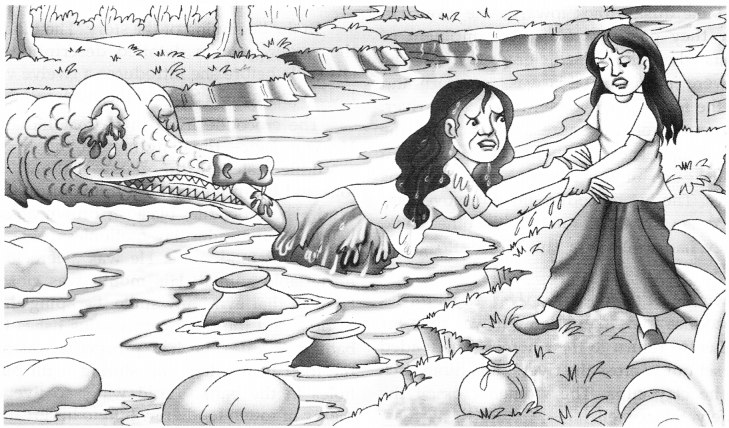
While crossing the river, they make a lot of noise to keep the crocodile away. They climb a hillside to get the grass, and down below them runs the broad river which bears Great turtles, kingfishers and mahseers. In the evening the women have to cross the river again to go back home. On one such evening, when the women are returning, one Gujar woman walks on to stepping stone to fill the gurrahs with clean water. She comes within the yard of the crocodile when it attacks her. The crocodile pulls on her leg and drags her into the deeps of the pool. Blood spread everywhere.

Sibia watches this and jumps into action. She aims at the eyes of the crocodile and drives the hayfork, one pointed part goes in it eyes. It crashes back and disappears. Sibia somehow drags the fainting woman and helps her home. She goes back to get her fork and sees the blue bead. She is happy to get it for a new necklace.

The Blue Bead Summary Theme

It’s a jungle adventure which excites every class of people. The writer has given a lively description of characters as well as the huge crocodile. There is perfect blend of thrill and suspense. Sibia, a twelve year old girl catches the attraction of readers through her actions. She does not belong to a wealthy family but finds happiness in all the little things.

Blue bead in the end represents her happiness as she grew up in poverty and faced many hardships for survival. There is conflict between human and nature. The strange thing is that the protagonist is a human being and the antagonist is an animal which reveal their direct statements. Woman is attacked by a crocodile and saved by Sibia. Courageous deeds can save a community.

There is a rich usage of figures of speech like metaphors in the line. ‘But now she came on wings choosing her footing in midair’, ‘all her little golden body decorated’, ‘cold silk water’. Alliteration in ‘sun- whitened stepping- stones’, ‘it lay in her sweet wet palm, perfect, even pierced’, ‘blue bead’, ferocious and formidable’, lay lapped. Simile in ‘he was showing dawn colored silk that was pouring like silk’, ‘leaping like a rock goat’ and Imagery. Onomatopoeia – ‘bang’, ‘slushing’. Another theme could be that something insignificant for one may be extremely important for other. There is no place for physical harm in the story.

The Blue Bead Summary Characters

Sibia

Sibia is the protagonist of the story. She is a young girl of twelve years who is the center of attraction. It’s not that she belonged to a very high class or had an extraordinary qualification or a wealthy social status. Rather she led a simple life who tried to find happiness in all the small things. She lived in poverty so she had ordinary expectations like she was interested in the natural jewelry made by the seeds that rattle round her neck. She appreciated little things in life like watching Kashmiri merchant selling silks, smell of the wonderful dressing of the cloth stall etc.

She felt ecstatic when she found the blue bead which projected her innocent and childlike quality. She was brave, laborious, courageous and extremely observant. Another quality that sometimes the adult lack was the ability to take decisions quickly and she displayed this quality when the Gujar woman was carried away by the giant crocodile and she immediately ran beside the shrieking woman without thinking anything and without wasting a moment. She showed the act of heroism by saving her life from the ferocious animal. Thus she made a significant place in the story.

The Blue Bead Summary Word-Meanings

  1. dislodge – remove from established position
  2. jostled – push roughly
  3. cliffs – a steep rock face
  4. juggernaut – a very large transport vehicle
  5. propelled – revolved
  6. tinged – colored
  7. snap – move
  8. fend – support oneself
  9. putrid – rotten
  10. tepid – lukewarm
  11. armoured – protective covering
  12. long-snouted – long projecting nose
  13. shoals – underwater sandbank
  14. perforated – piercing
  15. shrill – high pitched sound
  16. ford – shallow place where a stream may be crossed
  17. rancid – smell or taste like a stale butter
  18. ebony – black
  19. toddle – walk with short steps
  20. husked – dry covering
  21. rattling – making rapid hard sounds
  22. encampment – settle in a camp
  23. nomadic – tribe that roam for pasture for its animals
  24. gurrahs – earthen or metal pots for carrying water
  25. gaunt – lean and exhausted
  26. bicker – quarrel about unimportant thing
  27. swooping – sudden downward rush
  28. dawdle – walk slowly
  29. squeaked – a short high pitched cry
  30. slushing – partly melted snow
  31. livid – furiously angry, bluish grey
  32. clatter – rattling sound
  33. flails – swing wildly
  34. prong – pointed part
  35. wobbling – unsteady, quivering.

Fire and Ice Summary in English by Robert Frost

We have decided to create the most comprehensive English Summary that will help students with learning and understanding.

Fire and Ice Summary in English by Robert Frost

Fire and Ice by Robert Frost About the Poet

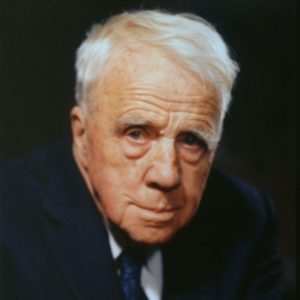
Robert Frost (1874-1963) was an American poet. His work was initially published in England before it was published in the United States. Known for his realistic depictions of rural life and his command of American. He became one of the United States rare “public literary figures, almost an artistic institution.”

Poet NameRobert Frost
Born26 March 1874, San Francisco, California, United States
Died29 January 1963, Boston, Massachusetts, United States
PoemsThe Road Not Taken, The Gift Outright, Nothing Gold Can Stay
AwardsRobert Frost Medal, Pulitzer Prize for Poetry
Fire and Ice Summary by Robert Frost

Fire and Ice Summary in English

The poet says that there are two theories held by the general public about how the world will come to an end. The first of these theories states that fire will cause the apocalypse to happen. The second theory say’s the world will freeze till all the species of flora and fauna inhabiting it become extinct once and for all. The poet equates fire with human passion and desire. He also says that he is quite familiar with this concept of desire, and know’s what it actions is capable of producing in human beings. The poet agrees with those people who believe that the world will be burnt in fire.

But he has also experienced the other extreme, and he know’s that colder emotions like hate have great destructive power. Love gets all .the publicity, but hate is the silent killer. It may not have the same grandeur as the fireball ending, but it’ll do the trick.

Fire and Ice Summary Questions and Answers

I. Some say the world will end in fire
Some say in ice.
From what I’ve tasted of desire
I hold with those who favour fire.

a. According to some people how will the world end In fire?
Answer:
‘Fire’ here stand’s for hatred, cruelty, fury and avarice that some people feel the world will end in.

b. How will it end in ice?
Answer:
‘Ice’ stand’s for insensitivity, coldness and intolerance, which too can end the world.

c. Why does the poet side with those who believe that the world will end in fire?
Answer:
The poet’s taste of his own desires had made him side with those people who believe that the world will end in fire.

2. Has given my heart
A change of mood
And saved some part
Of the day I had rued.

a. What type of mood the poet was in?
Answer:
The poet was in a depressed and distraught mood.

b. What does the poet say, has changed his mood?
Answer:
The poet’s mood has changed after a crow shook down on him a dust of snow fro MI a hemlock tree.

c. What was the result?
Answer:
His mood underwent a positive change.

d. What is the rhyme scheme in the stanza?
Answer:
The rhyme scheme in the stanza is “abab”.

3. The way a crow
shook down on me
The dust of snow
From a hemlock tree.

a. What is the dust of snow?
Answer:
Dust of snow refers to the snow flakes.

b. Who shook it down?
Answer:
A crow shook it down.

c. What does ‘the dust of snow’ stand for?
Answer:
The dust of snow’ stands for hope and joy in the midst of sorrow and despair.

d. What is a hemlock tree?
Answer:
A hemlock tree is a poisonous plant with small white flowers.

4. To say that for destruction ice
Is also great.

Question 1.
For the poet, what does ‘ice’ stand for? How is it sufficient to bring destruction?
Answer:
For the poet, ‘ice’ stands for insensitivity and coldness, indifference and intolerance. These qualities are sufficient to bring destruction because they promote hatred amongst people and ultimately lead to destruction.

Question 2.
‘I think I know enough of hate ………..’
What does the poet mean by knowing enough of hate?
Answer:
The poet has also experienced hate, a cold emotion, and he know’s that it can destroy things – namely, the world.

Dust of Snow Summary in English by Robert Frost

We have decided to create the most comprehensive English Summary that will help students with learning and understanding.

Dust of Snow Summary in English by Robert Frost

Dust of Snow by Robert Frost About the Poet

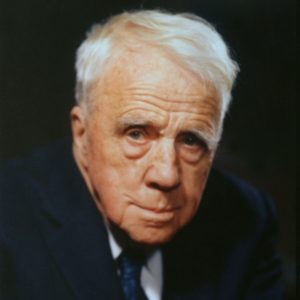
Robert Frost (1874-1963) was an American poet. His work was initially published in England before it was published in the United States. Known for his realistic depictions of rural life and his command of American. He became one of the United States rare “public literary figures, almost an artistic institution.”

Poet NameRobert Frost
Born26 March 1874, San Francisco, California, United States
Died29 January 1963, Boston, Massachusetts, United States
PoemsThe Road Not Taken, The Gift Outright, Nothing Gold Can Stay
AwardsRobert Frost Medal, Pulitzer Prize for Poetry
Dust of Snow Summary by Robert Frost

Dust of Snow Summary in English

TJie poet talks about a winter’s day, when all the treetops were covered in masses of snowflakes. The poet was walking under one such snow-covered hemlock tree. A crow alighted on this tree suddenly, and the mass of snowflakes atop it fell down on the poet like rain.

It changed his mood. The shower of dust-like snow on his shoulder changed his mind. It made him feel that the day had not been a complete waste. At least some part of that day had been pleasant, since it had given him a new experience.