Animals Summary in English by Walt Whitman

We have decided to create the most comprehensive English Summary that will help students with learning and understanding.

Animals Summary in English by Walt Whitman

Animals by Walt Whitman About the Poet

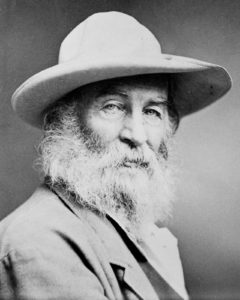
Walt Whitman (1819-1892) is a major figure in early American poetry. He broke the tradition of rhymed and metrical poetry. He was famous for writing a revolutionary new kind of poetry which was in free verse. The poem ‘animals’ is from his work ‘Song of Myself’ in Leaves of grass.

Poet NameWalt Whitman
Born31 May 1819, West Hills, New York, United States
Died26 March 1892, Camden, New Jersey, United States
PoemsSong of Myself, Leaves of Grass, Song of the Open Road
AwardsGolden Kite Award for Picture Book Illustration
Animals Summary by Walt Whitman

Animals Summary in English

Having fed up in the company of human beings, the poet wants to turn his way and live with animals. He finds the animals peaceful and satisfied. They don’t have any feeling of repentance. They don’t have any lust or greed. They have nothing to do with material things.

There is complete equality among animals. They do not have any hierachy. Animals don’t need to bow down before others. Poet feels that the traits of human being like truthfulness, honesty, commitment, loyalty, purity, innocence etc. have now passed on to the animals. He wonders how these qualities have passed on to the animals. Did he negligently drop all these qualities and animals acquired them?

Animals Summary Questions and Answers

1. I stand and look at them long and long.
They do not sweat and whine about their condition

a. ‘They’ in the above lines are ……………….
(i) human beings
(ii) animals
(iii) the poets
(iv) the audience
Answer:
(ii) animals.

b. The author keeps looking at them for long because he ………………..
(i) never finds them unhappy or dissatisfied
(ii) finds them calm and peaceful
(iii) feels more at home with them
(iv) all of the above
Answer:
(iv) all of the above.

c. They are unlike human beings who are ………………..
(i) always complaining
(ii) calm and quiet
(iii) contented
(iv) not prone to anger
Answer:
(i) always complaining.

2. So they show their relations to me and I accept them.
They bring me tokens of myself, they evince
them plainly in their possession.

a. In the above lines ‘they’ stand for …………………..
(i) listeners
(ii) audience
(iii) animals
(iv) viewers
Answer:
(iii) animals.

b. The author feels related to them as they remind him of ……………………
(i) his ego.
(ii) the basic qualities of his nature.
(iii) inhuman characteristics.
(iv) his greed.
Answer:
(ii) the basic qualities of his nature.

c. They seem to possess those qualities which man has chosen to ………………..
(i) ignore
(ii) deny
(iii) drop
(iv) All of the above
Answer:
(iv) All of the above.

3. So they show their relations to me and I accept them,
They bring me tokens of myself they evince
them plainly in their possession.

a. The speaker accepts that
(i) animals are better than men.
(ii) animals are his best friends.
(iii) there is a close relation between man and animal.
(iv) all of the above.
Answer:
(iv) all of the above.

b. By ‘tokens of myself the speaker means
(i) animals are like men.
(ii) coins dropped by the speaker.
(iii) they remind him of the basic values of the human beings.
(iv) the marks of animal’s goodness.
Answer:
(iii) they remind him of the basic values of the human beings.

c. Animals have the ‘tokens’ dropped by man.
(i) retained and preserved
(ii) searched
(iii) robbed
(iv) lost
Answer:
(i) retained and preserved.

4. I think I could turn and live with animals, they are so placid and self-contain’d,
I stand and look at them long and long.

a. The poet wants to live with the animals because they are …………….
(i) calm
(ii) self-contained
(iii) satisfied
(iv) all of the above
Answer:
(iv) all of the above.

b. The poet feels more at home with animals than
(i) birds and insects
(ii) human beings
(iii) natural things
(iv) all of the above
Answer:
(ii) human beings

c. The word which means ‘calm and quiet’ is
(i) placid
(ii) complex
(iii) groan
(iv) contented
Answer:
(i) placid

5. They do not lie awake in the dark and
Weep for their sin ……………

Question 1.
Who are ‘they’? How are they different from human beings?
Answer:
They’ here refers to the animals. They are different from human beings as they do not sweat and whine about their pathetic condition. Animals do not feel guilty for their actions so they need not awake in the dark and weep for their sins.

Question 2.
‘Not one is respectable or unhappy Over the whole earth.’
Who is the poet talking about? What is their state of mind?
Answer:
The poet is talking about the animals. They are placid and self contained. They are not worried about getting respect or disrespect as they have no ego.

Question 3.
‘They do not make me sick discussing their duty to God’
Who are ‘they’? What makes him sick?
Answer:
They’ are here the animals. The discussions about subjects of philosophy or religion which the animals do not indulge in make him sick.

Amanda Summary in English by Robin Klein

We have decided to create the most comprehensive English Summary that will help students with learning and understanding.

Amanda Summary in English by Robin Klein

Amanda by Robin Klein About the Poet

Robin Mc Maugh Klein is an Australian author of books for children. She writes Children’s and young adult fiction. Some of her famous books are Hating Alison Ashley, People might hear you, etc.

Poet NameRobin Klein
Born28 February 1936 (age 84 years), Kempsey, Australia
GenreChildren’s and young adult fiction
Movies and TV ShowsHating Alison Ashley, Say a Little Prayer, Halfway Across the Galaxy and Turn Left
AwardsDromkeen Medal, Grammy Award for Best Music Film
Amanda Summary by Robin Klein

Amanda Summary in English

Amanda’s mother tells Amanda in a very strict voice not to bite her nails. Then she tells Amanda not to slouch her shoulder’s. Instead she wants Amanda to sit up with her back straightened. Amanda withdraws from her real life to an imaginaty world. She imagines that there is a beautiful green sea, in which only she lives and there is nobody there to bother her Moreover, she is no longer a human being, but has taken the form of a mermaid, and is drifting along in a relaxed fashion within that sea.

Amanda’s mother asks Amanda whether she has completed the homework. She further asks Amanda whether she has cleaned up her own room. Finally, she asks Amanda whether she has cleaned her shoes or not. Amanda withdraws into again an imaginary world. She imagines that she is an orphan and is romancing around on the street bare feet. She designs in the soft dust with her bare feet thus making them dirtier. She cherishes the silence and the freedom.

Amanda’s mother forbids her to have any chocolate for they might cause her to develop acne on her face. She commands her to look at her when she is talking to her. Amanda withdraws into her fantasy world and imagines herself to be Rapunzel. She imagines that she is perfectly happy to live alone in the tower, for she has nothing to worry about. In fact, she is so happy with her life that she will never let down her hair in an attempt to escape from the tower.

Amanda’s mother tells her to stop sulking. She also accuses her daughter of having mood swings very frequently. Finally, she tells Amanda that anyone who saw her would think that her mother has been nagging at her.

(The poem depicts the dilemma of a teenage girl when she feels that her freedom is curtailed.)

Amanda Summary Questions and Answers

Question 1.
Read the extract given below and answer the questions that follow’s by choosing the most appropriate options.

Don’t eat that chocolate, Amanda!
Remember your acne, Amanda!
Will you please look at me when I’m speaking to you,
Amanda!

a. The speaker in the above lines is ……………….
(i) Amanda’s n-eighbour
(ii) Amanda’s friend
(iii) Amanda’s mother
(iv) Amanda’s physician
Answer:
(iii) Amanda’s mother

b. She is advised not to eat the chocolate because eating of chocolate ……………….
(i) causes skin problems
(ii) spoils the habits
(iii) is not good for children
(iv) is a very costly habit
Answer:
(i) causes skin problems

c. The person addressed here is listening to the advice ……………….
(i) inattentively
(ii) angrily
(iii) attentively
(iv) indifferently
Answer:
(iv) indifferently

Question 2.
Who is Amanda? What could Amanda do if she were a mermaid?
Answer:
If Amanda were a mermaid she could drift in the sea. It shows her desire to get away from the restrictions of her mother.

Question 3.
(I am an orphan, roaming the street ….)
Who is ‘I’? Is she an orphan? Why does she say so?
Answer:
‘I’ here refers to Amanda. No, she is not an orphan. She imagines to be an orphan as she feels her freedom is curtailed in her present position. By imagining herself as an orphan she can do whatever she wants to do.

Question 4.
‘The silence is golden, the freedom is sweet’
Why does Amanda say so?
Answer:
Amanda is a child and she does not like several restrictions put on her by her mother.
Therefore, she wants solitude and. freedom.

Animal Farm Chapter 1 Summary

We have decided to create the most comprehensive English Summary that will help students with learning and understanding.

Animal Farm Chapter 1 Summary

Soon after the meeting, something unusual happened at Manor Farm. Old Major died peacefully in his sleep, three days after the meeting took place. The animals buried him in the farm’s orchard. In the three months that followed, the most intelligent of the animals began meeting regularly. Even though they didn’t know when the Rebellion would happen, yet, they organized for it. The work of organizing and teaching fell upon the pigs, who were considered to be the cleverest of all animals.

The two pigs, Napoleon and Snowball, took the responsibility upon themselves. Snowball was a vivacious pig, whereas Napoleon was a large, rather fierce pig who was not much of a talker. Another pig named Squealer, joined Napoleon and Snowball, as he was well known for his powers of speech and persuasion. The three pigs worked together to formalize old Major’s ideas into a system of ideas called ‘Animalism’. They held several secret meetings to expound the principles of Animalism to others.

The pigs faced difficulty to convince other animals about the need for Rebellion. Some wondered why they should work for the Rebellion that might not happen in their lifetimes. Among them was Moses, the raven, who promised them that they would go to a land of plenty called ‘Sugarcandy Mountain’, when they died. Boxer and Clover proved helpful in winning the animals over to the cause because the animals believed the horses to be trustworthy.

Soon the animals got the opportunity to rebel against Mr. Jones who had lately fallen into evil ways. He lost a lawsuit and therefore, continued to neglect the farm and drank too much. His men were dishonest who also neglected the farm and, thus the farm kept deteriorating and the animals were kept underfed.

One Saturday night, Mr. Jones got drunk in the Red Lion and forgot to feed the animals. The cows broke in the door of the storage shed and, thus all animals helped themselves to food. When Mr Jones tried to stop and whip the animals, they fought back. Jones, his family, and his men ran out of the farm.

The animals, seeing what they had accomplished and realizing that they were free, destroyed the farmer’s tools and the symbols of their bondage, such as bits, nose rings, and halters. They burned everything that reminded them of their oppressor. After that, they all sang ‘Beasts of England’ seven times before they could go to sleep.

The next morning the animals hurled themselves into the air with leaps of excitement and gazed around in the morning light. They all agreed on the point that no animal must ever live there. In the meantime, the pigs had taught themselves to read and write and renamed Manor Farm as Animal Farm.

On the bam wall they wrote the basic tenets of Animalism as Seven Commandments :

  • Whatever goes upon two legs is an enemy.
  • Whatever goes upon four legs, or has wings, is a friend.
  • No animal shall wear clothes.
  • No animal shall sleep in a bed.
  • No animal shall drink alcohol.
  • No animal shall kill any other animal.
  • All animals are equal.

All animals agreed to them. just before the animals moved out to the hayfield to harvest, they realized that the cows needed milking, so the pigs decided to do the job. When the animals wondered about what would be done with the buckets of milk, Napoleon told them not to worry. Soon after when the animals returned from the hayfield, they noticed that the milk in the buckets had disappeared.

Animal Farm Chapter 1 Summary Word Meanings:

1. Dissentient – Refusing to attend service of the church in England
2. Resolution – A decision to do something or to behave in a certain manner
3. Tyrant – A cruel and oppressive dictator
4. Tyranny – Government in which the ruler is an absolute dictator
5. Tread – Put down or press the foot, place the foot
6. Rebellion – Organized opposition to authority
7. Tidings – Information about recent and important events
8. Knacker – Someone who buys up old horse for slaughter
9. Cynical – Believing the worst of human nature and motives
10. Majestic – Having or displaying great dignity or nobility
11. Lurch – Walk as if unable to control one’s movements
12. Confinement – The state of being enclosed

Animal Farm Chapter 1 Summary Questions and Answers

Question 1.
Read the extract given below and answer the questions that follow.
” your resolution must never falter. No argument must lead you astray. Never listen when they tell you that man and the animals have a common interest we must not come to resemble him No animal must ever live in a house, or sleep in a bed, or wear clothes, or drink alcohol, or smoke tobacco, or touch money, or engage in trade.”
(i) Who is the speaker of the above lines? Where is the speaker at this moment and why?
(ii) Name the animals who attended the meeting.
(iii) How does the rebellion finally happen?
(iv) According to the speaker, how are animals different from men?
(v) What are the Seven Commandments of the Animal Farm?
Answer:
(i) The above lines were spoken by the Old Major, a boar. The speaker was at the big barn when he spoke these lines. He was standing on a raised platform. He was addressing a gathering of animals and was telling them the ill ways of man and about his dream.

(ii) All the animals of the farm had gathered for the meeting. The pigs- Snowball, Napoleon etc., Boxer the horse, Clover the mare, Muriel the goat, Benjamin the donkey. Only Moses the raven was absent from the meeting.

(iii) Major had incited all the animals that the rebellion must happen. The drunkard owner of the farm, Mr Jones, forgot to feed the animals one day. Overtaken by starvation and years of exploitation, the animals broke through their stalls. They then chased away Jones and his men.

(iv) According to Old Major, man was very different from the animals. The animals produced their own food and were hardworking. However, the man was selfish and he exploited the animals to get food and other things.

(v) The Seven Commandments of the Animal Farm were :

  • Whatever goes upon two legs is an enemy.
  • Whatever goes upon four legs, or has wings, is a friend.
  • No animal shall wear clothes.
  • No animal shall sleep in bed.
  • No animal shall drink alcohol.
  • No animal shall kill an other animal.
  • All animals are equal.

Question 2.
Read the extract given below and answer the questions that follow.
‘Comardes’, he said,’here is a point that must be settled.’
The wild creatures, such as rats and rabbits- are they our friends or our enemies?
Let us put it to the vote. I propose this question to the meeting: “Are rats comrades ?”
(i) Name the speaker. What makes the speaker say the above words?
(ii) What is done immediately after this extract? What is found out?
(iii) What advice does the speaker give to the comrades?
(iv) The speaker talks about his dream later. What does he say about his dream?
(v) What is the effect of the song that is sung later? How do the comrades sing the song? How is the song interrupted?
Answer:
(i) The speaker of these lines is the Old Major, a prize-winning boar. The gathering was disturbed by the entry of the rats. The cats and dogs did not like them and they were a threat to the farm. However, the Old Major thought that all animals were equal in the rebellion and they had just one enemy and that was man.

(ii) Immediately after this, a vote was taken to ascertain whether the animals should consider rats as comrades or not. There was an overwhelming majority to support this. Only the dogs had opposed the motion while the cats had voted on both sides.

(iii) Old Major told the animals that they had only one common enemy and that was man. He advised them not to follow his ways ever in their lives. Instead, they should remain hostile to him and all animals must rebel against his tyranny.

(iv) Old Major talked about the dream that he had the previous night. In his dream, all men had vanished from Earth. It also reminded him of a song, “Beasts of England”, that he had long forgotten. The song was sung by his mother and other sons.

(v) The Old Major started singing a song, “Beasts of England”. Everybody picked up the tune and the lyrics of the song sooner or later. The song threw them into the wildest excitement. Even the stupidest of them were singing it. The uproar awoke Mr Jones and he, fearing that a fox had entered the farm, fired his gun. The bang of the gun scared all the animals and they ran to their respective sheds.

Question 3.
Read the extract given below and answer the questions that follow:
Beasts of England, beasts of Ireland,
Beasts of every land and clime,
Hearken to my joyful tiding Of the golden future time.
(i) Who sings these lines and why?
(ii) What is the significance of these lines?
(iii) Is the Old Major responsible for Rebellion?
(iv) Explain how does the Rebellion come about?
(v) What happens after the Rebellion is over?
Answer:
(i) These lines constitute the first verse of the song that Old Major hears in his dream, and which he teaches to the rest of the animals during the fateful meeting in the barn. All the animals sing these lines at the end of the meeting called by Old Major.

(ii) As it spreads rapidly across the other farms, the song gives the beasts both courage and solace on many occasions. The lofty optimism of the words “golden future time,” which appear in the last verse as well, serves to keep the animals focused on the Rebellion’s goals so that they will ignore the suffering along the way.

(iii) Yes, the Old Major is responsible for the Rebellion. It’s he who sows the seed of Rebellion in the minds of the animals. Even though he dies after a few nights after planting the ideas but he’s the one who brings about a revolution on the Animal Farm.

(iv) After the death of Old Major, Napoleon and Snowball, the more intelligent of the animals, developed Major’s ideas into a complete system of thought-Animalism. They went about instigating the other animals with those principles. Soon they got an opportunity to put them to use and when Jones started neglecting the animals they openly attacked him and his men which led to the expulsion of Jones from Animal Farm.

(v) After the Rebellion is over and Napoleon acquires control over the farm, The song’s revolutionary nature becomes dangerous. Squealer discourages animals from singing it, noting that the song was the song of the Rebellion. Now that the Rebellion is over and a new regime has gained power, Squealer fears the power of such idealistic, future-directed lyrics. Wanting to discourage the animals’ capacities for hope and vision, he orders Minimus to write a replacement for “Beasts of England” that praises Napoleon and emphasizes loyalty to the state.

Question 4.
Read the extract given below and answer the questions that follow.
“All men are enemies. All animals arficomrades. Whatever goes upon two legs in an enemy”.
(i) Who is the speaker of these lines? To whom are these lines addressed?
(ii) What are the reasons for these lines to be said?
(iii) What are the basic values which the speaker of these lines dreams about?
(iv) What does he warn the listeners about?
(v) Do you think the listeners are able to achieve the dreams and aspirations of the speaker?
Answer:
(i) The speaker of these lines is Old Major. These lines are addressed to all the animals who are present in the meeting called by Old Major.

(ii) The reason he says all these lines to the animals is, because he had dreamt of a world where all the animals are free and liberated. He calls a meeting to convey his message to all the animals on the farm.

(iii) The basic values that the Old Major dreams about are

  • a world in which all the animals are free and equal,
  • where they don’t have to serve any human beings and
  • lead a life free of misery and slavery.

(iv) The Old Major warns his listeners about Man, a species which consumes without producing. He informs the animals that all habits of “Man” are evil. He is selfish and can never treat animals equally so they should stay away from Man as far as possible.

(v) The listeners are able to gain independence and freedom for a short period of time till some other animals i.e., pigs gain ascendancy and leadership and started ruling over the other animals.

Call of the Wild Chapter 7 Summary

We have decided to create the most comprehensive English Summary that will help students with learning and understanding.

Call of the Wild Chapter 7 Summary

The money Buck wins for him enables Thornton to pay off some debts and journey with his partners in search of a fabled lost gold mine that no living man has ever found. They travel east on an unknown trail. Buck leads a team of six dogs 70 miles up the Yukon. Buck is very happy as they trek through the wilderness, fishing, hunting and unthinking of time.

For two years they wander, seeking an ancient cabin and a mythical mine. They never find the mine, but in the spring of the second year they find a “shallow place in a broad valley where the gold showed like yellow butter across the bottom of the washing-pan.”

With little work to do, Buck spends his days by the fire, dreaming once more of that ancient man. In his mind he wanders in this early, undefined world. Buck rightly hears an ancient call deep in the forest. Sometimes he searches for it, sometimes he hears it, springs from his place and runs wild through the forest. One night he hears it more clearly than ever before. He goes into the forest and sees a timber wolf. Wishing to make friends, Buck approaches; but the wolf is afraid of this beast three times his size and flees. Several times this meeting is repeated, until finally the wolf understands Buck’s intentions, and they sniff noses.

For two days he does not leave, but then he hears once more the call of the forest. He starts to wander in the woods, and stays away from the camp for days at a time, hunting and fishing for his food. He exhibits a wild, wolf-like cunning. As a fearsome hunter, he kills a moose by separating it from the herd and remorselessly pursuing and attacking it. He shows great patience and ferocity. It takes him four days to pull the moose down.

When he returns to Thornton’s camp, he finds it has been overrun by Yeehat Indians. The Yeehats are gleefully dancing. Three miles out he sees a fresh trail, and he becomes more cautious. Suddenly he comes across the body of Nig, an arrow sticking from his head. He passes the dog almost dead, and then he passes the body of Hans. He sees Yeehat Indians dancing around the wreckage of the camp.

Buck leaps at the Indians, ripping open the throat of the chief, and keeps killing until the rest of the tribe runs away in terror. For a few moments, Buck pursues them, killing a few more as they attempt to flee. Buck sees Pete’s body, and then he follows the scent to the lake, where he knows John Thornton’s body lies. Skeet, loyal to the end, lies dead just by the lake. Buck sits and contemplates the ache in his heart. He feels a bit better only when he looks at the bodies of the men he has killed. He realizes that men are no match for dogs without their arrows, clubs and spears.

For years Buck runs in the wild as a wolf. The Yeehats say a Ghost Dog that runs at the head of the pack, and they are afraid of him. They know he continues on occasion to kill human hunters. They do not enter the valley where he lives.

Call of the Wild Chapter 7 Summary Word Meaning

  • Abiding – Unceasing
  • Asunder – Into parts or pieces
  • Certitude – Complete assurance or confidence
  • Cessation – A stopping
  • Desolate – Providing no shelter or sustenance
  • Flank – The side between ribs and hipbone
  • Frenzy – State of violent, mental agitation
  • Gorge – A deep ravine, usually with a river running through it
  • Incarnate – Possessing or existing in bodily form
  • Infinitesimal – Immeasurably small
  • Intent – An anticipated outcome that guides your planned actions
  • Melancholy – A constitutional tendency to be gloomy and depressed
  • Obliterated – Reduced to nothingness
  • Overture – Orchestral music at the beginning of an opera
  • Prowess – A superior skill learned by study and practice

Call of the Wild Chapter 7 Summary Questions and Answers

Question 1.
What changes do the Yeehats notice the timber wolf?
Answer:
Buck dashes through the woods and finds a timber wolf, one-third of his size. Buck joins the wolf pack and the Yeehats notice a difference in the local breed. In the beginning the wolf is afraid, but later on, the two show their friendship by sniffing noses.

Question 2.
What advantage did Buck have when he killed the bear?
Answer:
Buck kills a bear and fishes for salmon the river; when the moose comes in the fall. Buck is not alone in the wild, he finds companionship, and the advantage is that he has learnt that he will not fear men. He found Hal and Thornton in trouble. Buck mourns his dead master, but feels pride at having killed the Yeehats.

Question 3.
What are the two identities of Buck as shown in Chapter 7?
Answer:
Buck has two identities as shown in chapter 7, one as a sled dog in Thornton’s camp, another as a wild hunter in the forest. He kills a bear and fishes for salmon in the river. He cuts a bull away from’ the pack to kill him and finally brings him down after fou todays. Then he heads back to the camp.

Question 4.
Show with references drawn from the text how Buck balances his love for Thornton with his more primitive self.
Answer:
Buck has a deep love for John Thornton. Buck’s instincts and connections to his primitive side draw him toward the forest. Buck does not want to let him out of his sight and the latter is rescued by the former. Thornton also looks after Buck and cares for him as if he was his own child. In the text, it is stated that Thornton had a way of taking Buck’s head roughly between his hands and resting his own head upon Buck’s. Buck felt joy in return for the love and care he received. Buck demonstrates his loyalty and love by being willing to do whatever John Thornton asks of him.

Question 5.
What is the legend of the Ghost Dog that is told among the Yeehats?
Answer:
Buck’s story morphs into legend as the Yeechats tell of a mythical Ghost Dog, who terrorizes the valley’s natives and hunters. But apart from the Indian legend the narrator tells us that there is a handsome wolf that roams, sometimes alone, sometimes at the head of the pack, singing the “Song of the younger world,” and who fathers many wolf cubs. Buck’s legacy affirms his masterful spirit. Buck seems to have cheated death by being immortalized in the legend.

Question 6.
What proves that Thornton is a successful miner?
Answer:
John Thornton’s pursuit of the lost place in the wilderness alludes to his yearning to tame the wild for profit. Finding the mine may lead to richness. But the simple way that Thornton lives proves that he is already a master of out doors and a successful miner. When Thornton and his team; i.e., Buck, Skeet, Nig, Hans and Pete, fail to find the site, they end up planning for gold in a shallow river valley.

Extract Based Questions

Question 1.
Read the extract given below and answer the questions that follow :
And closely akin to the visions of the hairy man was the call still sounding in the depths of the forest. It filled him with a great unrest and strange desires. It caused him to feel a vague, sweet gladness, and he was aware of wild yearnings and stirrings for he knew not what.
(i) What happens when Buck begins to feel the call of the wild in “the Call of the Wild” by Jack London?
(ii) What is the call of the wild?
(iii) What are some symbols in the call of the wild?
(iv) Why did the pack of wolves fling forward ?
(v) Who does Buck see in his dreams?
Answer:
(i) When Buck first hears the call of the wild in the night, he springs to his feet and runs in the direction of the sound plunging into the foreit; he goes so far, however he hears the howling of the wolves; a wolf who later becomes his “brother” wolf.

(ii) The call of the wild is Buck’s primordial desire to embrace his primitive nature, which he experiences when . he enters the wilderness of Alaska. Buck, who is a domesticated dog living a carefree life, possesses special traits. Buck makes friends with a wolf and almost takes off for the wild.

(iii) A symbol is something that stands for something other than itself. One of the symbols in the story is the club. For Buck, the club is a symbol of man’s power over animals. We see the symbols of the red shirt, which stands for anger. Traces and harness symbolize Buck’s role as a servant to his masters.

(iv) The wolf pack is awed by the largeness of Buck. Like a flash, Buck struck, breaking the neck of the wolf. Three others tried it in sharp succession and one after the other they drew back. This was enough for the whole wolf pack to fling forward.

(v) The author Jack London describes that, Buck sees a short legged hairy man in his dreams. Buck has a recurring dream of his distant ancestors. These dreams become more prominent and vivid as the story progresses indicating Buck’s transformation back into a more wild creature.

Question 2.
Read the extract given below and answer the questions that follow :
As the fall of the year came on, the moose appeared in greater abundance, moving slowly down to meet the winter in the lower and less rigorous valleys. Buck had already dragged down a stray part grown calf; but he wished strongly for larger and more formidable quarry.
(i) What does Buck find when he returns to the camp after killing the moose?
(ii) What do the Yeehats see in Buck?
(iii) What does Buck prove in this chapter?
(iv) What do the wolves do and see during the long winter nights?
(v) Explain the title “The Call of the Wild”.
Answer:
(i) In Jack London’s ‘The Call of the Wild’, when Buck returns from his moose hunt, he does not find his beloved master, John Thornton and everyone else, including his dog friends. They are all dead, in fact killed by the robbers. Buck had been away from the camp for quite a while. Thornton has abandoned Buck.

(ii) The Yeehats saw a great evil spirit in Buck. One man even throws a spear to hit him and ends up killing another man. They have never seen an animal like this before. Finally, they are convinced that it must be an evil spirit, because no animal could do what Buck did. They run awav to save their lives.

(iii) In chapter 7, it is proved that how, thoroughly, Buck became a creature of deep loyalty and admiration to a man fully deserving this devotion. Buck shows that human life is really just a long struggle for mastery and the greatest man will always seek out successfully. Buck’s vivid vision of the encounter with the wolf show that Buck’s wild yearnings had strengthened.

(iv) During the long winter nights the wolves go to the lower valleys for their meat. Buck may be seen running at the head of the pack through the pale moonlight; leaping above his fellows, his great throat bellowing as he sings the song of the pack.

(v) Buck changes from a civilized house dog to a wild beast. He is constantly hearing voices and seeing visions of his ancestors. By the end of the book, Buck has successfully achieved the call of the wild. Buck repeatedly feels the mysterious force telling him that what he really needs to do is leave his current domestic life and hunt things.

Call of the Wild Chapter 6 Summary

We have decided to create the most comprehensive English Summary that will help students with learning and understanding.

Call of the Wild Chapter 6 Summary

Having frozen his feet that past December, John Thornton walks a slight limp. Staying with Thornton during the spring, Buck’s strength is also restored. Buck’s muscles swell, and flesh returns to cover his bones. He makes friends with John Thornton’s other dogs, Skeet and Nig. They await the raft that will carry them to Dawson. Skeet is motherly and nurses Buck’s wounds during his convalescence. Nig is also quite friendly. The dogs manifest no jealously towards Buck. The kindness of John Thornton arises for them as well. Buck adores him, and goes wild with happiness when Thornton touches him or speaks to him.

He does not even like to lose sight of Thornton, however, Buck retains the wildness that has been growing in him since he was first kidnapped. If a strange dog appears, he fights fiercely, and always prevails. He never shows any mercy. He also hears the call of his wild nature, and apart from Thornton, he no longer has any ties to the human world. Later that year, a man named “Black” Burton, picks a quarrel with Thornton at a bar.

Burton hits him, and is immediately attacked by Buck. He barely escapes with his life, and as a result of his defense of his master, Buck gets a reputation through all the camps in Alaska. Again when John falls into the rapids of a river, Buck aids Hans and Pete in rescuing him and breaks three ribs. That winter, Buck’s fame spreads even farther throughout Alaska, when he wins a bet that Thornton makes in a bar.

The bet is that Buck can start a sled that weighs a thousand pounds. The test takes place in the street outside the bar, and Buck succeeds in his task, breaking the sled out of the ice and pulling it for one hundred yards. This feat of Buck wins sixteen hundred dollars for his master. A man then offers to Buck for twelve hundred dollars, but Thornton is not interested in selling Buck.

Call of the Wild Chapter 6 Summary Word Meanings

  • Entice – Provoke someone to do something through persuasion
  • Convalescence – Gradual healing through rest after sickness or injury
  • Pompous – Puffed up with vanity
  • Expediency – The quality of being suited to the end in view
  • Eloquent – Expressing yourself readily, clearly, effectively
  • Transient – Lasting a very short time
  • Beckon – Summon with a wave, nod, or some other geture
  • Chasm – A deep opening in the earth’s surface
  • Uncanny – Surpassing the ordinary or normal
  • Hankering – A yearning for something
  • Impede – Be a hindrance or obstacle to
  • Jagged – Having a sharply uneven surface or outline
  • Veer – Turn sharply; change direction abruptly
  • Appalled – Struck with fear, dread or consternation
  • Quibble – Evade the truth of a point by raising irrelevant objections.
  • Jubilant – Full of high-spirited delight
  • Ebb – Flow back or recede
  • Lurch – Move suddenly or as if unable to control one’s movements

Call of the Wild Chapter 6 Summary Questions and Answers

Question 1.
What trait in Buck’s characters ensures that he will survive in the North? How is this aspect of his character shown in the story ?
Answer:
Buck has inner strength and leadership. Buck is tenacious and assertine. In his former life, these traits would be aggressive and discouraged. Buck was merely a pampered pet. Although Buck’s new world is much harsher than his old world. It also suits Buck better.Buck is beginning his inner strength and purpose. Buck was docile and submissive. These traits in Buck’s character ensure that he will survive in the North.

Question 2.
What underlines Thornton’s mastery over Buck ?
Answer:
Buck’s devotion to Thornton is so great that it is blind. While Buck lives for Thornton, he will also die for him. This steadfast obedience underlines Thornton’s mastery over Buck.

Question 3.
How did Thornton test Buck’s loyalty ?
Answer:
Thornton test’s Buck’s loyalty by commanding him to jump off its ledge. Buck starts forward, but Thornton grabs him before he can toss himself over the ledge. Buck’s unwavering obedience delights and disturbs Thornton.

Question 4.
How did Buck save his master’s reputation?
Answer:
In chapter 6, just before Buck returns to the primitive world, Jack London shows us the love, and the devotion of an animal. Buck saves Thornton’s reputation by pulling a thousand pound load and winning a ton of money for.

Question 5.
Why is Thornton known as the “ideal master”?
Answer:
Buck’s relationship with Thornton is unique because it is defined by love, making Thornton the “ideal master”. Buck does not work for, or guard Thornton, but loves him. Yet this love is so potent that it enslaves Buck, quelling his instinctual desire to go into the forest and compelling him to follow Thornton, wherever he may go.

Question 6.
How do you come to know that the relationship between Buck and Thornton is one of mutual love and respect?
Answer:
When Buck rescues Thornton, he only repays John for rescuing his life-man and dog rely on each other not only to live, but to survive in the face of nature’s unforeseen calamities and conditions. Buck and Thornton are willing to risk their lives for the other shows that their relationship is one of mutual love and respect.

Extract Based Questions

Question 1.
Read the extract given below and answer the questions that follow:
For that matter, they were all loafing Buck, John Thornton, and Skeet and Nig-waiting for the raft to come that was to carry them down to Dawson. Skeet was a little Irish setter who early made friends with Buck, who, in a dying condition was unable to resent her first advances.
(i) Give the reference of the above passage.
(ii) Write briefly about Thornton’s other dogs.
(iii) How does Buck show his love to Thornton?
(iv) How does Buck act towards Pete and Hans?
(v) What did Buck hear one night.
Answer:
(i) The above extract has been taken from Chapter 6 -‘For the Love of a Man’ of the novel, “The Call of the Wild” written by Jack London. John Thornton having frozen his feet walks with difficulty. They all await the raft which will carry them to Dawson.

(ii) In Chapter 6, the dogs of John Thornton which are referred here are, Skeet and Nig. Skeet is motherly and nurses Buck’s wounds, when the eater is in trouble. Nig is also described as a friendly creature. The dogs love Buck, even John Thornton has feeling of kindness towards the dogs.

(iii) Buck’s true, in fact, genuine love is described in the chapter. To express his love towards Thornton, Buck closes his mouth around Thornton’s hand in a fake bite. Buck even adores him, and is wild with happiness when Thornton touches him or speaks to him.

(iv) Pete and Hans are John Thornton’s friends, in fact, partners. Buck tolerates both of them in a passive way. When Hans and Pete arrived on the long expected raft Buck refused to notice their arrival also. This shows he indifferent behavior towards Hans and Pele.

(v) One night Buck sprang from sleep. From the forest came the call, distinct as never before. In an open place among the trees, he saw a long, lean, timber wolf. The wolf fled at the sight of Buck.

Question 2.
Read the extract given below and answer the questions that follow :
But Thornton fell on his knees besides Buck. Head was against head, and he was shaking him back and forth. Those who hurried up heard him cursing Buck, and he cursed him long and fervently, and softly and lovingly.
(i) What do you know about the Forty Mile Creek?
(ii) How would you describe Mathewson’s bet?
(iii) How will the money that Buck won help John, Pete and Hans?
(iv) What was Buck’s reaction when he reached the camp?
(v) What were the things that stood out in Buck’s vision about the other world?
Answer:
(i) Forty Mile Creek is a dangerous river in the Yukon valley referred in chapter 6 in the novel, “The Call of the Wild” written by Jack London. Buck saves Thornton’s life when he is boating in the Forty Mile Creeks. Forty Mile was a mining community that flourished a few years before the big strike in the Klondike region.

(ii) John Thornton boasts that Buck can start a thousand pound load, break it out, walk off with it for a hundred yards. This leads to a bet with Mathewson, which is of $ 1,000. John O’ Brien lends the money to Thornton to match Mathewson’s bet. Thornton whisper’s to Buck, “As you love me, Buck. As you love me” in order to encourage him to win the bet.

(iii) John pays off his debts with the money that Buck earns from the bet; and he sets off together with his dogs and his friends, Pete and Hans. This is the most lucrative contribution to John Thornton and his partners. This bet happened outside the Eldorado Saloon.

(iv) When Buck returned to the deserted camp, he scented Thornton down to the edge of a pool. All day Buck roamed restlessly above the camp. He knew John Thornton was dead. It left a great void in him, a void which ached and ached.

(v) The salient thing of the other world seemed fear. And closely akin to the visions was the call still sounding in the depths of the forest. The most impressive thing about Buck was his massive bear gut that stood out. Buck was a stately creature; he carried himself with aloof dignity. Buck sacrificed his life out of moral.