Structure of Carboxyl Group:

Find free online Chemistry Topics covering a broad range of concepts from research institutes around the world.

Structure of Carboxyl Group:

Th carboxyl group represent a planar arrangement of atoms. In – COOH group, the centre carbon atom and both the oxygen atoms are in sp hybridisation. The three sp2 hybrid orbitals of the carbon atom overlap.

The two sp2 – hybridised orbitals of the carboxyl carbon overlap with one sp2 hybridised orbital of each oxygen atom while the third sp2 hybridised orbital of carbon overlaps with either a s – orbital of H – atom or a sp2 – hybridised orbital of C – atom of the alkyl group to form three s – bonds. Each of the two oxygen atoms and the carbon atom are left with one unhybridised p – orbital which is perpendicular to the s – bonding skeleton.

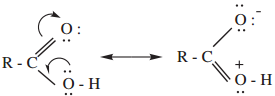
All these three p – orbitals being parallel overlap to form a π – bond which is partly delocalized between carbon and oxygen atom on one side, and carbon and oxygen of the OH group on the other side. In other words, RCOOH may be represented as a resonance hybrid of the following two canonical structures.

Structure of Carboxyl Group img 1

The carboxylic carbon is less electrophilic than carbonyl carbon because of the possible resonance structure. i.e., delocalisation of lone pair electrons from the oxygen in hydroxyl group.

Carboxyl group is a functional organic compound. In this structure of a carboxyl group, a carbon atom is attached to an oxygen atom with the help of a double bond. The carboxyl group ionizes and releases the H atom present in the hydroxyl group part as a free H+ ion or a proton.

Carboxylic acid, any of a class of organic compounds in which a carbon (C) atom is bonded to an oxygen (O) atom by a double bond and to a hydroxyl group (- OH) by a single bond. A fourth bond links the carbon atom to a hydrogen (H) atom or to some other univalent combining group.

The Carboxyl group contains a double bond of electronegative oxygen to a carbon atom. As a result, the polarity of a bond will increase. A compound containing a carboxyl group should possess hydrophilic centres with a high melting point and boiling point.

Carboxyl groups are functional groups with a carbon atom double-bonded to an oxygen atom and single bonded to a hydroxyl group. Ionized carboxyl groups act as acids, require less energy and are more stable. Electron sharing between oxygen atoms on ionized carboxyl groups increases stability.

A carboxyl group (COOH) is a functional group consisting of a carbonyl group (C=O) with a hydroxyl group (O-H) attached to the same carbon atom. Carboxylic acids are a class of molecules which are characterized by the presence of one carboxyl group.

When deprotonated, carboxylate anions are extremely stable due to resonance. This enables carboxyl groups to be influential components of fatty acids and amino acids, which can be further reacted to generate esters, proteins, lipids, and alcohols within the body.

A carboxyl group (COOH) is a functional group consisting of a carbonyl group (C=O) with a hydroxyl group (O-H) attached to the same carbon atom. Carboxyl groups have the formula -C(=O)OH, usually written as -COOH or CO2H.

Carboxyl groups are commonly found in amino acids, fatty acids, and other biomolecules. An example of a less hydrophilic group is the carbonyl group (C=O), an uncharged but polar (contains partial positive and partial negative charges) functional group.

Iupac Nomenclature of Carboxylic Acids

Find free online Chemistry Topics covering a broad range of concepts from research institutes around the world.

Iupac Nomenclature of Carboxylic Acids

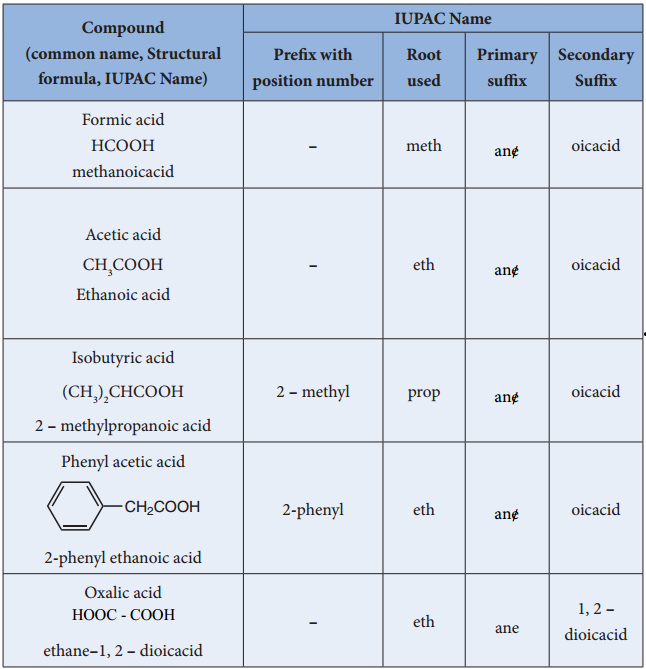
The IUPAC name of a carboxylic acid is derived from that of the longest carbon chain that contains the carboxyl group by dropping the final – e from the name of the parent alkane and adding the suffix – oic followed by the word “acid.” The chain is numbered beginning with the carbon of the carboxyl group.

Carboxylic acids are named by counting the number of carbons in the longest continuous chain including the carboxyl group and by replacing the suffix – ane of the corresponding alkane with – anoic acid.

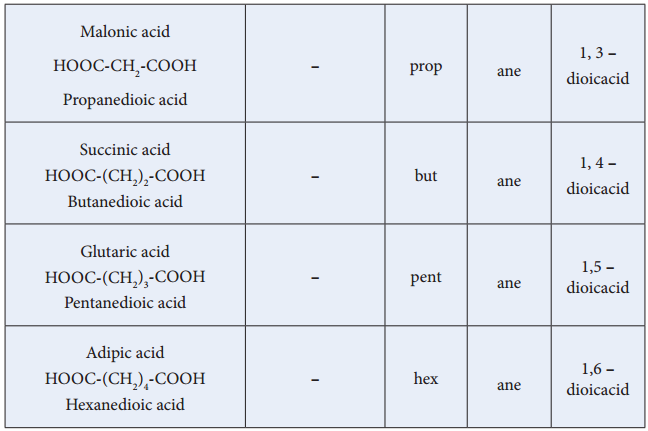
For molecules with two carboxylic acid groups the carbon chain in between the two carboxyl groups (including the carboxyl carbons) is used as the longest chain; the suffix – dioic acid is used. For molecules with more than two carboxylic acid groups, the carboxyl groups are named as carboxylic acid substituents.

Carboxylic acids are the most common type of organic acid. A carboxylic acid is an organic acid that contains a carboxyl group (C(=O)OH) attached to an R-group. The general formula of a carboxylic acid is R-COOH or R-CO2H, with R referring to the alkyl, alkenyl, aryl, or other group.

Carboxylic acids are commonly identified by their trivial names. They often have the suffix – ic acid. IUPAC-recommended names also exist; in this system, carboxylic acids have an -oic acid suffix. For example, butyric acid (C3H7CO2H) is butanoic acid by IUPAC guidelines.

Carboxylic acids occur in many common household items.

  • Vinegar contains acetic acid
  • Aspirin is acetylsalicylic acid
  • Vitamin C is ascorbic acid
  • Lemons contain citric acid, and
  • Spinach contains oxalic acid.

Carboxylic acids are weak acids because they only partially ionise in solution. Their solutions do not contain many hydrogen ions compared to a solution of a strong acid at the same concentration.

Carboxylic acids are very important biologically. The drug aspirin is a carboxylic acid, and some people are sensitive to its acidity. Carboxylic acids that have very long chains of carbon atoms attached to them are called fatty acids. As their name suggests, they are important in the formation of fat in the body.

Carboxylic acids are soluble in water. Carboxylic acids do not dimerise in water, but forms hydrogen bonds with water. Carboxylic acids are polar and due to the presence of the hydroxyl in the carboxyl group, they are able to form hydrogen bonds with water molecules.

Aspirin is both an aromatic carboxylic acid (red oval) and a phenyl ester of acetic acid (blue oval). While esterification will convert the carboxylic acid group to a methyl ester, transesterification (exchange of one alcohol portion of an ester for another alcohol) to afford methyl acetate 4 and methyl salicylate 3.

A carboxylic acid is an organic compound that contains a carboxyl group (C(=O)OH) attached to an R-group. The general formula of a carboxylic acid is R-COOH, with R referring to the alkyl group. Important examples include the amino acids and fatty acids.

Iupac Nomenclature of Carboxylic Acids img 1
Iupac Nomenclature of Carboxylic Acids img 1a

Uses of Aldehydes and Ketones

Find free online Chemistry Topics covering a broad range of concepts from research institutes around the world.

Uses of Aldehydes and Ketones

Formaldehyde

  1. 40% aqueous solution of formaldehyde is called formalin. It is used for preserving biological specimens.
  2. Formalin has hardening effct, hence it is used for tanning.
  3. Formalin is used in the production of thermo setting plastic known as bakelite, which is obtained by heating phenol with formalin.

Acetaldehye

  1. Acetaldehyde is used for silvering of mirrors
  2. Paraldehyde is used in medicine as a hypnotic.
  3. Acetaldehyde is used in the commercial preparation of number of organic compounds like acetic acid, ethyl acetate etc.,

Acetone

  1. Acetone is used as a solvent, in the manufacture of smokeless gun powder (cordite)
  2. It is used as a nail polish remover.
  3. It is used in the preparation of sulphonal, a hypnotic.
  4. It is used in the manufacture of thermosoftning plastic Perspex.

Benzaldehyde is Used

  1. As a flavouring agent
  2. In perfumes
  3. In dye intermediates
  4. As starting material for the synthesis of several other organic compounds like cinnamaldehyde, cinnamic acid, benzoyl chloride etc.

Aromatic Ketones

  1. Acetophenone has been used in perfumery and as a hypnotic under the name hypnone.
  2. Benzophenone is used in perfumery and in the preparation of benzhydrol eye drop.

Carboxylic Acids

Introduction

Carbon compounds containing a carboxyl function group, -COOH are called carboxylic acids. The Carboxyl group is the combination of carbonyl group Uses of Aldehydes and Ketones img 1 and the hydroxyl group (-OH).

However, carboxyl group has its own characteristic reaction. Carboxylic acids may be aliphatic (R – COOH) or aromatic (Ar – COOH) depending on the alkyl or aryl group attached to carboxylic carbon. Some higher members of aliphatic carboxylic acids (C12 to C18) known as fatty acids occur in natural fats as esters of glycerol.

Aldehydes are currently used in the production of resins and plastics. The simplest ketone, propanone, is commonly called acetone. Acetone is a common organic solvent that was one used in most nail polish removers, but has largely been replaced by other solvents.

It is used in tanning, preserving, and embalming and as a germicide, fungicide, and insecticide for plants and vegetables, but its largest application is in the production of certain polymeric materials.

  1. Ketone behaves as an excellent solvent for certain types of plastics and synthetic fibres.
  2. Acetone act as a paint thinner and a nail paint remover.
  3. It also is used for medicinal purposes such as chemical peeling procedure as well as acne treatments.

Example of Ketone

Ketones contain a carbonyl group (a carbon-oxygen double bond). The simplest ketone is acetone (R = R’ = methyl), with the formula CH3C(O)CH3. Many ketones are of great importance in biology and in industry. Examples include many sugars (ketoses), many steroids (e.g., testosterone), and the solvent acetone.

Example of Aldehyde

Aldehydes are given the same name but with the suffix – ic acid replaced by – aldehyde. Two examples are formaldehyde and benzaldehyde. As another example, the common name of CH2 = CHCHO, for which the IUPAC name is 2-propenal, is acrolein, a name derived from that of acrylic acid, the parent carboxylic acid.

Generally, the common names of ketones consist of the names of the groups attached to the carbonyl group, followed by the word ketone. (Note the similarity to the naming of ethers). Another name for acetone, then, is dimethyl ketone. The ketone with four carbon atoms is ethyl methyl ketone.

Common Ketones are Acetone and Methyl Ethyl Ketone. They have different uses. Acetone is known as fingernail polish remover but is also commonly used as lacquer and varnish solvent.

Aldehydes are made by oxidising primary alcohols. The aldehyde produced can be oxidised further to a carboxylic acid by the acidified potassium dichromate (VI) solution used as the oxidising agent. In order to stop at the aldehyde, you have to prevent this from happening.

Test for Aldehydes

Find free online Chemistry Topics covering a broad range of concepts from research institutes around the world.

Test for Aldehydes

(i) Tollens Reagent Test

Tollens reagent is an ammonical silver nitrate solution. When an aldehyde is warmed with Tollens reagent a bright silver mirror is produced due to the formation of silver metal. This reaction is also called silver mirror test for aldehydes.

Test for Aldehydes img 1

(ii) Fehlings Solution Test

Fehlings solution is prepared by mixing equal volumes of Fehlings solution ‘A’ containing aqueous copper sulphate and Fehlings solution ‘B’ containing alkaline solution of sodium potassium tartarate (Rochelle salt)

When aldehyde is warmed with Fehlings solution deep blue colour solution is changed to red precipitate of cuprous oxide.

Test for Aldehydes img 2

(iii) Benedict’s Solution Test:

Benedicts solution is a mixture of CuSO4 + sodium citrate + NaOH.Cu2+ is reduced by aldehyde to give red
precipitate of cuprous oxide.

Test for Aldehydes img 3

(iv) Schiff’ Reagent Test

Dilute solution of aldehydes when added to schiff’ reagent (Rosaniline hydrochloride dissolved in water and its red colour decolourised by passing SO2) yields its red colour. This is known as Schiff’ test for aldehydes. Ketones do not give this test. Acetone however gives a positive test but slowly.

An aldehyde is similar to a ketone, except that instead of two side groups connected to the carbonyl carbon, they have at least one hydrogen (RCOH). The simplest aldehyde is formaldehyde (HCOH), as it has two hydrogens connected to the carbonyl group.

Tollen’s reagent is a classical organic laboratory technique to test for the presence of an aldehyde. The reagent consists of silver (I) ions dissolved in dilute ammonia. When the aldehyde is oxidized, the silver (I) ions are reduced to silver metal.

The Schiff test is a chemical test used to check for the presence of aldehydes in a given analyte. This is done by reacting the analyte with a small quantity of a Schiff reagent (which is the product formed in certain dye formulation reactions such as the reaction between sodium bisulfite and fuchsin).

Aldehyde, any of a class of organic compounds in which a carbon atom shares a double bond with an oxygen atom, a single bond with a hydrogen atom, and a single bond with another atom or group of atoms (designated R in general chemical formulas and structure diagrams).

Fehling’s solution can be used to distinguish aldehyde vs ketone functional groups. The compound to be tested is added to the Fehling’s solution and the mixture is heated. Aldehydes are oxidized, giving a positive result, but ketones do not react, unless they are α-hydroxy ketones.

Take the given organic compound in a clean test tube. Add 1ml of chromic acid reagent to the given organic compound. The appearance of a green or blue colour precipitate indicates the presence of aldehydes.

Chemical Properties of Aldehydes and Ketones

Find free online Chemistry Topics covering a broad range of concepts from research institutes around the world.

Chemical Properties of Aldehydes and Ketones

A. Nucleophilic Addition Reactions

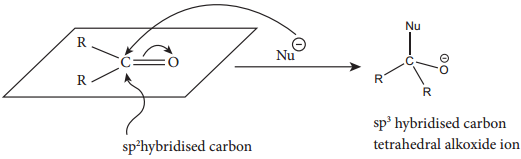
This reaction is the most common reactions of aldehydes and ketones. The carbonyl carbon carries a small degree of positive charge. Nucleophile such as CN can attack the carbonyl carbon and uses its lone pair to form a new carbon – nucleophile ‘σ’ bond, at the same time two electrons from the carbon – oxygen double bond move to the most electronegative oxygen atom. This results in the formation of an alkoxide ion. In this process, the hybridisation of carbon changes from sp2 to sp3.
Chemical Properties of Aldehydes and Ketones img 1

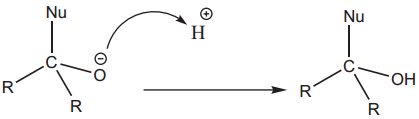
The tetrahedral intermediate can be protonated by water or an acid to form an alcohol.
Chemical Properties of Aldehydes and Ketones img 2

In general, aldehydes are more reactive than ketones towards nucleophilic addition reactions due to +I and steric effect of alkyl groups.

Examples

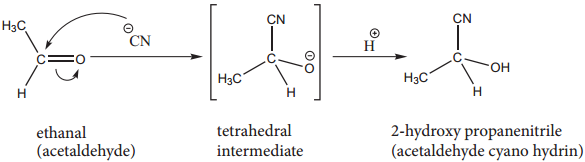
1. Addition of HCN

Attack of CN on carbonyl carbon followed by protonation gives cyanohydrins.
Chemical Properties of Aldehydes and Ketones img 3

The cyanohydrins can be converted into hydroxy acid by acid hydrolysis. Reduction of cyanohydrins gives hydroxy amines.

2. Addition of NaHSO3
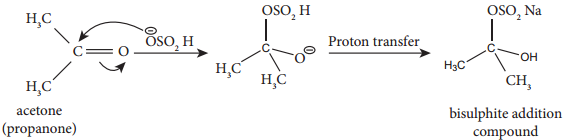
Chemical Properties of Aldehydes and Ketones img 4

This reaction finds application in the separation and purification of carbonyl compound. The bisulphate addition compound is water soluble and the solution is treated with mineral acid to regenerate the carbonyl compounds.

3. Addition of Alcohol

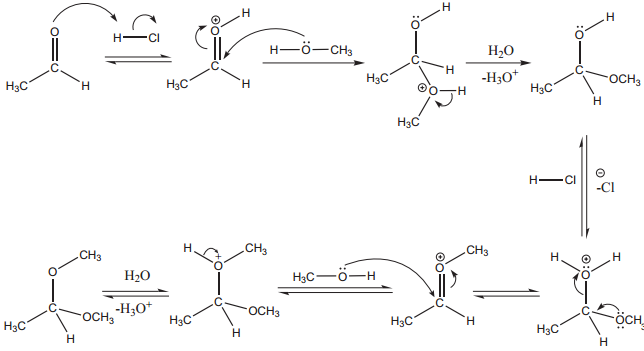
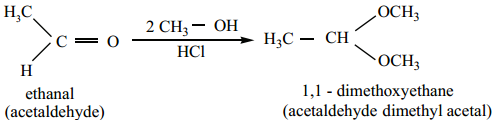
When aldehydes / ketones is treated with 2 equivalents of an alcohol in the presence of an acid catalyst to form acetals.

Example

When acetaldehyde is treated with 2 equivalent of methanol in presence of HCl, 1, 1, – dimethoxy ethane is obtained.
Chemical Properties of Aldehydes and Ketones img 5

Mechanism

Chemical Properties of Aldehydes and Ketones img 6

4. Addition of Ammonia and its Derivatives

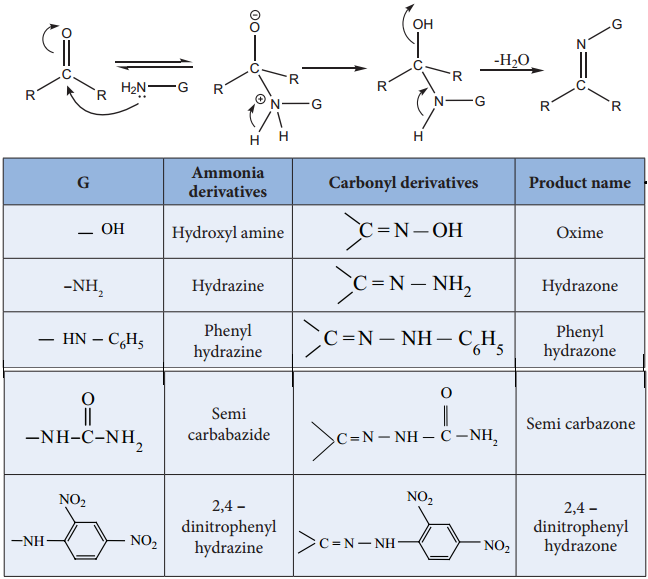
When the nucleophiles, such as ammonia and its derivative image 6 is treated with carbonyl compound, nuceophilic addition takes place, the carbonyl oxygen atom is protonated and then elimination takes place to form carbon – nitrogen double bond image 7

When G – alkyl, aryl, OH, NH2, C6H5NH, NHCONH2 etc…
Chemical Properties of Aldehydes and Ketones img 7

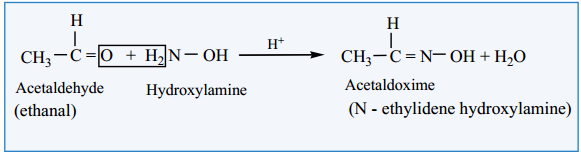
(i) Reaction with Hydroxyl Amine

Aldehyde and ketones react with hydroxylamine to form oxime.

Example:
Chemical Properties of Aldehydes and Ketones img 8

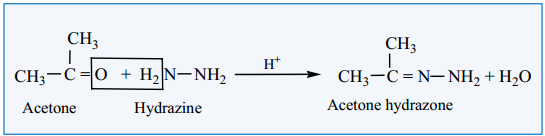
(ii) Reaction with Hydrazine

Aldehydes and ketones react with hydrazine to form hydrazone.

Example:
Chemical Properties of Aldehydes and Ketones img 9

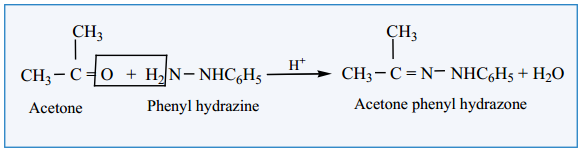
(iii) Reaction with Phenyl Hydrazine

Aldehydes and ketones react with phenyl hydrazine to form phenyl hydrazone.

Example:
Chemical Properties of Aldehydes and Ketones img 10

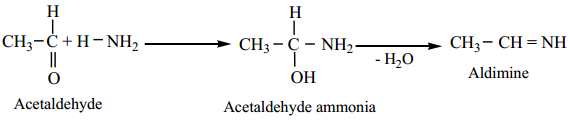
5. Reaction with NH3

(i) Aliphatic aldehydes (except formaldehyde) react with an ethereal solution of ammonia to form aldimines.
Chemical Properties of Aldehydes and Ketones img 11

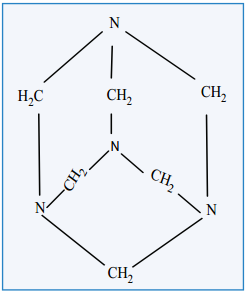
(ii) Formaldehyde reacts with ammonia to form hexa methylene tetramine, which is also known as Urotropine.

Structure
Chemical Properties of Aldehydes and Ketones img 12

Uses

1. Urotropine is used as a medicine to treat urinary infection.

2. Nitration of Urotropine under controlled condition gives an explosive RDX (Research and development explosive). It is also called cyclonite or cyclotri methylene trinitramine.

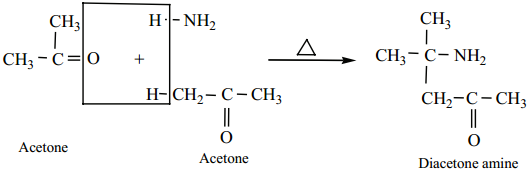
3. Acetone reacts with ammonia to form diacetone amine.
Chemical Properties of Aldehydes and Ketones img 13

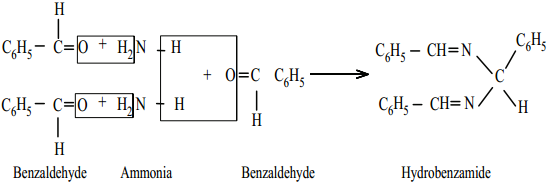
4. Benzaldehyde form a complex condensation product with ammonia.
Chemical Properties of Aldehydes and Ketones img 14

B. Oxidation of Aldehydes and Ketones

(a) Oxidation of Aldehydes

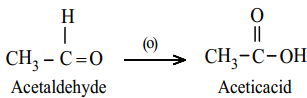
Aldehydes are easily oxidised to carboxylic acid containing the same number of carbon atom, as in parent aldehyde. The common oxidising agents are acidified K2Cr2O7, acidic or alkaline KMnO4 or chromic oxide.

Example
Chemical Properties of Aldehydes and Ketones img 15

(b) Oxidation of Ketone

Ketones are not easily oxidised. Under drastic condition or with powerful oxidising agent like Con. HNO3, H+/KMnO4, H+/K2Cr2O7, cleavage of carbon-carbon bond takes place to give a mixture of carboxylic acids having less number of carbon atom than the parent ketone.

Chemical Properties of Aldehydes and Ketones img 16

The oxidation of unsymmetrical ketones is governed by Popoff ’s rule. It states that during the oxidation of an unsymmetrical ketone, a (C-CO) bond is cleaved in such a way that the keto group stays with the smaller alkyl group.

Chemical Properties of Aldehydes and Ketones img 17

C. Reduction Reactions

(i) Reduction to Alcohols

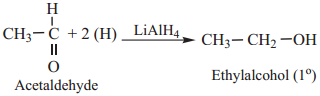
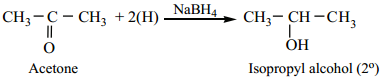
We have already learnt that aldehydes and ketones can be easily reduced to primary and secondary alcohols respectively. The most commonly used reducing agents are Lithium Aluminium hydride (LiAlH4), and Sodium borohydride (NaBH4).

(a) Aldehyde are Reduced to Primary Alcohols

Example
Chemical Properties of Aldehydes and Ketones img 18

(b) Ketone are Reduced to Secondary Alcohols.

Example
Chemical Properties of Aldehydes and Ketones img 19

The above reactions can also be carried out with hydrogen in the presence of metal catalyst like Pt, Pd, or Ni. LiAlH4 and NaBH4 do not reduce isolated carbon – carbon double bonds and double bond of benzene rings. In case of α, β unsaturated aldehyde and ketones, LiAlH4 reduces only C = O group leaving C = C bond as such.

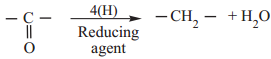
(ii) Reduction to Hydrocarbon

The carbonyl group of aldehydes and ketones can be reduced to methylene group using suitable reducing agents to give hydrocarbons.
Chemical Properties of Aldehydes and Ketones img 20

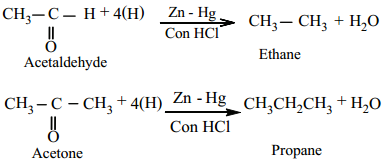
(a) Clemmensen Reduction

Aldehydes and Ketones when heated with zinc amalgam and concentrated hydrochloric acid gives hydrocarbons.

Example
Chemical Properties of Aldehydes and Ketones img 21

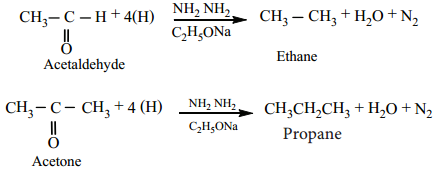
(b) Wolf Kishner Reduction

Aldehydes and Ketones when heated with hydrazine (NH2NH2) and sodium ethoxide, hydrocarbons are formed Hydrazine acts as a reducing agent and sodium ethoxide as a catalyst.

Example
Chemical Properties of Aldehydes and Ketones img 22

Aldehyde (or) ketones is first converted to its hydrazone which on heating with strong base gives hydrocarbons.

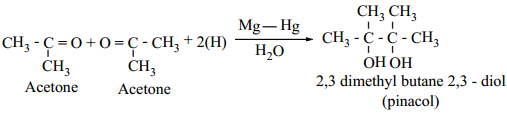
(iii) Reduction to Pinacols:

Ketones, on reduction with magnesium amalgam and water, are reduced to symmetrical diols known as pinacol.
Chemical Properties of Aldehydes and Ketones img 23

D. Haloform Reaction

Acetaldehyde and methyl ketones, containing image 26 group, when treated with halogen and alkali give the corresponding haloform. This is known as Haloform reaction.

Chemical Properties of Aldehydes and Ketones img 24

E. Reaction Involving Alkylgroup

(i) Aldol Condensation

The carbon attached to carbonyl carbon is called α – carbon and the hydrogen atom attached to α – carbon is called α – hydrogen.

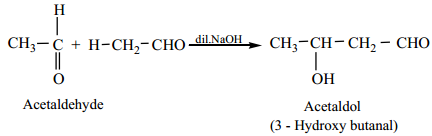
In presence of dilute base NaOH, or KOH, two molecules of an aldehyde or ketone having α – hydrogen add together to give β – hydroxyl aldehyde (aldol) or β – hydroxyl ketone (ketol). The reaction is called aldol condensation reaction. The aldol or ketol readily loses water to give α, β – unsaturated compounds which are aldol condensation products.

(a) Acetaldehyde when warmed with dil NaOH gives β – hydroxyl butyraldehyde (acetaldol)
Chemical Properties of Aldehydes and Ketones img 25

Mechanism

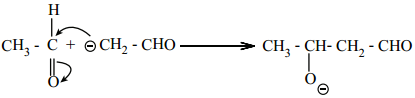
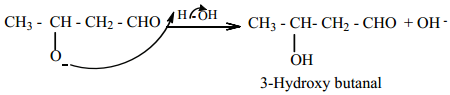
The mechanism of aldol condensation of acetaldehyde takes place in three steps.

Step 1:

The carbanion is formed as the α – hydrogen atom is removed as a proton by the base.

Chemical Properties of Aldehydes and Ketones img 26

Step 2:

The carbanion attacks the carbonyl carbon of another unionized aldehyde to form an alkoxide ion.
Chemical Properties of Aldehydes and Ketones img 27

Step 3:

The alkoxide ion formed is protonated by water to form aldol.
Chemical Properties of Aldehydes and Ketones img 28

The aldol rapidly undergoes dehydration on heating with acid to form α – β unsaturated aldehyde.

Chemical Properties of Aldehydes and Ketones img 29

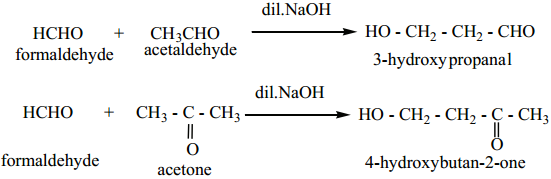
(ii) Crossed Aldol Condensation

Aldol condensation can also take place between two different aldehydes or ketones or between one aldehyde and one ketone such an aldol condensation is called crossed or mixed aldol condensation. This reaction is not very useful as the product is usually a mixture of all possible condensation products and cannot be separated easily.

Example
Chemical Properties of Aldehydes and Ketones img 30

F. Some Important Reactions of Benzaldehyde

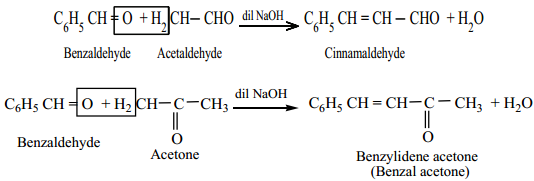
(i) Claisen – Schmidt Condensation

Benzaldehye condenses with aliphatic aldehyde or methyl ketone in the presence of dil. alkali at room temperature to form unsaturated aldehyde or ketone. This type of reaction is called Claisen – Schmidt condensation.

Example
Chemical Properties of Aldehydes and Ketones img 31

(ii) Cannizaro Reaction

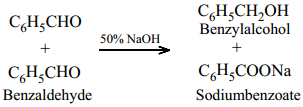
In the presence of concentrated aqueous or alcoholic alkali, aldehydes which do not have α – hydrogen atom undergo self oxidation and reduction (disproportionation) to give a mixture of alcohol and a salt of carboxylic acid. This reaction is called Cannizaro reaction.

Benzaldehyde on treatment with concentrated NaOH (50%) gives benzyl alcohol and sodium benzoate.
Chemical Properties of Aldehydes and Ketones img 32

This reaction is an example disproportionation reaction

Mechanism of Cannizaro Reaction

Cannizaro reaction involves three steps.

Step 1:

Attack of OH on the carbonyl carbon.

Chemical Properties of Aldehydes and Ketones img 33

Step 2:

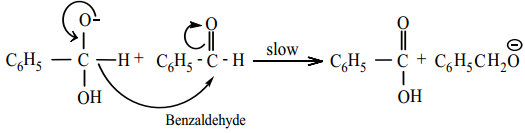
Hydride ion transfer

Chemical Properties of Aldehydes and Ketones img 34

Step 3:

Acid – base reaction.

Chemical Properties of Aldehydes and Ketones img 35

Cannizaro reaction is a characteristic of aldehyde having no α – hydrogen.

Crossed Cannizaro Reaction

When Cannizaro reaction takes place between two different aldehydes (neither containing an α hydrogen atom), the reaction is called as crossed cannizaro reaction.

Chemical Properties of Aldehydes and Ketones img 36

In crossed cannizaro reaction more reactive aldehyde is oxidized and less reactive aldehyde is reduced.

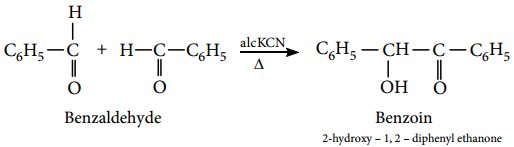
3. Benzoin Condensation

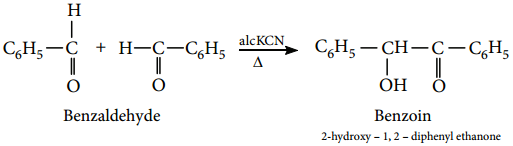
The Benzoin condensation involves the treatment of an aromatic aldehyde with aqueous alcoholic KCN. The products are a hydroxy ketone.

Example

Benzaldehyde reacts with alcoholic KCN to form benzoin
Chemical Properties of Aldehydes and Ketones img 37

4. Perkins’ Reaction

When an aromatic aldehyde is heated with an aliphatic acid anhydride in the presence of the sodium salt of the acid corresponding to the anhydride, condensation takes place and an α, β unsaturated acid is obtained. This reaction is known as Perkin’s reaction.

Example
Chemical Properties of Aldehydes and Ketones img 38

5. Knoevenagal Reaction

Chemical Properties of Aldehydes and Ketones img 39

Benzaldehyde condenses with malonic acid in presence of pyridine forming cinnamic acid, Pyridine act as the basic catalyst.

6. Reaction with Amine

Aromatic aldehydes react with primary amines (aliphatic or aromatic) in the presence of an acid to form schiff’s base.

Example

Chemical Properties of Aldehydes and Ketones img 40

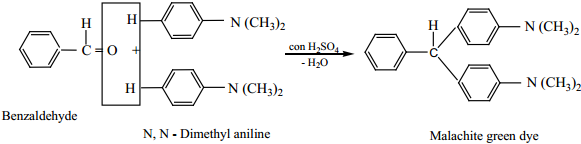
7. Condensation with Tertiary Aromatic Amines

Benzaldehyde condenses with tertiary aromatic amines like N, N – dimethyl aniline in the presence of strong acids to form triphenyl methane dye.

Example
Chemical Properties of Aldehydes and Ketones img 41

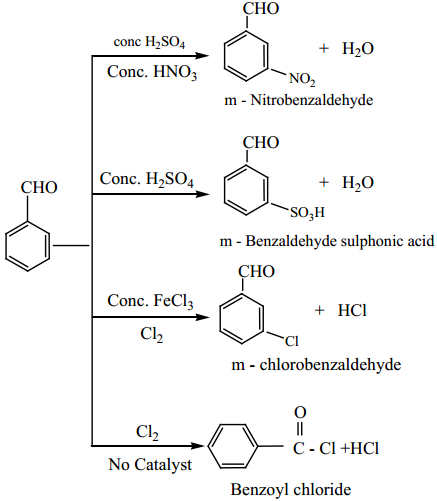
8. Electrophilic Substitution Reactions of Benzaldehyde
Chemical Properties of Aldehydes and Ketones img 42

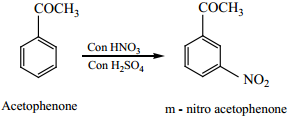
Electrophilic Substitution Reaction of Acetophenone

Acetophenone reacts with Nitrating mixture to form m – nitroacetophenone.
Chemical Properties of Aldehydes and Ketones img 43