Cyanides and Isocyanides

Find free online Chemistry Topics covering a broad range of concepts from research institutes around the world.

Cyanides and Isocyanides

These are the derivatives of hydrocyanic acid (HCN), and is known to exist in two tautomeric forms

Cyanides and Isocyanides img 1

Two types of alkyl derivatives can be obtained. Those derived by replacement of H – atom of hydrogen cyanide by the alkyl groups are known as alkyl cyanides (R-C≡N) and those obtained by the replacement of H – atom of hydrogen isocyanide are known as alkyl isocyanides

Cyanides and Isocyanides img 2

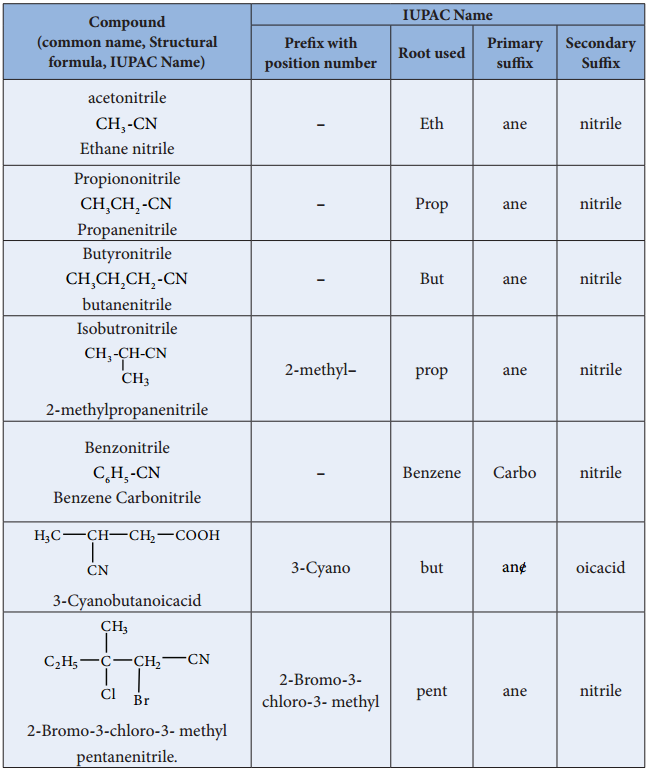
In IUPAC system, alkyl cyanides are named as “alkanenitriles” whereas aryl cyanides as “arenecarbonitrile”.

Table: Nomenclature of Cyanides

Cyanides and Isocyanides img 3

Methods of Preparation of Cyanides

1. From Alkyl Halides

When alkyl halides are treated in the solution NaCN (or) KCN, alkyl cyanides are obtained. In this reaction a new carbon – carbon bond is formed.

Example

Cyanides and Isocyanides img 4

Aryl cyanide cannot be prepared in this method because of their less reactivity towards nucleophilic substitution. Aryl cyanides are prepared using Sandmeyers reactions.

2. By Dehydration of Primary Amides and Aldoximes with P2O5

Cyanides and Isocyanides img 5

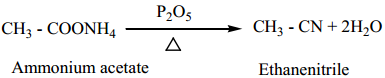
3. By dehydration of ammonium carboxylates with P2O5

Cyanides and Isocyanides img 6

This method suitable for large scale preparation of alkyl cyanides.

4. From Grignard Reagent

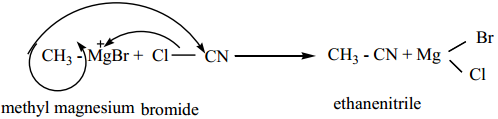
Methyl magnesium bromide on treatment with cyanogen chloride (Cl – CN) forms ethanenitrile.

Cyanides and Isocyanides img 7

Properties of Cyanides

Physical Properties

The lower members (up to C14) are colourless liquids with a strong characteristic sweet smell. The higher members are crystalline solids, They are moderately soluble in water but freely souble in organic solvents. They are poisonous. They have higher boiling points than analogous acetylenes due to their high dipole moments.

Chemical Properties

1. Hydrolysis

On boiling with alkali (or) a dilute mineral acid, the cyanides are hydrolysed to give carboxylic acids.

For Example

Cyanides and Isocyanides img 8

2. Reduction

On reduction with LiAlH4 2(or) Ni/H2, alkyl cyanides yields primary amines.

Cyanides and Isocyanides img 9

3. Condensation Reaction

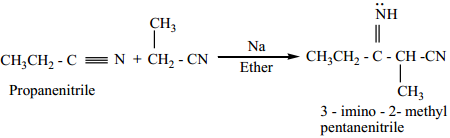
(a) Thorpe Nitrile Condensation

Self condensation of two molecules of alkyl nitrile (containing α-H atom) in the presence of sodium to form iminonitrile.

Cyanides and Isocyanides img 10

(b) The nitriles containing α – hydrogen also undergo condensation with esters in the presence of sodamide in ether to form ketonitriles. This reaction is known as “Levine and Hauser” acetylation.

This reaction involves replacement of ethoxy (OC2H5) group by methylnitrile (- CH2CN) group and
is called as cyanomethylation reaction.

Cyanides and Isocyanides img 11

Alkyl Isocyanides (Carbylamines)

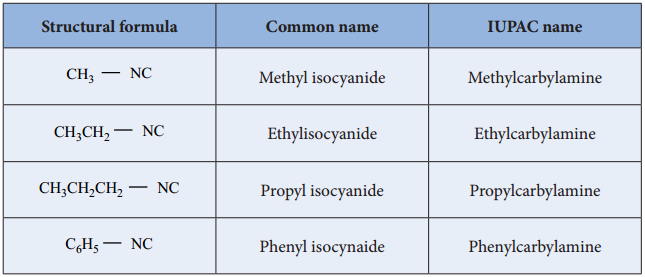
Nomenclature of Isocyanides

They are commonly named as Alkyl isocyanides. The IUPAC system names them as alkylcarbylamines

Table: Nomenclature of Alkylisocyanides

Cyanides and Isocyanides img a

Methods of Preparation of Isocyanides

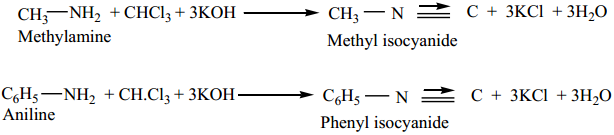
1. From Primary Amines (Carbylamines Reaction)

Both aromatic as well as aliphatic amines on treatment with CHCl3 in the presence of KOH give carbylamines.

Cyanides and Isocyanides img 12

2. From Alkyl Halides

Ethyl bromide on heating with ethanolic solution of AgCN give ethyl isocyanide as major product and ethyl cyanide as minor product.

Cyanides and Isocyanides img 13

3. From N – alkyl formamide. By reaction with POCl3 in pyridine.

Cyanides and Isocyanides img 14

Properties of Isocyanides

Physical Properties

  • They are colourless, highly unpleasant smelling volatile liquids and are much more poisonous than the cyanides.
  • They are only slightly soluble in water but are soluble in organic solvents.
  • They are relatively less polar than alkyl cyanides. Ths, their melting point and boiling point are lower than cyanides.

Chemical Properties

1. Hydrolysis:

Alkyl isocyanides are not hydrolysed by alkalies. However they are hydrolysed with dilute mineral acids to give primary amines and formic acids.

Cyanides and Isocyanides img 15

2. Reduction:

When reduced catalytically (or) by nascent hydrogen, they give secondary amines.

Cyanides and Isocyanides img 16

3. Isomerisation:

When Alkyl isocyanides and heated at 250°C, they change into the more stable, isomeric cyanides

Cyanides and Isocyanides img 17

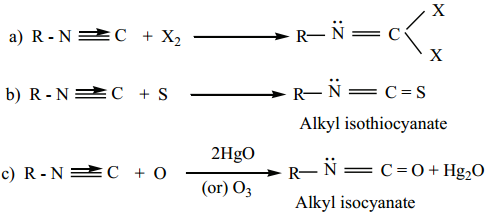
4. Addition Reaction:

Alkyl isocyanides add on halogen, sulphur, and oxygen to form the corresponding addition compounds.

Cyanides and Isocyanides img 18

Uses of Organic Nitrogen Compounds

Nitroalkanes

  1. Nitromethane is used as a fuel for cars
  2. Chloropicrin (CCl3NO2) is used as an insecticide
  3. Nitroethane is used as a fuel additive and precursor to explosive and they are good solvents for polymers, cellulose ester, synthetic rubber and dyes etc.,
  4. 4% solution of ethylnitrite in alcohol is known as sweet spirit of nitre and is used as diuretic.

Nitrobenzene

  1. Nitrobenzene is used to produce lubricating oils in motors and machinery.
  2. It is used in the manufacture of dyes, drugs, pesticides, synthetic rubber, aniline and explosives like TNT, TNB.

Cyanides and Isocyanides

1. Alkyl cyanides are important intermediates in the organic synthesis of larger number of compounds like acids, amides, esters, amines etc.

2. Nitriles are used in textile industry in the manufacture of nitrile rubber and also as a solvent particularly in perfume industry.

Organic Compounds of Diazonium Salts

Find free online Chemistry Topics covering a broad range of concepts from research institutes around the world.

Organic Compounds of Diazonium Salts

We have just learnt that aromatic amines on treatment with (NaNO2+HCl) gives diazonium salts. They are stable only for a short time and hence are used immediately after preparation.

Example

Diazonium Salts img 1

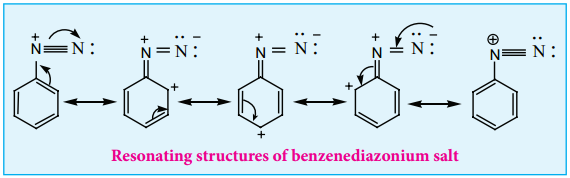
Resonance Structure

The stability of arene diazonium salt is due to the dispersal of the positive charge over the benzene ring.

Diazonium Salts img 2

Method of Preparation of Diazonium Salts

We have already learnt that benzene diazonium chloride is prepared by the reaction of aniline with nitrous acid (Which is produced by the reaction of NaNO2 and HCl) at 273 – 278K

Physical Properties

  • Benzene diazonium chloride is a colourless, crystalline solid.
  • These are readily soluble in water and stable in cold water. However it reacts with warm water.
  • Their aqueous solutions are neutral to litmus and conduct electricity due to the presence to ions.
  • Benzenediazonium tetrafloro borate is soluble in water and stable at room temperature.

Chemical Reactions

Benzene diazoniumchloride gives two types of chemical reactions

A. Replacement reactions involving loss of nitrogen

In these reactions diazonium group is replaced by nucleophiles such as X, CN, H, OH
etc.,

B. Reactions involving retention of diazogroup. Coupling reaction.

A. Replacement Reactions Involving loss of Nitrogen

1. Replacement by Hydrogen

Benzene diazonium chloride on reduction with mild reducing agents like hypophosphrous acid (phosphinic acid) or ethanol in the presence of cuprous ion gives benzene. This reaction proceeds through a free-radical chain mechanism.

Diazonium Salts img 3

2. Replacement by Chlorine, Bromine, Cyanide group

(a) Sandmeyer Reaction

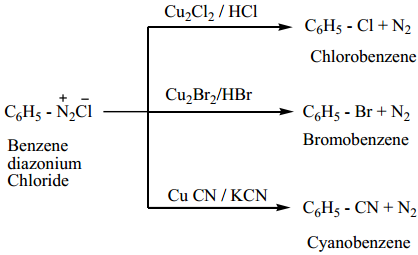
On mixing freshly prepared solution of benzene diazonium chloride with cuprous halides (chlorides and bromides), aryl halides are obtained. This reaction is called Sandmeyer reaction. When diazonium salts are treated with cuprous cyanide, cyanobenzene is obtained.

Diazonium Salts img 4

(b) Gattermann Reaction

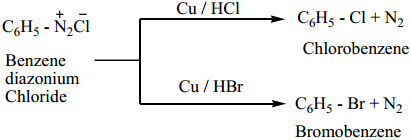
Conversion of benzene diazonium chloride into chloro/bromo arenes can also be effected using hydrochloric/hydrobromic acid and copper powder. This reaction is called Gattermann reaction.

Diazonium Salts img 5

The yield in Sandmeyer reaction is found to be better than the Gattermann reaction.

3. Replacement by Iodine

Aqueous solution of benzene diazonium chloride is warmed with KI to form iodobenzene

Diazonium Salts img 6

4. Replacement of Flourine (Baltz – schiemann reaction)

When benzene diazonium chloride is treated with floroboric acid, benezene diazonium tetra flouroborate is precipitated which on heating decomposes to give flourobenzene.

Diazonium Salts img 7

5. Replacement by Hydroxyl Group

Benzene diazonium chloride solution is added slowly to a large volume of boiling water to get phenol.

Diazonium Salts img 8

6. Replacement by Nitrogroup

When diazonium flouroborate is heated with aqueous sodium nitrite solution in the presence of copper, the diazonium group is replaced by – NO2 group.

Diazonium Salts img 9

7. Replacement by Aryl Group (Gomberg Reaction)

Benzene diazonium chloride reacts with benzene in the presence of sodium hydroxide to give biphenyl. This reaction in known as the Gomberg reaction.

Diazonium Salts img 10

8. Replacement by Carboxylic Acid Group

When diazonium flouroborate is heated with acetic acid, benzoic acid is obtained. This reaction is used to convert the of aliphatic carboxylic acid into aromatic carboxylic acid.

Diazonium Salts img 11

B. Reactions Involving Retention of Diazo Group

9. Reduction to Hydrazines

Certain reducing agents like SnCl2/HCl ; Zn dust/CH3COOH, sodium hydrosulphite, sodium sulphite etc. reduce benzene diazonium chloride to phenyl hydrazine.

Diazonium Salts img 12

10. Coupling Reactions

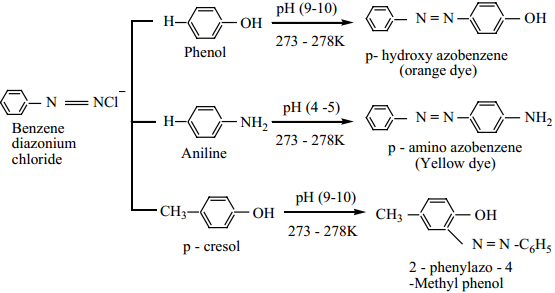
Benzene diazonium chloride reacts with electron rich aromatic compounds like phenol, aniline to form brightly coloured azo compounds. Coupling generally occurs at the para position. If para position is occupied then coupling occurs at the ortho position. Coupling tendency is enhanced if an electron donating group is present at the para – position to – N2Cl group. This is an electrophilic substitution.

Diazonium Salts img 13

Aryl flourides and iodides cannot be prepared by direct halogenation and the cyano group cannot be introduced by nucleophilic substitution of chlorine in chlorbenzene. For introducing such a halide group, cyano group -OH, NO2 etc.. benzenediazonium chloride is a very good intermediate Diazo compounds obtained from the coupling reactions of diazonium salts are coloured and are used as dyes.

Amines – Classification

Find free online Chemistry Topics covering a broad range of concepts from research institutes around the world.

Amines – Classification

Amines – classification
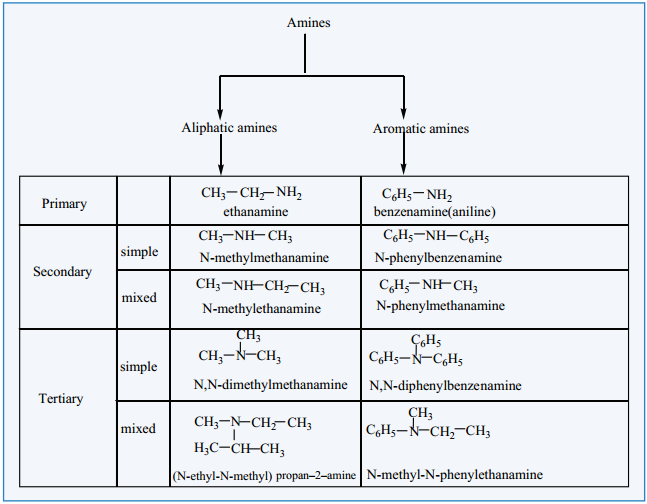
Amines - Classification img 1

Nomenclature

(a) Common System:

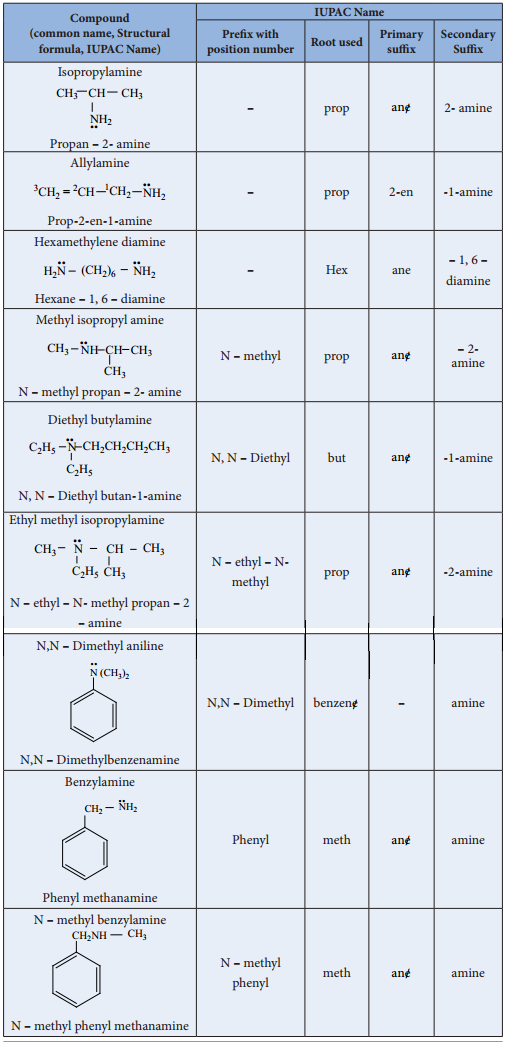
In common system, an aliphatic amine is named by prefixing alkyl group to amine. The prefixes di-,tri-, and tetra-, are used to describe two, three (or) four same substituent’s.

(b) IUPAC System:
Amines - Classification img 2

Structure of Amines

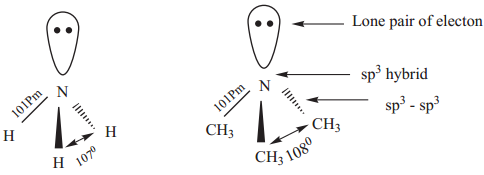
Like, ammonia, nitrogen atom of amines is trivalent and carries a lone pair of electron and sp3 hybridised, out of the four sp3 hybridised orbitals of nitrogen, three sp3 orbitals overlap with orbitals of hydrogen (or) alkyl groups of carbon, the fourth sp3 orbital contains a lone pair of electron.

Hence, amines posses pyramidal geometry. Due to presence of lone pair of electron C-N-H (or) C-N-C bond angle is less than the normal tetrahedral bond angle 109.50. For example, the C-N-C bond angle of trimethylamine is 1080 which is lower than tetrahedral angle and higher than the H-N-H bond angle of 107˚. This increase is due to the repulsion between the bulky methyl groups.
Amines - Classification img 3

General Methods of Preparation Amines

Aliphatic and aromatic amines are prepared by the following methods.

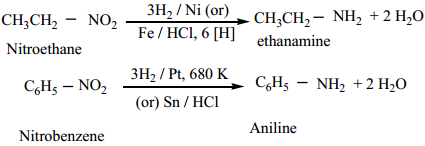
1. From Nitro Compounds

Reduction of Nitro compounds using H2/Ni (or) Sn/HCl or Pd/H2 gives primary amines.
Amines - Classification img 4

2. From Nitriles

(a) Reduction of alkyl or aryl cyanides with H2/Ni (or) LiAlH4 (or) Na/C2H5OH gives primary amines. The reduction reaction in which Na/C2H5OH is used as a reducing agent is called mendius reaction.

Amines - Classification img 5

(b) Reduction of isocyanides with sodium amalgam / C2H2OH gives secondary amines

Amines - Classification img 6

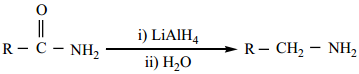
3. From Amides

(a) Reduction of amides with LiAlH4 gives amines
Amines - Classification img 7

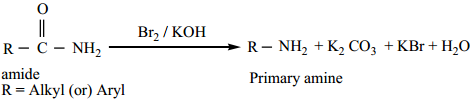
(b) Hoffann’s Degradation Reaction

When Amides are treated with bromine in the presence of aqueous or ethanolic solution of KOH, primary amines with one carbon atom less than the parent amides are obtained.

Example:
Amines - Classification img 8

4. From Alkyl Halides

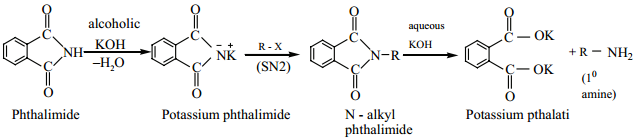
(a) Gabriel Phthalimide Synthesis

Gabriel synthesis is used for the preparation of Aliphatic primary amines. Phthalimide on treatment with ethanolic KOH forms potassium salt of phthalimide which on heating with alkyl halide followed by alkaline hydrolysis gives primary amine. Aniline cannot be prepared by this method because the arylhalides do not undergo nucleophilic substitution with the anion formed by phthalimide.
Amines - Classification img 9

(b) Hoffann’s Ammonolysis

When Alkyl halides (or) benzylhalides are heated with alcoholic ammonia in a sealed tube, mixtures of 1°, 2° and 3° amines and quaternary ammonium salts are obtained.

Amines - Classification img 10

This is a nucleophilic substitution, the halide ion of alkyl halide is substituted by the – NH2 group. The product primary amine so formed can also has a tendency to act as a nucleophile and hence if excess alkyl halide is taken, further nucleophilic substitution takes place leading to the formation of quarternary ammonium salt. However, if the process is carried out with excess ammonia, primary amine is obtained as the major product.

The order of reactivity of alkylhalides with amines.

RI > RBr > RCl

(c) Alkyl halide can also be converted to primary amine by treating it with sodium azide (NaN3) followed by the reduction using lithium aluminium hydride.

Amines - Classification img 11

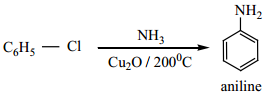
(d) Preparation of Aniline from Chlorobenzene

When chlorobenzene is heated with alcoholic ammonia, aniline is obtained.
Amines - Classification img 12

5. Ammonolysis of Hydroxyl Compounds

(a) when vapour of an alcohol and ammonia are passed over alumina, W2O5 (or) silica at 400°C, all types of
amines are formed. This method is called Sabatier – Mailhe method.

Amines - Classification img 13

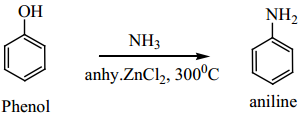
(b) Phenol reacts with ammonia at 300°C in the presence of anhydrous ZnCl2 to give aniline
Amines - Classification img 14

Properties of Amines

1. Physical State and Smell

The lower aliphatic amines (C1 – C2) are colourless gases and have ammonia like smell and those with four or
more carbons are volatile liquids with fish like smell. Aniline and other arylamines are usually colourless but when exposed to air they become coloured due to oxidation.

2. Boiling Point

Due to the polar nature of primary and secondary amines, can form intermolecular hydrogen bonds using their lone pair of electorn on nitrogen atom. There is no such H-bonding in tertiary amines.
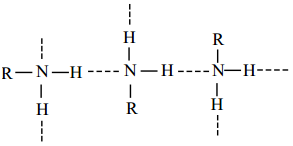
Amines - Classification img 15

The boiling point of various amines follows the order,
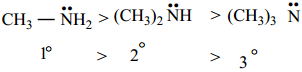
Amines - Classification img 16

Amines have lower boiling point than alcohols because nitrogen has lower electronegative value than oxygen and hence the N-H bond is less polar than -OH bond.

Table Boiling points of amines, alcohols and alkanes of comparable molecular weight.

Compound

Molecular Mass

Boiling Point (K)

CH3(CH3)2NH259321
C2H5-NH-CH359308
(CH3)3N59277
CH3CH(OH)CH360355
CH3CH2CH2CH358272.5

Solubility

Lower aliphatic amines are soluble in water, because they can form hydrogen bonds with water molecules. However, solubility decreases with increase in molecular mass of amines due to increase in size of the hydrophobic alkyl group. Amines are insoluble in water but readily soluble in organic solvents like benzene, ether etc.

Chemical Properties

The lone pair of electrons on nitrogen atom in amines makes them basic as well as nucleophilic. They react with acids to form salts and also react with electrophiles. They form salts with mineral acids

Example:

Amines - Classification img 17

Expression for Basic Strength of Amines

In the aqueous solutions, the following equilibrium exists and it lies far to the left hence amines are weak bases compared to NaOH.
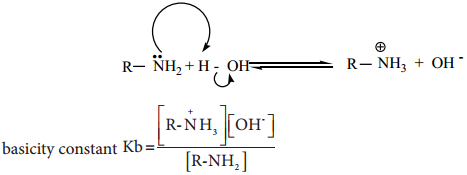
Amines - Classification img 18

The basicity constant Kb gives a measure of the extent to which the amine accepts the hydrogen ion (H+) from water, we know that,

Larger the value of Kb or smaller the value of pKb, stronger is the base.

Table: pKb values of Amines in Aqueous solution. (pKb for NH3 is 4.74)
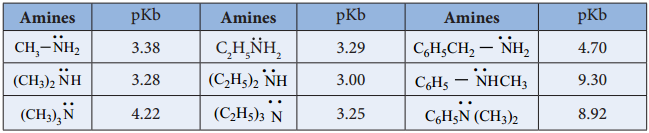
Amines - Classification img 19

Influence of Structure on Basic Character of Amines

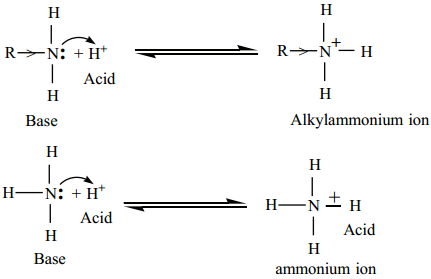
The factors which increase the availability of electron pair on nitrogen for sharing with an acid will increase the basic character of an amine. When a +I group like an alkyl group is attached to the nitrogen increase the electron density on nitrogen which makes the electron pair readily available for protonation.

(a) Hence alkyl amines are stronger bases than ammonia.

Consider the reaction of an alkyl amine image 19 with a proton
Amines - Classification img 20

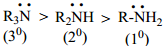
The electron – releasing alkyl group R pushes electron towards nitrogen in the amine Amines - Classification img 21 and provide unshared electron pair more available for sharing with proton. Therefore, the expected order of basicity of aliphatic amines (in gas phase) is
Amines - Classification img 22

The above order is not regular in their aqueous solution as evident by their pKb values given in the table.

To compare the basicity of amines, the inductive effect, solvation effect, steric hindrance, etc., should be taken into consideration.

Solvation Effect

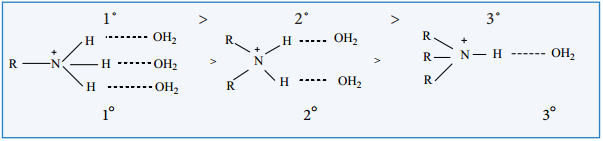
In the aqueous solution, the substituted ammonium cations get stabilized not only by electron releasing (+I) effect of the alkyl group but also by solvation with water molecules. The greater the size of the ion, lesser will be the solvation.

The order of stability of the protonated amines is greater the size of the ion, lesser is the solvation and lesser is the stability. In case of secondary and tertiary amines, due to steric hindrance, the alkyl groups decrease the number of water molecules that can approach the protonated amine. Therefore the order of basicity is,
Amines - Classification img 23

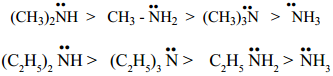
Based on these effects we can conclude that the order of basic strength in case of alkyl substituted amines in aqueous solution is
Amines - Classification img 24

The resultant of +I effect, steric effect and hydration effect cause the 2° amine, more basic.

Basic Strength of Aniline

In aniline, the NH2 group is directly attached to the benzene ring. The lone pair of electron on nitrogen atom in aniline gets delocalised over the benzene ring and hence it is less available for protonation makes the, aromatic amines (aniline) less basic than NH3.

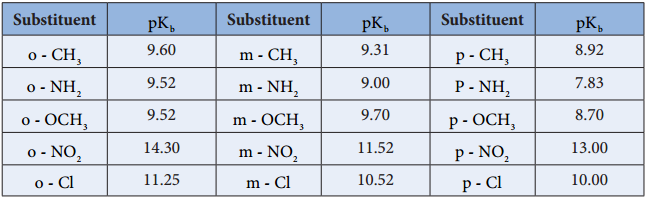
In case of substituted aniline, electron releasing groups like -CH3, -OCH3, -NH2 increase the basic strength and electron withdrawing group like -NO2,-X,-COOH decrease the basic strength.

Table pKb’s of substituted anilines (pKb value of aniline is 9.376)
Amines - Classification img 25

The relative basicity of amines follows the below mentioned order

Alkyl amines > Aralkyl amines > Ammonia > N – Aralkyl amines > Aryl amines

Chemical Properties of Amines

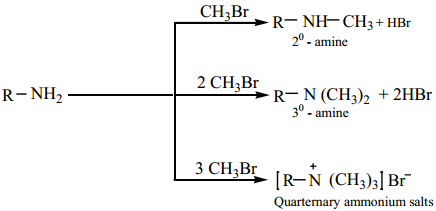
1. Alkylation

Amines reacts with alkyl halides to give successively 2° and 3° amines and quaternary ammonium salts.
Amines - Classification img 26

2. Acylation

Aliphatic/aromatic primary and secondary amines react with acetyl chloride (or) acetic anhydride in presence of pyridine to form N – alkyl acetamide.

Example

Amines - Classification img 27

3. Schotten – Baumann Reaction

Aniline reacts with benzoylchloride (C6H5COCl) in the presence of NaOH to give N – phenyl benzamide. This reaction is known as Schotten – Baumann reaction. The acylation and benzoylation are nucleophilic substitutions.

Amines - Classification img 28

4. Reaction With Nitrous Acid

Three classes of amines react differently with nitrous acid which is prepared in situ from a mixture of NaNO2 and HCl.

(a) Primary Amines

(i) Ethylamine reacts with nitrous acid to give ethyl diazonium chloride, which is unstable and it is converted to ethanol by liberating N2.

Amines - Classification img 29

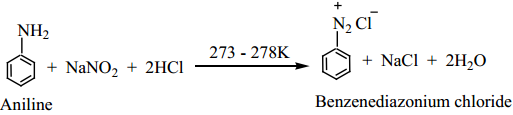
(ii) Aniline reacts with nitrous acid at low temperature (273 – 278 K) to give benzene diazonium chloride which is stable for a short time and slowly decomposes even at low temperatures. This reaction is known as diazotization.
Amines - Classification img 30

(b) Secondary Amines

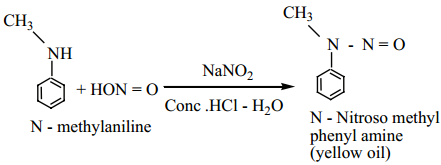
Alkyl and aryl secondary amines react with nitrous acid to give N – nitroso amine as yellow oily liquid which is insoluble in water.
Amines - Classification img 31

This reaction is known as Libermann’s nitroso test,

(c) Teritiary Amine

(i) Aliphatic tertiary amine reacts with nitrous acid to form trialkyl ammonium nitrite salt, which is soluble in water.

Amines - Classification img 32

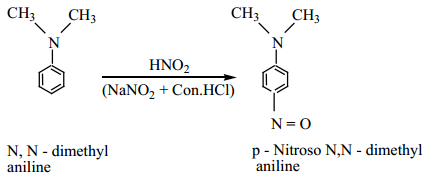
(ii) Aromatic tertiary amine reacts with nitrous acid at 273K to give p – nitroso compound.
Amines - Classification img 33

5. Carbylamine Reaction

Aliphatic (or) aromatic primary amines react with chloroform and alcoholic KOH to give isocyanides (carbylamines), which has an unpleasant smell. This reaction is known as carbylamine test. This test used to identify the primary amines.

Amines - Classification img 34

6. Mustard Oil Reaction

(i) When primary amines are treated with carbon disulphide (CS2), N – alkyldithio carbomic acid is formed which on subsequent treatment with HgCl2, give an alkyl isothiocyanate.

Amines - Classification img 35

(ii) When aniline is treated with carbon disulphide, or heated together, S-diphenylthio urea is formed, which on boiling with strong HCl, phenyl isothiocyanate (phenyl mustard oil), is formed.

Amines - Classification img 36

These reactions are known as Hofmann – Mustard oil reaction. This test is used to identify the primary amines.

7. Electrophilic Substitution Reactions in Aniline

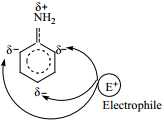
The image 36 group is a strong activating group. In aniline the NH2 is directly attached to the benzene ring, the lone pair of electrons on the nitrogen is in conjugation with benzene ring which increases the electron density at ortho and para position, thereby facilitating the electrophilic attack at ortho and para positions.
Amines - Classification img 37

(i) Bromination

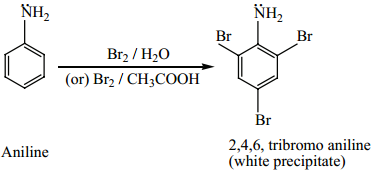
Aniline reacts with Br2/H2O to give 2, 4, 6 – tribromo aniline a white precipitate.
Amines - Classification img 38

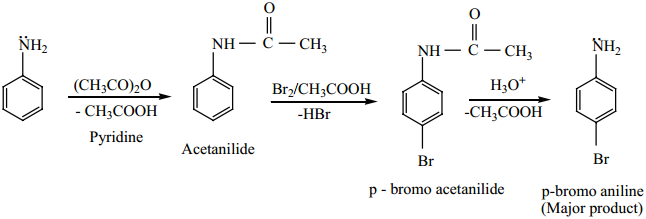
To get mono bromo compounds, – NH2 is first acylated to reduce its activity.
Amines - Classification img 39

When aniline is acylated, the lone pair of electron on nitrogen is delocalised by the neighbouring carbonyl group by resonance. Hence it is not easily available for conjugation with benzene ring.

Amines - Classification img 40

The acetylamino group is thus less activating than the amino group in electrophilic substitution reaction.

(ii) Nitration

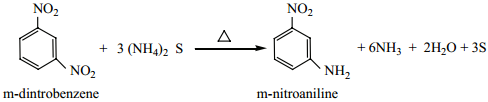
Direct nitration of aniline gives o and p – nitro aniline along with dark coloured ‘tars’ due to oxidation. Moreover in a strong acid medium aniline is protonated to form anilinium ion which is m – directing and hence m – nitro aniline is also formed.
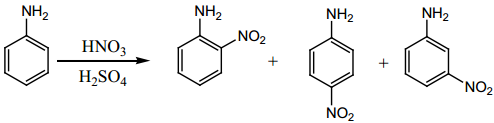
Amines - Classification img 41

To get para product, the – NH2 group is protected by acetylation with acetic anhydride. Then, the nitrated product is hydrolysed to form the product.
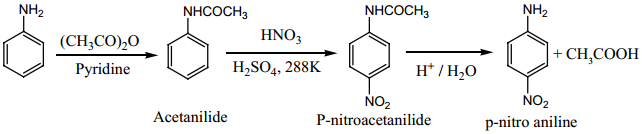
Amines - Classification img 42

(iii) Sulphonation

Aniline reacts with Conc. H2SO4 to form anilinium hydrogen sulphate which on heating with H2SO4
at 453 – 473K gives p – aminobenzene sulphonic acid, commonly known as sulphanilic acid, as the major product.
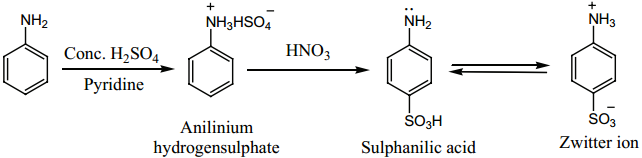
Amines - Classification img 43

(iv) Aniline

It does not under go Friedel – Crafts reaction (alkylation and acetylation) we know aniline is basic in nature and it donates its lone pair to the lewis acid AlCl3 to form an adduct which inhibits further the electrophilic substitution reaction.


Nitro Compounds

Find free online Chemistry Topics covering a broad range of concepts from research institutes around the world.

Nitro Compounds

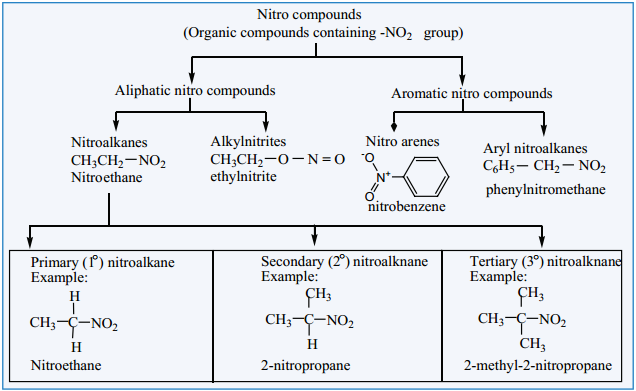
Nitro compounds are considered as the derivaties of hydrocarbons. If one of the hydrogen atom of hydrocarbon is replaced by the – NO2 group, the resultant organic compound is called a nitrocompound.

Classification of Nitrocompounds

Nitro Compounds img 1

Nitroalkanes are represented by the formula, R-NO2 where R is an alkyl group (CnH2n+1-). Nitroalkanes are further classified into primary, secondary, tertiary nitroalkanes on the basis of type of carbon atom to which the nitro (-NO2) group is attached.

Nomenclature of Nitroalkanes

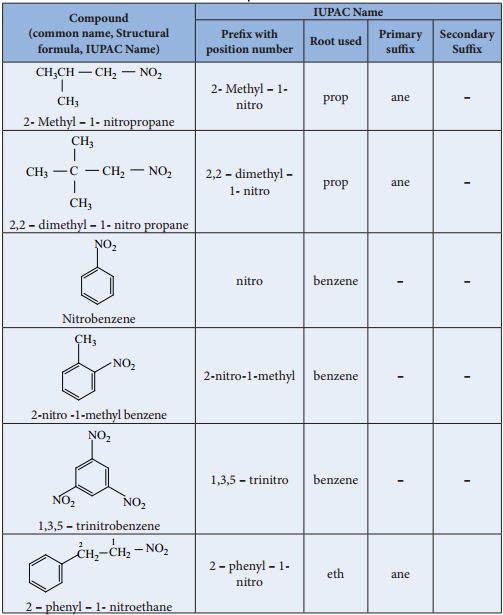
In the IUPAC nomenclature, the nitroalkanes are named by adding prefi nitro before the name of alkane, the position of the nitro group is indicated by number.

Nitro Compounds img 2

ISOMERISM

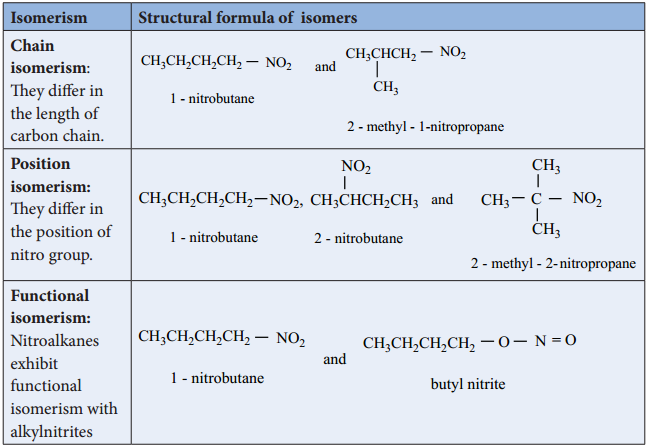
Nitroalkanes exhibit chain and position isomerism among their own class and functional isomerism with alkyl nitrites and special type tautomerism can also exist in nitro alkanes having an α – H atom. For example, nitro compounds having the molecular formula C4H9NO2 exhibit the following isomerisms.

Nitro Compounds img 3

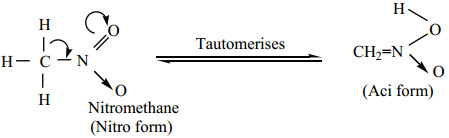
Tautomerism:

Primary and secondary nitroalkanes, having α-H, also show an equilibrium mixture of two tautomers namely nitro – and aci – form.

Nitro Compounds img 4

Tertiary nitro alkanes do not exhibit tautomerism due to absence of α – H atom.

Nitro Form

Aci-Form

1. Less Acidic1. More Acidic
2. Dissolves in NaOH slowly2. Dissolves in NaOH instantly
3. Decolourises FeCl3 solution3. With FeCl3 gives reddish brown colour
4. Electrical conductivity is low4. Electrical conductivity is high


Acidic Nature of Nitro Alkanes

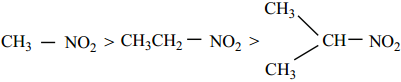
Th α – H atom of 1° & 2° nitroalkanes show acidic character because of the electron with drawing effect of NO2 group. These are more acidic than aldehydes, ketones, ester and cyanides. Nitroalkanes dissolve in NaOH solution to form a salt. Aci – nitro derivatives are more acidic than nitro form. When the number of alkyl group attached to α carbon increases, acidity decreases. due to +I effect of alkyl groups.

Nitro Compounds img 5

Preparation of Nitroalkanes

1. From Alkyl Halides: (Laboratory Method)

(a) Alkyl bromides (or) iodides on heating with ethanolic solution of potassium nitrite gives nitroethane.

Nitro Compounds img 6

The reaction follows SN2 mechanism.

This method is not suitable for preparing nitrobenzene because the bromine directly attached to the benzene ring cannot be cleaved easily.

2. Vapour Phase Nitration of Alkanes: (Industrial Method)

Gaseous mixture of methane and nitric acid passed through a red hot metal tube to give nitromethane.

Nitro Compounds img 7

Except methane, other alkanes (upto n – hexane) give a mixture of nitroalkanes due to C-C cleavage. The individual nitro alkanes can be separated by fractional distillation.

Nitro Compounds img 8

3. From α – Halocarboxylic Acid

α – choloroacetic acid when boiled with aqueous solution of sodium nitrite gives nitromethane.

Nitro Compounds img 9

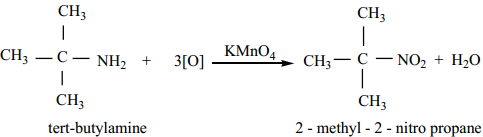
4. Oxidation of Tert – Alkyl Amines

tert – butyl amine is oxidised with aqueous KMnO4 to give tert – nitro alkanes.

Nitro Compounds img 10

5. Oxidation of Oximes

Oxidation of acetaldoxime and acetoneoxime with trifloroperoxy acetic acid gives nitroethane (1°) and 2 – nitropropane (2°) respectively.

Nitro Compounds img 11

Preparation of Nitroarenes

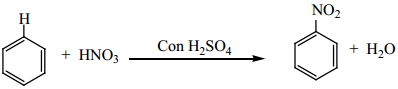
1. By Direct Nitration

When benzene is heated at 330K with a nitrating mixture (Con.HNO3 + Con.H2SO4), electrophilic
substitution takes place to form nitro benzene. (Oil of mirbane)

Nitro Compounds img 12

On direct nitration of nitrobenzene m – dinitrobenzene is obtained

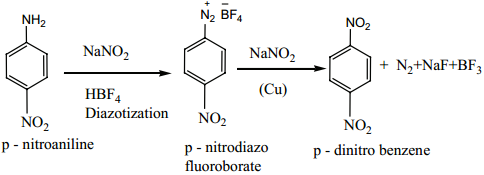
2. Indirect Method

Nitration of nitro benzene gives m-dinitrobenzene. The following method is adopted for the preparation of p-dinitrobenzene.

For example

Nitro Compounds img 13

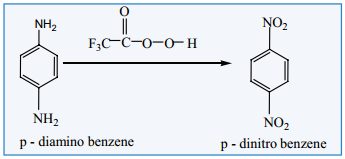
Amino group can be directly converted into nitro group, using caro’s acid (H2SO5) (or) persulphuric acid
(H2S2O8) (or) peroxytrifluro acetic acid (F3C.CO3H) as oxidising agent.

Nitro Compounds img 14

Physical Properties of Nitro Alkane

The lower nitroalkanes are colourless pleasant smelling liquids, sparingly soluble in water, but readily soluble in organic solvents like benzene, acetone etc… They have high boiling points because of their highly polar nature. Alkylnitrites have lower boiling points than nitro alkanes.

Chemical Properties of Nitroalkanes

Nitroalkanes undergo the following common reactions.

  1. Reduction
  2. Hydrolysis
  3. Halogenations

1. Reduction of Nitroalkanes

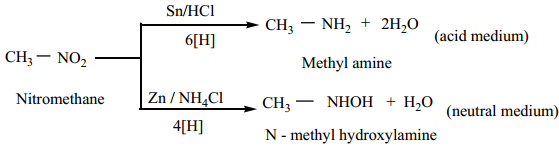
Reduction of nitroalkanes has important synthetic applications. The various reduction stages of nitro group are given below.

Nitro Compounds img 15

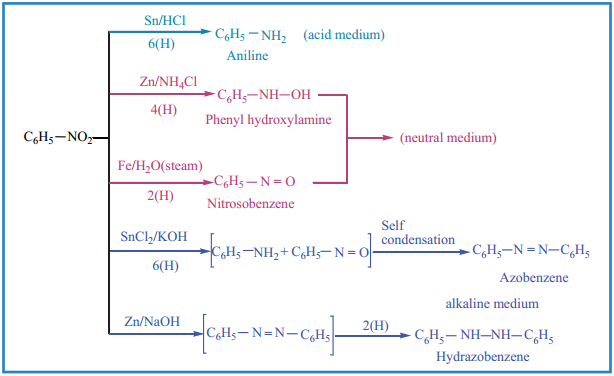
The final product depends upon the nature of reducing agent as well as the pH of the medium.

Nitro Compounds img 16

Reduction of Alkyl Nitrites

Ethylnitrite on reduction with Sn / HCl gives ethanol

Nitro Compounds img 17

2. Hydrolysis of Nitroalkanes

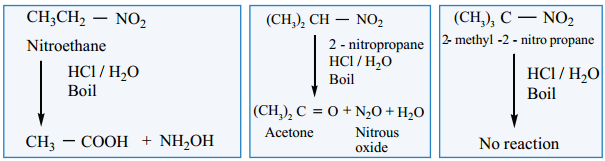
Hydrolysis can be effected using conc. HCl or conc. H2SO4. Primary nitroalkanes on hydrolysis gives carboxylic acid, and the secondary nitroalkanes give ketones. The tertiary nitroalkanes have no reaction.

Nitro Compounds img 18

On the other hand, the acid or base hydrolysis of ethyl nitrite gives ethanol.

Nitro Compounds img 19

3. Halogenation of Nitroalkanes

Primary and secondary nitroalkanes on treatement with Cl2 or Br2 in the presence of NaOH give halonitroalkanes. The α – H atom of nitroalkanes are successively replaced by halogen atoms.

Nitro Compounds img 20

Toxicity

Nitroethane is suspected to cause genetic damage and be harmful to the nervous system.

Nef Carbonyl Synthesis:

Nitro Compounds img 21

Chemical Properties of Nitrobenzene

Nitro Compounds img 22

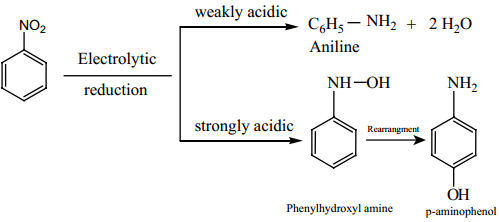
Electrolytic Reduction:

Nitro Compounds img 23

Reduction of Catalytic and Metal Hydrides

Nitrobenzene reduction with Ni (or) Pt, (or) LiAlH4 to give aniline

Nitro Compounds img 24

Selective Reduction of Polynitro Compounds

Nitro Compounds img 25

Electrophilic Substitution Reaction

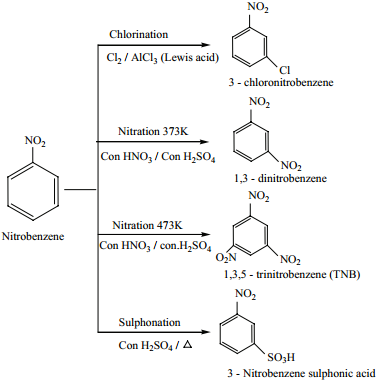
The electrophilic substitution reactions of nitrobenzene are usually very slow and vigorous reaction condition have to be employed (-NO2 group is strongly deactivating and m – directing).

Nitro Compounds img 26

Nitrobenzene does not undergo Friedel – Craft reactions due to the strong deactivating nature of -NO2 group.

Uses of Carboxylic Acids and its Derivatives

Find free online Chemistry Topics covering a broad range of concepts from research institutes around the world.

Uses of Carboxylic Acids and its Derivatives

Formic Acid

It is Used

  1. For the dehydration of hides.
  2. As a coagulating agent for rubber latex
  3. In medicine for treatment of gout
  4. As an antiseptic in the preservation of fruit juice.

Acetic Acid

It is Used

  1. As table vinegar
  2. For coagulating rubber latex
  3. For manufacture of cellulose acetate and poly vinylacetate

Benzoic Acid

It is Used

  1. As food preservative either in the pure form or in the form of sodium benzoate
  2. In medicine as an urinary antiseptic
  3. For manufacture of dyes

Acetyl Chloride

It is Used

  1. As acetylating agent in organic synthesis
  2. In detection and estimation of – OH, – NH2 groups in organic compounds

Acetic Anhydride

It is Used

  1. Acetylating Agent
  2. In the preparation of medicine like asprin and phenacetin
  3. For the manufacture plastics like cellulose acetate and poly vinyl acetate.

Ethyl Acetate is Used

  1. In the preparation of artificial fruit essences.
  2. As a solvent for lacquers.
  3. In the preparation of organic synthetic reagent like ethyl acetoacetate.

Carboxylic acids and their derivatives are used in the production of polymers, biopolymers, coatings, adhesives, and pharmaceutical drugs. They also can be used as solvents, food additives, antimicrobials, and flavourings.

The functional groups at the heart of this chapter are called carboxylic acid derivatives: they include carboxylic acids themselves, carboxylates (deprotonated carboxylic acids), amides, esters, thioesters, and
acyl phosphates.

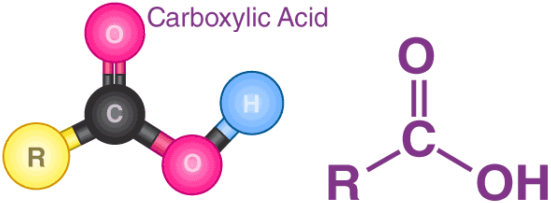
Carboxylic acids have a hydroxyl group bonded to an acyl group, and their functional derivatives are prepared by replacement of the hydroxyl group with substituents, such as halo, alkoxyl, amino and acyloxy. Some examples of these functional derivatives were displayed earlier.

Carboxylic acids are also important in the manufacture of greases, crayons, and plastics. Compounds with carboxyl groups are relatively easily converted to compounds called esters, which have the hydrogen atom of the carboxyl group replaced with a group containing carbon and hydrogen atoms.

In general, it finds use primary as an acylating agent (source of an acetyl group) for alcohols and amines. This liquid is also used to make pharmaceuticals such as aspirin and salicylic acid, as well as a preservative for wood.

Carboxylic acids are soluble in water. Carboxylic acids do not dimerise in water, but forms hydrogen bonds with water. Carboxylic acids are polar and due to the presence of the hydroxyl in the carboxyl group, they are able to form hydrogen bonds with water molecules.

Uses of Carboxylic Acids and its Derivatives img 1